Question
Each first element of a group differs in properties with other members of group. Explain the statement with reason.
or
In second period there is a difference between properties of elements. Why?
Answer

SELF

Need a full question paper?

Generate a complete, print-ready paper with questions like this in minutes — across 16+ boards, with answer keys.

Start Generating Free

Similar questions

Describe various method to form alkane.
What is hybridization? Describe sp³, sp² and sp hybridization with examples.
Describe the hybridisation in case of $PCl_5$ . Why are the axial bonds longer as compared to equatorial bonds?
What is distillation? Explain different types of distillation.
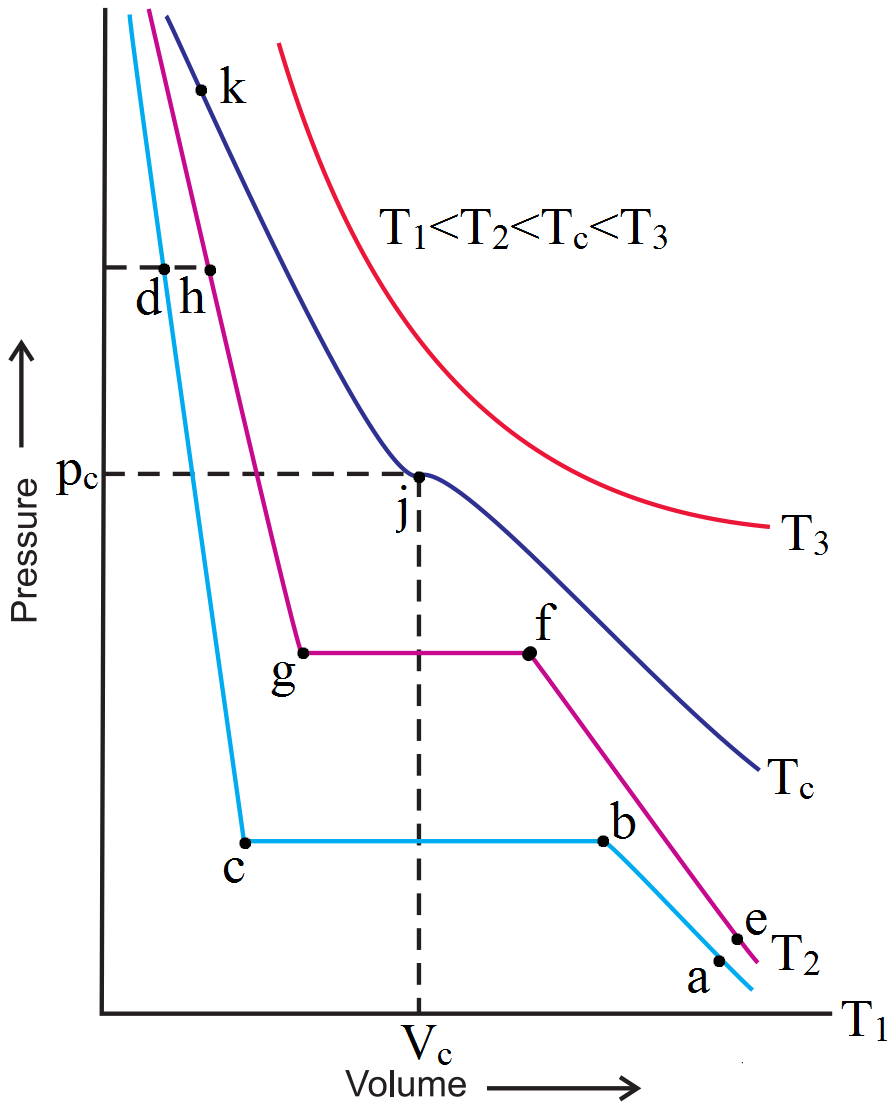
Isotherms of carbon dioxide at various temperatures are represented in the figure. Answer the following questions based on the figure.

i. In which state will $CO _2$ exist between the points a and b at temperature $T _1$ ?
ii. At what point will $CO _2$ start liquefying when temperature is $T _1$ ?
iii. At what point will $CO _2$ be completely liquefied when temperature is $T _2$ ?
iv. Will condensation take place when the temperature is $T_3$ ?
v. What portion of the isotherm at $T _1$ represent liquid and gaseous $CO _2$ at equilibrium?
Although geometries of $\mathrm{NH}_3$ and $\mathrm{H}_2 \mathrm{O}$ molecules are distorted tetrahedral, bond angle in water is less than that of ammonia. Discuss.
Pay load is defined as the difference between the mass of displaced air and the mass of the balloon. Calculate the pay load when a balloon of radius $10 \ m$ , mass $100 \ kg$ is filled with helium at 1.66 bar at $27^{\circ} C$. (Density of air $=1.2 kg$ $m ^{-3}$ and $R =0.083 bar dm ^3 K^{-1} mol^{-1}$ ).
An element with mass number 81 contains 31.7% more neutrons as compared to protons. Assign the atomic symbol.
Explain the nomenclature of organic compounds by common name system with examples.
Present a comparative account of the alkali and alkaline earth metals with respect to the following characteristics:
  1. Tendency to form ionic/ covalent compounds.
  2. Nature of oxides and their solubility in water.
  3. Formation of oxosalts.
  4. Solubility of oxosalts.
  5. Thermal stability of oxosalts.