Question
Explain any two Source Documents.
Answer

  1. Cash Memo: Cash Memo is prepared by the seller when goods are sold against cash. It has details of goods sold, quantity, rate of each item and the total amount received, besides the date of transaction and other terms and conditions, if any. It is an evidence for the purchaser for, goods purchased against cash, and for the seller, it is an evidence of sales for cash.
A specimen of a Cash Memo is as follows:
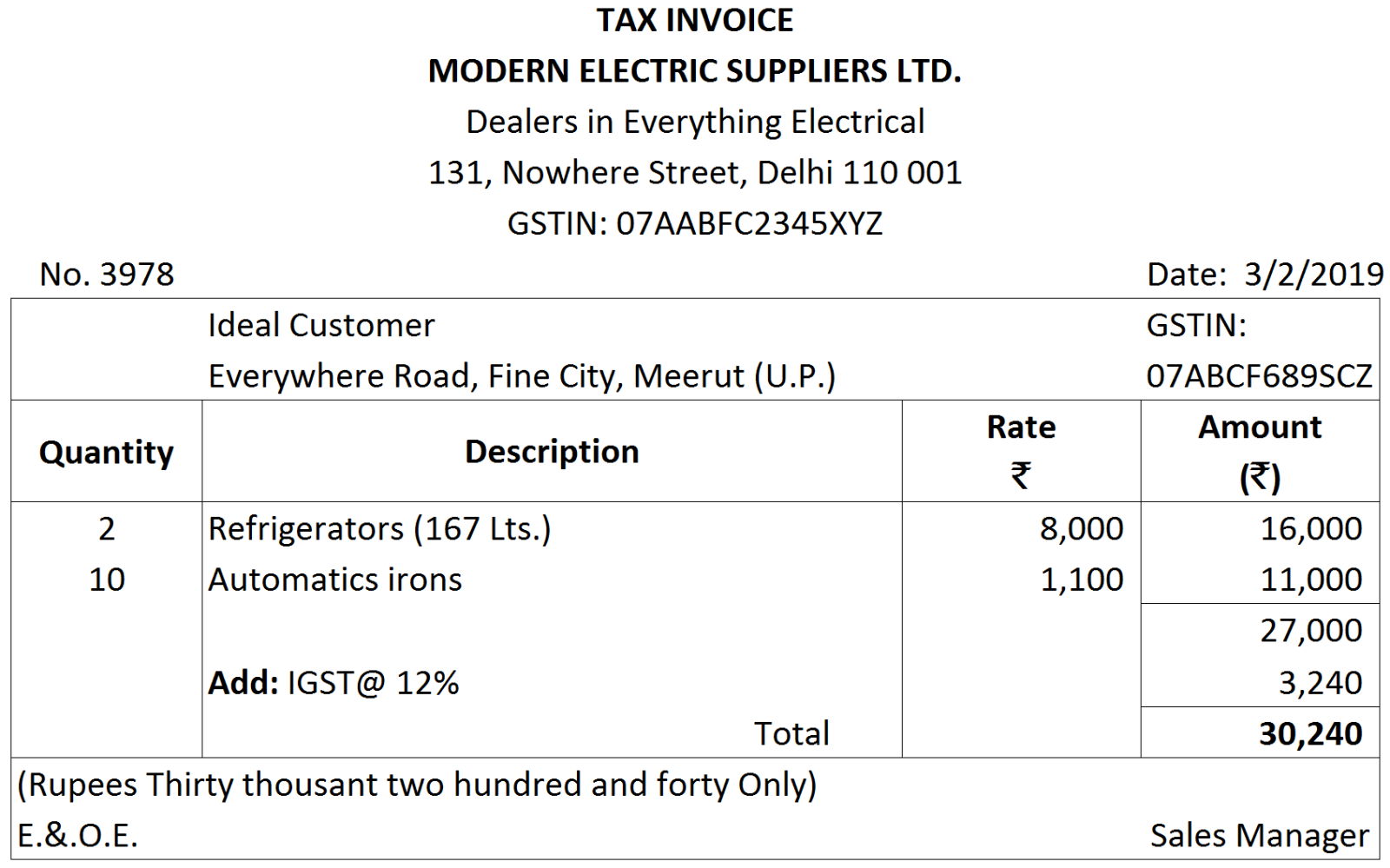
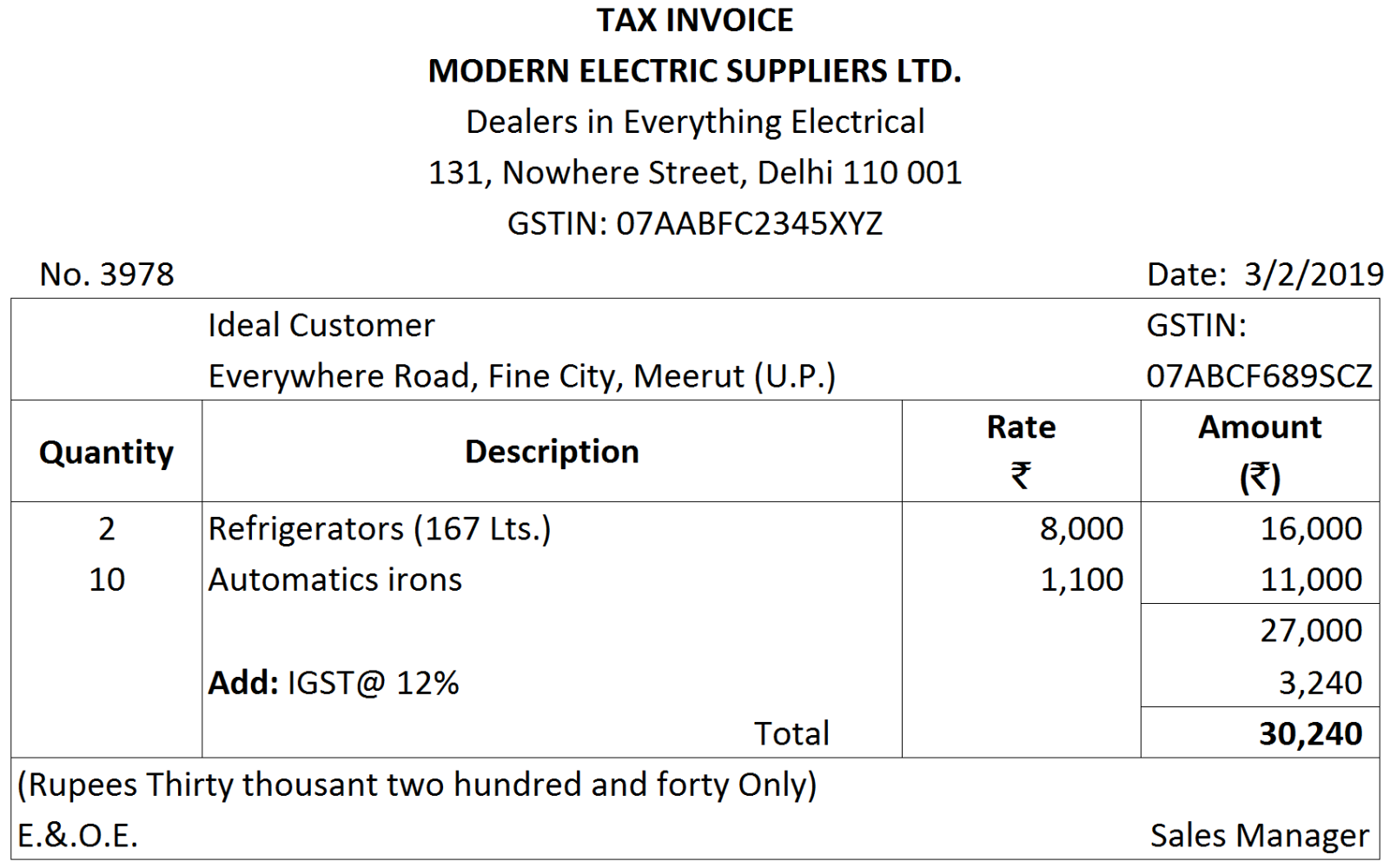
  1. Invoice or Bill: An Invoice or Bill is prepared by the seller when the goods are sold on credit. It has details of the party to whom goods are sold, goods sold and the total sale amount. The original copy of the sales invoice is sent to the purchaser and a duplicate copy is retained as an evidence of the sales for recording it in the books of account and for future reference. For the purchaser, credit purchases are evidenced by bill received from the supplier. A specimen of a Invoice or a Bill is as follows:

Need a full question paper?

Generate a complete, print-ready paper with questions like this in minutes — across 16+ boards, with answer keys.

Start Generating Free

Similar questions

Record the following transactions in the Sales Book of M/s Ajanta Electronics, Ranchi (Jharkhand) assuming CGST @ 9% and SGST @ 9%.
2018
 
March 1
Sold to Vandna Electronics, Kolkata (West Bengal) Vide Invoice No. 1255
50 Musical Alarm Clocks @ ₹ 800 each
40 Wall Clocks @ ₹ 500 each
Trade Discount 20%
March 10
Sold to Mohan Watch Company, Patna (Bihar) Vide Invoice No. 1256
25 Deluxe Wall Clocks @ ₹ 800 each
Trade Discount 10%
March 15
Sold to Superior Watch Company, Ranchi Vide Invoice No. 1257
75 Deluxe Wall Clocks @ ₹ 800 each
40 Super Deluxe Wall Clocks @ ₹ 1,000 each
Trade Discount 15%
March 20
Sold to Modern Electronics, Ranchi Vide Cash Memo No. 5234
100% Musical Alarm Clocks @ ₹ 800 each
Trade Discount 20%
State whether the balance of the following accounts should be placed in the debit (or) the credit columns of the Trial Balance:
  1. Plant and Machinery
  2. Discount Allowed
  3. Bank Overdraft
  4. Sales
  5. Interest Paid
  6. Bad Debts
My bank Pass Book showed an overdraft of ₹ 6,500 on 31st March, 2017. This does not agree with the Cash Book balance. From the following particulars ascertain the Cash Book balance:- Cheques amounting to ₹ 15,000 were paid into bank in March, out of which, it appears, only cheques amounting to ₹ 4,500 were credited by bank. Cheques issued during March amounted in all to ₹ 11,000. Out of these cheques for ₹ 3,000 were unpaid on 31st March, 2017. The Pass Book stands debited with ₹ 150 for interest and with ₹ 30 for bank charges. The bank had paid the annual subscription of ₹ 100 to my club according to my instructions. The entries for interest, bank charges and subscription have not yet been made in Cash Book.
State three advantages of Sub-Division of Journal.
Prepare Bank Reconciliation Statement from the following particulars on June 30, 2016:
Bank Statement showed a favourable balance of ₹ 9,214.
  1. On 29th June, the bank credited the sum of ₹ 1,650 in error.
  2. Certain cheques, valued at ₹ 4,500 issued before June 30, were not cleared.
  3. A hire purchase payment of ₹ 950, made by a standing order was not entered in the cash book.
  4. A cheque of ₹ 600 received, deposited and credited by bank, was accounted as a receipt in the cash column of the cash book.
  5. Other cheques for ₹ 8,500 were deposited in June but cheques for ₹ 6,000 only were cleared by the bankers.
Explain the statement 'Cash book is a Journalised Ledger'.
What are Provisions?
'Business units last indefinitely.' Mention and explain the concept on which the statement is based.
From the following transactions, state the nature of accounts and state the accounts which will be debited and credited:
  1. Ganesh started business with Cash ₹ 2,00,000.
  2. Purchased goods for Cash ₹ 60,000.
  3. Sold goods for cash ₹ 75,000.
  4. Purchased goods from Nakul on Credit for ₹ 80,000.
  5. Sold goods to Bhushan on Credit for ₹ 50,000.
  6. Paid Cash to Nakul ₹ 20,000.
  7. Received Cash from Bhushan ₹ 10,000.
  8. Paid salary ₹ 20,000.
A Trial Balance disclosed a difference of ₹ 417 placed on the credit side of the Suspense Account. Later on the following errors were located:
  1. Goods worth ₹ 200 purchased from Sohan had been posted to his account as ₹ 250.
  2. A purchase of furniture for ₹ 500 was recorded in the Purchases Book.
  3. Instead of crediting Gian’s Account with ₹ 512, it was debited with ₹ 215.
  4. Goods worth ₹ 130 returned by Gian were entered in the Sales Book and posted therefrom to the credit of Gian’s Personal Account.
Pass the rectifying entries and prepare a Suspense Account.