Question
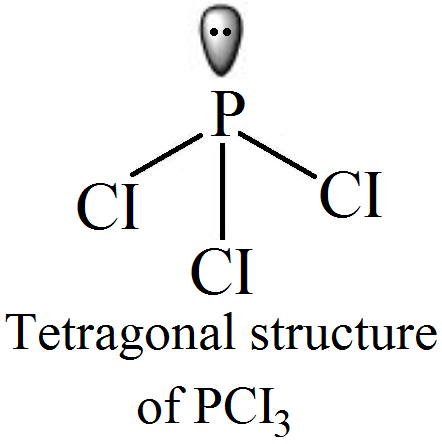
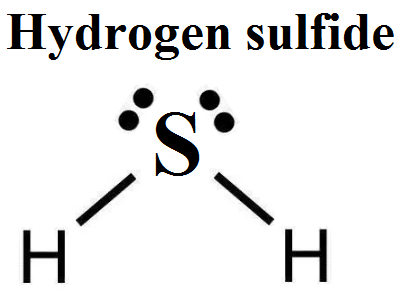
Explain the non linear shape of $H_2S$ and non planar shape of $PCl_3$ using valence shell electron pair repulsion theory.
Answer

In the molecule $PCl_3$, The electronic configuration of P atom is $1s^2, 2s^2, 2p^6, 3s^2, 3p^3$. The valency of $P$ is $5$. In $PCl3$,
$P$ has $3$ single bonds and $1$ lone pair (pair of unshared electrons). This suggests us to use $sp^3$ hybrid orbitals on phosphorus. Each chlorine atom (valence shell configuration $3s^23p^5$) has one singly occupied $3p$ orbital. The P–Cl bonds are formed by the overlap of a phosphorus $sp3$ hybrid orbital with singly occupied chlorine $3p$ orbital. Each Cl atom holds three lone pairs.

In $H_2S$ , S is the central atom, which has 6 valence electrons, out of which 2 electron are used by two hydrogen forming two bonds and two remaining pairs remain as lone pairs around the atom, Thus due to lone pair lone pair repulsion offered by the two pairs of electrons, it has a bent shape.

Need a full question paper?

Generate a complete, print-ready paper with questions like this in minutes — across 16+ boards, with answer keys.

Start Generating Free

Similar questions

If $1$ gram of each of the following gases are taken at STP, which of the gases will occupy (a) greatest volume and (b) smallest volume?
$CO, H_2O, CH_4, NO$.
  1. Why is hydrated barium peroxide used in the preparation of hydrogen peroxide instead of anhydrous barium peroxide?
  2. Phosphoric acid is preferred over sulphuric acid in preparing hydrogen peroxide from peroxides. Why?
  3. Hydrogen peroxide acts both as an oxidising agent as well as a reducing agent in alkaline solution towards certain first row transition metal ions. Illustrate both these properties of $H_2O_2$ using chemical equations.
Describe the properties of covalent compounds.
The $Mn^{3+}$ ion is unstable in solution and undergoes disproportionation to give $Mn^{2+}, MnO_2,$ and $H^+$ ion. Write a balanced ionic equation for the reaction.
Attempt any five of the following:
1. Can a catalyst change the position of equilibrium in a reaction?
2. To which category of compounds does cyclohexane belong?
3.
Image
4. What is hydrogenation?
5. What are conformations?
6. The intermediate carbocation formed in the reactions of $HI , HBr$ and HCl with propene is the same and the bond energy of $HCl , HBr$ and HI is $430.5 kJ mol ^{-1}, 363.7 kJ mol ^{-1}$ and $296.8 kJ mol ^{-1}$ respectively. What will be the order of reactivity of these halogen acids?
7. State Le chatelier's principle.
Explain the following: (i) Markownikov's Law (ii) Peroxide effect
Explain with example the IUPAC nomenclature system for organic compounds having one functional group.
Explain the following observations:
  1. $CO_2$ and $SO_2$ are not isostructural.
  2. $BF_3$ and $NF_3$ are not isostructural.
  3. $\text{BH}^-_4$ and $\text{NH}^+_4$ are isostructural.
  4. $N_2$ has higher bond order than NO.
  5. In $NO^+$ and $N_2$, the bond order is same.
When $\mathrm{BCl}_3$ is treated with water, it hydrolyses and forms $\left[\mathrm{B}[\mathrm{OH}]_4\right]^{-}$only whereas $\mathrm{AlCl}_3$ in acidified aqueous solution forms $\left[\mathrm{Al}\left(\mathrm{H}_2 \mathrm{O}\right)_6\right]^{3+}$ ion. Explain what is the hybridisation of boron and aluminium in these species?
Match the species in Column I with the type of hybrid orbitals in Column II.
 
Column I
 
Column II
i.
$H_3O^+$
a.
Linear
ii.
$HC = CH$
b.
Angular
iii.
$\text{ClO}^{-}_{2}$
c.
Tetrahedral
iv.
$\text{NH}^{+}_{4}$
d.
Trigonal bipyramidal
 
 
e.
Pyramidal