Question
Explain with example, how will you carry out disaster management in your region or premises?

Answer

In Mumbai region there is always flooding either due to continuous heavy downpour or due to cyclone. Disaster management can be done in following ways:
Preparedness and mitigation

  1. People be made aware of floods through media. People be warned not to come out of the house during floods.
  2. People should be told to be ready with food, medicines, water, etc.
  3. People can be evacuated from vulnerable areas.
  4. Strengthening of existing building be done.
  5. Hospitals should be ready for the treatment of affected people.

Disaster response

  1. Government and NGOs should supply food, medicines and temporary shelter to affected people.
  2. People should be rescued from affected areas.
  3. Efforts be made to restore normal condition.

Recovery

  1. Giving financial assistance to victims.
  2. Restoration of basic services like transport and repair of physical, economic and social damages.

Rehabilitation

  1. Houses be provided to the affected people.
  2. Rehabilitation of affected farmers and people involved in agriculture and other sectors of economy.
  3. It may also include reconstructions of schools, hospitals, water and gas pipelines, restoring electricity, transport and communication.

Need a full question paper?

Generate a complete, print-ready paper with questions like this in minutes — across 16+ boards, with answer keys.
Start Generating Free

Similar questions

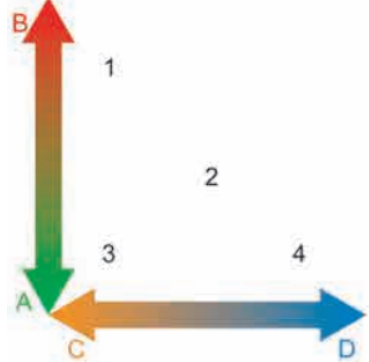
Study the following schematic diagram. It shows the relationship between speed of material and moisture content. Read the index, and answer the following questions.

Image
(A) Fast (B) Slow (C) Dry (D) Wet
(1) Creep (2) Slide (3) Fall (4) Flow
(1)What will happen when the weather conditions are dry?
(2)When will a flow occur?
(3)When will a creep occur?
(4)Now can you enumerate the factors which affect mass wasting?
There is similarity in the relief on the land surface and the ocean bottom.
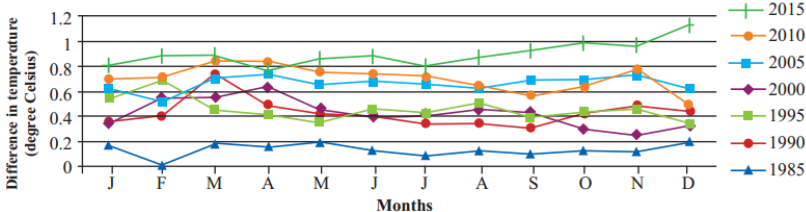
1. The graph in the figure shows the difference between the global average temperature of the twentieth century and global monthly temperatures from 1985 to 2015. Answer the questions given below.

Image
(1)In which year is the difference the least?
(2)What is the difference between the mean temperatures of the twentieth century and temperature in 2015?
(3)Why do the temperatures differ in different months?

What measures will you suggest to combat climate change in your village/city.
Have you ever been to a river and seen its bed? Discuss in the class about your observation about the river, its banks, its bed and its velocity.
(i) The tropical deserts are mainly found in which direction of the continents? What could be the reason behind their formation there?
(ii) In which continent is desert not found?
Discuss how development of oceanic tourism should be carried out without disturbing marine life.
Explain the effects of disasters with the help of examples.
Can animals and plants also influence weathering? Will that be physical or chemical weathering? Which type of weathering does stone quarrying cause?
Given below are a list of measures taken for disaster. Write whether they are pre-disaster or post-disaster and structural or non-structural. Also write the name of the disaster for which they are used. Complete the table.
Sr No.MeasuresPre-disaster / Post- disasterStructural / Non structuralDisaster/ (s) to which they are applicable
1.Conducting mock drills.Pre- disasterNon structuralEarthquake, landslides, fire
2.Discussions about disaster risks and community problems and solutions.………………………………………………
3.Using art, documentaries, music and drama to portray the impact of disasters on communities.………………………………………………
4.Inviting emergency services personnel to provide lectures/demonstrations.………………………………………………
5.Making booklets on disaster related information.………………………………………………
6.Retrofit old buildings.………………………………………………
7.Constructing shelters and evacuation chambers.………………………………………………
8.Making change in land use policy regarding construction of houses in low- lying areas.………………………………………………
9.Constructing buildings and houses using disaster resistant material, design to comply with relevant BIS (Bureau of Indian Standards) codes.………………………………………………
10.Constructing proper drains.………………………………………………
11.Carrying out plantation activities.………………………………………………
12.Regular disaster related activities through radio, TV newspaper, etc.………………………………………………
13.Using satellites for early warning.………………………………………………
14.Evacuation routes in disaster management plans should be delineated.………………………………………………