Question
Force between the protons and neutrons in a nucleus is:

Answer

CONCEPT:
Strong nuclear force: The strong attractive force which binds together the protons and neutrons in a nucleus is called a strong nuclear force.
  • This force cannot be an electrostatic force because positively charged protons strongly repel each other at such a small separation of the order $10^{-15}m.$
  • This strong nuclear force is the strongest of all the fundamental forces, about $100$ times stronger than the electromagnetic force.
Important properties of the strong nuclear force:
  • It is the strongest interaction known in nature, which is about $1038$ times stronger than the gravitational force.
  • It is a short$-$range force that operates only over the size of the nucleus $(= 10^{-15}m).$
  • It is basically an attractive force but becomes repulsive when the distance between the nucleons becomes less than $0.5$ fermi $(1$ fermi $= 10^{-15}m).$
  • It varies inversely with some higher power $(> 2)$ of distance.
  • It is a non$-$central and non-conservative force.
From the above, it is clear that the force between a neutron and a proton inside the nucleus is only nuclear attractive.

Need a full question paper?

Generate a complete, print-ready paper with questions like this in minutes — across 16+ boards, with answer keys.
Start Generating Free

Similar questions

Assertion :   If a point charge q is placed in front of an infinite grounded conducting plane surface, the point charge will experience a force.
Reason     : This force is due to the induced charge on the conducting surface which is at zero potential.(a) If both assertion and reason are true and the reason is the correct explanation of the assertion.(b) If both assertion and reason are true but reason is not the correct explanation of the assertion.(c) If assertion is true but reason is false.(d) If the assertion and reason both are false.


A radioactive sample at any instant has its disintegration rate 5000 disintegration per minute. After 5 minutes, the rate is 1250 disintegrations per minute. Then, the decay constant (per minute) is(a) 0.8 In 2(b) 0.4 In 2(c) 0.2 In 2(d) 0.1 In 2
       
The direction of electric field is from:
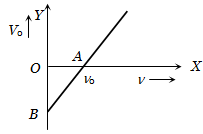
In an experiment on photoelectric effect the frequency $f$ of the incident light is plotted against the stopping potential $V_0$ . The work function of the photoelectric surface is given by $(e$ is electronic charge$)$
Choose the correct answer.$\text{F}=\frac{\text{K.}(\text{q}_1\times\text{q}_2)}{\text{r}^2}$
This is given by which law?
The power loss is less in transmission lines, when:
Two electric dipoles of moment $P$ and $64 P$ are placed in opposite direction on a line at a distance of $25 \ cm$. The electric field will be zero at point between the dipoles whose distance from the dipole of moment $P$ is
Taking Rydberg’s constant $R_H=1.097\times 10^7m$ first and second wavelength of Balmer series in hydrogen spectrum is
If current flowing through a conductor is doubled then the heat produced in it is:
The large scale destruction, that would be caused due to the use of nuclear weapons is called(a) Nuclear holocaust(b) Thermo-nuclear reaction(c) Nuetron reproduction factor(d) None of these