Question
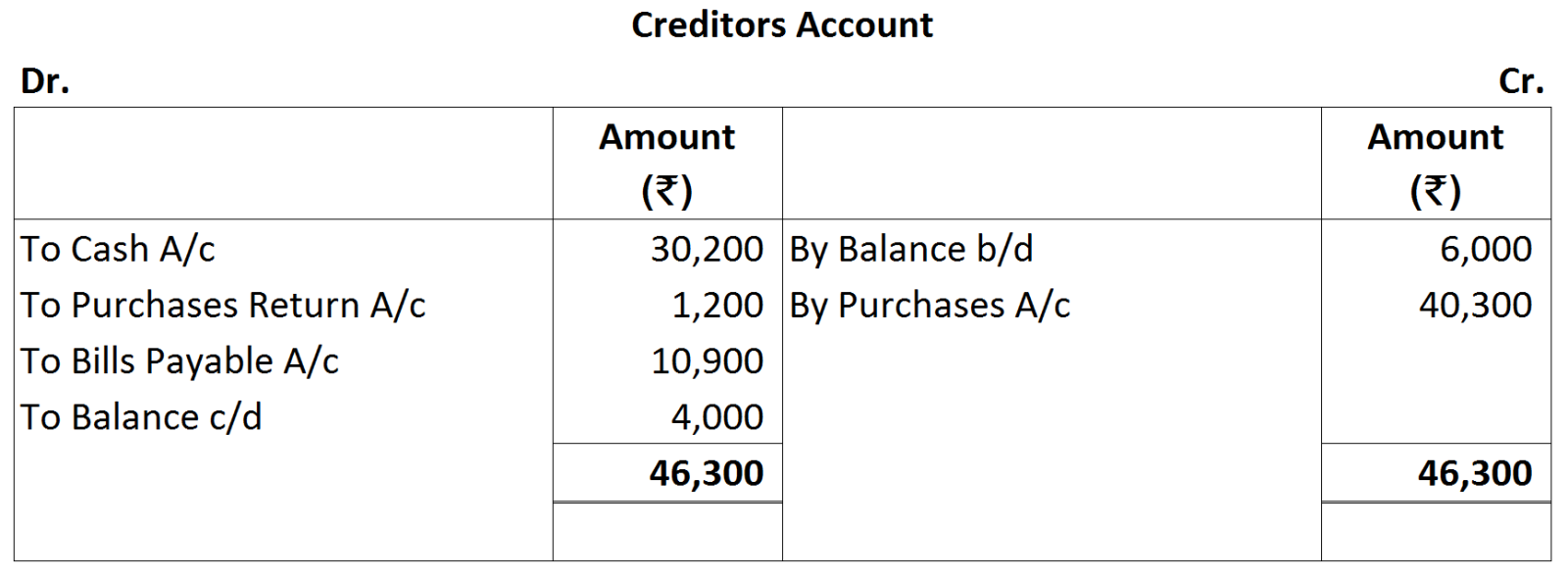
From the following information supplied by X, who keeps his books on Single Entry System, you are required to calculate Total Purchases:
 
Opening balance of Bills Payable 5,000
Opening balance of Creditors 6,000
Closing balance of Bills Payable 7,000
Closing balance of Creditors 4,000
Cash paid to Creditors during the year 30,200
Bills Payable discharged during the year 8,900
Returns Outward 1,200
Cash Purchases 25,800

Answer


Total Purchases = Cash Purchases + Credit Purchases
Total Purchases = 25,800 + 40,300 = ₹ 66,100

Need a full question paper?

Generate a complete, print-ready paper with questions like this in minutes — across 16+ boards, with answer keys.

Start Generating Free

Similar questions

Rectify the following errors by passing Journal entries:
  1. A sum of ₹ 470 received from Ganga was posted to her debit as ₹ 740.
  2. A debit balance of ₹ 550 in the personal account of Mr. John was undercast.
  3. Bills Receivable from Brown for ₹ 3,000 posted to the credit of Bills Payable Account and credited to Brown’s Account.
  4. Goods returned by Mridul ₹ 225 have been entered in the Returns Outward Book.
Following information is given below: calculate the closing capital:
  April 01, 2016 March 31, 2017
 
Creditors 5,000 30,000
Bills payable 10,000
Loan 50,000
Bills receivable 30,000 50,000
Stock 5,000 30,000
Cash 2,000 20,000
Calculation of profit or loss and ascertainment of statement of affairs at the end of the year (Opening Balance is given).
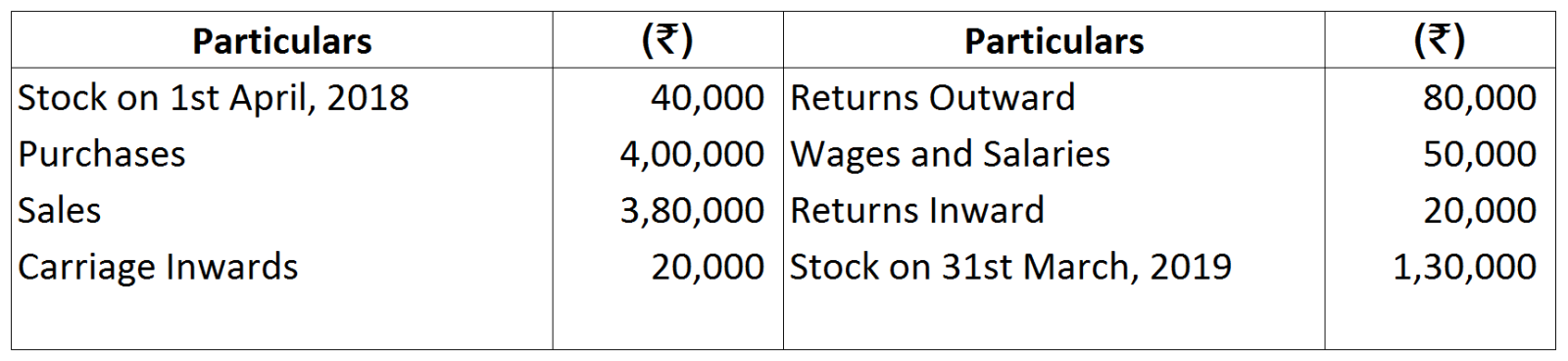
From the following information, prepare Trading Account for the year ended $31^{st}$​​​​​​​ March, $2019$:
Net Realisable Value (Market Value) of stock as on $31^{st}$​​​​​​​ March, $2019$ was $₹ 1,20,000$.
​​​​​​​[Hint: Closing Stock is shown at Net Realisable Value, i.e., Market Value $(₹ 1,20,000)$ since Market Value is less the Cost of Stock.]
What are Direct Expenses? Give two examples.
The following balances appeared in the trial balance of M/s Kapil Traders as on March 31, 2017
 
Sundry debtors
30,500
Bad debts
500
Provision for doubtful debts
2,000
The partners of the firm agreed to records the following adjustments in the books of the Firm: Further bad debts ₹ 300. Maintain provision for bad debts 10%. Show the following adjustments in the bad debts account, provision account, debtors account, profit and loss account and balance sheet.
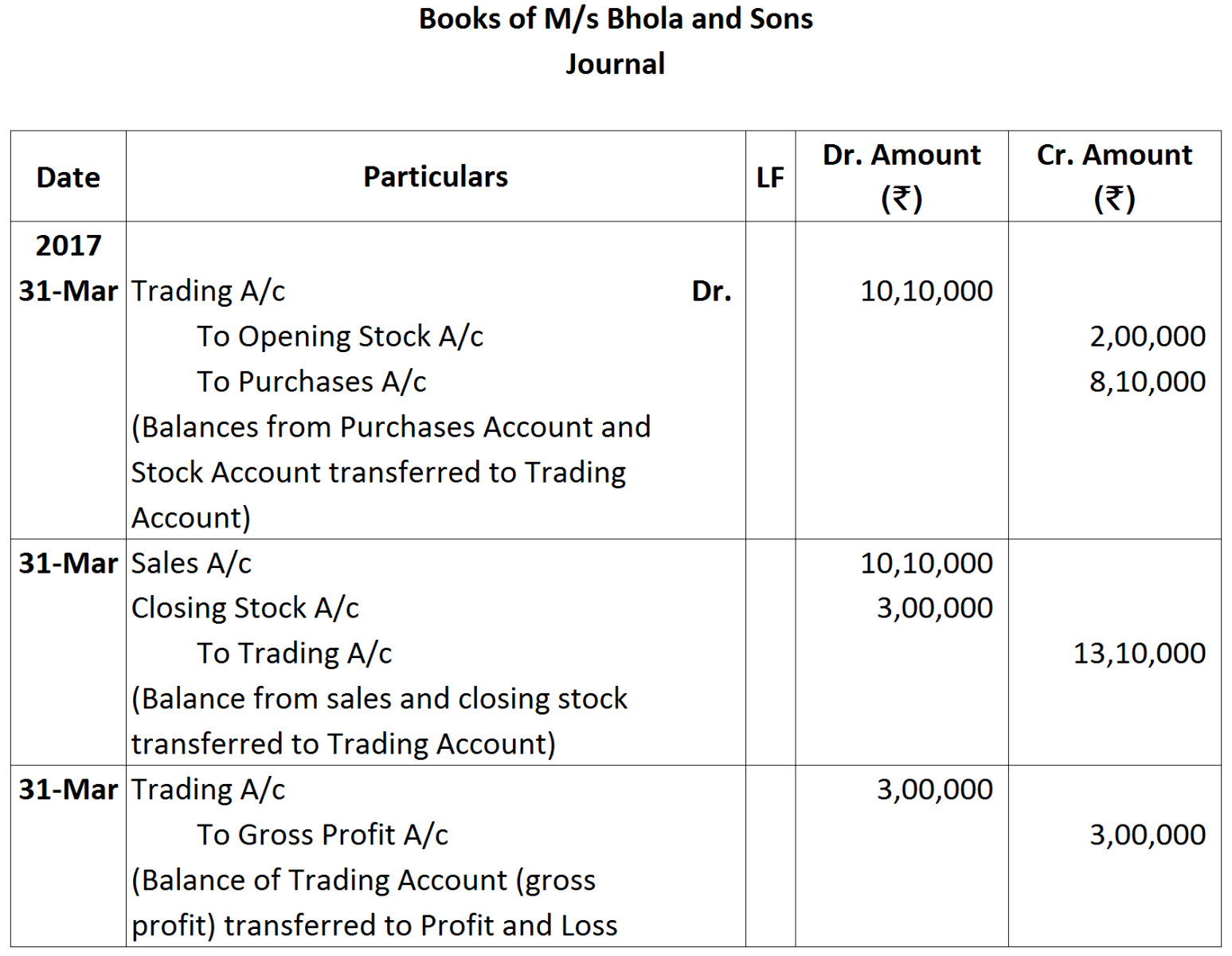
The following are the extracts from the trial balance of M/s Bhola & Sons as on March 31, 2017

Closing Stock as on date was valued at ₹ 3,00,000.
You are required to record the necessary journal entries and show how the above items will appear in the trading and profit and loss account and balance sheet of M/s Bhola & Sons.
Write a note on types of Assets with one example of each.
Give any three reasons for keeping records under Single Entry System.
Mention three limitations of the CAS (Computerised Accounting System).
Why is Balance Sheet prepared?