MCQ
In a certain thermodynamical process, the pressure of a gas depends on its volume as $kV ^{3}$. The work done when the temperature changes from $100^{\circ} C$ to $300^{\circ} C$ will be .......... $nR$, where $n$ denotes number of moles of a gas.
  • A
    $25$
  • B
    $40$
  • $50$
  • D
    $60$

Answer

Correct option: C.
$50$
c
$P=k V^{3}$

$T_{i}=100^{\circ} C $

$T _{ f }=300^{\circ} C$

$\Delta T =300-100$

$\Delta T =200^{\circ} C$

$P = kV ^{3}$

now $PV = nRT$

$\therefore kV ^{4}= nRT$

now $4 kV ^{3} dV = nRdT$

$\therefore PdV = nRdT / 4$

$\therefore$ Work $=\int PdV =\int \frac{ nRdT }{4}=\frac{ nR }{4} \Delta T$

$=\frac{200}{4} \times nR =50 nR$

Need a full question paper?

Generate a complete, print-ready paper with questions like this in minutes — across 16+ boards, with answer keys.

Start Generating Free

Similar questions

Decibel is unit of
An express train is moving with a velocity $v_1$. Its driver finds another train is moving on the same track in the same direction with velocity $v_2$. To escape collision, driver applies a retardation a on the train. the minimum time of escaping collision will be
A block of mass $M$ is pulled along a horizontal frictionless surface by a rope of mass $m$. If a force $P$ is applied at the free end of the rope, the force exerted by the rope on the block will be
How many wavelength of $Kr^{86}$ are there in $1m?$
Standing waves are produced in a $10 \;m$ long stretched string. If the string vibrates in $5$ segments and the wave velocity is $20\; m/s$, the frequency is ... $Hz$
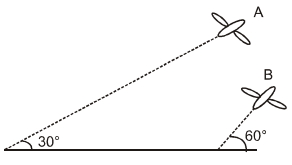
Airplanes $A$ and $B$ are flying with constant velocity in the same vertical plane at angles $30^{\circ}$ and $60^{\circ}$ with respect to the horizontal respectively as shown in figure . The speed of $A$ is $100 \sqrt{3} ms ^{-1}$. At time $t=0$, an observer in A finds $B$ at a distance of $500 \ m$. This observer sees $B$ moving with a constant velocity perpendicular to the line of motion of $A$. If at $t = t _0$, $A$ just escapes being hit by $B , t _0$ in seconds is:
Which of the following are true?
  1. A polar satellite goes around the earth’s pole in northsouth direction.
  2. A geostationary satellite goes around the earth in eastwest direction.
  3. A geostationary satellite goes around the earth in westeast direction.
  4. A polar satellite goes around the earth in eastwest direction.
A particle is projected with velocity $v_{0}$ along $x-$ axis. A damping force is acting on the particle which is proportional to the square of the distance from the origin i.e., $ma =-\alpha x ^{2}.$ The distance at which the particle stops:
In Guericke's experiment to show the effect of atmospheric pressure, two copper hemispheres were tightly fitted to each other to form a hollow sphere and the air from the sphere was pumped out to create vacuum inside. If the radius of each hemisphere is $R$ and the atmospheric pressure is $p$, then the minimum force required (when the two hemispheres are pulled apart by the same force) to separate the hemispheres is
The mass of moon is $7.34 \times {10^{22}}\,kg$ and radius of moon is $1.74 \times {10^6}\,m$ then The value of gravitation accelaration will be ....... $N/kg$