Question
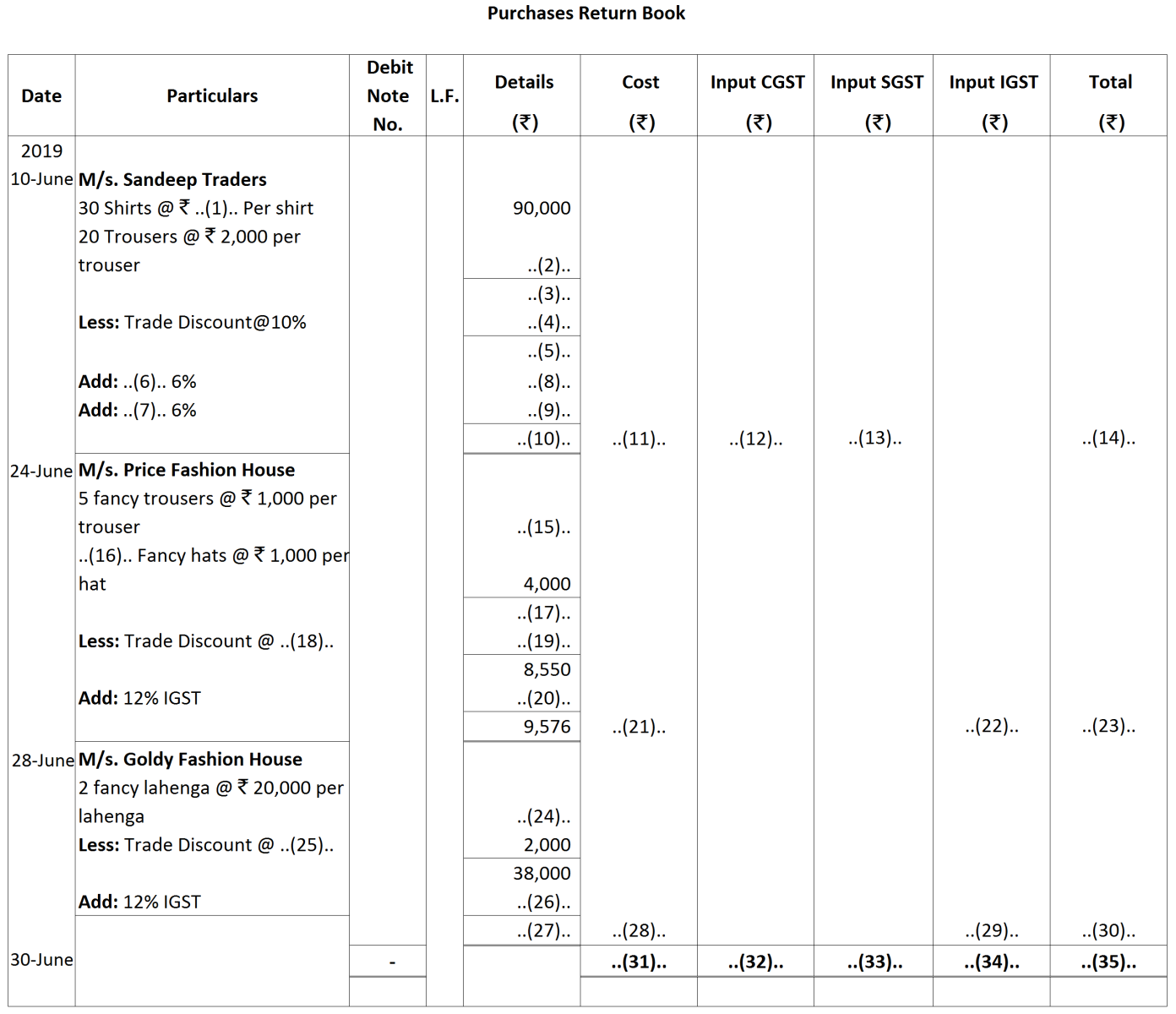
In the following Purchases Return Book, determine the missing information:
Answer

Get the step-by-step solution for this question inside the Vidyadip app.

Get the answer in the app

Need a full question paper?

Generate a complete, print-ready paper with questions like this in minutes — across 16+ boards, with answer keys.
Start Generating Free

Similar questions

Explain the following along with their advantages:
  1. Ready to use accounting software.
  2. Customised accounting software.
  3. Tailored accounting software.
State three points of difference between Single Entry and Double Entry System. Difference between Double Entry System and Single Entry System?
Vardhman commenced business on $1^{st} $ April, $2018,$ with a capital of $₹\ 50,000.$ He immediately purchased furniture of $₹\ 20,000$. During the year he received from his uncle a gift of $₹\ 3,000$ and he borrowed from his father a sum of $₹\ 5,000.$ He had withdrawn $₹\ 600$ per month for his household expenses. He had no Bank account and all dealings were in cash. He did not maintain any books but following information is given :
He used goods worth $₹\ 1,300$ for personal purposes and paid $₹\ 500$ to his son for examination and college fees. On $31^{st}$ March, $2019$, his Debtors were worth $₹\ 21,000$ and Creditors $₹\ 15,000$. Stock in trade was valued at $₹\ 10,000$. Furniture to be depreciated by $10\%$ p.a. Prepare Trading and Profit and Loss Account for the year ended on $31^{st}$ March, $2019,$ and Balance Sheet as at $31^{st}$ March, $2019.$
Vijay commenced business as food grains merchant on 1st April, 2018 with a capital of ₹ 4,00,000. On the same day, he purchased furniture for ₹ 80,000. From the following particulars obtained from his books which do not conform to Double Entry principles, you are required to prepare the Trading and Profit and Loss Account for the year ended 31st March, 2019 and the Balance Sheet as on that date:
 
Sales (including Cash Sales ₹ 2,00,000) 5,00,000
Purchases (including Cash Purchases ₹ 1,20,000 4,00,000
Vijay's Drawings (in Cash) 40,000
Salaries to Staff 48,000
Bad Debts written off 4,000
Trade Expenses paid 16,000
Vijay used goods of ₹ 12,000 for personal purposes during the year. On 31st March, 2019, his Debtors amounted to ₹ 1,40,000 and Creditors ₹ 80,000. Stock-in-Trade on that date was ₹ 1,60,000.
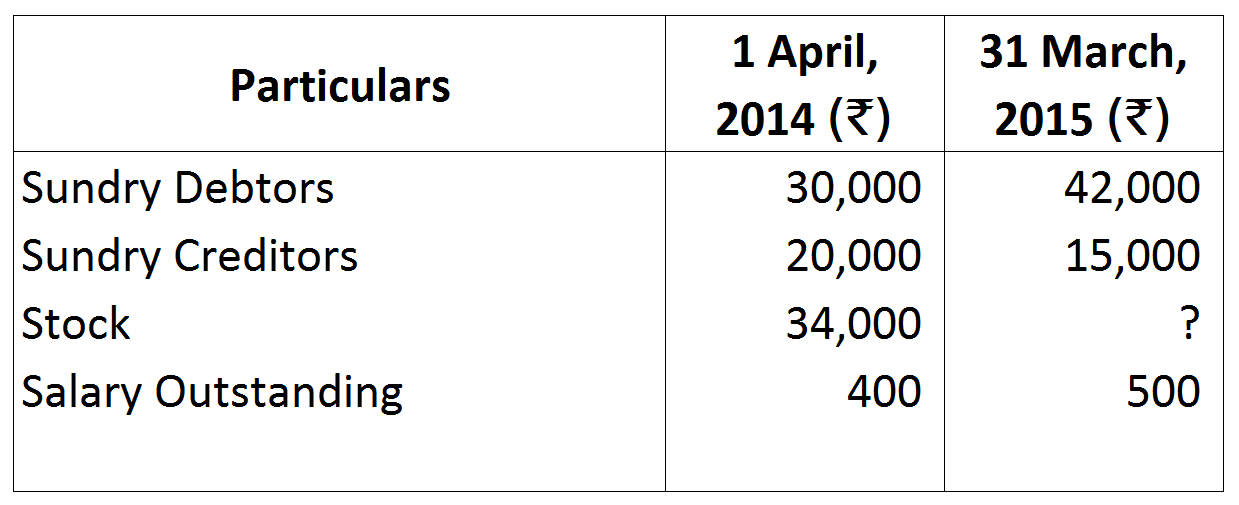
Mr. Gopal Das has only a Bank Pass Book and does not keep any other books of accounts. From the following information prepare his Final Accounts for the year ended $31^{st} $ March, $2015.$ An analysis of the Pass Book shows: Total amount received from Debtors and deposited with the Bank $₹\ 2,20,000;$ Payment to Creditors $₹\ 1,82,000$; Salaries $₹\ 6,000;$ Rent paid $₹\ 4,800;$ Advertisement $₹\ 2,000;$ Printing $₹\ 800;$ Personal Expenses $₹\ 4,000;$ Payment for Furniture $₹\ 12,000;$ Balance at Bank on $31^{st}$ March, $2015, ₹\ 21,000.$ Other Assets and Liabilities were as follows:
Mr. Gopal Das takes $20\%$ profit on sales.
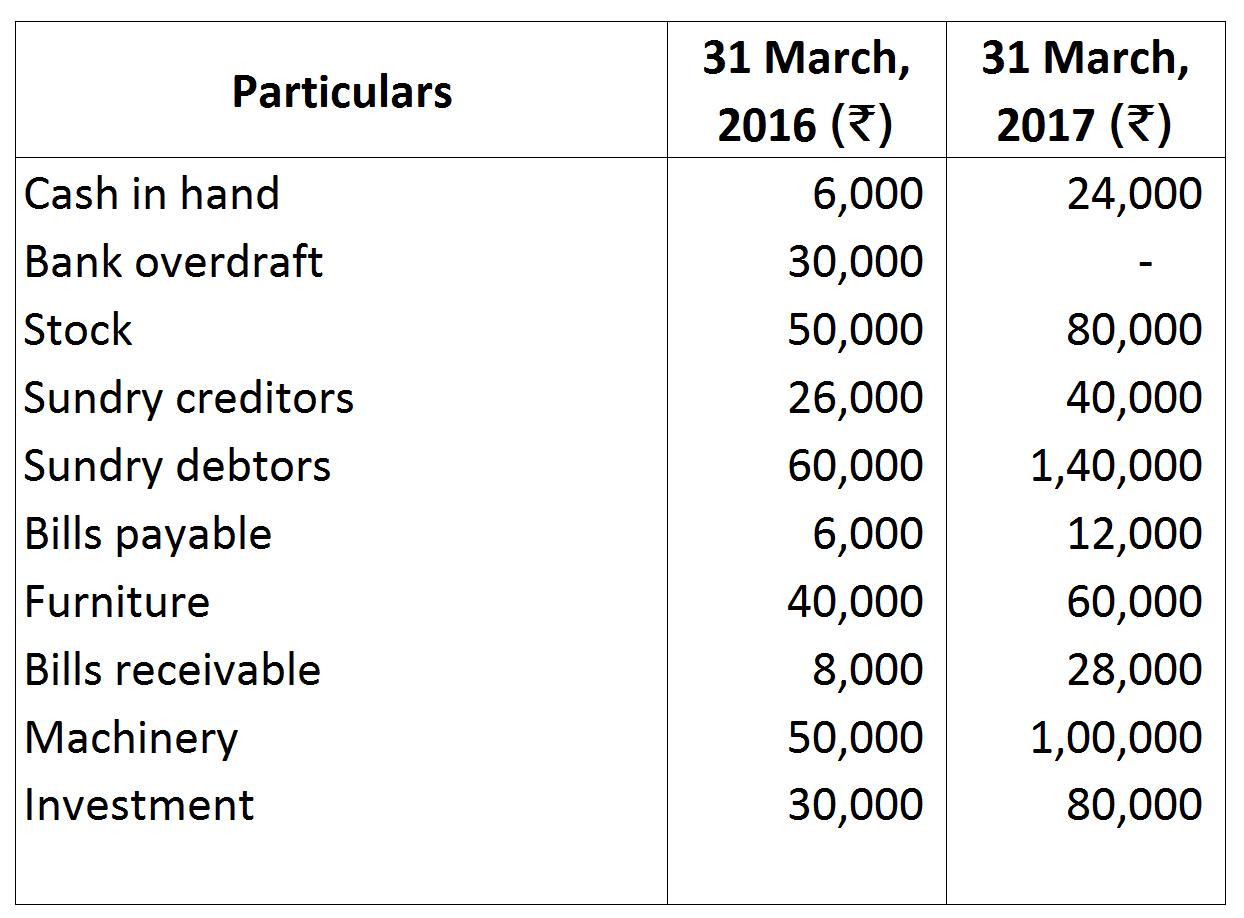
M/s Saniya Sports Equipment does not keep proper records. From the following information find out profit or loss and also prepare balance sheet for the year ended March 31, 2017:

Drawing 10,000 p.m. for personal use, fresh capital introduce during the year 2,00,000. A bad debts of 2,000 and a provision of 5% is to be made on debtors. outstanding salary 2,400, prepaid insurance 700, depreciation charged on furniture and machine @ 10% p.a.
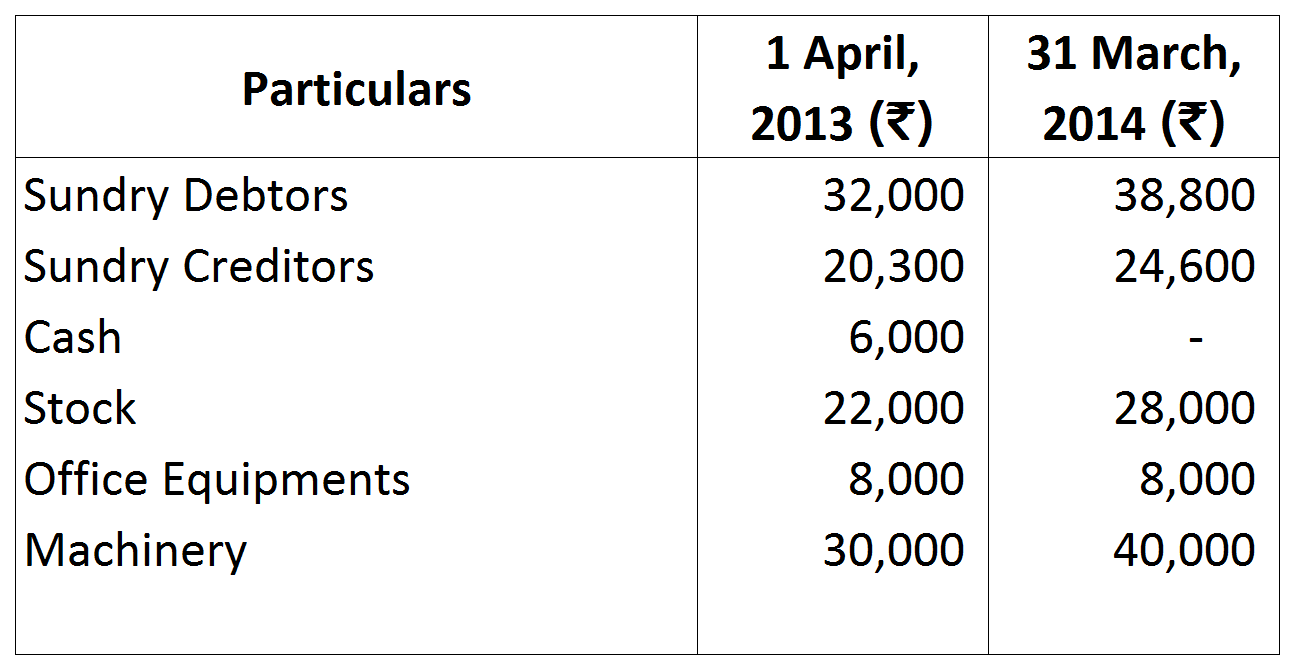
A retail trader did not keep his books on the double entry system. Following balances were obtained from his books:
Following further details of the transactions for the year ended $31^{st}$​​​​​​​ March,$ 2014:$ are available from his incomplete records:
You are required to prepare his Trading, P & L A/c and Balance Sheet after considering the following:
  1. ₹ $1,500$ are outstanding for salaries.
  2. Insurance was unexpired to the extent of ₹$ 800.$
  3. Goods worth ₹ $2,000$ were used by the proprietor for personal use.
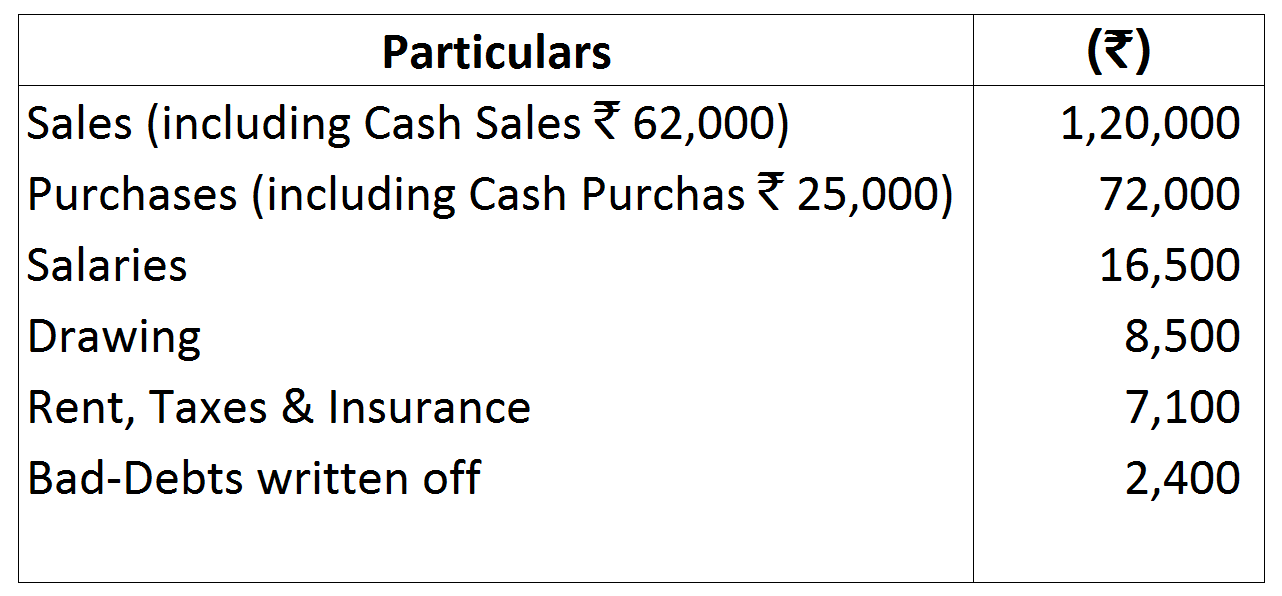
From the following balances, as on $31^{st}$​​​​​​​ March,$ 2019:$, prepare Trading and Profit and Loss Account and Balance Sheet:

Closing Stock on $31^{st}​​​​​​​$​​​​​​​ March,$ 2019:$ was valued at ₹$ 14,500.$
On 31st March, 2017 the following Trial Balance was extracted from the books of Sh. Ghanshyam Das:

Prepare Trading and Profit & Loss Account for the year ended 31st March, 2017 and Balance Sheet as at that date, after making adjustments for the following matters:
  1. Depreciate Land and Building at 2.5% and Motor Vehicles at 20%.
  2. Interest on Loan at 15% p.a. is unpaid for six months.
  3. Ghanshyam Das withdrew ₹ 2,000 for his private use. This amount was included in general expenses.
  4. Interest on Investments is receivable for full year @ 10%.
  5. Provide for Manager's Commission at 10% on Net Profit after charging such commission.
  6. Stock in hand on 31st March, 2017 was valued at ₹ 25,000 (Realisable value ₹ 22,000).
What practical difficulties are encountered by a trader due to incompleteness of accounting records?