MCQ
$\int_{}^{} {{e^{\log (\sin x)}}dx = } $
  • A
    $\sin x + c$
  • $ - \cos x + c$
  • C
    ${e^{\log (\cos x)}} + c$
  • D
    એકપણ નહીં.

Answer

Correct option: B.
$ - \cos x + c$
b
(b)$\int_{}^{} {{e^{\log (\sin x)}}dx} = \int_{}^{} {\sin x\,dx} = - \cos x + c.$

Need a full question paper?

Generate a complete, print-ready paper with questions like this in minutes — across 16+ boards, with answer keys.

Start Generating Free

Similar questions

${d \over {dx}}{e^{x\sin x}} = $
ધારો કે $f(x)=\left\{\begin{array}{cc}\frac{\sin (x-[x])}{x-[x]} & , \quad x \in(-2,-1) \\ \max \{2 x, 3[|x|]\} & , \quad|x|<1 \\ 1 & , \quad \text { otherwise }\end{array}\right.$

જ્યાં $[t]$ એ મહતતમ પૂણાંક $\leq t$ દર્શાવે છ. જ્યાં $f$ સતત ન હોય તેવા બિંદુઆની સંખ્યા $m$ અને $f$ વિકલનીય ન હોય તેવા બિંદુઆની સંખ્યા $n$ હોય, તો કમયુંક્ત જોડ $(m,n)$ =
$\int_{}^{} {{{\tan }^4}x\;dx = } $
જો $f(x)\, = \,\,\left\{ {\begin{array}{*{20}{c}}{\frac{{x - 1}}{{2{x^2} - 7x + 5}}}&{{\rm{for \,\,}}x \ne 1}\\{ - \frac{1}{3}}&{{\rm{for \,\,}}x = 1}\end{array}\,\,,} \right.$ તો $f'(1) = $
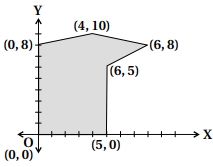
એક સુરેખ આયોજનના પ્રશ્નના સીમિત શકય ઉકેલ પ્રદેશનો આલેખ આપેલ છે તો હેતુલક્ષી વિધેય $z=3 x-4 y$ નું ન્યૂનતમ કિમત ............... બિંદુએ મળે 
જો $\overrightarrow A  = i - 2j - 3k,\,\overrightarrow B  = 2i + j - k,\,\overrightarrow C  = i + 3j - 2k,\,$ તો $\,(\overrightarrow A  \times \overrightarrow B ) \times \overrightarrow C  = ....$ છે 
ધારોકે $\overrightarrow{\mathrm{a}}=6 \hat{i}+\hat{j}-\hat{k}$ અને $\overrightarrow{\mathrm{b}}=\hat{i}+\hat{j}$. મે $\overrightarrow{\mathrm{c}}$ એવો સદીશ હોય કે જેથી $|\overrightarrow{\mathrm{c}}| \geq 6, \overrightarrow{\mathrm{a}} \cdot \overrightarrow{\mathrm{c}}=6|\overrightarrow{\mathrm{c}}|,|\overrightarrow{\mathrm{c}}-\overrightarrow{\mathrm{a}}|=2 \sqrt{2}$ તથા $\vec{a} \times \vec{b}$ અને $\vec{c}$ વચ્ચેનો ખૂણો $60^{\circ}$ થાય, તો $|(\vec{a} \times \vec{b}) \times \vec{c}|=$...........
આપેલ સદિશો $\hat i - \hat j$ અને $\hat i + 2\hat j,$ છે, તો આપેલ બન્નેને સમતલીય અને પ્રથમને લંબ સદિશ $...........$
$\begin{vmatrix}\sqrt{14}+\sqrt{3}&\sqrt{20}&\sqrt{5}\\\sqrt{15}+\sqrt{28}&\sqrt{25}&\sqrt{10}\\3+\sqrt{70}&\sqrt {15}&\sqrt{25}\end{vmatrix}= ......$
જો $y = {(\cos {x^2})^2}$ તો ${{dy} \over {dx}} = . . . .$