MCQ
Latent heat of ice is:
  • A
    Less than external latent heat of fusion.
  • B
    More than external latent heat of fusion.
  • C
    Twice the external latent heat of fusion.
  • D
    Equal to external latent heat of fusion.

Answer

  1. Equal to external latent heat of fusion.

Explanation:

Latent heat of ice is more than external latent heat of fusion.

Need a full question paper?

Generate a complete, print-ready paper with questions like this in minutes — across 16+ boards, with answer keys.
Start Generating Free

Similar questions

A person is standing in an elevator. In which situation he finds his weight less than actual when
A Carnot engine take $5000 \,k\,cal$ of heat from a reservoir at $727\,^{\circ}C$ and gives heat to a $\operatorname{sink}$ at $127\,^{\circ}C$. The work done by the engine is $.......... \times 10^{6}\,J$
If a solid sphere of mass $5\,kg$ and a disc of mass $4\,kg$ have the same radius. Then the ratio of moment of inertia of the disc about a tangent in its plane to the moment of inertia of the sphere about its tangent will be $\frac{x}{7}$. The value of $x$ is $.........$
If two forces of $5 \,N$ each are acting along $X$ and $Y$ axes, then the magnitude and direction of resultant is
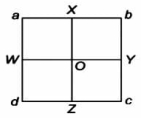
A uniform square plate abcd has a mass of $1 \,kg$. If two point masses each of $20 \,g$ are placed at the corners $b$ and $c$ as shown, then the centre of mass shifts on the line
Projectiles $A$ and $B$ are thrown at angles of $45^{\circ}$ and $60^{\circ}$ with vertical respectively from top of a $400 \mathrm{~m}$ high tower. If their ranges and times of flight are same, the ratio of their speeds of projection $v_A: v_B$ is :
An object with uniform density $\rho$ is attached to a spring that is known to stretch linearly with applied force as shown below.When the spring object system is immersed in a liquid of density $\rho_1$ as shown in the above figure, the spring stretches by an amount $x_1\left(\rho > \rho_1\right)$. When the experiment is repeated in a liquid of density $\left(\rho_2 < \rho_1\right)$, the spring stretches by an amount $x_2$. Neglecting any buoyant force on the spring, the density of the object is
When both the listener and source are moving towards each other, then which of the following is true regarding frequency and wavelength of wave observed by the observer?
The decay constant of a radioactive sample is $\lambda.$ The half-life and the average-life of the sample are respectively:

  1. $\frac{1}{\lambda}$ and $\Big(\text{ln}\frac{2}{\lambda}\Big)$

  2. $\Big(\text{ln}\frac{2}{\lambda}\Big)$ and $\frac{1}{\lambda}$

  3. $\lambda(\text{ln}2)$ and $\frac{1}{\lambda}$

  4. $\frac{\lambda}{(\text{ln})2}$ and $\frac{1}{\lambda}$

In the density measurement of a cube, the mass and edge length are measured as $(10.00 \pm 0.10)\,\,kg\,$ and $(0.10 \pm 0.01)\,\,m\,$ respectively. The error in the measurement of density is