MCQ
Liquids have:
  • A
    Fixed shape and volume.
  • B
    Variable shape and volume.
  • C
    Variable shape but fixed volume.
  • D
    Fixed shape but variable volume.

Answer

  1. Variable shape but fixed volume.

Need a full question paper?

Generate a complete, print-ready paper with questions like this in minutes — across 16+ boards, with answer keys.
Start Generating Free

Similar questions

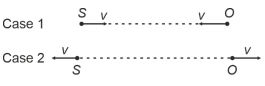
A source $(S)$ of sound has frequency $240 \ Hz$. When the observer $(O)$ and the source move towards each other at a speed $v$ with respect to the ground (as shown in Case $1$ in the figure), the observer measures the frequency of the sound to be $288 \ Hz$. However, when the observer and the source move away from each other at the same speed $v$ with respect to the ground (as shown in Case $2$ in the figure), the observer measures the frequency of sound to be $n Hz$. The value of $n$ is. . . . . .
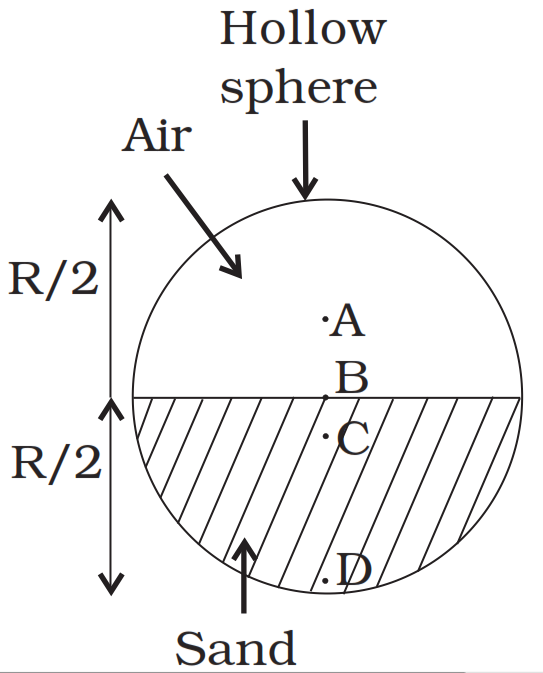
Which of the following points is the likely position of the centre of mass of the system shown in?

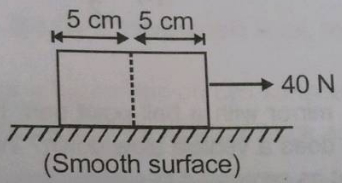
A block of mass $m$ as shown in figure is pulled by a force $40 \,N$. The tension at the middle of the block is ........... $N$
If $\vec A$ and $\vec B$ are perpendicular vectors and vector $\vec A = 5\hat i + 7\hat j - 3\hat k$ and $\vec B = 2\hat i + 2\hat j - a\hat k.$ The value of $a$ is
The energy that will be ideally radiated by a $100\,kW$ transmitter in $1$ hour is :
A point charge q is rotated along a circle in the electric field generated by another point charge Q. The work done by the electric field on the roatating charge in one complete revolution is:
  1. Zero.
  2. Positive.
  3. Negative.
  4. Zero if the charge Q is at the centre and nonzero otherwise.
A travelling wave passes a point of observation. At this point, the time interval between successive crests is $0.2$ seconds and
$3$ particles each of mass $m$ are kept at vertices of an equilateral triangle of side $L$. The gravitational field at centre due to these particles is
Sound travels in rocks in the form of
Two capillaries of same length and radii in the ratio $1 : 2$  are connected in series. A liquid flows through them in streamlined condition. If the pressure across the two extreme ends of the combination is $ 1 m$  of water, the pressure difference across first capillary is...... $m$