MCQ
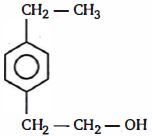
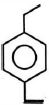
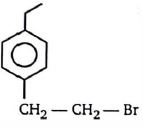
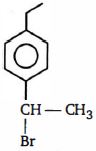
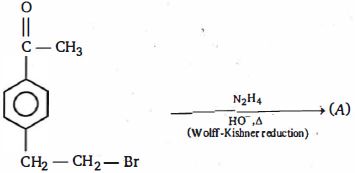
Product $(A)$ is
  • A


  • C

  • D

Answer

Correct option: B.

b
$(b)$ In basic medium halide undergo elimination reaction ($E_2$ elimination bimolecular).

Need a full question paper?

Generate a complete, print-ready paper with questions like this in minutes — across 16+ boards, with answer keys.

Start Generating Free

Similar questions

Water rises in a vertical capillary tube upto a height of $2.0 \,cm $. If the tube is inclined at an angle of ${60^o}$ with the vertical, then upto what length the water will rise in the tube....... $cm$ 
A $800$ turn coil of effective area $0.05\; \mathrm{m}^{2}$ is kept perpendicular to a magnetic fleld $5 \times 10^{-5}\; \mathrm{T}$. When the plane of the coil is rotated by $90^{\circ}$ around any of tis coplanar axis in $0.1\; \mathrm{s}$, the $emf$ induced in the coll will be.....$V$
Assertion : If the current in a solenoid is reversed in direction while keeping the same magnitude, the magnetic field energy stored in the solenoid decreases.

Reason : Magnetic field energy density is proportional to square of current.
Which of the following graphs correctly represents the variation of $\beta = - (dV/dP)/V$ with $P$ for an ideal gas at constant temperature
The force between two charges $0.06\,m$ apart is $5\,N$. If each charge is moved towards the other by $0.01\,m$, then the force between them will become.........$N$
The velocity of water waves $v$ may depend upon their wavelength $\lambda $, the density of water $\rho $ and the acceleration due to gravity $g$. The method of dimensions gives the relation between these quantities as
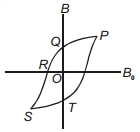
The figure illustrates how $B$, the flux density, inside a sample of ferromagnetic material varies with external magnetic field $B_0$. For the sample to be suitable for making a permanent magnet
Average velocity of a particle executing $SHM$ in one complete vibration is 
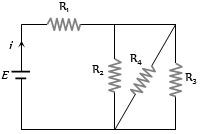
In the circuit given $E = 6.0 \,V, R_1 = 100\, ohms, R_2 = R_3 = 50\, ohms, R_4 = 75\, ohms$. The equivalent resistance of the circuit, in $ohms$, is
Column $I$ describe some situations in which a small object moves. Column $II$ describes some characteristics of these motions. Match the situation in Column $I$ with the characteristics in Column $II$ and indicate your answer by darkening appropriate bubbles in the $4 \times 4$ matrix given in the $ORS$.
Column $I$ Column $II$
$(A)$ The object moves on the $\mathrm{x}$-axis under a conservative force in such a way that its "speed" and "position" satisfy $v=c_1 \sqrt{c_2-x^2}$, where $\mathrm{c}_1$ and $\mathrm{c}_2$ are positive constants. $(p)$ The object executes a simple harmonic motion.
$(B)$ The object moves on the $\mathrm{x}$-axis in such a way that its velocity and its displacement from the origin satisfy $\mathrm{v}=-\mathrm{kx}$, where $\mathrm{k}$ is a positive constant. $(q)$ The object does not change its direction.
$(C)$ The object is attached to one end of a massless spring of a given spring constant. The other end of the spring is attached to the ceiling of an elevator. Initially everything is at rest. The elevator starts going upwards with a constant acceleration a. The motion of the object is observed from the elevator during the period it maintains this acceleration. $(r)$ The kinetic energy of the object keeps on decreasing.
$(D)$ The object is projected from the earth's surface vertically upwards with a speed $2 \sqrt{\mathrm{GM}_e / R_e}$, where, $M_e$ is the mass of the earth and $R_e$ is the radius of the earth. Neglect forces from objects other than the earth. $(s)$ The object can change its direction only once.