Question
Read the passage given below and answer the following questions
Few colligative properties are:
  1. Relative lowering of vapour pressure: depends only on molar concentration of solute (mole fraction) and independent of its nature.
  2. Depression in freezing point: it is proportional to the molal concentration of solution.
  3. Elevation of boiling point: it is proportional to the molal concentration of solute.
  4. Osmotic pressure: it is proportional to the molar concentration of solute
A solution of glucose is prepared with $0.052$ g at glucose in $80.2$ g of water. $\left(\mathrm{KJ}=1.86 \mathrm{~K} \mathrm{~kg} \mathrm{~mol}^{-1}\right.$ and $\left.\mathrm{K}_{\mathrm{b}}=5.2 \mathrm{~K} \mathrm{~kg} \mathrm{~mol}^{-1}\right)$ The following questions are multiple choice questions. Choose the most appropriate answer:
  1. Molality of the given solution is.
  1. $0.0052m$
  2. $0.0036m$
  3. $0.0006m$
  4. $1.29m$
  1. Boiling point for the solution will be.
  1. $373.05K$
  2. $373.15K$
  3. $373.02K$
  4. $373.02K$
  1. The depression in freezing point of solution will be.
  1. $0.0187K$
  2. $0.035K$
  3. $0.082K$
  4. $0.067K$
  1. Mole fraction of glucose in the given solution is.
  1. $6.28 \times 10^{-5}$
  2. $6.28 \times 10^{-4}$
  3. $0.00625$
  4. $0.00028$
  1. If same amount of sucrose $(C_{12} H_{22} O_{11})$ is taken instead of glucose, then.
  1. Elevation in boiling point will be higher.
  2. Depression in freezing point will be higher.
  3. Depression in freezing point will be lower.
  4. Both $(a)$ and $(b).$

Answer

  1. (b) $0.0036m$
Explanation:

$\text{m}=\frac{0.052}{180}\times\frac{1000}{80.2}=0.0036$
  1. (c) $373.02K$
Explanation:

$\Delta\text{T}_\text{b}=\text{k}_\text{b}\times\text{m}=5.2\times0.0036=0.0187\ \text{K}$

$T_b = 373 + 0.0187 = 373.0187 K  \approx  373.02 K$
  1. (d) $0.067 K$
Explanation:

$\Delta\text{T}_\text{f}=\text{k}_\text{f}\times\text{m}=1.86\times0.0036=0.067\ \text{K}$
  1. (a) $6.28 \times 10^{-5}$​​​​​​​
Explanation:

Moles of water $\frac{80.2}{18}=4.455$

Mole fraction of glucose $=\frac{0.00028}{4.45+0.00028}=6.28\times10^{-5}$'
  1. (c) Depression in freezing point will be lower.
Explanation:

Depression in freezing point or elevation in boiling point is proportional to molarity, which is proportional to number of moles. For same amount, higher the molar mass of solute, lower will be number of moles. Hence, lower will be the colligative property.

Need a full question paper?

Generate a complete, print-ready paper with questions like this in minutes — across 16+ boards, with answer keys.

Start Generating Free

Similar questions

In these questions, a statement of assertion followed by a statement of reason is given. Choose the correct answer out of the following choices.
Assertion: Colloidal particles show Brownian movement.
Reason: Brownian movement arises because of the impact of the molecules of the dispersion medium with the colloidal particles.
Read the passage given below and answer the following questions:
The transition elements have incompletely filled d-subshells in their ground state or in any of their oxidation states. The transition elements occupy position in betweens- and p-blocks in groups $3-12$ of the Periodic table. Starting from fourth period, transition elements consists of four complete series : Sc to $Zn, Y$ to Cd and La, $Hf$ to $Hg$ and $Ac, Rf$ to $Cn$. In general, the electronic configuration of outer orbitals of these elements is $(n - 1)d^{1-10} n^{1-2}$. The electronic configurations of outer orbitals of $Zn, Cd, Hg$ and $Cn$ are represented by the general formula $(n - 1)d^{10}ns^2$. All the transition elements have typical metallic properties such as high tensile strength, ductility, malleability. Except mercury, which is liquid at room temperature, other transition elements have typical metallic structures. The transition metals and their compounds also exhibit catalytic property and paramagnetic behaviour. Transition metal also forms alloys. An alloy is a blend of metals prepared by mixing the components. Alloys may be homogeneous solid solutions in which the atoms of one metal are distributed randomly among the atoms of the other.
The following questions are multiple choice questions. Choose the most appropriate answer:
  1. Which of the following characteristics of transition metals is associated with higher catalytic activity?
  1. High enthalpy of atomisation.
  2. Variable oxidation states.
  3. Paramagnetic behaviour.
  4. Colour of hydrated ions.
  1. Transition elements form alloys easily because they have.
  1. Same atomic number.
  2. Same electronic configuration.
  3. Nearly same atomic size.
  4. Same oxidation states.
  1. The electronic configuration of tantalum $(Ta)$ is:
  1. $[Xe]4f^05d^16s^2$
  2. $[Xe]4f^{14}5d^26s^2$
  3. $[Xe]4f^{14}5d^36s^2$
  4. $[Xe]4f^{14}5d^46s^2$
  1. Which one of the following outer orbital configurations may exhibit the largest number of oxidation states?
  1. $3d^54s^1$
  2. $3d^54s^2$
  3. $3d^24s^2$
  4. $3d^34s^2$
  1. The correct statement(s) among the following is/ are:
  1. All d and f-block elements are metals.
  2. All d and f-block elements form coloured ions.
  3. All d and f-block elements are paramagnetic.
  1. $(I)$ only
  2. $(I)$ and $(II)$ only
  3. $(II)$ and $(III)$ only
  4. $(I), (II)$ and $(III)$
Read the passage given below and answer the following questions: The amines are basic in nature due to the presence of a lone pair of electron on $N-$atom of the $-NH_2$ group, which it can donate to electron deficient compounds. Aliphatic amines are stronger bases than $NH_3$ because of the $+I$ effect of the alkyl groups. Greater the number of alkyl groups attached to $N-$atom, higher is the electron density on it and more will be the basicity. Thus, the order of basic nature of amines is expected to be $3^\circ > 2^\circ > 1^\circ$ , however the observed order is $2^\circ > 1^\circ > 3^\circ $. This is explained on the basis of crowding on N-atom of the amine by alkyl groups which hinders the approach and bonding by a proton, consequently, the electron pair which is present on N is unavailable for donation and hence $3^\circ$ amines are the weakest bases. Aromatic amines are weaker bases than ammonia and aliphatic amines. Electron-donating groups such as $-CH_3, -OCH_3,$ etc. increase the basicity while electron-withdrawing substitutes such as $-NO_2, -CN,$ halogens, etc. decrease the basicity of amines. The effect of these substituents is more at p than at m-positions. The following questions are multiple choice questions. Choose the most appropriate answer:
  1. Which one of the following is the strongest base in aqueous solution?
  1. Methyl amine.
  2. Tri methyl amine.
  3. Aniline.
  4. Dimethyl amine.
  1. Which order ofbasicity is correct?
  1. Aniline > m-toluidine > o-toluidine
  2. Aniline> o-toluidine > m-toluidine
  3. o-toluidine > aniline> m-toluidine
  4. o-toluidine < aniline < m-toluidine
  1. What is the decreasing order of basicity of primary, secondary and tertiary ethylamines and $NH_3?$
  1. $NH_3 > C_2H_5NH_2 > (C_2H_5)_2NH > (C_2H_5)_3N$
  2. $(C_2H_5)_3N > (C_2H_5)_2NH_> C_2H_5NH_2 > NH_3$
  3. $(C_2H_5)_2NH > C_2H_5NH_2> (C_2H_5)_3N > NH_3$
  4. $(C_2H_5)_2NH > (C_2H_5)_3N > C_2H_5NH_2 > NH_3$
  1. The order of basic strength among the following amines in benzene solution is:
  1. $CH_3NH_2 > (CH_3)_3N > (CH_3)_2NH$
  2. $(CH_3)_3N > (CH_3)_2NH > CH_3NH_2$
  3. $CH_3NH_2 > (CH_3)_2NH > (CH_3)_3N$
  4. $(CH_3)_3N > CH_3NH_2 > (CH_3)_2NH$
  1. Choose the correct statement.
  1. Methylamine is slightly acidic.
  2. Methylamine is less basic than ammonia.
  3. Methylamine is a stronger base than ammonia.
  4. Methylamine forms salts with alkalies.
Read the passage given below and answer the following questions:
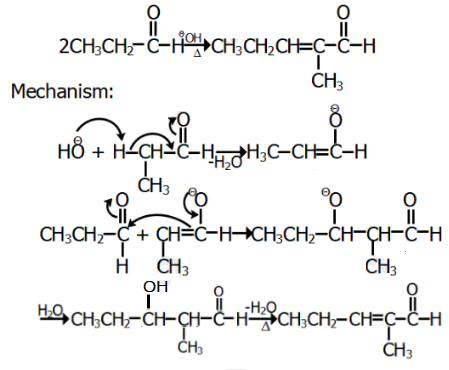
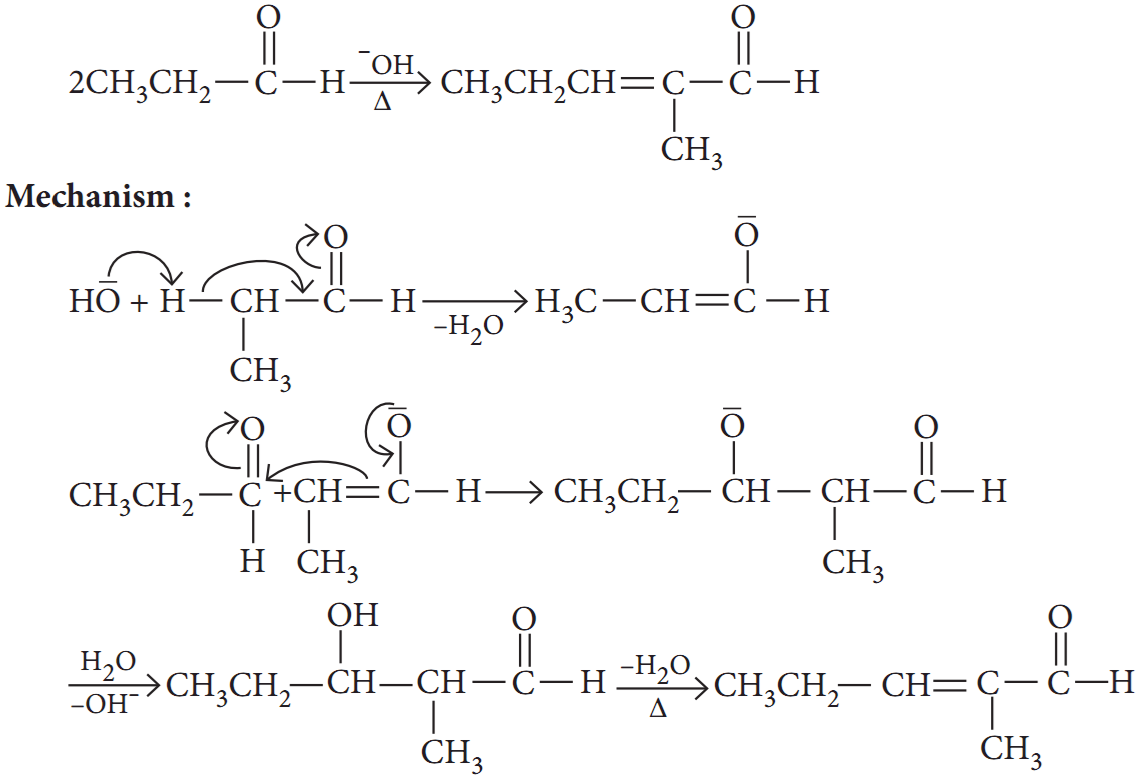
The addition reaction of enol or enolate to the carbonyl functional group of aldehyde or ketone is known as aldol addition. The β-hydroxyaldehyde or ββ-hydroxyketone so obtained undergo dehydration in second step to produce a conjugated enone. The first part of reaction is an addition reaction and the second part is an elimination reaction. Carbonyl compound having αα-hydrogen undergoes aldol condensation reaction.
  1. Condensation reaction is the reverse of which of the following reaction?
  1. Lock and key hypothesis
  2. Oxidation
  3. Hydrolysis
  4. Glycogen formation
  1. Which of the following compounds would be the main product of an aldol condensation of acetaldehyde and acetone?
  1. $CH_3CH=CHCHO$
  2. $CH_3CH=CHCOCH_3$
  3. $(CH_3)_2C=CHCHO$
  4. $(CH_3)_2C=CHCOCH_3$
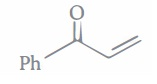
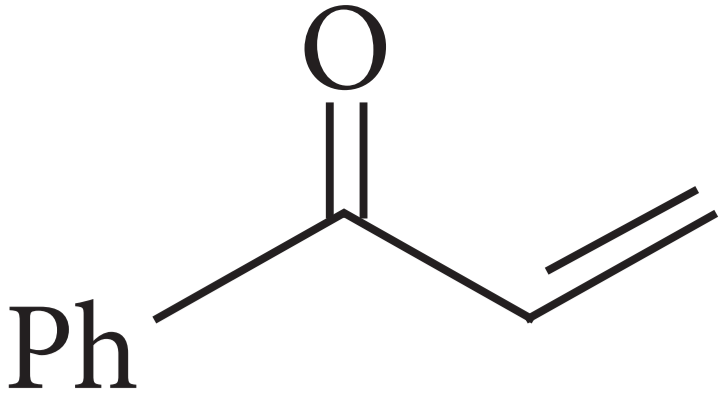
  1. Which combination of carbonyl compounds gives phenyl vinyl ketone by an aldol condensation?
  1. Acetophenone and Formaldehyde
  2. Acetophenone and acetaldehyde
  3. Benzaldehyde and acetaldehyde
  4. Benzaldehyde and acetone
  5. Which of the following will undergo aldol condensation?
  1. $HCHO$
  2. $CH_3CH_2OH$
  3. $C_6H_5CHO$
  4. $CH_3CH_2CHO$
Read the passage given below and answer the following questions:
When haloalkanes with $\beta-$hydrogen atom are boiled with alcoholic solution of KOH, they undergo elimination of hydrogen halide resulting in the formation of alkenes. These reactions are called $\beta-$elimination reactions or dehydrohalogenation reactions. These reactions follow Saytzeff's rule. Substitution and elimination reactions often compete with each other. Mostly bases behave as nucleophiles and therefore can engage in substitution or elimination reactions depending upon the alkyl halide and the reaction conditions.
The following questions are multiple choice questions. Choose the most appropriate answer:
  1. Among the following the most reactive towards alcoholic $KOH$ is:
  1. $CH_2 = CHBr$
  2. $CH_3COCH_2CH_2Br$
  3. $CH_3CH2Br$
  4. $CH_3CH_2CH_2Br$
  1. The general reaction, $\text{R}-\text{X}\xrightarrow{\text{aq.OH}^-}\text{ROH}+\text{X}^-,$ is expected to follow decreasing order of reactivity as in:
  1. $t-BuI> t-BuBr > t-BuCI > t-BuF$
  2. $t-BuF > t-BuCI > t-BuBr > t-BuI$
  3. $t-BuBr > t-BuCI >t-BuI> t-BuF$
  4. $t-BuF > t-BuCI > t-BuI > t-BuBr$
  1. Reaction of t-butyl bromide with sodium methoxide produces:
  1. Sodium t-butoxide.
  2. t-butyl methyl ether.
  3. Iso-butane.
  4. Iso-butylene.
  1. In the elimination reactions, the reactivity of alkyl halides follows the sequence:
  1. $R - F > R - CI > R - Br > R - I$
  2. $R - I > R - Br > R - Cl > R - F$
  3. $R - I > R - F > R - Br > R - CI$
  4. $R - F > R - I > R - Br > R - CI$
  1. The ease of dehydrohalogenation of alkyl halide with alcoholic $KOH$ is:
  1. $3^\circ < 2^\circ < 1^\circ$
  2. $3^\circ > 2^\circ > 1^\circ$
  3. $3^\circ < 2^\circ > 1^\circ$
  4. $3^\circ > 2^\circ < 1^\circ$
Read the passage given below and answer the following questions:
The addition reaction of enol or enolate to the carbonyl functional group of aldehyde or ketone is known as aldol addition. The $\beta-$ hydroxyaldehyde or $\beta-$hydroxyketone so obtained undergo dehydration in second step to produce a conjugated enone. The first part of reaction is an addition reaction and the second part is an elimination reaction. Carbonyl compound having $\propto-$hydrogen undergoes aldol condensation reaction.

The following questions are multiple choice questions. Choose the most appropriate answer:
  1. Condensation reaction is the reverse of which of the following reaction?
  1. Lock and key hypothesis.
  2. Oxidation.
  3. Hydrolysis.
  4. Glycogen formation.
  1. Which of the following compounds would be the main product of an aldol condensation of acetaldehyde and acetone?
  1. $CH_3CH = CHCHO$
  2. $CH_3CH = CHCOCH_3$
  3. $(CH_3)_2C = CHCHO$
  4. $(CH_3)_2C = CHCOCH_3$
  1. Which combination of carbonyl compounds gives phenyl vinyl ketone by an aldol condensation?
  1. Acetophenone and Formaldehyde.
  2. Acetophenone and acetaldehyde.
  3. Benzaldehyde and acetaldehyde.
  4. Benzaldehyde and acetone.
  1. Which of the following will undergo aldol condensation?
  1. $HCHO$
  2. $CH_3CH_2OH$
  3. $C_6H_5CHO$
  4. $CH_3CH_2CHO$
  1. Which of the following does not undergo aldol condensation?
  1. $CH_3CHO$
  2. $CH_3CH_2CHO$
  3. $CH_3COCH_3$
  4. $C_3H_2CHO$
Standard electrode potentials are used for various processes:
  • It is used to measure relative strengths of various oxidants and reductants.
  • It is used to calculate standard cell potential.
  • It is used to predict possible reactions.
A set of half-reactions (in acidic medium) along with their standard reduction potential, $E^\circ ($in volt$)$ values are given below:
$I_2 + 2e^- \rightarrow 2I^- ; E^\circ = 0.54 V$
$Cl_2 + 2e^- \rightarrow 2Cl^- ; E^\circ = 1.36 V$
$Mn^{3+} +e^- \rightarrow Mn^{2+}; E^\circ = 1.50 V$
$Fe^{3+} + e^- \rightarrow Fe^{2+}; E^\circ = 0.77 V$
$O_2 + 4H^+ + 4e^- \rightarrow 2H_2O ; E^\circ = 1.23 V$
The following questions are multiple choice questions. Choose the most appropriate answer:
  1. Which of the following statements is correct?
  1. $Cl^-$ is oxidised by $O_2.$
  2. $Fe^{2+}$ is oxidised by iodine.
  3. $I^-$ is oxidised by chlorine.
  4. $Mn^{2+}$ is oxidised by chlorine.
  1. $Mn^{3+}$ is not stable in acidic medium, while $Fe^{3+}$ is stable because:
  1. $O_2$ oxidises $Mn^{2+}$ to $Mn^{3+}$
  2. $O_2$ oxidises both $Mn^{2+}$ to $Mn^{3+}$ and $Fe^{2+}$ to $Fe^{3+}$
  3. $Fe^{3+}$ oxidises $H_2O$ to $O_2$
  4. $Mn^{3+}$ oxidises $H_2O$ to $O_2$
  1. The strongest reducing agent in the aqueous solution is:
  1. $I^-$
  2. $Cl^-$
  3. $Mn^{2+}$
  4. $Fe^{2+}$
  1. The emf for the following reaction is:
$\text{I}_2+\text{KCl}\rightleftharpoons2\text{KI}+\text{Cl}_2$
  1. $-0.82\ V$
  2. $+0.82\ V$
  3. $-0.73\ V$
  4. $+0.73\ V$
  1. Which of the following statements is correct for the following reaction?
$Fe^{3+} + Mn^{2+} \rightarrow Fe^{2+}+ Mn^{3+}$
  1. The emf of the cell is positive.
  2. $Fe^{3+}$ oxidises $Mn^{2+}.$
  3. The reaction does not occur.
  4. All are correct.

 
Read the passage given below and answer the following questions:
Proteins are high molecular mass complex biomolecules of amino acids. The important proteins required for our body are enzymes, hormones, antibodies, transport proteins, structural proteins, contractile proteins etc. Except for glycine, all $\alpha$-amino acids have chiral carbon atom and most of them have L-configuration. The amino acids exists as dipolar ion called zwitter ion, in which a proton goes from the carboxyl group to the amino group. A large number of $\alpha$-amino acids are joined by peptide bonds forming polypeptides. The peptides having very large molecular mass (more than 10,000) are called proteins. The structure of proteins is described as primary structure giving sequence of linking of amino acids; secondary structure giving manner in which polypeptide chains are arranged and folded; tertiary structure giving folding, coiling or bonding polypeptide chains producing three dimensional structures and quaternary structure giving arrangement of sub-units in an aggregate protein molecule.
A statement of assertion followed by a statement of reason is given. Choose the correct answer out of the following choices.
  1. Assertion and reason both are correct statements and reason is correct explanation for assertion.
  2. Assertion and reason both are correct statements but reason is not correct explanation for assertion.
  3. Assertion is correct statement but reason is wrong statement.
  4. Assertion is wrong statement but reason is correct statement.
  1. Assertion: Except glycine, all naturally occurring CL-amino acids are optically active.
Reason: All naturally occurring CL-amino acids, except glycine, has at least one asymmetric carbon.
  1. Assertion: All amino acids are optically active.
Reason: Amino acids contain asymmetric carbon atoms.
  1. Assertion: In $\alpha$-helix structure, intramolecular H-bonding takes place whereas in $\beta$-pleated structure, intermolecular H-bonding takes place.
Reason: An egg contains a soluble globular protein called albumin which is present in the white part.
  1. Assertion: Secondary structure of protein refers to regular folding patterns of continuos portions of the polypeptide chain.
Reason: Out of 20 amino acids, only 12 amino acids can be synthesised by human body.
  1. Assertion: The helical structure of protein is stabilised by intramolecular hydrogen bond between -NH and carbonyl oxygen.
Reason: Sanger's reagent is used for the identification of N-tenninal amino acid of peptide chain.
Read the passage given below and answer the following questions: The order of reactivity towards $S_N1$ reaction depends upon the stability of carbocation in the first step. Greater the stability of the carbocation, greater will be its ease of formation from alkyl halide and hence faster will be the rate of the reaction. As we know, $3^\circ$ carbocation is most stable, therefore, the tert-alkyl that halides will undergo $S_N1$ reaction very fast. For example, it has been observed that the reaction $(CH_3)_3CBr$ with $OH^-$ ion to give 2-methyl-2-propanol is about I million times as fast as the corresponding reaction of the methyl bromide to give methanol. The primary alkyl halides always react predominantly by $S_N2$ mechanism. On the other hand, the tertiary alkyl halides react predominantly by $S_N1$ mechanism. Secondary alkyl halides may react by either mechanism or by both the mechanisms without much preference depending upon the nature of the nucleophile and solvent. In these questions (Q. No. i-tv), a statement of assertion followed by a statement of reason is given. Choose tile correct answer out of tile following choices.
  1. Assertion and reason both are correct statements and reason is correct explanation for assertion.
  2. Assertion and reason both are correct statements but reason is not correct explanation for assertion.
  3. Assertion is correct statement but reason is wrong statement.
  4. Assertion is wrong statement but reason is correct statement.
  1. Assertion: Low concentration of nudeophile favours $S_N1$ mechanism.
Reason: $2^\circ$ alkyl halides are less reactive than $1^\circ$ towards $S_N1$ reactions.
  1. Assertion: Polar solvent slows down $S_N2$ reactions.
Reason: $CH_3-Br$ is less reactive than $CH_3Cl.$
  1. Assertion: Benzyl bromide when kept in acetone- water it produces benzyl alcohol.
Reason: The reaction follows $S_N2$ mechanism.
  1. Assertion: Rate of hydrolysis of methyl chloride to methanol is higher in DMF than in water.
Reason: Hydrolysis of methyl chloride follows second order kinetics.
  1. Assertion: $S_N1$ reaction is carried out in the presence of a polar protic solvent.
Reason: A polar protic solvent increases the stability of carbocation due to solvation.
Read the passage given below and answer the following questions:
A mixture of two aromatic compounds $(A)$ and $(B)$ was separated by dissolving in chloroform followed by extraction with aqueous $KOH$ solution. The organic layer containing compound $(A)$, when heated with alcoholic solution of KOH produce $C_7H_5N (C)$ associated with unpleasant odour.
The following questions are multiple choice questions. Choose the most appropriate answer:
  1. What is A?
  1. $C_6H_5NH_2$
  2. $C_6H_5CH_3$
  3. $C_6H_5CH_3$
  4. None of these.
  1. The reaction of $(A)$ with alcoholic solution of $KOH$ to produce $(C)$ of unpleasant odour is called:
  1. Sandmeyer reaction.
  2. Carbylamine reaction.
  3. Ullmann reaction.
  4. Reimer-Tiemann reaction..
  1. The alkaline aqueous layer $(B)$ when heated with chloroform and then acidified give a mixture of isomeric compounds of molecular formula $C_7H_6O_2. (B)$ is:
  1. $C_6H_5CHO$
  2. $C_6H_5COOH$
  3. $C_6H_5CH_3$
  4. $C_6H_5OH$
  1. In the chemical reaction, $CH_3CH_2NH_2 + CHCl_3 + 3KOH \rightarrow (A)+ (B) + 3H_2O,$
  1. $C_2H_5NC$ and $KCl$
  2. $C_2H_5CN$ and $KCl$
  3. $CH_3CH_2CONH_2$ and $KCl$
  4. $C_2H_5NC$ and $K_2CO_3$
  1. Direct nitration of an aromatic compound (A) is not feasible because:
  1. The reaction cannot be stopped at the mononitration stage.
  2. A mixture of o, m and p-nitroaniline is always obtained.
  3. Nitric acid oxidises most of the aromatic compound to give oxidation products along with only a small amount of nitrated products.
  4. All of the above.