Question
Read the passage given below and answer the following questions:
Haloarenes are less reactive than haloalkanes. The low reactivity of haloarenes can be attributed to:
The following questions are multiple choice questions Choose the most appropriate answer: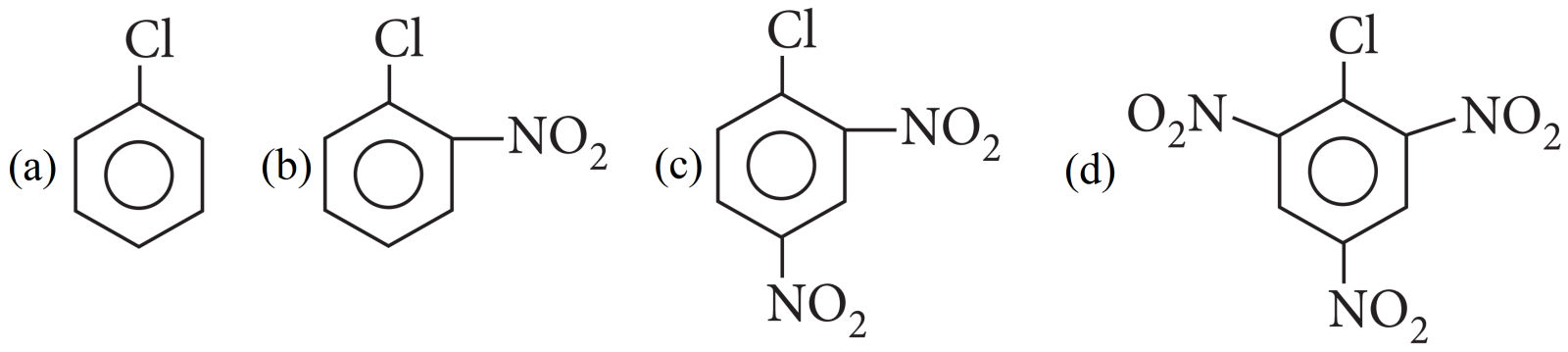
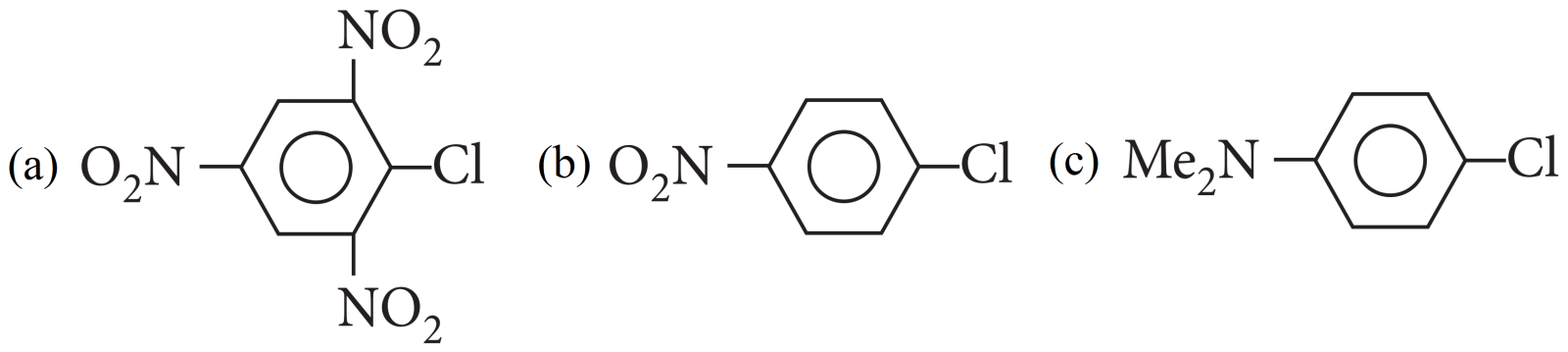
Haloarenes are less reactive than haloalkanes. The low reactivity of haloarenes can be attributed to:
- Resonance effect.
- $sp^2$ hybridisation of $C - X$ bond.
- Polarity of $C - X$ bond
- Instability of phenyl cation $($formed by self$-$ionisation of haloarene$).$
- Repulsion between the electron rich attacking nucleophiles and electron rich arenes.
The following questions are multiple choice questions Choose the most appropriate answer:
- Aryl halides are less reactive towards nucleophilic substitution reaction as compared to alkyl halides due to
- The formation of less stable carbonium ion.
- Resonance stabilisation.
- Larger carbon$-$halogen bond.
- Inductive effect.
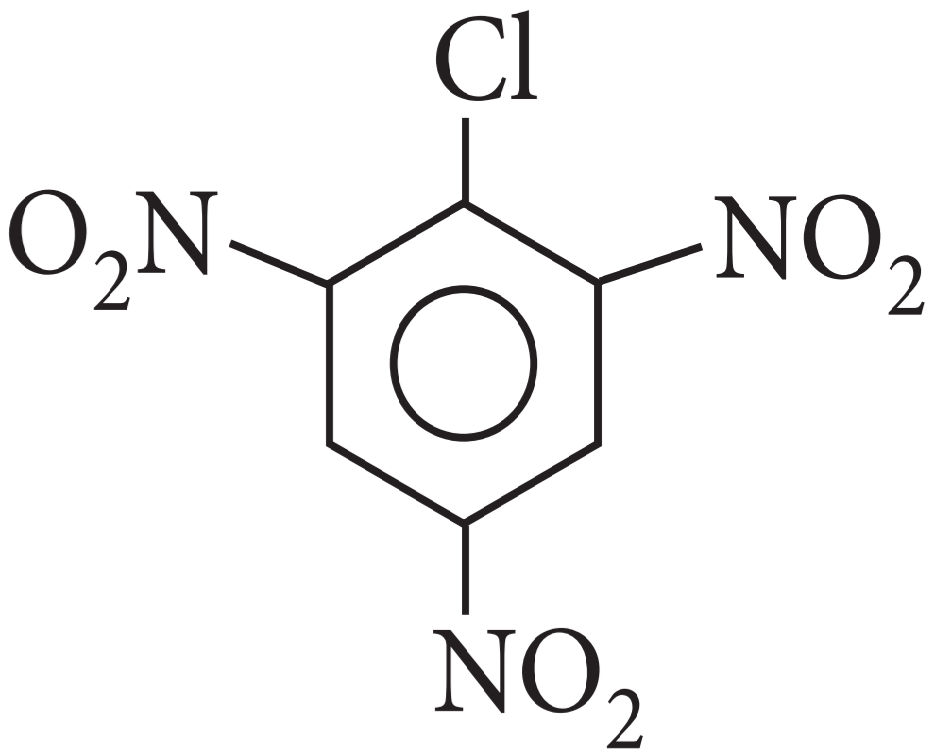
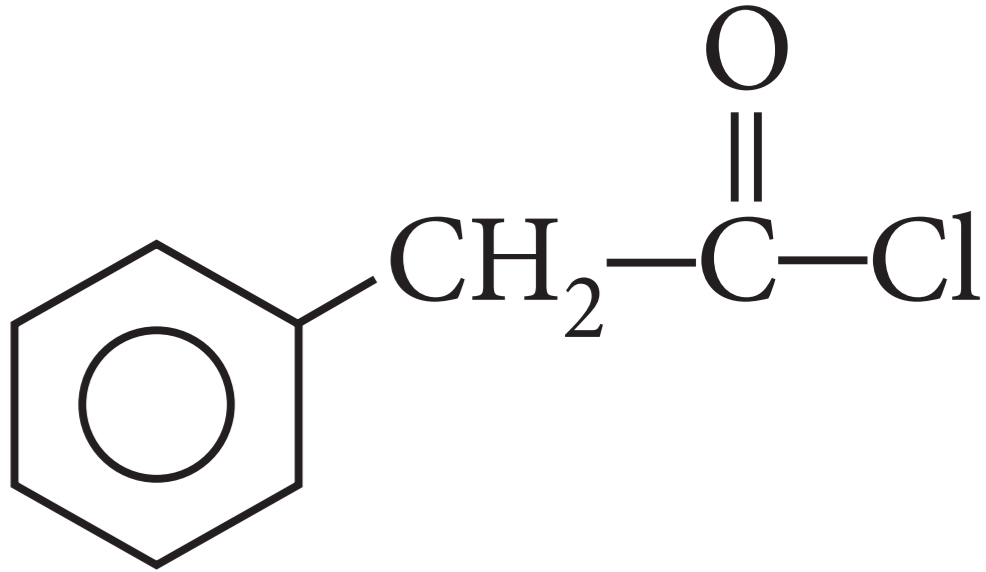
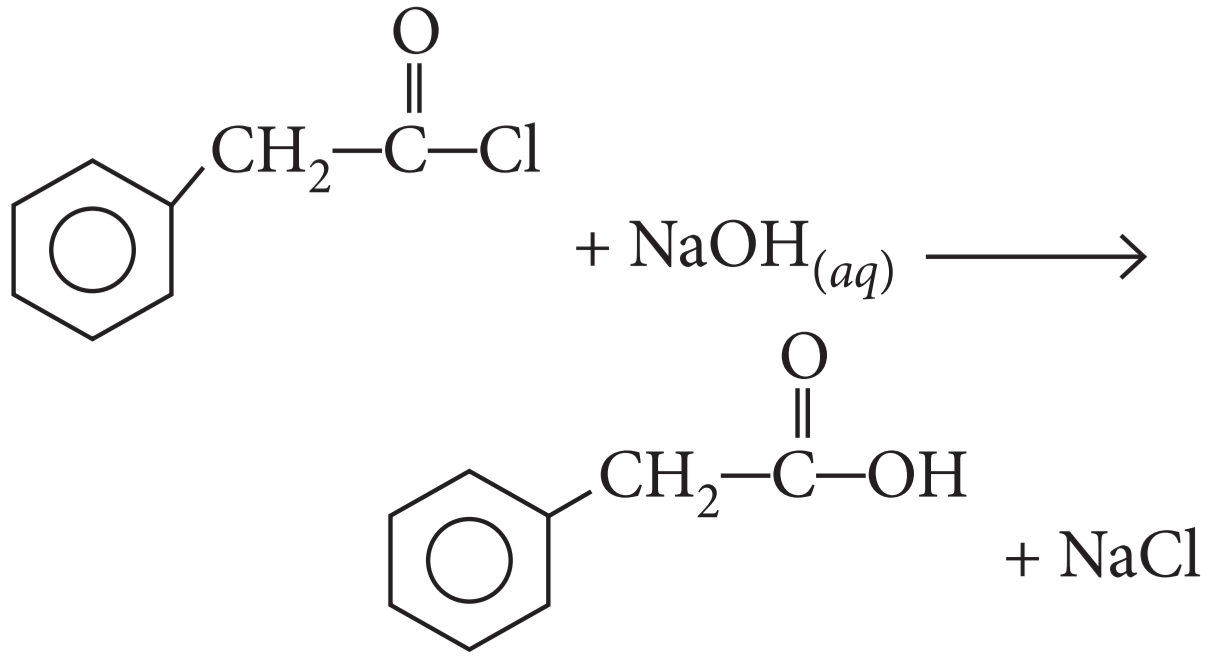
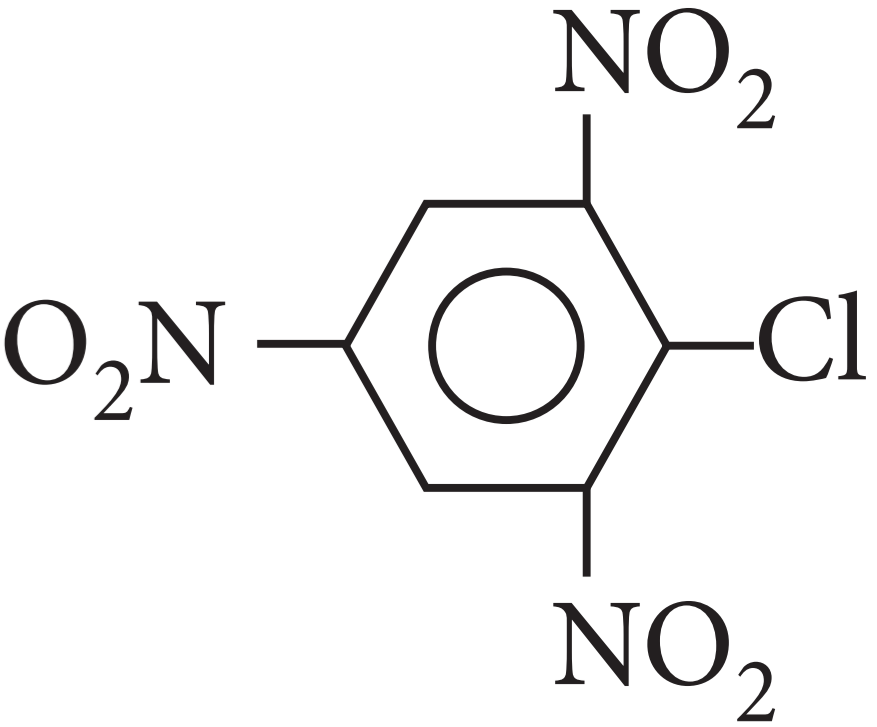
- Which of the following aryl halides is the most reactive towards nucleophilic substitution?
- Which one of the following will react fastest with aqueous $\text{NaOH}$?
- Which chloro derivative of benzene among the followings would undergo hydrolysis most readily with aqueous sodium hydroxide to furnish the corresponding hydroxy derivative?
- $\ce{C_6H_5Cl}$
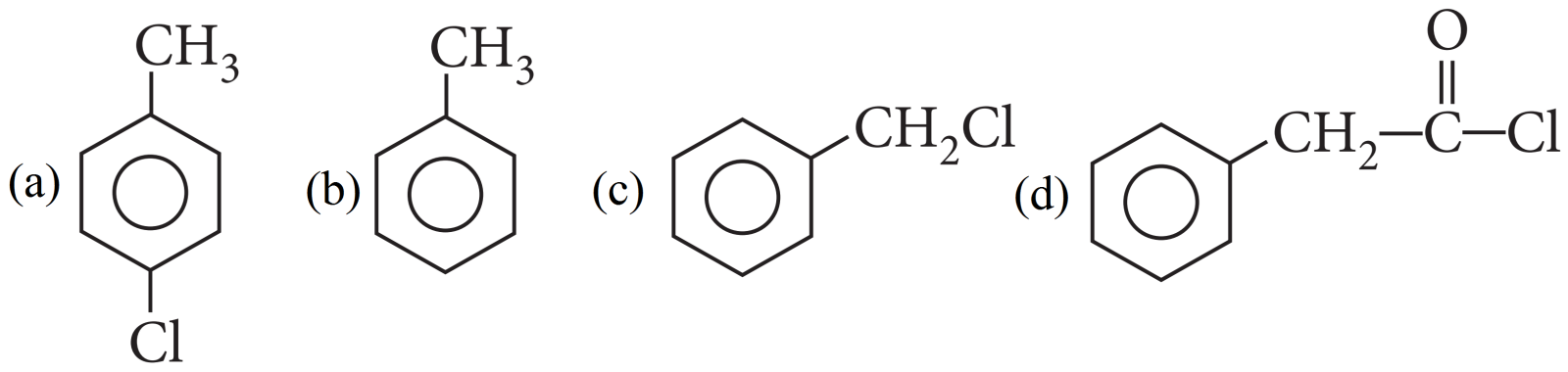
- The reactivity of the compounds $\ce{(i)\ MeBr, (ii)\ PhCH_2Br, (iii)\ MeCI, (iv)\ p-MeOC_6H_4Br}$ decreases as:
- $\ce{(i) > (ii) > (iii) > (iv)}$
- $\ce{(iv) > (ii) > (i) > (iii)}$
- $\ce{(iv) > (iii) > (i) > (ii)}$
- $\ce{(ii) > (i) > (iii) > (iv)}$