MCQ
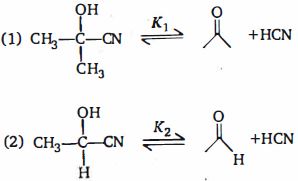
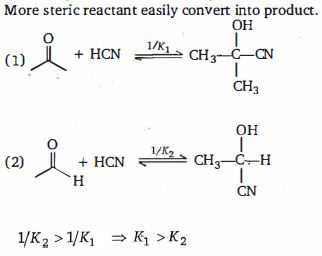
Relation between $K_1$ and $K_2$ is
  • A
    $K_1 = K_2$
  • $K_1 > K_2$
  • C
    $K_2 > K_1$
  • D
    $K_1 = K_2 = 1$

Answer

Correct option: B.
$K_1 > K_2$
b

Need a full question paper?

Generate a complete, print-ready paper with questions like this in minutes — across 16+ boards, with answer keys.
Start Generating Free

Similar questions

A very long (length $L$ ) cylindrical galaxy is made of uniformly distributed mass and has radius $R(R < < L).$ A star outside the galaxy is orbiting the galaxy in a plane perpendicular to the galaxy and passing through its centre. If the time period of star is $T$ and its distance from the galaxy's axis is $r,$ then
A condenser of capacity ${C_1}$ is charged to a potential ${V_0}$. The electrostatic energy stored in it is ${U_0}$. It is connected to another uncharged condenser of capacity ${C_2}$ in parallel. The energy dissipated in the process is
A charge $ + q$ is fixed at each of the points $x = {x_0},\,x = 3{x_0},\,x = 5{x_0}$..... $\infty$, on the $x - $axis and a charge $ - q$ is fixed at each of the points $x = 2{x_0},\,x = 4{x_0},x = 6{x_0}$,..... $\infty$. Here ${x_0}$ is a positive constant. Take the electric potential at a point due to a charge $Q$ at a distance $r$ from it to be $Q/(4\pi {\varepsilon _0}r)$. Then, the potential at the origin due to the above system of charges is
The displacement of a body in $8\,s$ starting from rest with an acceleration of $20\,cm / s ^2$ is $............$
Two masses ${m_A}$and ${m_B}$moving with velocities ${v_A}$and ${v_B}$in opposite directions collide elastically. After that the masses ${m_A}$and ${m_B}$move with velocity ${v_B}$and ${v_A}$respectively. The ratio $ \frac{m_A}{m_B} =$
A  sample of $0.1\, g$ of water at $100^o C$ and normal pressure $(1.013 \times 10^5 N m^{-2} )$ requires $54\ cal $ of heat energy to convert to steam at $100^o C.$ If the volume of the steam produced is $167.1 \,cc,$ the change in internal energy of the sample, is ....... $J$
Unit of impulse is
The potential energy of a molecule on the surface of liquid compared to one inside the liquid is
The Brewsters angle ${i }_{b}$ for an interface should be
A simple pendulum doing small oscillations at a place $\mathrm{R}$ height above earth surface has time period of $T_1=4 \mathrm{~s}$. $T_2$ would be it's time period if it is brought to a point which is at a height $2 R$ from earth surface. Choose the correct relation $[R=$ radius of Earth]: