MCQ
સમીકરણ $e^{6 x}-e^{4 x}-2 e^{3 x}-12 e^{2 x}+e^{x}+1=0$ ના વાસ્તવિક બીજની સંખ્યા મેળવો.
  • A
    $1$
  • B
    $6$
  • C
    $4$
  • D
    $2$

Answer

$e^{6 x}-e^{4 x}-2 e^{3 x}-12 e^{2 x}+e^{x}+1=0$

$\Rightarrow\left(e^{3 x}-1\right)^{2}-e^{x}\left(e^{3 x}-1\right)=12 e^{2 x}$

$\left(e^{3 x}-1\right)^{2}\left(e^{x}-e^{-x}-e^{-2 x}\right)=12$

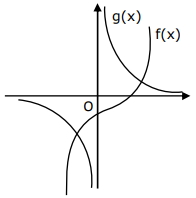
$\Rightarrow \underbrace{e^{x}-e^{-x}-e^{-2 x}}_{\text {increasing(let } f(x))}=\frac{12}{\underbrace{e^{3 x}-1}_{\text {decreasing }(l e t g(x))}}$

$\Rightarrow$ No. of real roots $=2$
Need a full question paper?

Generate a complete, print-ready paper with questions like this in minutes — across 16+ boards, with answer keys.

Start Generating Free

Similar questions

જો $f(x + y) = f(x)f(y)$ અને $f(x) = 1 + \sin (3x)g(x)$ કે જ્યાં $g(x)$ એ સતત હોય તો $f'(x) =$
જો $x = \int\limits_{ - y}^y {\frac{{dt}}{{\sqrt {1 + 9{t^2}} }}\,and\,\frac{{{d^2}y}}{{d{x^2}}} = ky} $, હોય તો $k$ ની કિમત મેળવો. 
ઉગમ બિંદુથી $\overrightarrow{r}=4\hat{i}+2\hat{j}+4\hat{k}+\lambda(3\hat{i}+4\hat{j}-5\hat{k})$ પરનાં લંબની લંબાઈ $........ $ છે.
$f (x) = x^{25} (1 - x)^{75}, x \in [0, 1]$  એ $x = ....... $ આગળ મહત્તમ છે.
જો $a, b, c$ ત્રણ વિષસમતલીય સદિશ છે અને $p, q, r$ એ $p = \frac{{b \times c}}{{[a\,b\,c]}},\,\,q = \frac{{c \times a}}{{[a\,b\,c]}},\,\,r = \frac{{a \times b}}{{[a\,b\,c]}}$ સંબંધનું પાલન કરે છે તો $ (a+b) . p +(b+c) . q +(c+a) . r =$
રેખા $y=x$ ની નીચે પ્રથમ ચરણમાં ઉપવલય $x^2+3 y^2=18$ વડે ઘેરાયેલા પ્રદેશ નું ક્ષેત્રફળ (યોરસ એકમ માં ) ............. છે.
$|a \times i{|^2} + |a \times j{|^2} + |a \times k{|^2} = $   
${x^2} = xy$ એ  . . .  . સંબંધ દર્શાવે છે.   
એક સમચતુષ્ફલકનુ ઘનફળ $5$ હોય અને તેના ત્રણ શિરોબિંદુઓ $A(2,1,-1), \,\,B(3,0,1)$ અને $C(2,-1,3)$ છે. જો ચોથુ શિરોબિંદુ $D$ એ $y-$ અક્ષ પર આવેલ હોય તો શિરોબિંદુ $D$ ના શક્ય એવા બધા યામોનો સરવાળો મેળવો. 
વિધાન -$1$ : ${\cot ^{ - 1}}\left[ {\frac{{\log \left( {e/{x^2}} \right)}}{{\log \left( {e{x^2}} \right)}}} \right] + {\cot ^{ - 1}}\left[ {\frac{{\log (e{x^2})}}{{\log (e/{x^2})}}} \right]$ = $\frac {\pi}{2}$ 

વિધાન-$2$ : ${\tan ^{ - 1}}\left[ {\frac{{1 + \log {x^2}}}{{1 - \log {x^2}}}} \right]$ = ${\tan ^{ - 1}}\,1 + \,{\tan ^{ - 1}}\left( {\log {x^2}} \right)$