Question
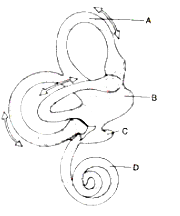
The diagram alongside represents the structure found in the inner ear. Study the same and then answer the questions that follow:
(i) Name the parts labelled A, B, C and D.
(ii) Name the parts of the ear responsible for transmitting impulses to the brain.
(iii) Name the part labelled above which is responsible for:
1. Static equilibrium. 2. Dynamic equilibrium. 3. Hearing
(iv) Name the audio receptor cells which pick up vibrations.
(v) Name the fluid present in the inner ear.
Answer

(i) A - Semi-circular canal
B - Utriculus
C - Sacculus
D - Cochlea
(ii) Auditory nerve.
(iii) 1. Utriculus and sacculus
2. Semi-circular canal
3. Cochlea
(iv) Sensory cells of organ of Corti
(v) Perilymph

Need a full question paper?

Generate a complete, print-ready paper with questions like this in minutes — across 16+ boards, with answer keys.

Start Generating Free

Similar questions

Draw a duplicate chromosome and label its part.
Differentiate: Cretinism and Myxedema.
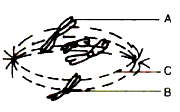
The fig given alongside shows a certain stage in a cell division in a cell with four chromosomes.

(i) Name the parts of the chromosome labeled A and B.
(ii) Name the structure C. what is its function?
(iii) Name the type of division . Give a reason.
(iv) Name the stage of division.
(v) Name the stages before and after the stage shown in diagram.
Why is pollution prevention important?
A 50-year-old man, Mr. Johnson, is experiencing frequent urination, especially at night, along with fatigue and swelling in his ankles. Upon examination, his doctor suspects a possible issue with his excretory system. Mr. Johnson is concerned about his condition and seeks clarification on how the excretory system fiunctions and its role in maintaining overall health.
(i) What are the organs involved in excretion in human body and the substances excreted by the excretory system?
(ii) How does the excretory system regulate the balance of water and electrolytes in the body?
(iii) Discuss the role of the kidneys in excretion.

(i) Identify the above diagram.
(ii) Label the guidelines 1-3.
(iii) Name the phenomenon which takes place in the above diagram.
(iv) Define the phenomenon.
(v) What is the importance of the above phenomenon?
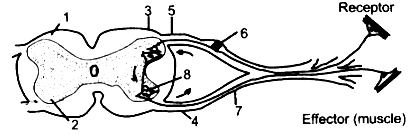
The diagram given below represents the spinal cord of a mammal, seen in a transverse section together with the nerves. Study the diagram and then answer the questions given below:

(i) Label the parts 1—8 indicated by guidelines.
(ii) What do the arrows indicate? What is the pathway indicated termed?
(iii) What type of nerve is shown in the diagram?
Give reason for the following:
The blood groups of both the donor and recipient must be known before transfusing blood.
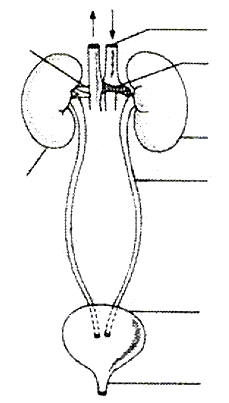
Label the diagram given below :
How does the rate of transpiration get affected by?
(i) Wind velocity
(ii) Intensity of light
(iii) Humidity