MCQ
The dimension $\ce{ML^{-1} T^{-2}}$ can correspond to$:$
  • A
    Moment of a force.
  • Surface tension.
  • C
    Modulus of elasticity.
  • D
    Moefficient of viscosity.

Answer

Correct option: B.
Surface tension.
Dimension of modulus of elasticity$: \frac{\frac{\text{F}}{\text{A}}}{\frac{\triangle\text{l}}{\text{l}}}=\frac{\big[\text{MLT}^{-1}\big]}{\text{L}^2}=\big[\text{ML}^{-1}\text{T}^{-2}\big]$
Dimension of moment of force$: =\big[\text{MLT}^{-2}\big][\text{L}]=\big[\text{ML}^{2}\text{T}^{-2}\big]$
Dimension of surface tension$: \frac{\text{F}}{\text{L}}=\frac{\big[\text{MLT}^{-2}\big]}{\text{L}}=\big[\text{MT}^{-2}\big]$
Dimension of coefflcient of viscosity$: \frac{\text{FL}}{\text{A}\text{v}}=\frac{\big[\text{MLT}^{-2}[\text{L}]}{\big[\text{L}^2\big]\big[\text{LT}^{-1}\big]}=\big[\text{ML}^{-1}\text{T}^{-1}\big]$

Need a full question paper?

Generate a complete, print-ready paper with questions like this in minutes — across 16+ boards, with answer keys.
Start Generating Free

Similar questions

Let p and E denote the linear momentum and the energy of a photon. For another photon of smaller wavelength (in same medium):
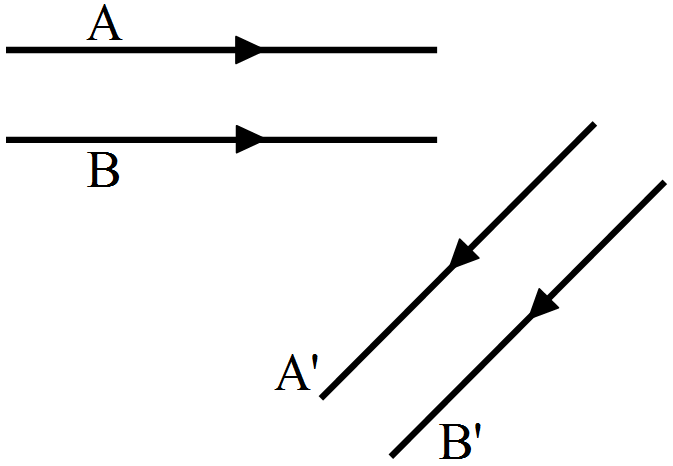
Two rays A and B being reflected by a mirror and going as A' and B'. The mirror:
  1. Is plane.
  2. Is convex.
  3. Is concave.
  4. May be any spherical mirror.
Capacity of any condenser does not depend upon :
A proton enters a magnetic field of flux density   $1.5^{\text {weber } / m^2}$ with a velocity of  $2 \times 10^7 m / sec$ at an angle of $30^\circ$ with the field. The force on the proton will be
Mark out the correct options.
The electric potential inside a conducting sphere:
The electric field inside a conductor.
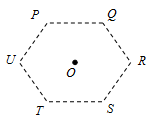
Six charges, three positive and three negative of equal magnitude are to be placed at the vertices of a regular hexagon such that the electric field at $\text{O}$ is double the electric field when only one positive charge of same magnitude is placed at $\text{R}$. Which of the following arrangements of charges is possible for $\text{P, Q, R, S, T}$ and $\text{U}$ respectively
The magnetic potential at a point on the axial line of a bar magnet of dipole moment $M$ is $V.$ What is the magnetic potential due to a bar magnet of dipole moment $\frac{M}{4}$ at the same point
A metallic rod of mass per unit length $0.5\ kg m^{–1}$ is lying horizontally on a smooth inclined plane which makes an angle of $30^\circ$ with the horizontal. The rod is not allowed to slide down by flowing a current through it when a magnetic field of induction $0.25$ T is acting on it in the vertical direction. The current flowing in the rod to keep it stationary is: