Question
The magnetic field due to the earth has a horizontal component of $26\mu\text{T}$ at a place where the dip is 60°. Find the vertical component and the magnitude of the field.

Answer

$\delta(\text{dip}) =60^\circ$$\text{B}_\text{H}=\text{B}\cos60^\circ$
$\Rightarrow\text{B}=52\times10^{-6}=52\mu\text{T}$
$\text{B}_\text{v}=\text{B}\sin\delta=52\times10^{-6}\frac{\sqrt{3}}{2}$
$=44.98\mu\text{T} \approx45\mu\text{T}$

Need a full question paper?

Generate a complete, print-ready paper with questions like this in minutes — across 16+ boards, with answer keys.
Start Generating Free

Similar questions

The mean free path of electrons in a gas in a discharge tube is inversely proportional to the pressure inside it. The Crookes dark space occupies half the length of the discharge tube when the pressure is 0.02mm of mercury. Estimate the pressure at which the dark space will fill the whole tube.
Read the passage given below and answer the following questions from 1 to 5. Centre of Mass:
The centre of mass of a body or a system of bodies is the point which moves as though all of the mass were concentrated there and all external forces were applied to it. Hence, a point at which the entire mass of the body or system of bodies is supposed to be concentrated is known as the centre of mass. If a system consists of more than one particles (or bodies) and net external force on the system in a particular direction is zero with centre of mass at rest. Then, the centre of mass will not move along that direction. Even though some particles of the system may move along that direction.
  1. The centre of mass of a system of two particles divides, the distance between them:
  1. in inverse ratio of square of masses of particles
  2. in direct ratio of square of masses of particles
  3. in inverse ratio of masses of particles
  4. in direct ratio of masses of particles
  1. Two bodies of masses 1kg and 2 kg are lying in xy-plane at ( -1, 2 ) and ( 2, 4 ) respectively. What are the coordinates of the centre of mass?
  1. $\big(1,\frac{10}{3}\big)$
  2. (1, 10)
  3. (0, 1)
  4. None of these
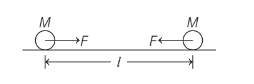
  1. Two balls of same masses start moving towards each other due to gravitational attraction, if the initial distance between them is l. Then, they meet at:
  1. $\frac{\text{ l}}{2}$
  2. l
  3. $\frac{\text{ l}}{3}$
  4. $\frac{\text{ l}}{4}$
  1. All the particles of a body are situated at a distance R from the origin. The distance of centre of mass of the body from the origin is:
  1. $=\text{R}$
  2. $\leq\text{R}$
  3. $>\text{R}$
  4. $\geq\text{R}$
  1. Two particles A and B initially at rest move towards each other under a mutual force of attraction. At the instant, when the speed of A is v and the speed of B is 2v, the speed of centre of mass of the system is:
  1. zero
  2. v
  3. 1. 5v
  4. 3v
A uniform magnetic field of $0.20 \times 10^{-3} \mathrm{~T}$ exists in the space. Find the change in the magnetic scalar potential as one moves through 50 cm along the field.
On a winter day when the atmospheric temperature drops to $-10^\circ C$, ice forms on the surface of a lake.
  1. Calculate the rate of increase of thickness of the ice when $10cm$ of ice is already formed.
  2. Calculate the total time taken in forming $10cm$ of ice. Assume that the temperature of the entire water reaches $0^\circ C$ before the ice starts forming. Density of water = $1000kgm^{-3}$, latent heat of fusion of ice $=3.36\times10^5\text{Jkg}^{-1}$ and thermal conductivity of ice $=1.7\text{Wm}^{-1}{^{\circ}}\text{C}^{-1}.$ Neglect the expansion of water on freezing.
Read the passage given below and answer the following questions from $1$ to $5$. When an object is in motion, its position changes with time. But how fast is the position changing with time and in what direction? To describe this, we define the quantity average velocity. Average velocity is defined as the change in position or displacement (x) divided by the time intervals (t), in which the displacement occurs: $\text{V}=\frac{\text{x2}-\text{x1}}{\text{t2}-\text{t1}}=\frac{\triangle\text{x}}{\triangle\text{t}}$ Where $x2$ and $x1$ are the positions of the object at time t2and t1, respectively. The SI unit for velocity is m/s or $m s^{–1},$ although km $h^{–1} $ is used in many everyday applications. Like displacement, average velocity is also a vector quantity. Average speed is defined as the total path length travelled divided by the total time interval during which the motion has taken place: Average speed = Total path length/ Total time interval. Average speed has obviously the same unit $(m s^{–1})$ as that of velocity. But it does not tell us in what direction an object is moving. Thus, it is always positive (in contrast to the average velocity which can be positive or negative). If the motion of an object is along a straight line and in the same direction, the magnitude of displacement is equal to the total path length. The velocity at an instant is defined as the limit of the average velocity as the time interval Dt becomes infinitesimally small. In other words $\text{V}=\lim_{\text{dt}-0}\frac{\text{dx}}{\text{dt}}$
$\text{V}=\frac{\text{dx}}{\text{dt}}$ Note that for uniform motion, velocity is the same as the average velocity at all instants. Instantaneous acceleration is defined in the same way as the instantaneous velocity $\text{A}=\lim_{\text{dt}-0}\frac{\text{dv}}{\text{dt}}$
$\text{A}=\frac{\text{dv}}{\text{dt}}$
  1. For uniform motion instantaneous velocity is same as:
  1. Average velocity
  2. Average acceleration
  3. Instantaneous speed
  4. None of these
  1. If velocity is constant then
  1. Acceleration is zero
  2. Acceleration is positive
  3. Acceleration is negative
  4. None of these
  1. Define average speed
  1. Define instantaneous acceleration
  1. Define average velocity
The absolute temperature of air in a region linearly increases from $T_1$ to $T_2$ in a space of width d . Find the time taken by a sound wave to go through the region in terms of $\mathrm{T}_1, \mathrm{~T}_2, \mathrm{~d}$ and the speed v of sound at 273 K . Evaluate this time for $T_1=280 \mathrm{~K}, T_2=310 \mathrm{~K}, d=33 \mathrm{~m}$ and $\mathrm{v}=330 \mathrm{~m} / \mathrm{s}$.
When tall buildings are constructed on earth, the duration of day-night slightly increases. Is it true?
Indian style of cooling drinking water is to keep it in a pitcher having porous walls. Water comes to the outer surface very slowly and evaporates. Most of energy needed for evaporation is taken from the water itself and the water is cooled down. Assume that a pitcher contains 10kg of water and 0.2g of water comes out per second. Assuming no backward heat transfer from the atmosphere to the water, calculate the time in which the temperature decrease by 5°C. Specific heat capacity of water $= 4200\ J\ kg^{-1} \ ^\circ C^{-1} $ and latent heat of vaporization of water $= 2.27 \times 10^6 J kg^{-1}.$
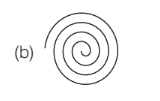
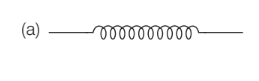
Read the passage given below and answer the following questions from 1 to 5. PE of Spring There are many types of spring. Important among these are helical and spiral springs as shown in figure.


Usually, we assume that the springs are massless. Therefore, work done is stored in the spring in the form of elastic potential energy of the spring. Thus, potential energy of a spring is the energy associated with the state of compression or expansion of an elastic spring.
  1. The potential energy of a body is increases in which of the following cases?
  1. If work is done by conservative force
  2. If work is done against conservative force
  3. If work is done by non-conservative force
  4. If work is done against non- conservative force
  1. The potential energy, i.e. U (x) can be assumed zero when:
  1. x = 0
  2. gravitational force is constant
  3. infinite distance from the gravitational source
  4. All of the above
  1. The ratio of spring constants of two springs is 2 : 3. What is the ratio of their potential energy, if they are stretched by the same force?
  1. 2 : 3
  2. 3 : 2
  3. 4 : 9
  4. 9 : 4
  1. The potential energy of a spring increases by 15 J when stretched by 3cm. If it is stretched by 4cm, the increase in potential energy is:
  1. 27 J
  2. 30 J
  3. 33 J
  4. 36 J
  1. The potential energy of a spring when stretched through a distance x is 10 J. What is the amount of work done on the same spring to stretch it through an additional distance x?
  1. 10 J
  2. 20 J
  3. 30 J
  4. 40 J
A short magnet makes 40 oscillations per minute when used in an oscillation magnetometer at a place where the earth's horizontal magnetic field is $2\mu\text{T.}$ Another short magnet of magnetic moment $1.6A-m^2$ is placed 20cm east of the oscillating magnet. Find the new frequency of oscillation if the magnet has its north pole:
  1. Towards north.
  2. Towards south.