The plates of a capacitor are charged to potential difference of $V\, volts$ and then connected across a resistor. The potential difference across the capacitor decreases exponentially with respect to time. After one second, the potential difference between the plates is $V/3$; then after two seconds from the start, the potential difference between the plates is
Medium


Download our appand get started for free
Experience the future of education. Simply download our apps or reach out to us for more information. Let's shape the future of learning together!No signup needed.*
Similar Questions
- 1View SolutionWhen two identical capacitors are charged individually to different potentials and connected parallel to each other, after disconnecting them from the source :
- 2View SolutionAn insulator plate is passed between the plates of a capacitor. Then the displacement current
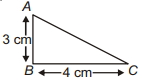
- 3$A B C$ is a right angled triangle situated in a uniform electric field $\vec{E}$ which is in the plane of the triangle. The points $A$ and $B$ are at the same potential of $15 \,V$ while the point $C$ is at a potential of $20 \,V . A B=3 \,cm$ and $B C=4 \,cm$. The magnitude of electric field is (in $S.I.$ Units)View Solution
- 4The distance between the two plates of a parallel plate capacitor is doubled and the area of each plate is halved. If $C$ is its initial capacitance, its final capacitance is equal toView Solution
- 5Assertion : A parallel plate capacitor is connected across battery through a key. A dielectric slab of dielectric constant $K$ is introduced between the plates. The energy which is stored becomes $K$ times.View Solution
Reason : The surface density of charge onthe plate remains constant or unchanged.
- 6An electric dipole when placed in a uniform electric field $E$ will have minimum potential energy, when the angle made by dipole moment with field $E$ isView Solution
- 7View SolutionWhich of the following is possible application of an RC circuit?
- 8Choose the $CORRECT$ optionView Solution
- 9A parallel plate capacitor of plate area $A$ and plate seperation $d$ is charged to potential difference $V$ and then the battery is disconnected. Aslab of dielectric constant $K$ is then inserted between the plates of the capacitor so as to fill the space between the plates. If $Q, E$ and $W$ denote respectively, the magnitude of charge on each plate, the electric field between the plates (after the slab is inserted) and the work done on the system, in question, in the process of inserting the slab, thenView Solution
- 10A charge of $40\,\mu \,C$ is given to a capacitor having capacitance $C = 10\,\mu \,F$. The stored energy in ergs isView Solution