Question
The property which differentiates two kinds of charges is called ____________?

Answer

  1. Polarity of charge
Explanation:
The property which differentiates two kinds of charges is called polarity of charge.

Need a full question paper?

Generate a complete, print-ready paper with questions like this in minutes — across 16+ boards, with answer keys.
Start Generating Free

Similar questions

In one average-life:
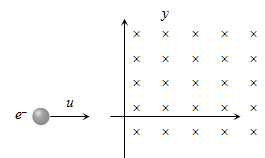
An electron moving with a speed $u$ along the positive $x-$axis at $y = 0$ enters a region of uniform magnetic field $\overrightarrow{B}=B_0 \overrightarrow{k}$  which exists to the right of $y-$axis. The electron exits from the region after some time with the speed $v$ at co$-$ordinate $y,$ then
$\beta$-particles are of high speed :
The magnetic field produced by a current - carrying wire at a given point depends on:
In a mean life of a radioactive sample(a) About 1/3 of substance disintegrates(b) About 2/3 of the substance disintegrates(c) About 90% of the substance disintegrates(d) Almost all the substance disintegrates


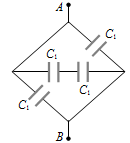
Four identical capacitors are connected as shown in diagram. When a battery of $6 V$ is connected between $A$ and $B,$ the charge stored is found to be $1.5\  \ \mu C$. The value of $C_1$ is
Assertion  :   The 200 W bulbs glows with more brightness then 100 W bulbs.
Reason    : A 100 W bulb has more resistance than a 200 W bulb.(a) If both assertion and reason are true and the reason is the correct explanation of the assertion.(b) If both assertion and reason are true but reason is not the correct explanation of the assertion.(c) If assertion is true but reason is false.(d) If the assertion and reason both are false.


Magnetic dipole moment of a rectangular loop is(a) Inversely proportional to current in loop(b) Inversely proportional to area of loop(c) Parallel to plane of loop and proportional to area of loop(d) Perpendicular to plane of loop and proportional to area of loop


A uniform wire of resistance $R$ is uniformly compressed along its length, until its radius becomes $n$ times the original radius. Now resistance of the wire becomes
Magnetic field can be defined as the: