Question
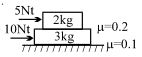
The system shown in figure is released then $a_1$ and $a_2$ is
Answer

Get the step-by-step solution for this question inside the Vidyadip app.

Get the answer in the app

Need a full question paper?

Generate a complete, print-ready paper with questions like this in minutes — across 16+ boards, with answer keys.
Start Generating Free

Similar questions

The work done to take an electron from rest where potential is $-60\, V$ to another point where potential is $-20\, V$ is given by.....$eV$
The terminal velocity of a small sphere of radius $a$ in a viscous liquid is proportional to
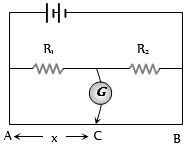
In the shown arrangement of the experiment of the meter bridge if $AC$ corresponding to null deflection of galvanometer is $x$, what would be its value if the radius of the wire $AB$ is doubled
A galvanometer having a coil resistance of $60\,\Omega $ shows full scale deflection when a current of $1.0\, amp$ passes through it. It can be converted into an ammeter to read currents upto $5.0\, amp$ by
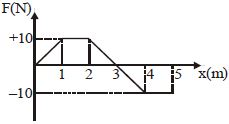
A position dependent force $F$ acting on a particle and its force-position curve is shown in the figure. Work done on the particle, when its displacement $0$ to $5\,m$ is ............. $\mathrm{J}$
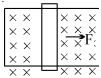
$A$ rod closing the circuit shown in figure moves along a $U$ shaped wire at a constant speed $v$ under the action of the force $F$. The circuit is in a uniform magnetic field perpendicular to the plane. Calculate $F$ if the rate of heat generation in the circuti is $Q$.
The displacement of a particle is given at time $t$, by:$x=A \sin (-2 \omega t)+B \sin ^2 \omega t \quad$ Then,
When a gas in a closed vessel was heated so as to increase its temperature by ${5^o}C$, there occurred an increase of $1\%$ in its pressure. The original temperature of the gas was ...... $^oC$
The magnetic moment of a current $(i)$ carrying circular coil of radius $(r)$ and number of turns $(n)$ varies as
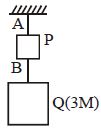
Wires $A$ and $B$ are connected with blocks $P$ and $Q$ as shown. The ratio of lengths, radii and Young's modulus of wires $A$ and $B$ are $r, 2r$ and $3r$ respectively ($r$ is a constant). Find the mass of block $P$ if ratio of increase in their corresponding lengths is $1/6r^2$. The mass of block $Q$ is $3M$.