MCQ
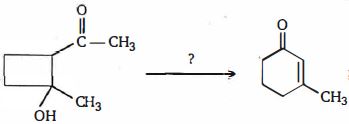
This conversion can be achieved by
  • A
    Dehydration, Hydrolysis
  • Retro aldol and further condensation
  • C
    Perkin condensation & Clemmensen reduction
  • D
    Clemmensen and Perkin condensation

Answer

Correct option: B.
Retro aldol and further condensation
b

Need a full question paper?

Generate a complete, print-ready paper with questions like this in minutes — across 16+ boards, with answer keys.

Start Generating Free

Similar questions

What will happen when a $40\, watt$, $220\, volt$ lamp and $100\, watt$, $220\, volt$ lamp are connected in series across $40\, volt$ supply
Paramagnetic substances:

$A$. align themselves along the directions of external magnetic field.

$B$. attract strongly towards external magnetic field.

$C$. has susceptibility little more than zero.

$D$. move from a region of strong magnetic field to weak magnetic field.

Choose the most appropriate answer from the options given below:
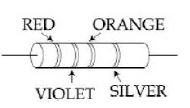
A resistance is shown in the figure. Its value and tolerance are given respectively by
When forces $\vec{P}_1, \vec{P}_2, \vec{P}_3$ are a acting on a particle of mass (m) such that $\vec{P}_2$ and $\vec{P}_3$ are mutually perpendicular if particle remains stationary then
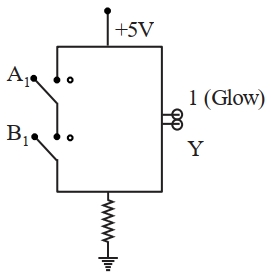
The logic gate equivalent to the given circuit diagram is:
A bar magnet having centre $O$ has a length of $4 $ $cm. $ Point $P_1$ is in the broad side-on and $P_2 $ is in the end side-on position with $OP_1 = OP_2 = 10$ metres. The ratio of magnetic intensities $H$ at $P_1$ and $P_2$ is
From the top of a $64\, ft$ high tower, a stone is thrown upwards vertically with the velocity of $48\, ft/s$. The greatest height (in $ft$) attained by the stone, assuming the value of the gravitational acceleration $g\, = 32\, ft/s^2$, is
Two waves are represented by ${y_1} = a\sin \left( {\omega \,t + \frac{\pi }{6}} \right)$ and ${y_2} = a\cos \omega \,t$. What will be their resultant amplitude
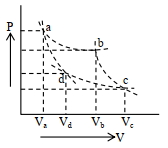
Two different adiabatic paths for the same gas intersect two isothermal curves as shown in$P-V$ diagram. The relation between the ratio $\frac{V_a}{V_d}$ and the ratio $\frac{V_b}{V_c}$ is:
Least count of a vernier caliper is $\frac{1}{20 \mathrm{~N}} \mathrm{~cm}$. The value of one division on the main scale is $1 \mathrm{~mm}$. Then the number of divisions of main scale that coincide with $\mathrm{N}$ divisions of vernier scale is :