MCQ
Two waves having sinusoidal waveforms have different wavelengths and different amplitude. They will be having
  • Same pitch and different intensity
  • B
    Same quality and different intensity
  • C
    Different quality and different intensity
  • D
    Same quality and different pitch

Answer

Correct option: A.
Same pitch and different intensity
a
(a) The pitch depends upon the frequency of the source.

As the two waves have different amplitude therefore they having different intensity.

While quality depends on number of harmonics$/$overtone produced and their relative intensity.

Assuming that their frequencies are the same.


Need a full question paper?

Generate a complete, print-ready paper with questions like this in minutes — across 16+ boards, with answer keys.

Start Generating Free

Similar questions

If the tension on a wire is removed at once, then
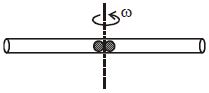
A smooth tube of certain mass closed at both ends is rotated in a gravity free space and released. The two balls shown in figure moves towards the ends of the tube and stay there. Then which statement is incorrect about this whole system
The average translational energy and the $r.m.s.$ speed of molecules in a sample of oxygen gas at $300 K$ are $6.21 \times {10^{ - 21}}\,J$ and $484\, m/s$ respectively. The corresponding values at $600 K$ are nearly (assuming ideal gas behaviour)
A ball of mass $m$ moving with velocity $v$ collides head-on with the second ball of mass $m$ at rest. If the coefficient of restitution is $e$ and velocity of first ball after collision is $v_1$ and velocity of second ball after collision is $v_2$ then
What is the mass of $22.4L$ of $CO_2$ at $\text{STP}?$
If ${\mu _s},\,{\mu _k}$ and ${\mu _r}$ are coefficients of static friction, sliding friction and rolling friction, then
The distance between the vertex and the centre of mass of a uniform solid planar circular segment of angular size $\theta$ and radius $R$ is given by
A satellite is revolving around the earth with a kinetic energy E. The minimum addition of kinetic energy needed to make it escape from its orbit is :
During an adiabatic process, the pressure of a gas is found to be proportional to the cube of its absolute temperature. The ratio of $\frac{C_p}{C_v}$ for the gas is:
A point traversed $3 / 4$ th of the circle of radius $R$ in time $t$. The magnitude of the average velocity of the particle in this time interval is