MCQ
What happen to the instantaneous velocity in a non - uniformly accelerated motion?
  • It increases
  • B
    It decreases
  • C
    It varies as the acceleration
  • D
    It remains constant

Answer

Correct option: A.
It increases
$a.$ It increases
Explanation:
The instantaneous velocity will increase with time. If the motion is accelerated, no matter if the acceleration is constant, or variable, the instantaneous velocity will increase. Variation of acceleration describes how to change in velocity is changing.

Need a full question paper?

Generate a complete, print-ready paper with questions like this in minutes — across 16+ boards, with answer keys.
Start Generating Free

Similar questions

A stationary object at $4°C$ and weighing $3.5\, kg$ falls from a height of $2000\, m$ on a snow mountain at  $0°C$. If the temperature of the object just before hitting the snow is $0°C$ and the object comes to rest immediately $(g = 10\,m/{s^2})$ and (latent heat of ice$ = 3.5 \times {10^5}\,joule/\sec $), then the object will melt
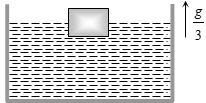
A cubical block is floating in a liquid with half of its volume immersed in the liquid. When the whole system accelerates upwards with acceleration of $g/3,$  the fraction of volume immersed in the liquid will be
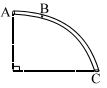
The tube $AC$ forms a quarter circle in a vertical plane. The ball $B$ has an area of cross-section slightly smaller than that of the tube, and can move without friction through it. $B$ is placed at $A$ and displaced slightly. It will
The torque acting on a body about centre of mass due to normal reaction
A hallow cone of radius $R$ and height $2R$ is placed on an inclined plane of inclination $\theta$ . If $\theta$ is increased gradually, at what value of $\theta$ the cone will topple.Assume sufficient friction is present to prevent slipping.
Two bottles $A$ and $B$ have radii $R_{A}$ and $R_{B}$ and heights $h_{A}$ and $h_{B}$ respectively, with $R_{B}=2 R_{A}$ and $h_{B}=2 h_{A}$. These are filled with hot water at $60^{\circ} C$. Consider that heat loss for the bottles takes place only from side surfaces. If the time, the water takes to cool down to $50^{\circ} C$ is $t_{A}$ and $t_{B}$ for bottles $A$ and $B$, respectively. Then, $t_{A}$ and $t_{B}$ are best related as
The average velocities of the objects $A$ and $B$ are $V_A$ and $V_B$, respectively. The velocities are related such that $V_A>V_B$. The position$-$time graph for this situation can be represented as:
A pendulum clock is set to give correct time at the sea level. This clock is moved to hill station at an altitude of $2500\, m$ above the sea level. In order to keep correct time of the hill station, the length of the pendulum
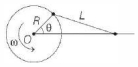
One end of a rod of length $L$ is fixed to a point on the circumference of a wheel of radius $R$. The other end is sliding freely along a straight channel passing through the centre of the wheel as shown in the figure below. The wheel is rotating with a constant angular velocity $\omega$ about $O$. Taking $T=\frac{2 \pi}{\omega}$, the motion of the rod is
A $100\,m$ long train crosses a man travelling at $5\,km / h$, in opposite direction, in $7.2\,s$, then the velocity of train is $..........\,km/h$