Question
What is a statistical series? Explain different types of statistical series on the basis of character.

Answer

According to Horace Secrist, "A series as used statistically may be defined as things or attributes of things arranged according to some logical order." According to Prof. Connor, "If two variable quantities can be arranged side by side so that measurable difference in the one corresponds with measurable difference in the other, the result is said to form a statistical series." On the Basis of Characteristics:
  1. Time Series: When series of values of some variable which is represented according to successive points in time is called time series. In such a series, data are represented with reference to a time period which can be a year, week, month or day. An example is given below:
Production in a cloth mill:
Year
2005
2006
2007
2008
2009
2010
Production (in 000 meters)
15
27
58
72
134
140
OR
Rainfall in a week
DAY
Mon
Tue
Wed
Thu
Fri
Sat
Sun
Rainfall in cm
15
27
17
14
54
64
10
  1. Spatial Series: A series of values of some variable which is represented according to area under investigation i.e. geographical division of the universe is called spatial series. An example is given below:
Production of wheat in different states of India in 2010
States
Punjab
Haryana
Maharashtra
U.P.
Bihar
Orissa
Production (in 000 tonnes)
1500
2700
580
720
134
140
  1. Condition Series: A series of values of some variables which is represented according to condition which may be expressed in quantitative terms is called condition series. An example is given below:
 
Grade
A
B
C
Total
Boys
13
25
11
49
Girls
7
20
6
33
Total
20
45
17
82

Need a full question paper?

Generate a complete, print-ready paper with questions like this in minutes — across 16+ boards, with answer keys.

Start Generating Free

Similar questions

Represent the following information through a time series graph.
Year
2005
2006
2007
2008
2009
2010
2011
Export (₹ in crore)
300
320
400
350
360
250
340
Imort (₹ in crore)
450
300
280
375
330
450
325
Answer the following questions
(i) When price of a commodity falls by Rs 1 per unit, its quantity demanded rises by 3 units. Its Price Elasticity of Demand is (-) 2. Calculate its quantity demanded if the price before change was Rs 10 per unit.
(ii) A consumer buys 30 units of a good at a price of Rs. 10 per unit. Price elasticity of demand for the good is (-)1. How many units the consumer will buy at a price of Rs. 9 per unit Rs. Calculate.
The yield of wheat and rice per acre for 10 districts of a state is as under:
District
1
2
3
4
5
6
7
8
9
10
Wheat
12
10
15
19
21
16
18
9
25
10
Rice
22
29
12
23
18
15
12
34
18
12
Calculate for crop.
Mean deviation about Median.
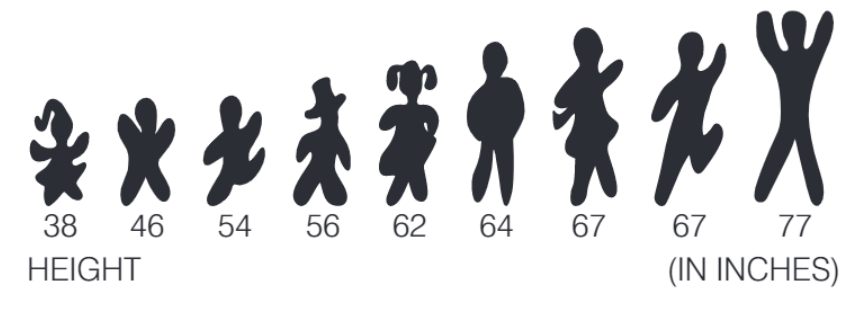
Direction Analyse the following case study graph and answer questions (i) to (v) on the basis of the same.
  1. What is the mean height of the above students?
  1. 54
  2. 59
  3. 62
  4. 67
  1. Median of a given series divides the data into ......... parts.
  1. Two
  2. Three
  3. Four
  4. None of these
  1. What will be the median value of the above figure?
  1. 52
  2. 56
  3. 62
  4. 65
  1. If we reverse the data in decreasing order, value of median will be:
  1. 52
  2. 55
  3. 64
  4. None of the above
  1. What will be the mode value in the above series?
  1. 54
  2. 59
  3. 67
  4. Can't be determined
Why should MC curve be rising in a situation of producer's equilibrium?
Why do central problems arise? Explain the central problems of an economy
Write a brief note of National Sample Survey Organisation and also state it's various objectives.
Define cost of living index numbers. Give its formulae.
Explain the concepts of positive and normative economics with illustrations.
Explain market equilibrium when the number of firms happens to increase or decrease in the market and only normal profits are earned.