Question
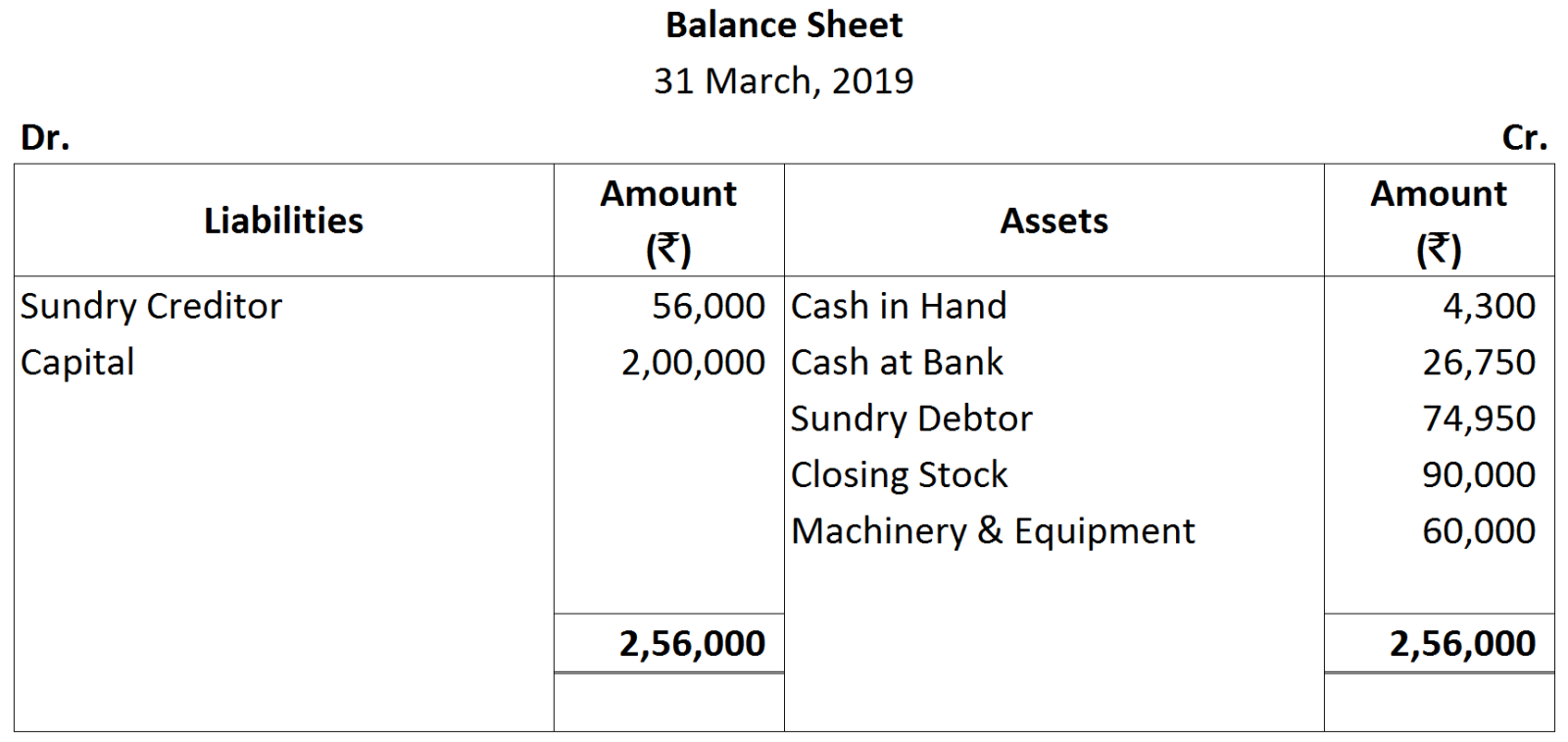
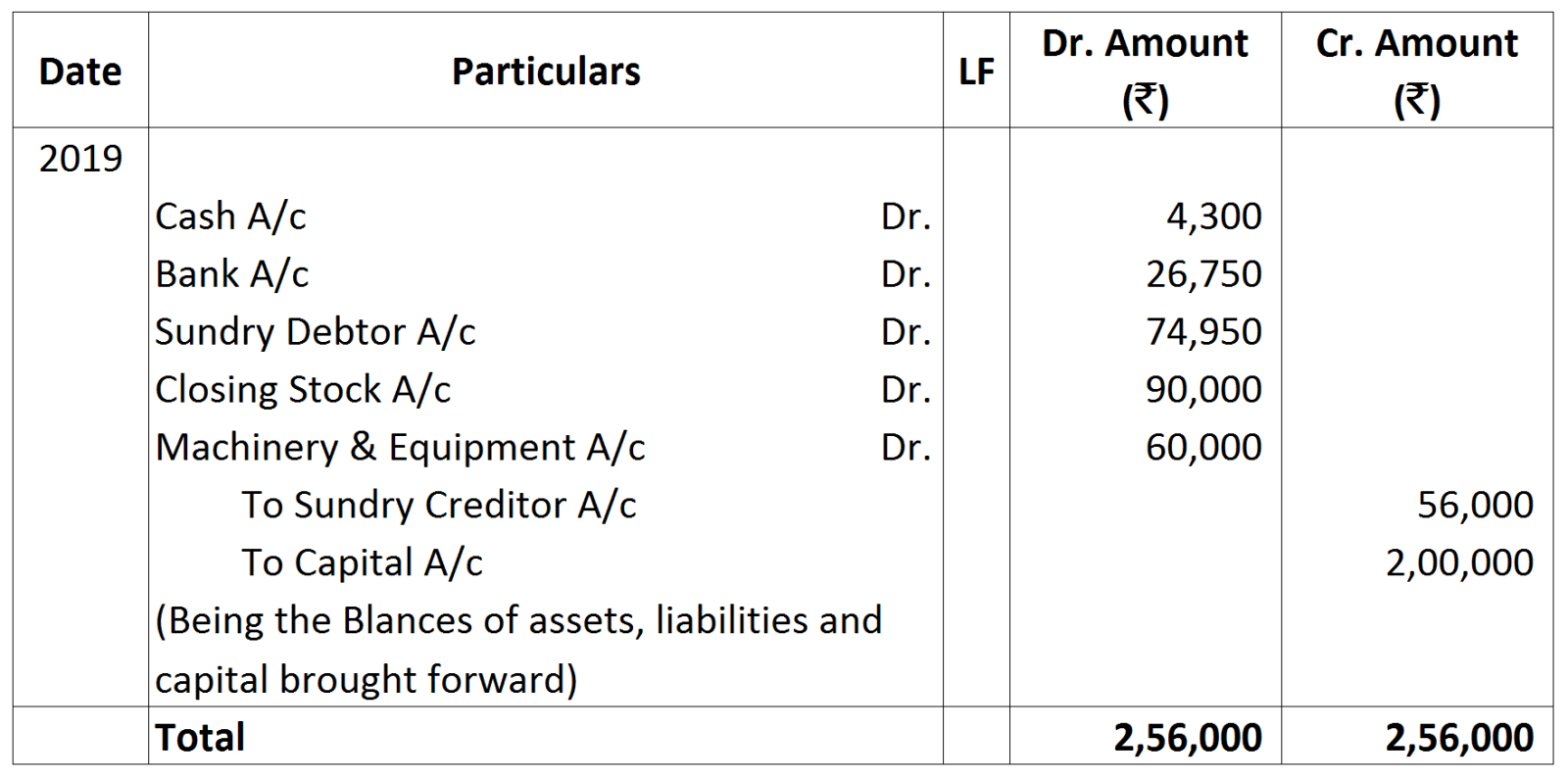
What is an Opening Entry? Give an example.
Generate a complete, print-ready paper with questions like this in minutes — across 16+ boards, with answer keys.
| (₹) | ||
| i. | Brij Mohan commenced business with Cash | 1,00,000 |
| ii. | Bought goods for Cash | 60,000 |
| iii. | $\frac{1}{3}\text{rd}$ of the above goods sold at a profit of 20% on cost. Half the payment recieved in Cash | |
| iv. | Purchased typewritter for office use | 15,000 |
| v. | Purchased goods on Credit from X | 25,000 |
| vi. | Paid to X | 15,000 |
| vii. | Paid Salary | 3,000 |
| viii. | Received commission | 500 |
| ix. | Sold goods for Cash (Cost ₹ 50,000) | 60,000 |
|
2016
|
|
|
June 1
|
Balance of Cash in Hand ₹ 12,000; Overdraft at Bank ₹ 1,500
|
|
June 2
|
Deposited into Bank ₹ 10,000
|
|
Sold goods for Cash ₹ 28,000 and paid half the proceeds into Bank
|
|
|
June 3
|
Purchased goods for ₹ 7,000 from Manoj & Co. on Credit
|
|
June 5
|
Received a Money Order from Suresh ₹ 500
|
|
June 8
|
Received ₹ 2,800 from Govind. Paid ₹ 1,000 into Bank
|
|
June 10
|
Received a cheque for ₹ 7,600 from Subhash in full settlement of ₹ 8,000 due from him
|
|
June 12
|
Settled the account of Manoj & Co. by payment of ₹ 6,600
|
|
half Cash and half by cheque
|
|
|
June 13
|
Cheque received from Subhash deposited into Bank
|
|
June 15
|
Paid for purchase of Machinery by cheque ₹ 20,000
|
|
June 16
|
Paid wages for the erection of above Machinery ₹ 1,000
|
|
June 17
|
Cheque issued for ₹ 6,000 in favour of Sachdeva & Co. for purchase of furniture
|
|
June 20
|
Purchased goods from Kalpna Garments for ₹ 10,500 on credit
|
|
Received a Bank Draft for ₹ 4,800 from Damodar & Co. in full settlement of ₹ 5,000 due from them. Sent the draft to bank
|
|
|
June 24
|
Bank issued a draft for ₹ 10,000 in favour of Kalpna Garments on our request. Bank charged ₹ 25 for issuing the draft. Account of Kalpna Garments was fully settled
|
|
June 26
|
Drew from bank for petty cash ₹ 100
|
|
June 28
|
Paid salary by cheque ₹ 6,000
|
|
June 30
|
Bank Charges ₹ 50 and Interest ₹ 1,620 charged by bank
|
|
Deposited into bank the entire balance after retaining ₹ 4,000 at office
|
| 2023 | ₹ | |
| June-01 | Govind invested capital in cash | 1,00,000 |
| June-3 | Purchased goods from Harsh | 10,000 |
| June-5 | Purchased goods for cash | 8,000 |
| June-8 | Purchased goods from Manoj for cash | 7,000 |
| June-10 | Sold goods to Kunal on credit. | 2,000 |
| June-12 | Sold goods to Neeraj for cash | 1,500 |
| June-14 | Goods returned by Kunal | 500 |
| June-16 | Goods returned to Harsh | 360 |
| June-18 | Machinery purchased from Sonu | 8,000 |
| June-19 | Paid to Harsh on account | 5,000 |
| June-25 | Cash withdrawn for Personal use | 5,000 |
| June-30 | Old newspapers sold | 200 |
| June-30 | Received loan from Manish and deposited in bank | 50,000 |
| 2019 | ₹ | |||
| April 1 | Opening Balance of Cash in Hand | 1,00,000 | ||
| Opening Balance of Bank Overdraft | 5,00,000 | |||
| April 2 | Sold goods for cash, including CGST and SGST @ 6% each | 4,48,000 | ||
| April 3 | Sold goods including CGST and SGST @ 6% each against cheque and paid into bank the same day | 3,36,000 | ||
| April 5 | Sold goods to Reema, including IGST @ 12% | 1,12,000 | ||
| April 6 | Ram paid by cheque | 78,000 | ||
| Discount allowed | 2,000 | |||
| April 7 | Bought goods from Rahul, Gurugram for ₹ 40,000 plus CGST and SGST @ 6% each and paid him by cheque | 44,800 | ||
| Salary paid to staff by cheque | 2,20,000 | |||
| April 10 | Deposited into bank | 3,10,000 | ||
| April 11 | Received a cheque from Suresh and paid into bank | 1,28,500 | ||
| Discount allowed | 1,500 | |||
| April 15 | Received from R. Kumar a cheque for a full settlement of his account for ₹ 1,95,000 | 1,87,500 | ||
| April 18 | Paid wages in cash | 30,000 | ||
| April 20 | Bank charges, including CGST and SGST @ 6% each | 5,600 | ||
| April 22 | Withdrew from bank for office use | 1,00,000 | ||
| Withdrew from Bank for personal use | 1,20,000 | |||
| April 25 | Paid electricity bill by cheque | 31,500 | ||
| Issued a cheque in favour of Sudha as advance for purchase of house of Gaurav | 2,00,000 | |||
| April 26 | Received a cheque from Amar | 58,200 | ||
| Allowed discount to him | 1,800 | |||
| April 28 | Cheque received from Amar sent to bank | |||
| April 30 | Bank collected interest received on investments | 15,000 | ||
| Paid rent for the month of May, 2019, including CGST and SGST @ 6% each | 22,400 | |||