Questions · Page 1 of 3

6 Marks Question

🎯

Test yourself on this topic

50 questions · timed · auto-graded

Question 16 Marks
Journalise the following transactions in the books of Ashok:
  1. Received ₹ 11,700 from Hari Krishan in full settlement of his account for ₹ 12,000.
  2. Received ₹ 11,700 from Shyam on his account for ₹ 12,000.
  3. Received a first and final dividend of 70 paise in the rupee from the official receiver of Rajagopal who owed us ₹ 7,000.
  4. Paid ₹ 2,880 to A.K. Mandal in full settlement of his account for ₹ 3,000.
  5. Paid ₹ 2,880 to S.K. Gupta on his account for ​₹ 3,000.
View full question & answer
Question 36 Marks
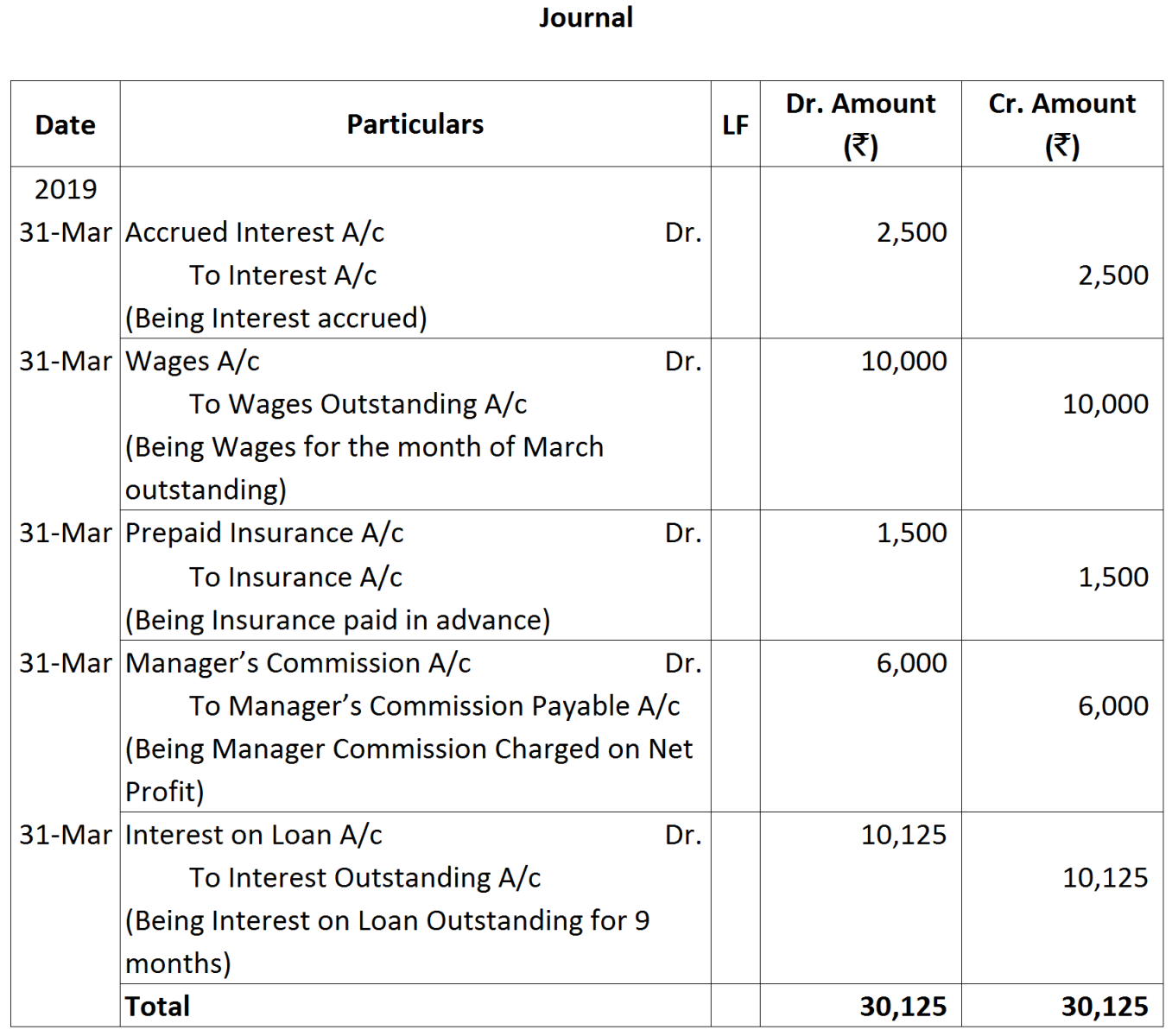
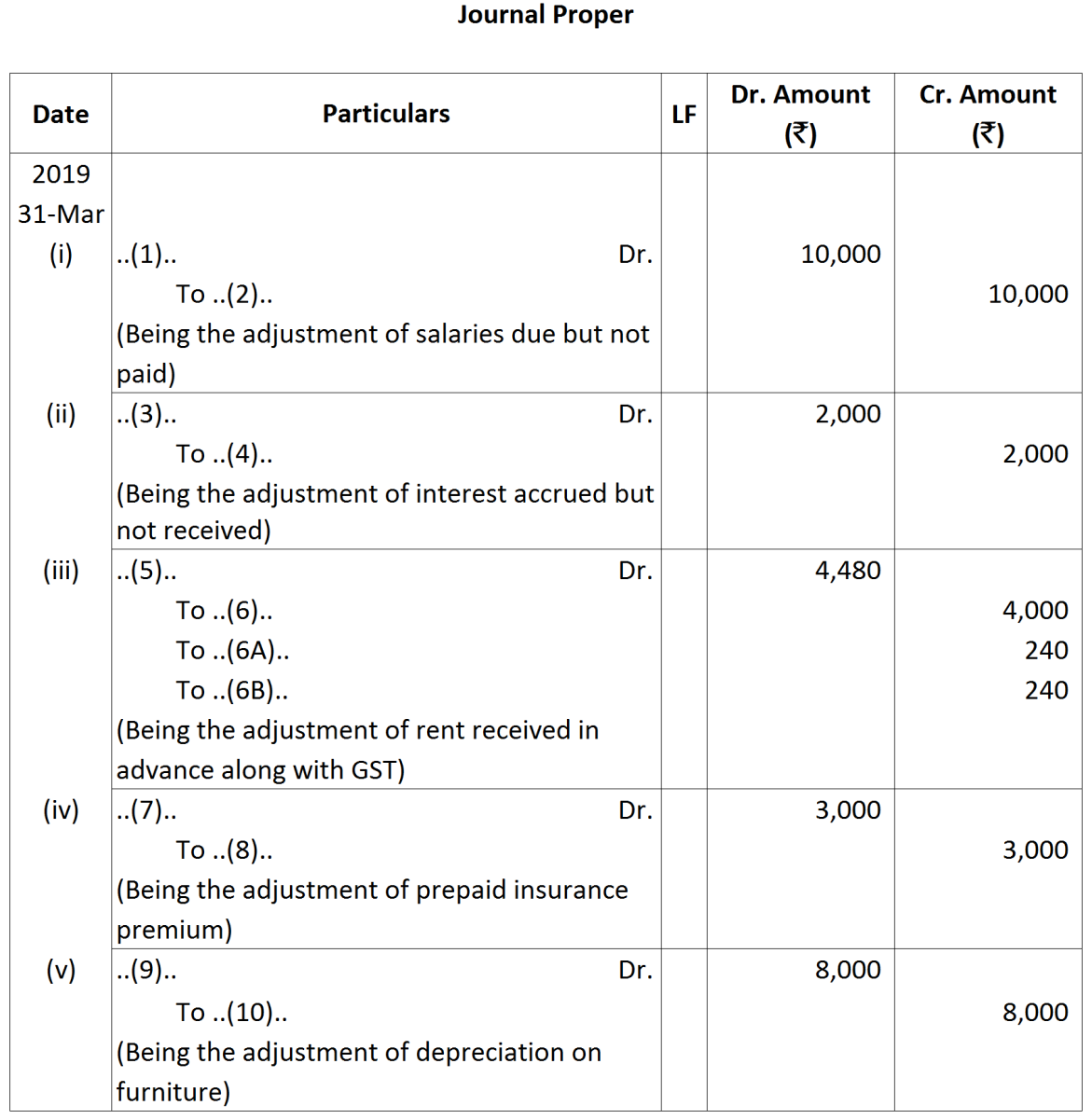
(Adjustment Entries) From the following information available on 31st March, 2019, pass the necessary Adjustment Entries in the Journal for the year ending on that date:
  1. Interest accrued ₹ 2,500.
  2. Wages for March, 2019 outstanding ₹ 10,000.
  3. Insurance prepaid ₹ 1,500.
  4. Commission due to manager 6% on net profit after charging such commission. The profit before charging such commission was ₹ 1,06,000.
  5. Interest due on loan but not paid. Loan of ₹ 1,50,000 was taken at 9% p.a. 9 months before end of the year.
Answer
Working Note:
$\text{Manager Commission}=1,06,000\times\frac{6}{106}$ $\text{Interest on Loan}=1,50,000\times\frac{9}{100}\times\frac{9}{12}$
View full question & answer
Question 46 Marks
What is petty cash book? Write the advantages of petty cash book?
Answer
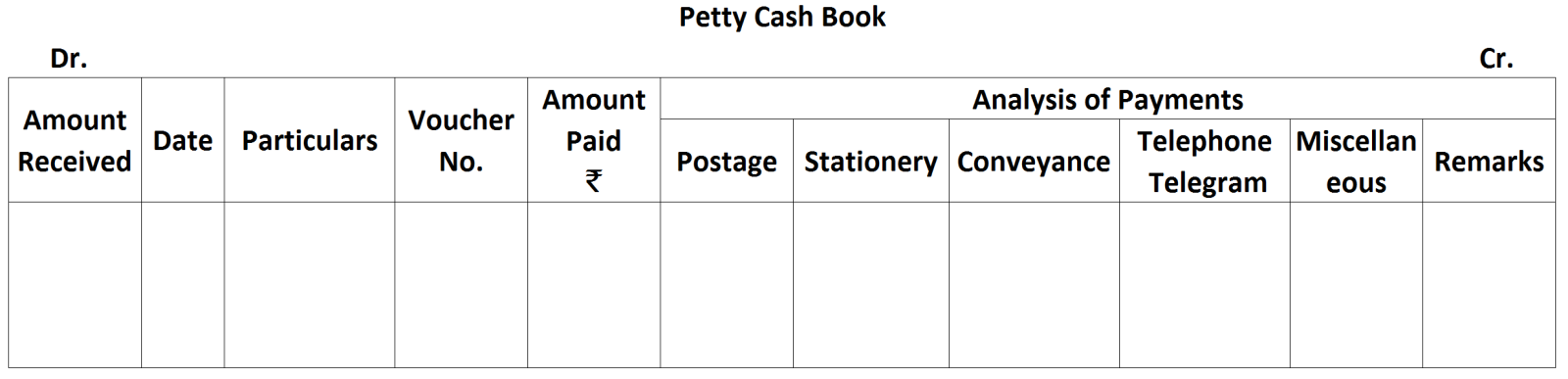
Petty Cash Book is used for recording payments of small expenses, which are of smaller denominations such as postage, stationery, conveyance, refreshment, etc. Person who maintains Petty Cash Book is known as petty cashier and these small expenses are termed as petty expenses.
It is prepared by the below given two methods.
  1. Ordinary system: Under this system, a certain sum of money is given to the petty cashier for the payment of petty expenses. After spending the whole amount, the accounts are submitted by the petty cashier to the main cashier.
  2. Imprest system: Under this system, a fixed sum of money is given to the petty cashier in the beginning of a period to meet the petty expenses to be incurred in that period. At the end of the period, the amount spent by the petty cashier is reimbursed. So, the petty cashier has the same fixed amount of money in the beginning of the next period.
The Performa of Petty Cash Book is given below.

Advantages of Petty Cash Book:
Simple method: Recording of transactions in a petty cash book is easy. In an analytical Petty Cash Book, there exists separate heads for different petty expenses, which makes recording much easier. Recording in a Petty Cash Book does not require formal knowledge of accounting principles and techniques.
Time saving: Recording in Petty Cash Book saves time and efforts of the chief cashier.
Efficient control: At the end of a period,Petty Cash Book is audited by the main cashier, so frauds and errors are less probable.
Convenient handling: Recording in Petty Cash Book is convenient, as entries are to be recorded under separate heads, which makes posting easier and quicker.
View full question & answer
Question 56 Marks
Prepare double column cash book from the following information for July 2017:
   
01
Cash In hand
7,500
 
Bank overdraf
3,500
03
Paid wages
200
05
Cash sales
7,000
10
Cash deposited into bank
4,000
15
Goods purchased and paid by cheque
2,000
20
Paid ren
500
25
Drew from bank for personal use
400
30
Salary paid
1,000
View full question & answer
Question 66 Marks
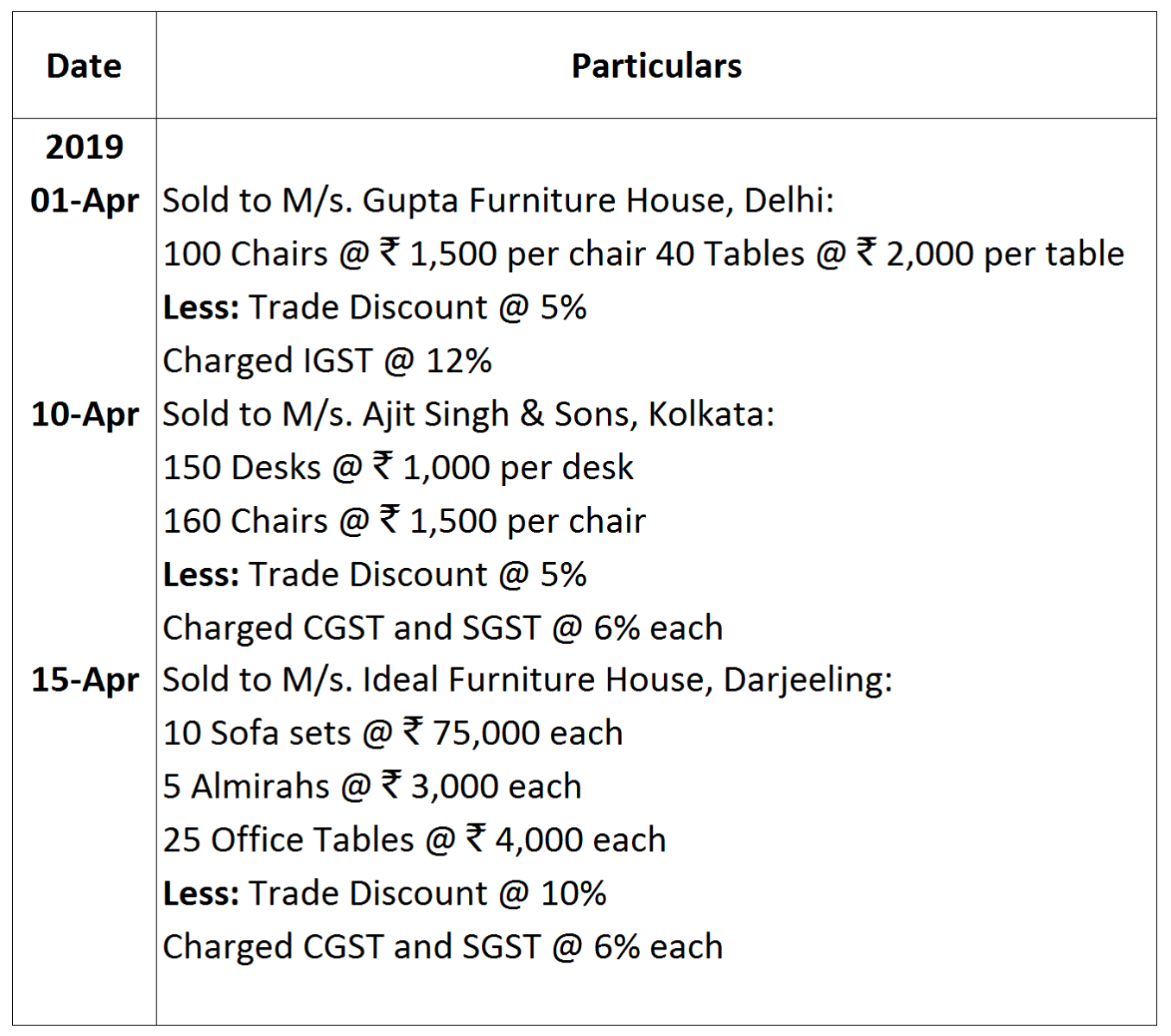
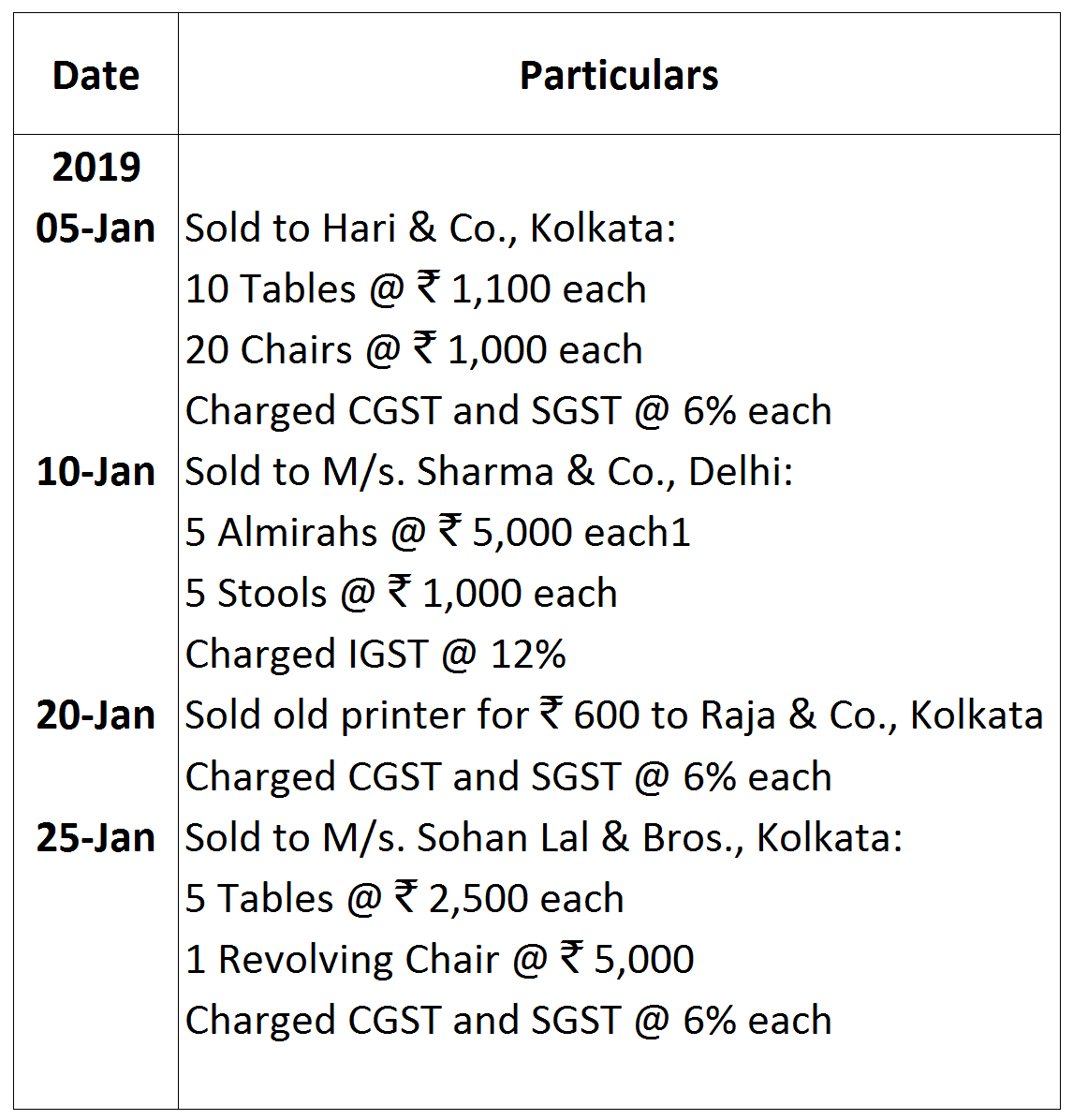
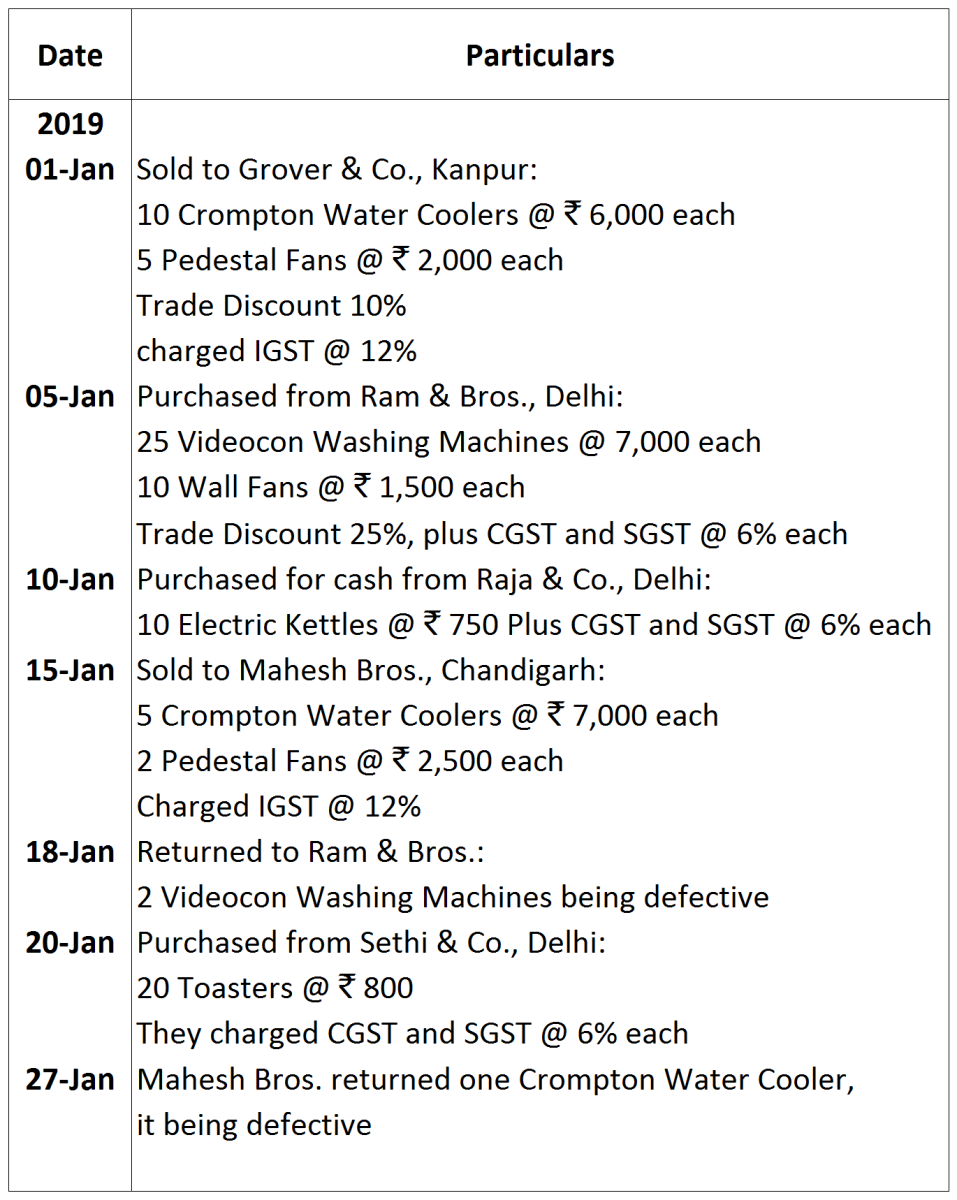
Prepare Sales Book from the following transactions of Hema Traders, Kolkata dealing in furniture. Open the Ledger Accounts also:
View full question & answer
Question 76 Marks
Enter the following transaction in a double column cash book of M/s.Mohit Traders for January 2017:
 
 
01
Cash in hand
3,500
 
Bank overdraft
2,300
03
Goods purchased for cash
1,200
05
Paid wages
200
10
Cash sales
8,000
15
Deposited into bank
6,000
22
Sold goods for cheque which was deposited into bank same day
2,000
25
Paid rent by cheque
1,200
28
Drew from bank for personal use
1,000
31
Bought goods by cheque
1,000
View full question & answer
Question 86 Marks
Write the process of preparing ledger from a journal.
Answer
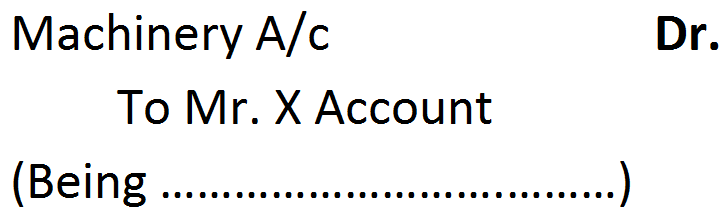
The process of preparing ledger from Journal can be explained with the help of an example. Let us suppose that machinery is purchased from Mr. X, so, the journal entry will be:
In this example, Machinery Account is debited and Mr. X Account is credited. Let us understand the process of preparing ledger from the journal entry. Account which is debited in the entry:Step 1: Indentify the account in ledger that is debited, i.e., ‘Machinery Account’.
Step 2: Enter date in the debit side of the ‘Machinery Account’ in the ‘Date’ column.
Step 3: Enter the name of the account as ‘Mr. X Account’ (which is credited in the entry) in the ‘Particulars’ column in the debit side of the Machinery Account
Step 4: Enter the page number of the journal, where the entry is recorded in the ‘J.F.’ (journal folio) column.
Step 5: Post the corresponding amount in the ‘Amount’ column, which is recorded against ‘Machinery Account’ in the journal entry.
Account which is credited in entry:Step 1: Indentify the account in ledger that is credited, i.e., ‘Mr. X Account’.
Step 2: Enter date in the credit side of ‘Mr. X Account’ in the ‘Date’ column.
Step 3: Enter the name of the account as ‘Machinery Account’ (which is debited in the entry) in the ‘Particulars’ column in the credit side of the ‘Machinery Account’.
Step 4: Enter the page number of the journal where the entry is recorded in the ‘J.F.’ (journal folio) column.
Step 5: Post the corresponding amount in the ‘Amount’ column, which is recorded against ‘Mr. X Account’ in the journal entry.
View full question & answer
Question 96 Marks
Explain Debit and Credit note in five sentences.
Answer
Debit Note:
This is referred to a note that is issued by the business to the other concerned parties. It represents the details and reasons for debiting the concerned party's account.
Example: Goods worth ₹ 2,000 returned by the business to Mr. Ramesh (a supplier).
In this case, Ramesh's Account will be debited with ₹ 2,000 as the goods purchased from him were returned to him. A issue of Debit Note in this case explains that Ramesh A/c has been debited with ₹ 2,000 with explanation, i.e. due to the goods returned by the business.
Credit Note:
Similar to the Debit Note, a Credit Note is also issued by the business to the other concerned parties. It represents the details and reasons for crediting the concerned party's account.
Example: Goods worth ₹ 2,000 were returned by Mr. Ramesh (a customer) to the business.
In this case, Ramesh's Account will be credited with ₹ 2,000 as the goods sold to him were returned back to the business. A issue of Credit Note in this case explains that Ramesh's A/c has been credited with ₹ 2,000 with explanation, i.e. due to the goods returned by him.
Both Debit Note as well as Credit Note also contains other important information such as, quantity of the goods (in units), amount of the transaction, Challan Number, Date, Names and Addresses of both the parties involved in the transaction.
View full question & answer
Question 106 Marks
Briefly explain the concept of GST.
Answer
Goods and Services Tax (GST): It is a tax levied and collected on supply (sale) of goods and/ or services or both. It is charged by the seller on the net sale value, i.e., sale value less trade discount. The seller is bound to charge GST on sale made and deposit it in the Government Account. For the seller of goods, it is not sale because it is collected on behalf of the Government and is to be paid into Government Account.
In the case of intra-state (i.e., within the state) sale of goods, both CGST and SGST is charged at half the prescribed rate of GST. And in the case of inter-state (i.e., outside the state) sale of goods, IGST is charged at the prescribed rate of GST.
CGST and SGST charged on intra-state sale of goods is credited to 'Output CGST Account and Output SGST Account' respectively. IGST charged on inter-state sale of goods is credited to Output IGST Account.
View full question & answer
Question 116 Marks
What is a Petty Cash Book? Why is it maintained?
Answer
Petty Cash Book is the book which is used for the purpose of recording expenses involving small amounts. Besides petty expenses, receipts from main cashier are recorded. Petty Cash Book is like Petty Cash Account and is maintained by Petty Cashier.
Advantages of Imprest System of Petty Cash:
  1. Control Over Mistakes: The Petty Cash Book is checked by the cashier at regular intervals so that a mistake, if committed, is soon rectified.
  2. Control Over Petty Expenses: Petty expenses are kept within the limits of imprest since the petty cashier can never spend more than the available petty cash.
  3. Control Over Frauds: Under this system defalcation of cash can be minimised since the Petty Cashier is not allowed to draw cash as and when he desires.
View full question & answer
Question 126 Marks
State Whether the following accounts will a debit or credit balances:
  1. Rent Received.
  2. Bank Overdraft.
  3. Wages.
  4. Land and Building.
  5. Commission Received.
  6. Commision Paid.
  7. Rent Outstanding.
  8. Cash in Hand.
  9. M/s. Gupta Traders (Supplliers).
  10. Drawings.
  11. Capital.
  12. Prepaid Rent.
  13. Input IGST.
  14. Output SGST.
Answer
Debit Balance:
  1. Wages.
  1. Land and Building.
  1. Commision Paid.
  1. Cash in Hand.
  1. Drawings.
  1. Prepaid Rent.
  1. Input IGST.
Credit Balance:
  1. Rent Received.
  1. Bank Overdraft.
  1. ​​​​​​​Commision Received.
  1. Rent Outstanding.
  1. M/s. Gupta Traders.
  1. Capital.
  1. Output SGST.
View full question & answer
Question 136 Marks
What are transfer entries?
Answer
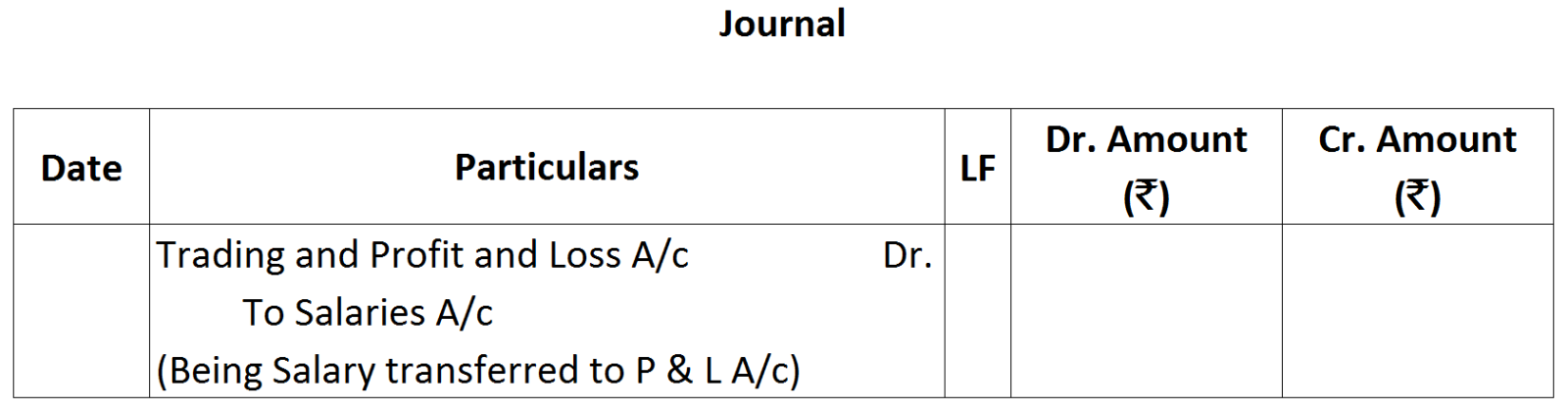
Transfer entries are also termed as Closing entries. At the end of each year, balances in all accounts, except for assets and liabilities accounts are transferred to the other accounts to close these accounts and also for assessing the financial performance and positions. For example: All the expense accounts are transferred to the Debit side of the Trading and Profit and loss A/c and all the income or gains accounts are transferred to the Credit side of the Trading and Profit and Loss A/c by passing journal entries for the same. These are known as transfer entries This balances the expense accounts and the Trading and Profit and Loss A/c helps assess the financial performance of the firm. Another example would be the transfer of the Drawings A/c to the Debit side of the Capital account at the end of each year. This closes the drawings A/c and tells the balance of capital remaining in the firm.One transfer entry is given below:
View full question & answer
Question 146 Marks
Why is it necessary to sub-divide a Journal? What are its advantages?
Answer
Business transactions are numerous and it becomes difficult to record all the transactions in one book of primary entry, i.e., Journal Book. For example, in a business, many transactions may relate to receipts and payments of cash, sale of goods and their purchase. It is convenient to maintain a separate book for each such class of transactions--one to record cash transactions, another to record credit purchase of goods and yet another to record credit sale of goods. Book of this type is called a book of original entry or primary entry-it is a special form of Journal, a sub-division of it.
Advantages of Subsidiary Books
The use of subsidiary books has following advantages:
  1. Division of Work: Since in place of one Journal, Subsidiary Books are maintained, accounting work can be divided among a number of persons.
  2. Specialisation and Efficiency: When the same work is handled by a particular person for a considerable time, he acquires knowledge and expertise in it. He Become more efficient in handling it. Thus, accounting is done more efficiently.
  3. Saving of Time: Various accounting processes can be undertaken simultaneously because of the use of number of books. Thus, it leads to completing the work timely.
  4. Availability of Information: Since a separate book is maintained for each class of transactions, information relating to each class is available at one place.
  5. Facility in Checking: In case, the Trial Balance does not agree, locating the error or errors is facilitated by the existence of separate books. Since the number of transactions is less in each Subsidiary Book as compared to only one Journal, is easy to locate the errors.
  6. Responsibility: Division of work results in assigning a particular job to a particular person. If an error is committed in recording, responsibility can be easily fixed.
View full question & answer
Question 156 Marks
Prepare a double column cash book with the help of following information for December 2016:
   
01
Started business with cash
1,20,000
03
Cash paid into bank
50,000
05
Purchased goods from Sushmita
20,000
06
Sold goods to Dinker and received a cheque
20,000
10
Paid to Sushmita cash
20,000
14
Cheque received on December 06, 2016 deposited into bank
 
18
Sold goods to Rani
12,000
20
Cartage paid in cash
500
22
Received cash from Rani
12,000
27
Commission received
5,000
30
Drew cash for personal use
2,000
View full question & answer
Question 166 Marks
Journalise the following transactions in the books of Bhushan Agencies:
  1. Received from Bharat cash ₹ 20,000, allowed him discount of ₹ 500.
  2. Received from Vikas ₹ 35,000 by cheque, allowed him discount of ₹ 750.
  3. Received from Akhil ₹ 38,000 in settlement of his dues of ₹ 40,000 in cash.
  4. Received from Amrit ₹ 50,000 by cheque on account against dues of ₹ 60,000.
  5. Paid cash ₹ 40,000 to suresh, availed discount of 2%.
  6. Paid by cheque ₹ 25,000 to Mehar and settled her dues of ₹ 26,000.
  7. Paid ₹ 25,000 to Yogesh by cheque on account.
  8. Purchased goods costing ₹ 1,00,000 against cheque and availed discount of 3%.
  9. Purchased goods costing ₹ 60,000 from Akash & Co., paid 50% immediately availing 3% discount.
  10. Sold goods of ₹ 30,000 against cheque allowing 2% discount.
  11. Sold goods of ₹ 60,000 to Vimal received 50% of due amount allowing 2% discount.
View full question & answer
Question 176 Marks
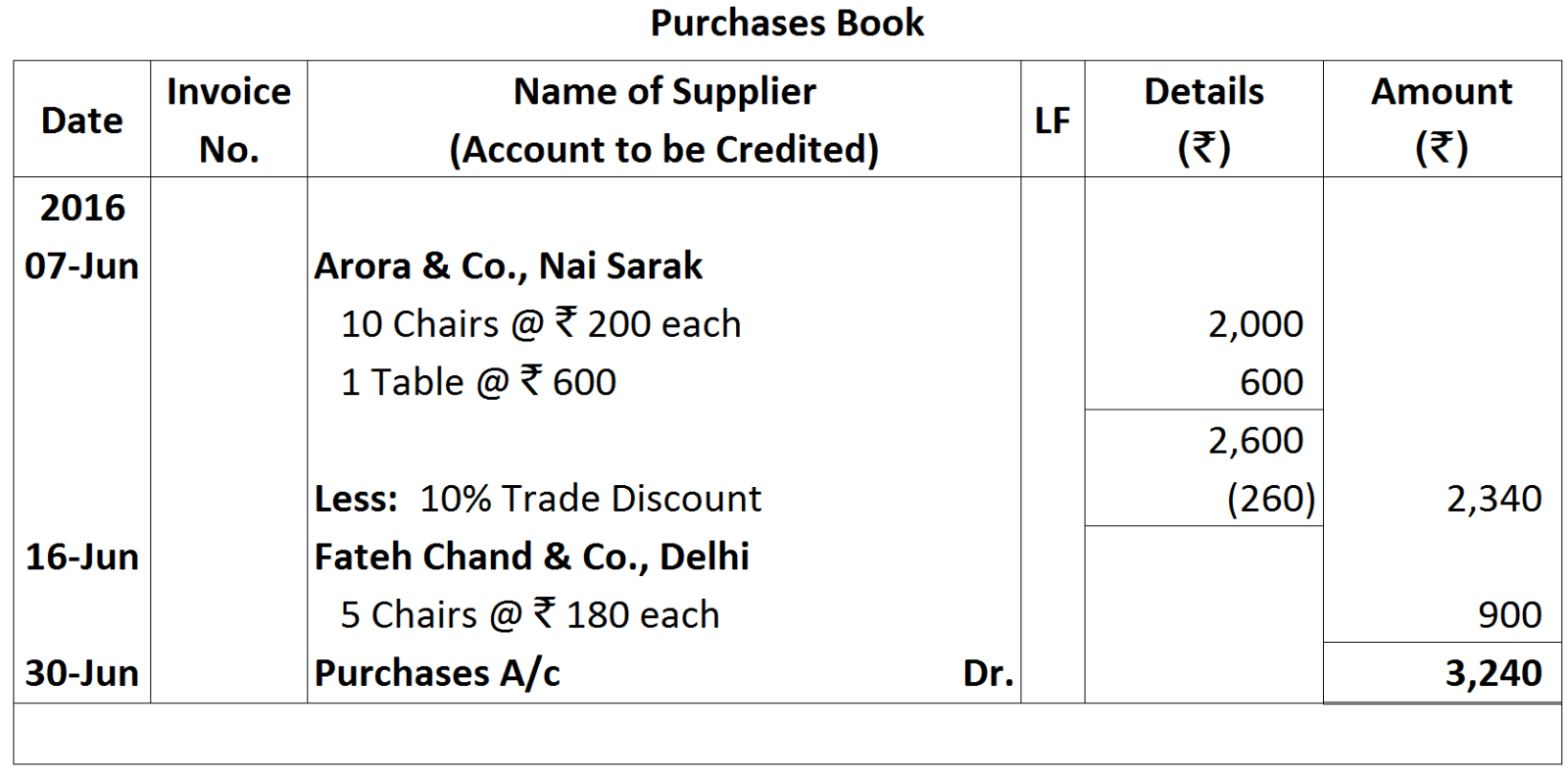
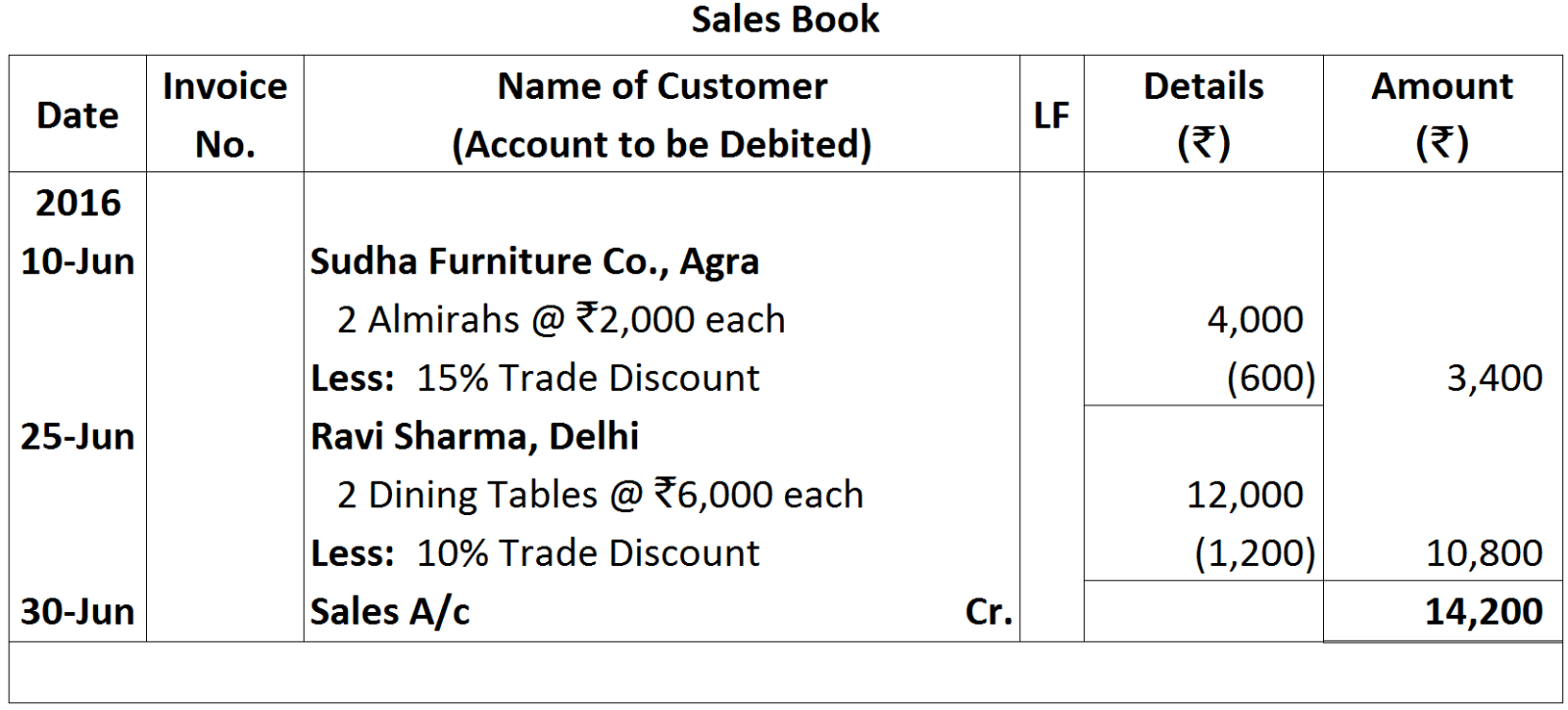
Prepare Sales book and Purchases book of M/s Deendayal from the following transactions.
2016
 
June 7
Purchased from Arora & Co., Nai Sarak
10 Chairs @ ₹ 200 each
1 Table for ₹ 600
Trade discount 10%
June 10
Sold to Sudha Furniture Co., Agra
2 Almirahs @ ₹ 2,000 each
Less: 15%
June 12
Sold to Meera Mart for cash
10 Tables @ ₹ 1,000 each
June 15
Purchased from Hira Lal & Sons for cash
15 Chairs @ ₹ 350 each
June 16
Purchased from Fateh Chand & Co., Delhi
5 Chairs @ ₹ 180 each
June 25
Sold to Ravi Sharma, Delhi
2 Dining Tables @ ₹ 6,000 each
Less: 10%
 
Answer

Note: Purchases book records only the credit purchase of goods, so transaction dated June 15 (being purchase of goods for cash) will not be recorded.

Note: Sales book records only the credit sales of goods, so transaction dated June 12 (being cash sales) will not be recorded.
View full question & answer
Question 186 Marks
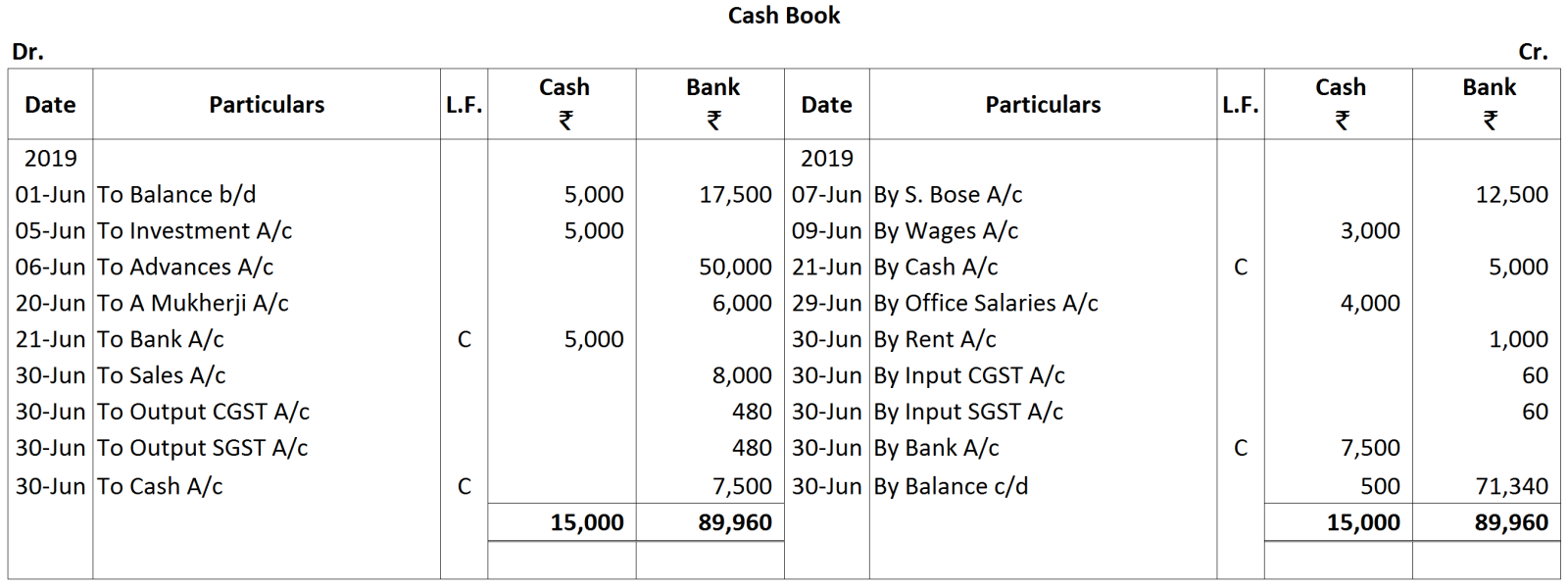
Prepare Two-column Cash Book of Bimal, Lucknow from the following transactions:
2019
 
June 1
Cash Balance
5,000
June 1
Bank Balance
17,500
June 5
Cash received from sale of personal asset deposited in firm's account
5,000
June 6
Cheque received as advance against sale, paid into bank
50,000
June 7
Paid S. Bose by cheque
12,500
 
Discount received
200
June 9
Paid wages in cash
3,000
June 20
Received a cheque from A. Mukherjee and sent it to bank
6,000
June 21 Drawn from Bank 5,000
June 29 Paid office salaries in cash 4,000
June 30 Sold goods in cash for ₹ 8,000 plus CGST and SGST @ 6% each and banked the same  
June 30 Paid rent by cheque including CGST and SGST @ 6% each 1,120
June 30 Paid into Bank 7,500
Answer
Solution is as follows.
View full question & answer
Question 196 Marks
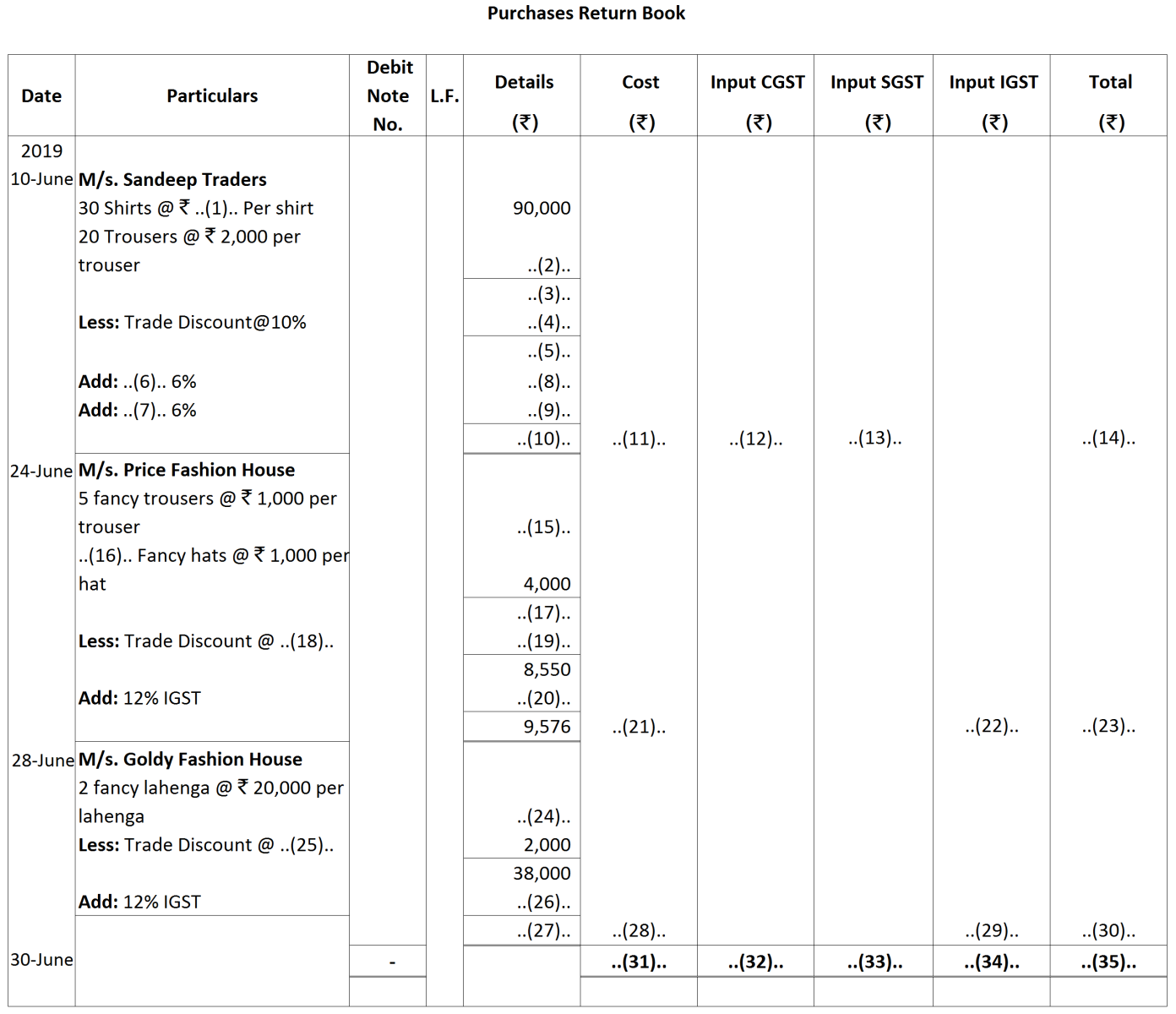
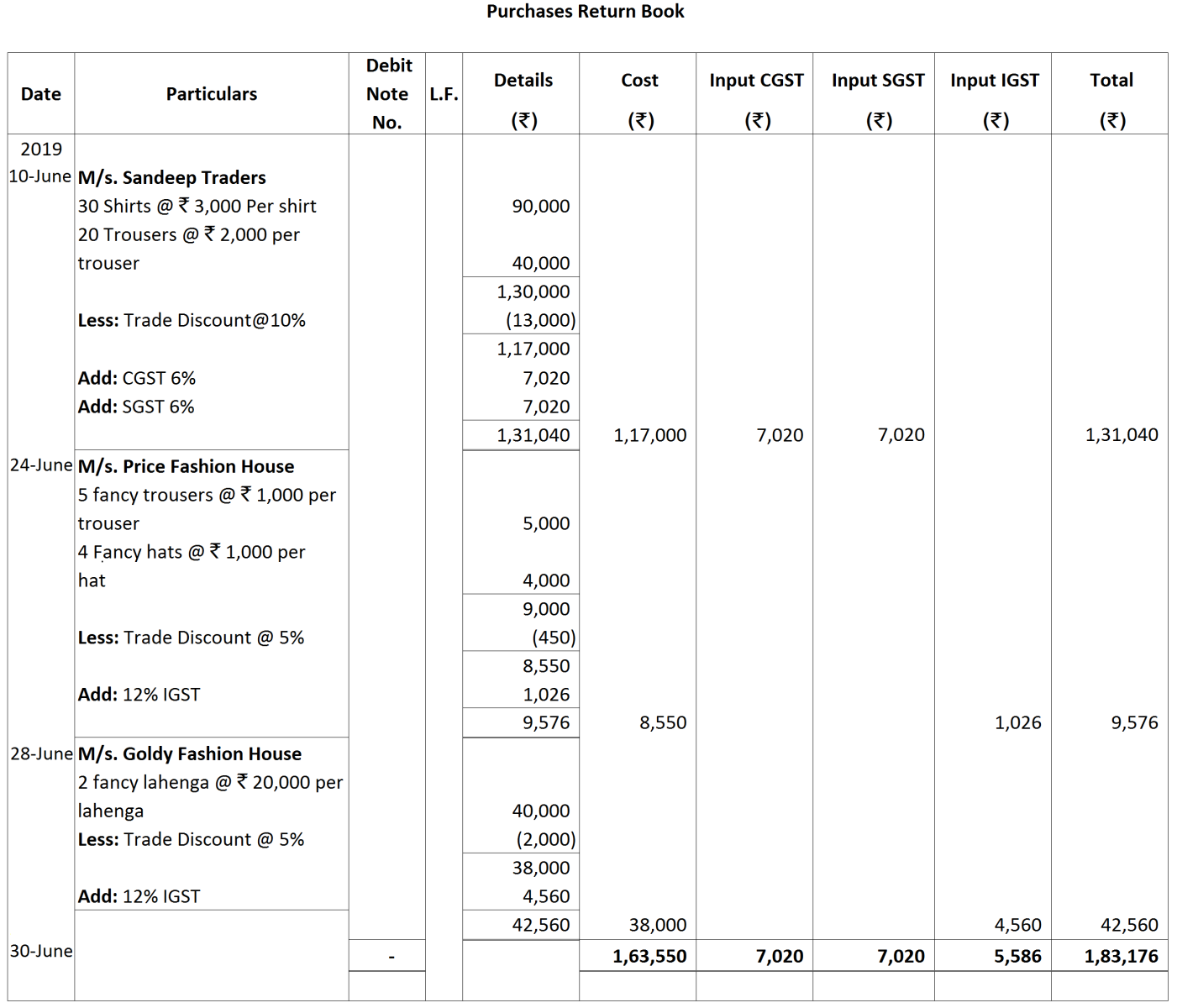
In the following Purchases Return Book, determine the missing information:
Answer
Solution is as follows.
View full question & answer
Question 206 Marks
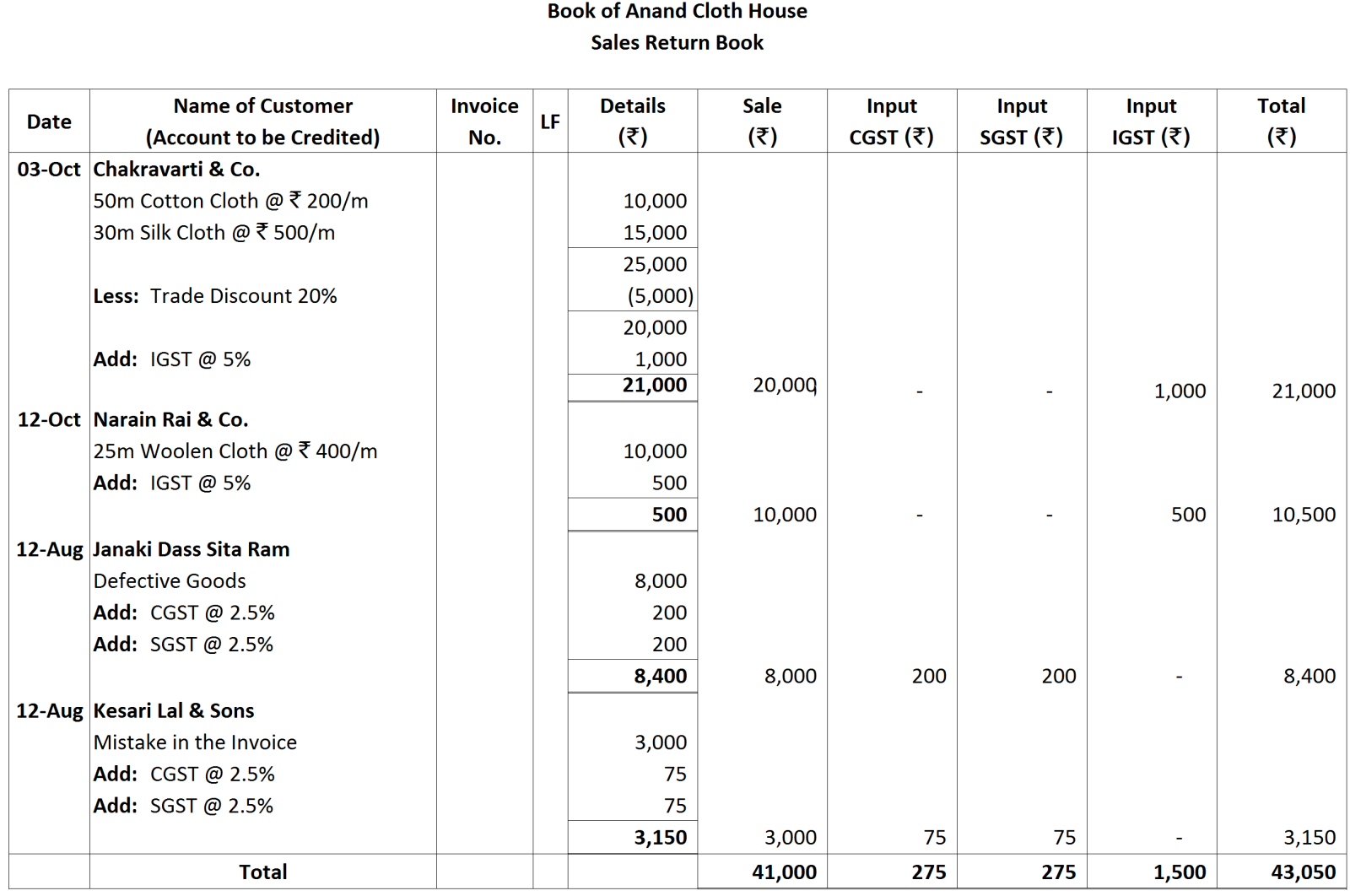
Enter the following transactions in the Returns Inward Book of Anand Cloth House, Ajmal Khan Road, Mathura (U.P.) assuming CGST @ 2.5% and SGST @ 2.5%.
October 3
Chakravarti & Co. Jaipur (Rajasthan), returned to us being not according to sample
50 Metre Cotton Cloth @ ₹ 200 per Metre
30 Metre Silk Cloth @ ₹ 500 per Metre
Trade Discount 20%
October 12
Narain Rai & Co. Indore (M.P.), returned being not up to the approved sample
25 Metre woollen cloth @ ₹ 400 per Metre
October 20
Goods sold to Janaki Das Sita Ram, Agra (U.P.) now returned by them, being defective valued at ₹ 8,000.
October 28
Allowance allowed to Kesari Lal & Sons, Sadar Bazar, Prayagraj (U.P.) on account of a mistake in the invoice ₹ 3,000.
Answer
Returns Inward Book of Anand Cloth House, Ajmal Khan Road, Mathura (U.P).
View full question & answer
Question 216 Marks
Prepare Two-column Cash Book of Vinod, Delhi from the following transactions:
2018  
Oct. 1 Cash in Hand 25,000
Oct. 1 Cash at Bank 75,000
Oct. 7 Bought goods for ₹ 15,000 plus IGST @ 12% against cheque  
Oct. 8 Bought goods for ₹ 5,000 plus CGST and SGST @ 6% each  
Oct. 10 Honoured our own acceptance by cheque 5,000
Oct. 14 Paid petty expenses 150
Oct. 18 Ramesh who owed ₹ 5,000 became bankrupt and paid us 50 paise in a rupee  
Oct. 20 Received cash from Manohar 7,500
  Allowed discount 250
Oct. 23 Withdrew from bank 4,000
Oct. 24 Paid to Ghanshyamdas & Co. 3,000
  Received discount 100
Oct. 25 Withdrew from bank for personal expenses 3,000
Oct. 27 Sold goods for ₹ 11,000 plus CGST and SGST @ 6% against cash  
Oct. 28 Received cheque for goods sold for ₹ 9,000 plus CGST and SGST @ 6% each  
Oct. 29 Received repayment of a loan of ₹ 5,000 and deposited ₹ 3,000 out of it into bank  
View full question & answer
Question 236 Marks
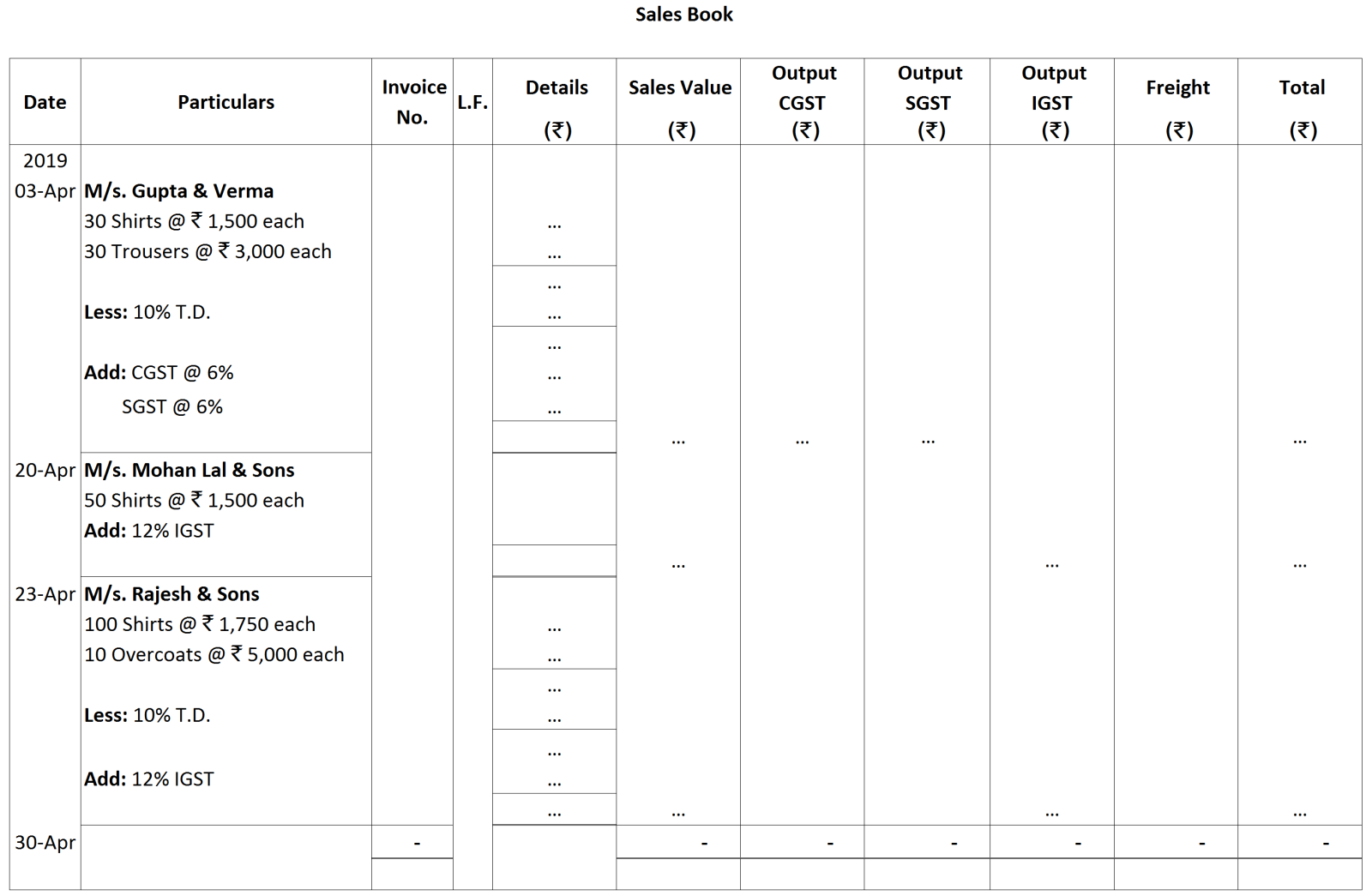
From the following particulars, prepare Sales Book of Gupta & Co., Kolkata who deals in furniture:
Show the Posting from Sales Book to Ledger Accounts.
View full question & answer
Question 246 Marks
M/s Ruchi trader started their cash book with the following balances on July 2017: cash in hand ₹ 1,354 and balance in bank current account ₹ 7,560. He had the following transaction in the month of July 2017:
 
 
03
Cash sales
2,300
05
Purchased goods, paid by cheque
6,000
08
Cash sales
10,000
12
Paid trade expenses
700
15
Sales goods, received cheque (deposited same day)
20,000
18
Purchased motor car paid by cheque
15,000
20
Cheque received from Manisha (deposited same day)
10,000
22
Cash Sales
7,000
25
Manisha’s cheque returned dishonoured
 
28
Paid Rent
2,000
29
Paid telephone expenses by cheque
500
31
Cash withdrawn for personal use Prepare bank column cash book
2,000
View full question & answer
Question 256 Marks
Journalise the following transactions:
 
 
(i)
Shyam became insolvent. A first and final compensation of 75 paise in a rupee was received from his Official Receiver. He owed us
10,000
(ii)
Received cash for bad debts written off last year.
5,000
(iii)
Rent due to landlord.
8,000
(iv)
Salaries due to clerks.
10,000
(v) Placed an order with Rakesh Mohan for the supply of goods of the list price of ₹ 1,00,000. In this connection, Raman paid 10% of the list price as an advance by cheque.  
View full question & answer
Question 266 Marks
Prepare double column cash book from the following transactions for the year August 2017:
 
 
01
Cash in hand
17,500
 
Cash at bank
5,000
03
Purchased goods for cash
3,000
05
Received cheque from Jasmeet
10,000
08
Sold goods for cash
7,000
10
Jasmeet’s cheque deposited into bank
 
12
Purchased goods and paid by cheque
20,000
15
Paid establishment expenses through bank
1,000
18
Cash sales
7,000
20
Deposited into bank
10,000
24
Paid trade expenses
500
72
Received commission by cheque
6,000
29
Paid Rent
2,000
30
Withdrew cash for personal use
1,200
31
Salary paid
6,000
View full question & answer
Question 276 Marks
What is a Cash Book? What are the types of Cash Book? How is it balanced?
Answer
Cash Book is a book of primary entry in which cash and bank transactions are recorded in a chronological order, i.e., in the order they happen. Receipts are recorded on the debit side of Cash Book while payments are recorded on the credit side. Cash transactions are recorded in the cash column and bank transactions are recorded in the Bank Column.Types of Cash Book:
  1. Simple Cash Book or Single Column Cash Book:
Simple Cash Book looks like an account, with one column on each side. On the left-hand side receipts of cash are recorded and on the right-hand side payments are recorded. The ruling is as follows:
  1. Two-Column or Double Column Cash Book (Cash Book with Cash and Bank Columns)
Two Column Cash Book or Double Column Cash Book is a Cash Book which has two columns for amount on each side; one column to record cash transactions and the other column to record bank transactions. Deposit of cheques or cash, issue of cheques and withdrawal of cash from bank, etc., are recorded in bank column of the Cash Book. Thus, Two Column Cash Book represents two accounts, i.e., Cash Account and Bank Account.
Balanced:
  1. Balancing of Single Column Cash Book:
Cash Book is balanced like an account. The total of receipts column is bigger than or equal to the total of payments column. The difference is written on the credit side as By Balance c/d. The totals are then entered in the two columns opposite to one another and then on the debit side, the balance is written as 'To Balance b/d' to show the cash balance in hand in the beginning of the next period.
  1. Balancing of Double Column Cash Book:
Cash columns are balanced in the same manner as in the case of a Simple Cash Book. The process is similar for balancing the bank column.
Bank may allow to withdraw more amount than the deposited. If the bank allows the firm to withdraw more amount than the balance in the account, it is known as Overdraft. In such a case, total of the bank column on the credit side will be bigger than the total of debit side. The difference is written on the debit side as 'To Balance c/d'. Then the totals are written on the two sides opposite one another. The balance is then entered on the credit side mentioning 'By Balance b/d'.
View full question & answer
Question 286 Marks
(Transfer Entries). Give the Journal entries for the following:
  1. Gross Profit of ₹ 32,000 from Trading Account to Profit and Loss Account.
  2. Net Profit of ₹ 14,500 to Capital Account of Sri Sankar Saha.
  3. Sri Sankar Saha draws ₹ 10,000 from his Capital Account.
  4. Purchases Return of ₹ 7,000 plus IGST @ 12%.
  5. Sales Return of ​₹ 6,000 plus CGST and SGST @ 6% each.
View full question & answer
Question 306 Marks
What is an Opening Entry? Give an example.
Answer
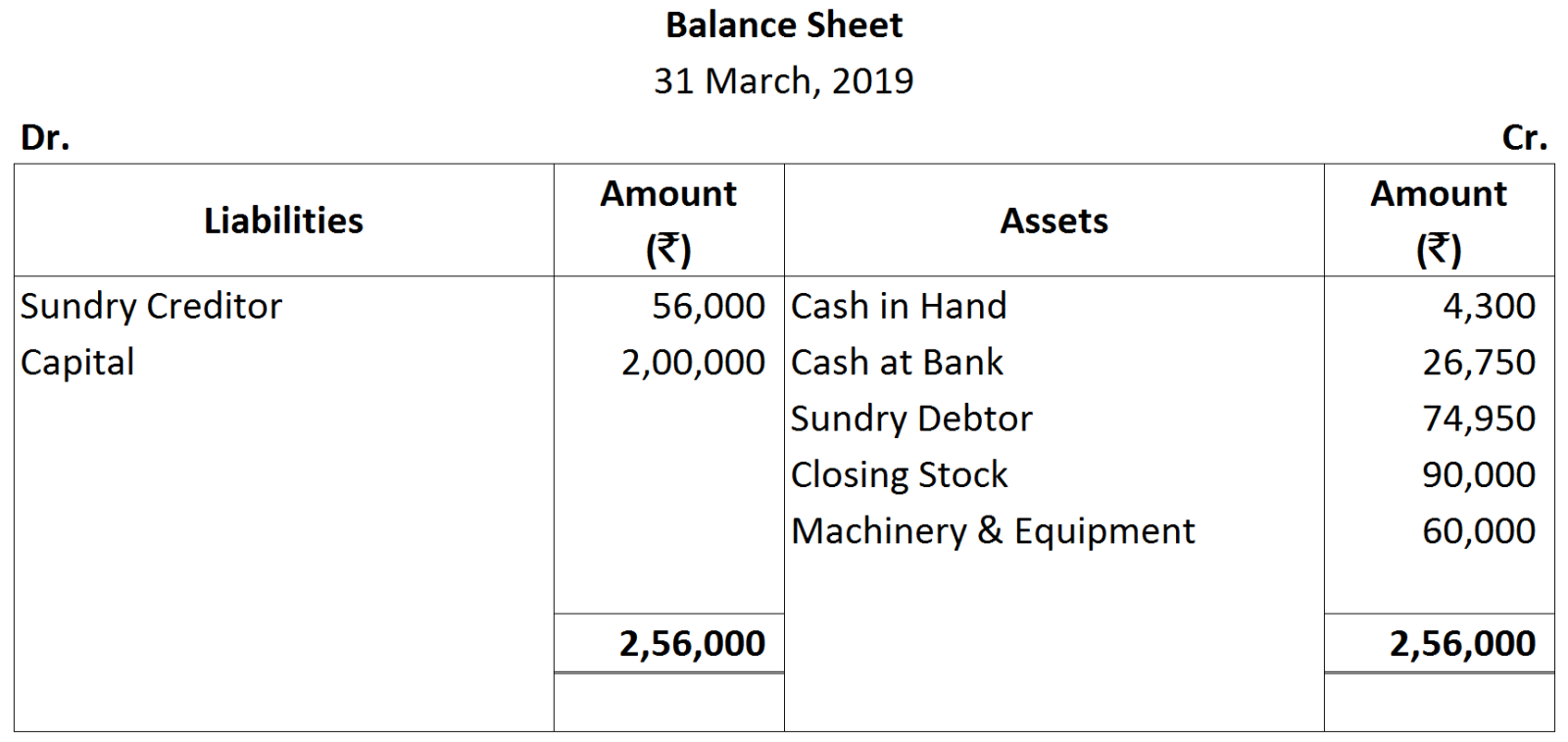
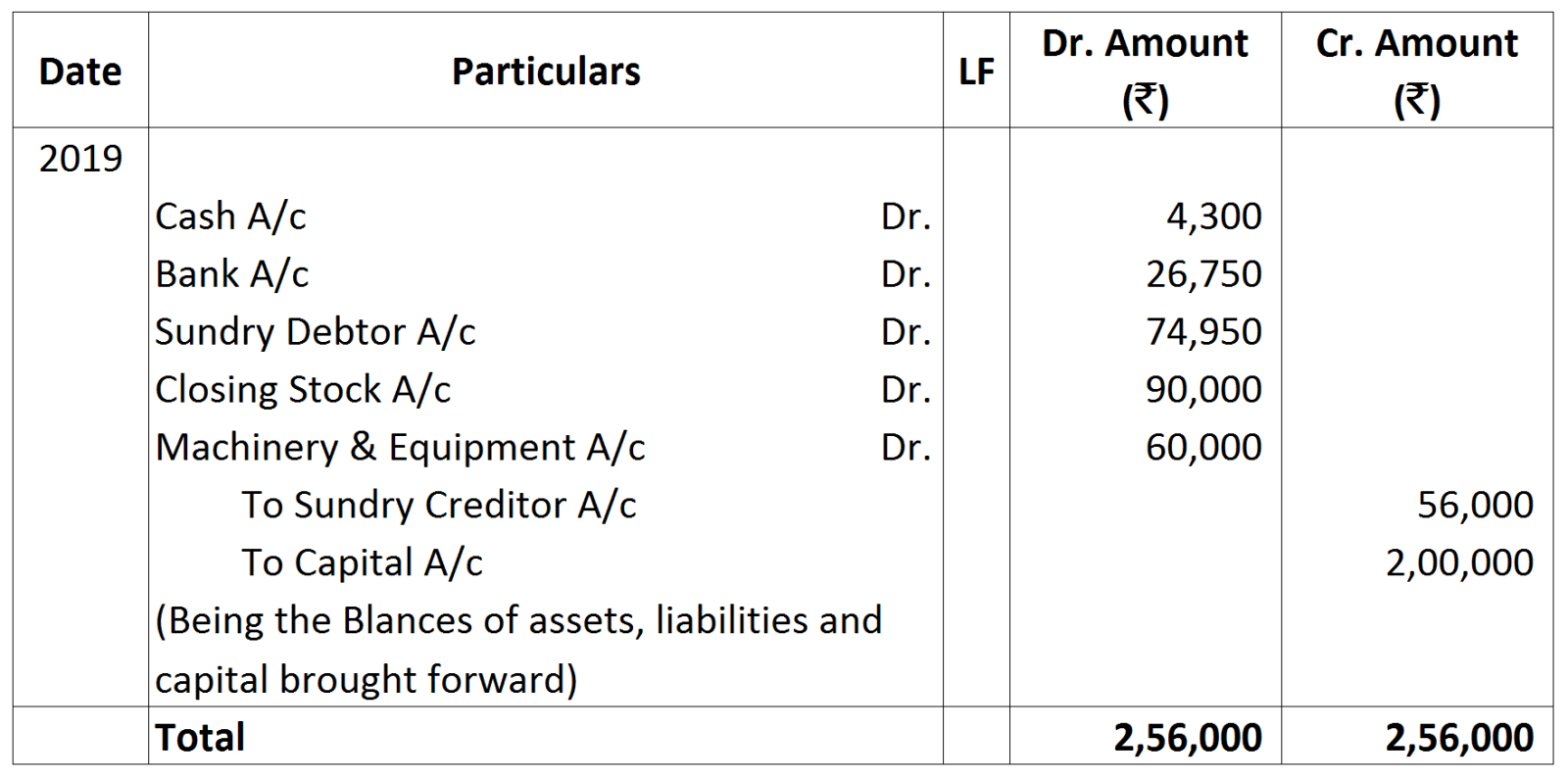
Enterprises close their books of account at the end of each year. In this process nominal accounts are closed by transferring them to Profit and Loss Account. The balances of Personal and Real Accounts (under Traditional Approach for classification of accounts) and Asset, liability and Capital Accounts (under Modern Approach for classification of accounts) are carried forward to the next year. These balances become the opening balances of the next year. The first entry in the Journal is passed to record closing balances of the previous year. It is called Opening Entry. Following example will make it more clear:
Based on the above Balance Sheet, the Opening Entry will be:
View full question & answer
Question 316 Marks
Enter the following transactions in double column cash book of M/s Ambica Traders for July 2017:
   
01
Commenced business with cash
50,000
03
Opened bank account with ICICI
30,000
05
Purchased goods for cash
10,000
10
Purchased office machine for cash
5,000
15
Sales goods on credit from Rohan and received chaeque
7,000
18
Cash sales
8,000
20
Rohan’s cheque deposited into bank
 
22
Paid cartage by cheque
500
25
Cash withdrawn for personal use
2,000
30
Paid rent by cheque
1,000
View full question & answer
Question 326 Marks
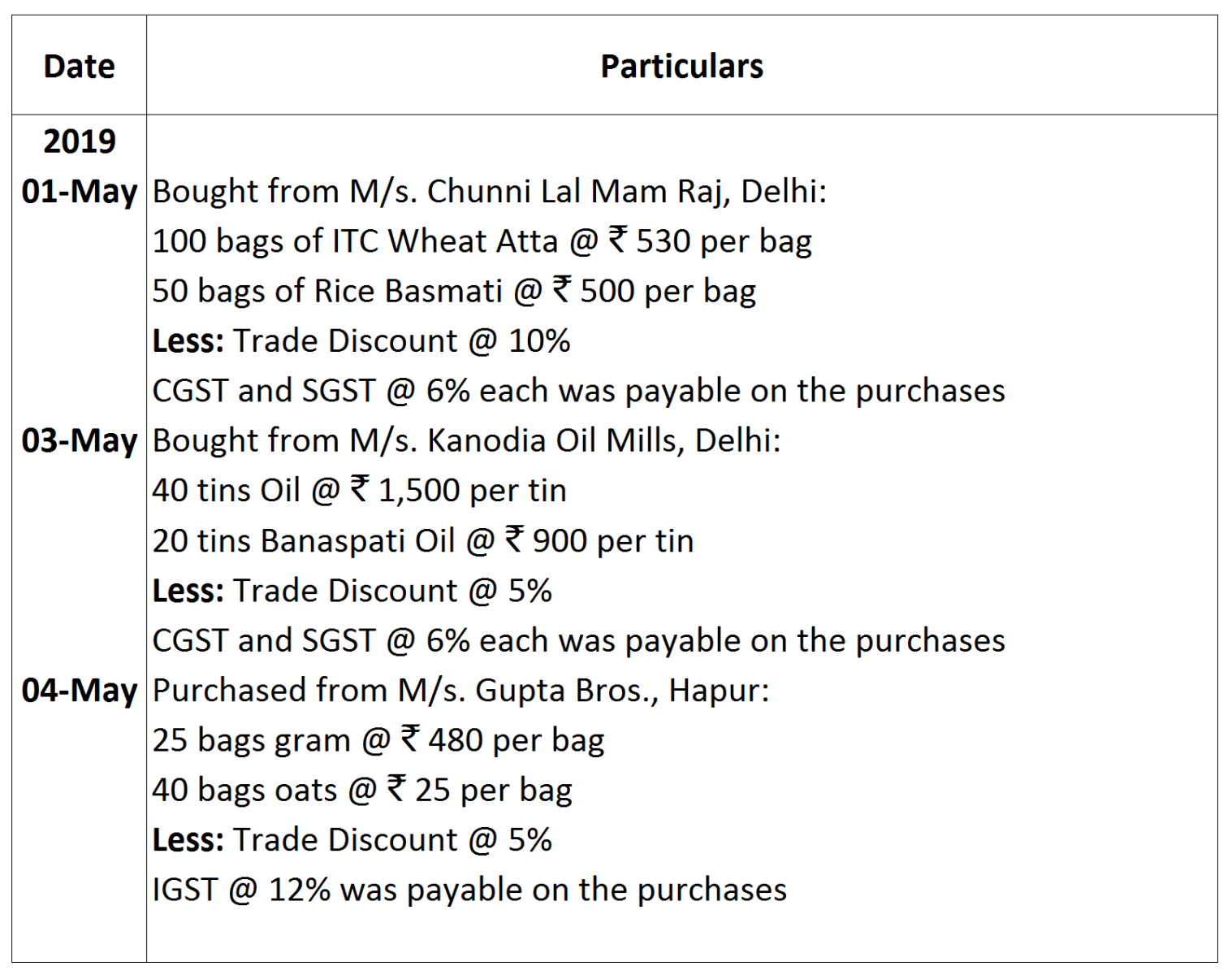
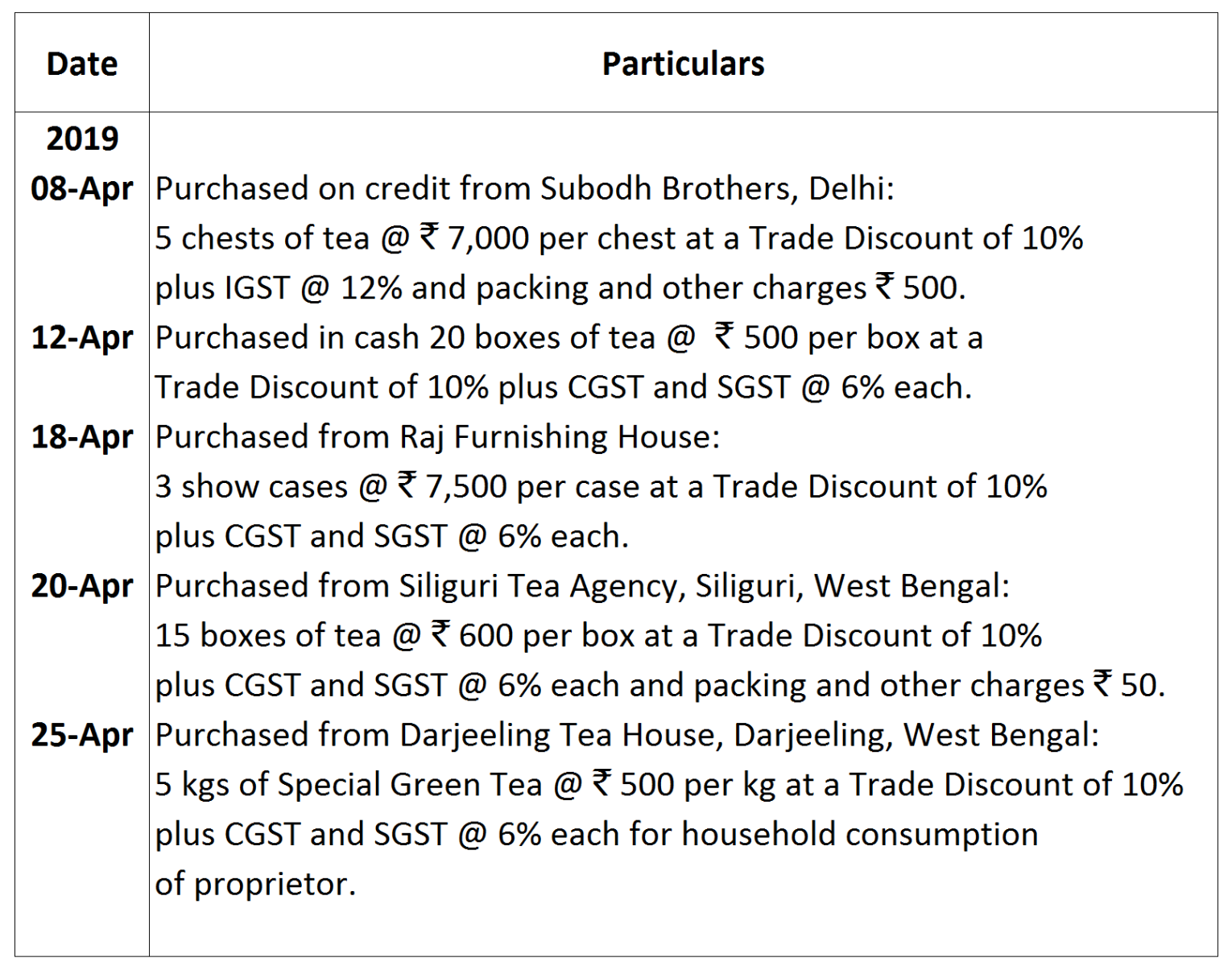
The following purchases were made by Karam, Kolkata, during the month of April, 2019. Prepare Purchases Book and post into Ledger Accounts:
View full question & answer
Question 336 Marks
Journalise the following transactions in the books of Manoj Store:
  1. Purchased goods from Ramesh ₹ 20,000 less Trade Discount at 20% plus IGST @ 12% .
  2. Sold goods costing ₹ 7,000 to Krishna for ₹ 9,000 plus IGST @ 12%.
  3. Sold goods for ₹ 10,000 and charged IGST @ 12% against cheque.
  4. ₹ 5,000 were deposited into Savings Account.
  5. Machinery costing ₹ 4,00,000 for which order was placed earlier paying advance of ₹ 40,000. The balance amount was paid as follows:
  6. An old machine (personal) valued at ₹ 30,000 was given in exchange:
  1. Issued a cheque from his savings account for ₹ 1,30,000.
  2. Balance by issue cheque from firm's bank account.
  3. Paid wages ₹ 2,500 for installation of machine.
View full question & answer
Question 346 Marks
Enter the following transactions of Ripinder, Delhi in a Single Column Cash Book and balance it:
2019  
Jan. 1 Ripinder started business with capital 2,00,000
Jan. 2 Purchased furniture for cash 50,000
Jan. 3 Purchased goods for cash 30,000
Jan. 5 Paid freight 500
Jan. 7 Sold goods for cash 28,000
Jan. 10 Paid to Ramesh 20,000
Jan. 15 Sold goods for cash 10,000
Jan. 20 Paid wages 10,000
Jan. 25 Purchased goods from Raj on credit 20,000
Jan. 31 Paid rent by Cheque 5,000
View full question & answer
Question 356 Marks
Write the following transactions in the Cash Book of Premium Stores, Kolkata (Proprietor Amrit Kumar):
2019
 
Jan. 1
Commenced business with cash
50,000
Jan. 2
Opened Bank Account and deposited cash in bank
20,000
 
Purchased goods in cash of ₹ 5,000 plus CGST and SGST @ 6% each
5,000
Jan. 4
Paid wages
500
Jan. 6
Cash sales of ₹ 2,000 plus CGST and SGST @ 6% each
2,000
 
Purchased goods for ₹ 10,000 plus CGST and SGST @ 6% each for cash
 
Jan. 10
Sold goods of ₹ 4,000 plus CGST and SGST @ 6% each and payment received by cheque which is deposited in Bank, allowed cash discount of ₹ 400
 
 
Received from Amit
5,900
 
Allowed him discount
100
Jan. 15
Paid to Bhaskar
2,800
 
Received discount
200
Jan. 18
Purchased goods from Kanchan, Delhi of ₹ 10,000 plus IGST @ 12%
 
Jan. 20
Goods were destroyed during transportation, Transport Company settled the claim for ₹ 10,000 in full
 
Jan. 27
Received cheque from the transport company
10,000
Jan. 28
Withdrew for office use
5,000
View full question & answer
Question 366 Marks
Record the following transactions in a Petty Cash Book drawn with suitable columns and then balance the same:
2017
 
(₹)
Jan. 1
Petty cashier is given a monthly imprest amount of ₹ 10,000. He spent last month ₹ 9,200 and got the balance from the head cashier today.
 
Jan. 2
Paid for Wages
600
Jan. 3
Paid for sundry expenses
100
Jan. 5
Paid for stationery
700
Jan. 9
Paid for courier charges
200
Jan. 12
Stamps purchased
750
Jan. 14
Paid wages to casual labour
500
Jan. 16
Stationery purchased
400
Jan. 19
Paid for general expenses
610
Jan. 20
Paid for cartage
800
Jan. 22
Paid for advertising
900
Jan. 24
Paid for postage
400
Jan. 25
Paid for Taxi Fare
840
Jan. 27
Paid for entertainment
600
Jan. 29
Paid for carriage
500
Jan. 31
Paid for petty repairs
700
View full question & answer
Question 376 Marks
Prepare Simple Cash book of Gopal of Amritsar from the following transactions:​
2019
 
April 1
Gopal commenced business introducing cash ₹ 60,000 and ₹ 1,50,000 by taking a loan from the Allahabad Bank.
 
April 4
Purchased following assets for business: Computer ₹ 16,000; Furniture ₹ 18,500 and Machinery ₹ 32,000 plus CGST and SGST @ 6% each, paid by cheque.
 
April 6
Purchased goods of ₹ 40,000 plus CGST and SGST @ 6% each from Bhushan, Amritsar, half of the value paid in cash.
 
April 8
Paid wages for installation of Machinery
4,000
April 12
Computer repair charges ₹ 1,900 paid along with CGST and SGST @ 6% each
 
April 15
Paid wages
15,000
 
Purchased Postage Stamps
150
 
Paid for stationery of ₹ 2,700 along with CGST and SGST @ 6% each
 
April 19
Sold for cash half the goods purchased from Bhushan to Anil Krishna at a profit of 25% and allowed him Trade Discount of 5%. Charged CGST and SGST @ 6% each
 
April 24
Payment to carpenter for repairs to personal furniture
350
April 26
Paid for medical expenses of Smt. Gopal
1,800
April 30
Paid for shop rent ₹ 2,000 along with CGST and SGST @ 6% each.
 
View full question & answer
Question 386 Marks
Prepare Returns Inward and Returns Outward Books from the following in the books of Modern Shoes, Kolkata (West Bengal) assuming CGST @ 6% and SGST @ 6%.
2018
 
January 3
Returned to Bata Shoe Co., Kolkata
50 pairs of Chappals being not up to the approved sample @ ₹ 600 per pair
Less: Trade Discount 20%
January 10
Guru Nanak & Co., Kolkata, returned to us:
10 pairs of Shoes, for being defective @ ₹ 1,200 per pair
Less: Trade Discount 10%
January 15
Returned to Baluja Shoe Co., Kolkata
20 pairs of ladies chappals @ ₹ 500 per pair
Less: 15%
January 22
Partap Footwear Co., Patna (Bihar), returned to us:
50 pairs of Shoes @ ₹ 1,400 per pair
January 27
Less: 5%
Manoj Shoe Co., Kolkata, returned to us:
20 pairs of Sandals @ ₹ 1,000 per pair
January 31
Returned to Liberty Shoe Co., Ranchi (Jharkhand) defective shoes worth ₹ 5,000.
View full question & answer
Question 396 Marks
Sri R maintains a Columnar Petty Cash Book on the Imprest System. The imprest amount is ₹ 5,000. From the following information, show how his Petty Cash Book would appear for the week ended 12th September, 2018:
2018  
Sept. 7 Balance in Hand 1,349
  Received cash reimbursement to make up the imprest  
  Postage 123
  Stationery 321
  Entertainment 54
Sept. 8 Travelling and conveyance 126
  Miscellaneous expenses 11
  Entertainment 72
Sept. 9 Repairs 1,567
Sept. 10 Postage 174
  Entertainment 127
  Travelling 673
Sept. 11 Stationery 41
  Entertainment 12
Sept. 12 Miscellaneous expenses 201
  Travelling 51
  Postage 483
  ​Repairs 30
View full question & answer
Question 406 Marks
Journalise the following transactions of Singh Enterprises, Delhi:
2018
 
June 1
Started business with cash
50,000
June 2
Deposited cheque from Savings Account in firm's account
2,00,000
June 3
Received cash from Ram
50,000
June 4
Purchased goods for cash
15,000
June 11
Sold goods to M/s. Hari Sales, Delhi
12,000
June 13
Paid to Ramavtar
40,000
June 17
Received from M/s. Hari Sales
10,000
June 20
Bought furniture from S.R. Furnishers against Cash
22,400
June 27
Paid rent
28,000
June 30
Paid salary
50,000
View full question & answer
Question 416 Marks
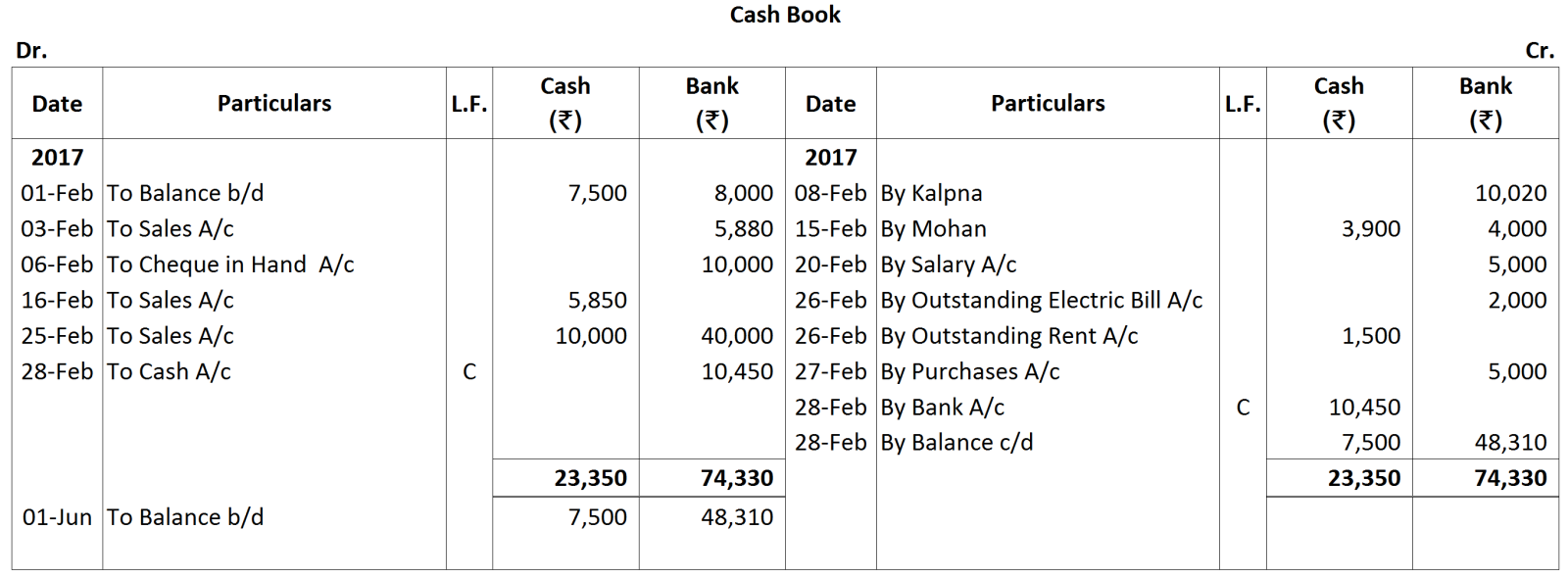
Compile a Two Column Cash Book from the following transactions of Kavita Garments:
2017
 
Feb. 1
Cash in hand ₹ 7,500; Cash at bank ₹ 8,000
Feb. 3
Received a cheque of ₹ 5,880 for cash sales. Cheque was immediately deposited into bank
Feb. 5
Received two cheques from Kalpna each of ₹ 10,000
Feb. 6
First cheque received from Kalpna is endorsed to Sunita in full settlement of ₹ 10,200
Second cheque is sent to bank for collection
Feb. 8
Second cheque received from Kalpna is returned as dishonoured by the bank
The bank has debited our account with ₹ 20 as bank charges on this cheque
Feb. 10
Received cheque from sale of old furniture ₹ 1,950. Next day, the cheque is endorsed to a creditor Ramesh in full settlement of ₹ 2,000 due to him
Feb. 12
Purchased goods from Mohan on Credit for ₹ 8,000
Feb. 15
Settled Mohan's account by giving a cheque for ₹ 4,000 and Cash ₹ 3,900
Feb. 16
Goods sold to Pawan for ₹ 6,000. He paid the amount in cash immediately after deducting $2\frac{1}{2}\%$ cash discount
Feb. 20
Paid salary by cheque ₹ 5,000
Feb. 25
Cash sale to date ₹ 50,000 of which ₹ 40,000 banked
Feb. 26
Paid electric bill of ₹ 2,000 for January by cheque. Paid Rent for January ₹ 1,500
Feb. 27
Cash purchases ₹ 5,000, issued a cheque
Feb. 28
Deposited into bank cash retaining ₹ 7,500
Answer

Working Notes:
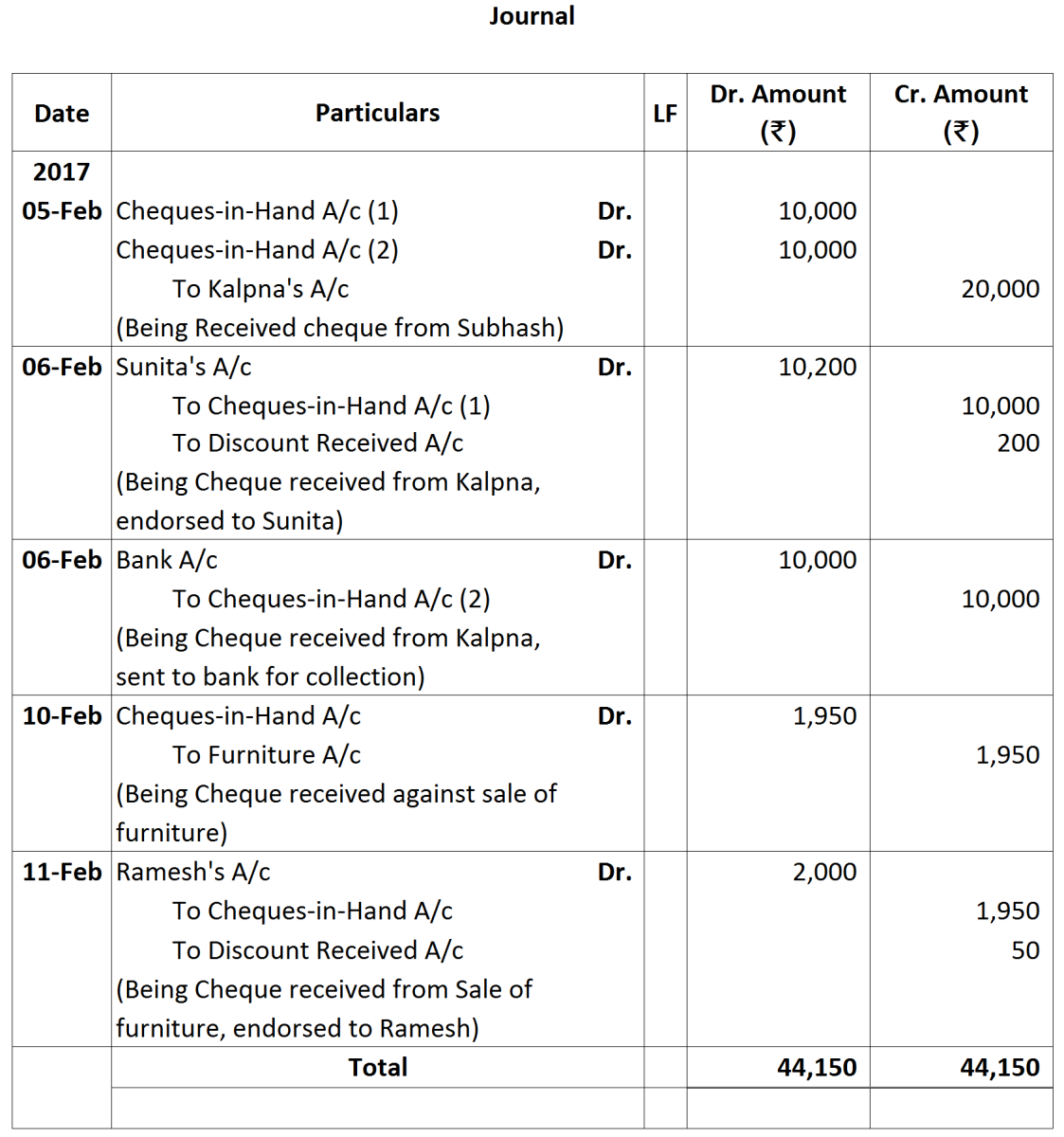
WN 1:

WN 2: Cash Deposited into the Bank,
Cash Deposited into the Bank = Total of Cash Column (Dr. side) - (Total of Cash Column (Cr. side) + Cash balance maintained)
Cash Deposited into the Bank = 23,350 - (5,400 + 7,500) = ₹ 10,450
Note: Transaction dated Feb. 12, 2017, will not be recorded in Cash Book because credit transactions will not affect the cash/ bank balance.
View full question & answer
Question 426 Marks
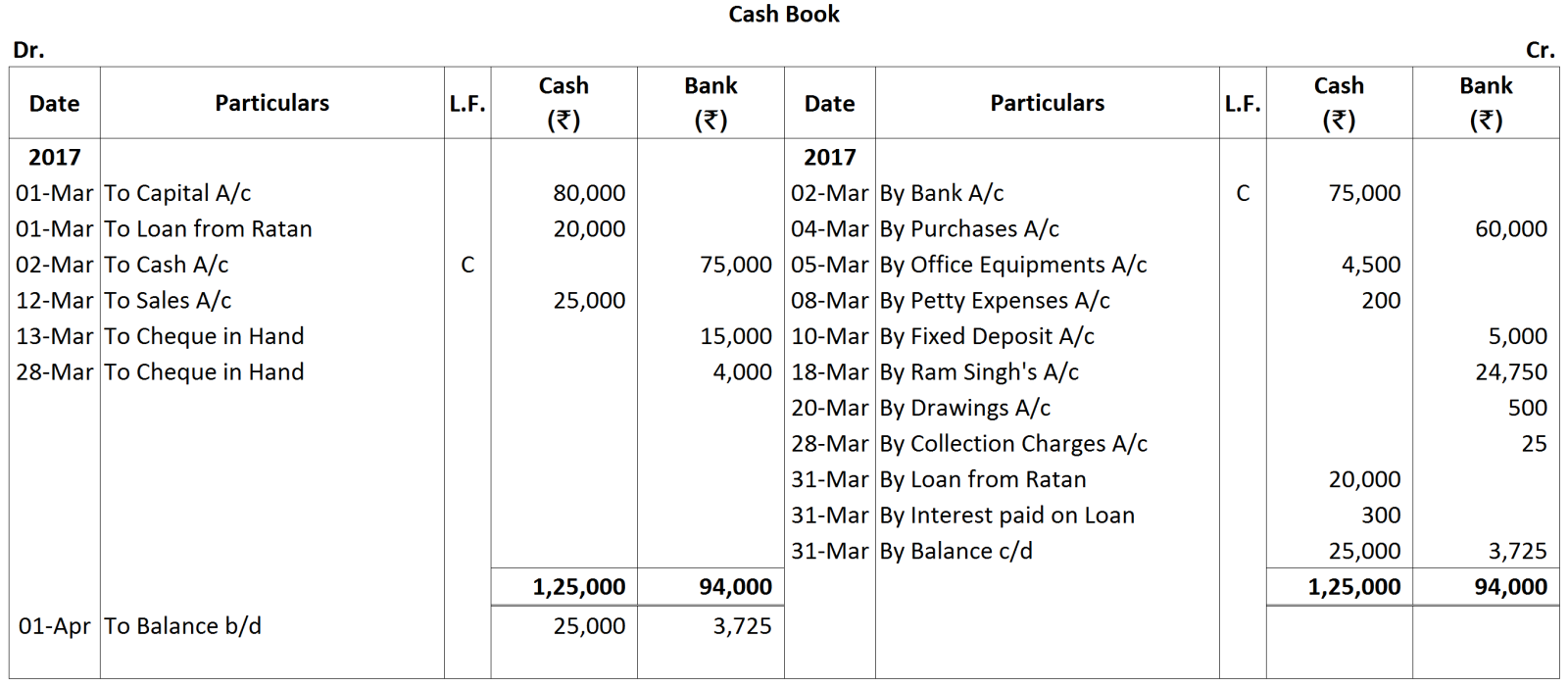
Enter the following transactions in a Cash Book with Cash and Bank Columns:
2017
 
(₹)
March 1
Commenced business with ₹ 1,00,000 of which ₹ 20,000 were borrowed from Mr. Ratan
 
March 2
Opened current account with Punjab National Bank
75,000
March 4
Bought goods by cheque
60,000
March 5
Purchased a typewriter for ₹ 4,000 and spent ₹ 500 on its repairs
 
March 8
Paid petty cash expenses
200
March 10
Transferred from Current account to Fixed Deposit Account in the Bank
5,000
March 12
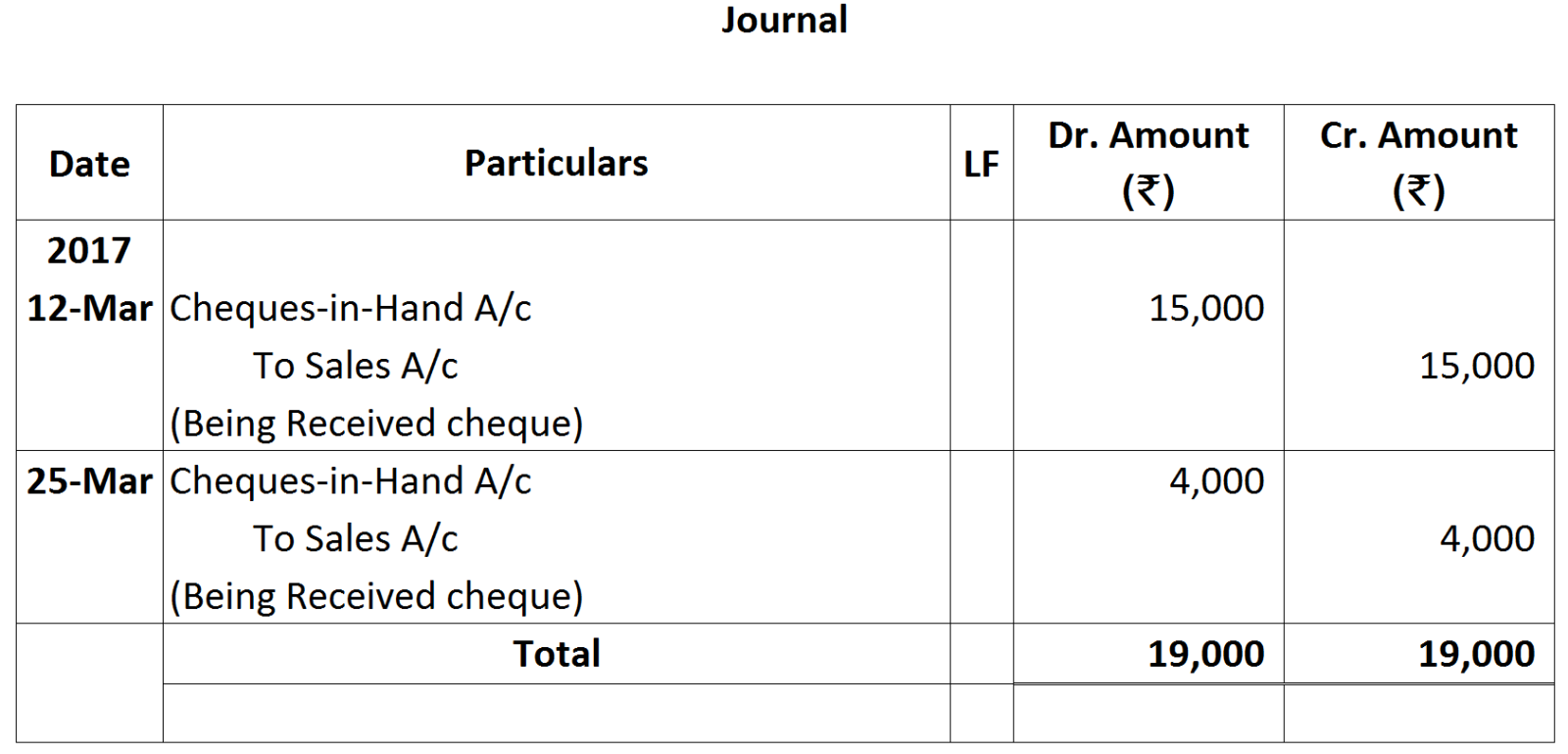
Sold goods for Cash ₹ 25,000 and cheque ₹ 15,000
 
March 13
Deposited the above cheque into bank
 
March 15
Purchased goods from Ram Singh on Credit
25,000
March 18
Settled Ram Singh's Account by cheque
24,750
March 20
Sent a cheque in payment of the fees of Proprietor's son
500
March 25
Cash sales, received a cheque
4,000
March 28
Deposited the above cheque into bank, collection charges
25
March 31
Repaid the loan taken from Mr. Ratan including interest @18% p.a.
 
Answer
Working Notes:
WN 1: WN 2: Calculation of Interest on Loan, $\text{Interest on Loan}=20,000\times\frac{18}{100}\times\frac{1}{2}=₹\ 300$
View full question & answer
Question 436 Marks
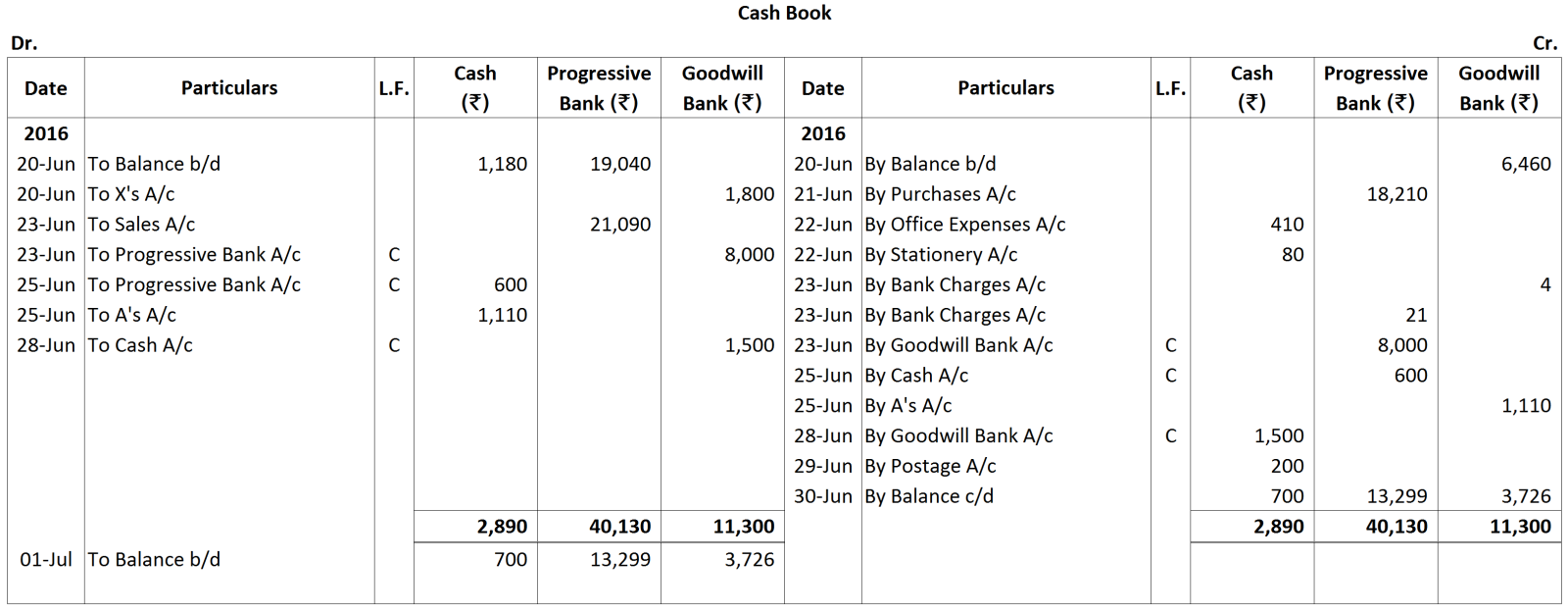
Mr. Lal operates two bank accounts both of which are maintained in the columnar cash book itself. You are required to prepare a proforma of the cash book, record the following transactions therein and draw the closing balances as on 30th June, 2016:
2016
 
(₹)
June 20
Opening Balance of Cash
1,180
Progressive Bank
19,040
Goodwill Bank (Overdraft)
6,460
June 20
Received cheque for ₹ 1,800 from a debtor Mr. X and deposited in Goodwill Bank. The Bank credited the amount on 23rd June and debited ₹ 4 as its collection charges.
 
June 21
Purchased goods for ₹ 18,210 and a cheque issued on Progressive Bank.
 
June 22
Paid office expenses ₹ 410 and ₹ 80 for stationery in cash.
 
June 23
Deposited a cheque for ₹ 21,090 being sale proceeds of goods in Progressive Bank. The Bank credited the amount on the same day and debited ₹ 21 as cheque discounting charges.
 
June 23
A cheque for ₹ 8,000 drawn by Mr. Lal himself on Progressive Bank was deposited in his account with Goodwill Bank.
 
June 25
Cash drawn from the account with Progressive Bank ₹ 600 for office use.
 
June 25
A cheque for ₹ 1,100 received from Mr. A and earlier deposited in Goodwill Bank (on 14th June) was returned unpaid and Bank debited ₹ 10 towards its charges. Mr. Lal received the amount of returned cheque and Bank charges in cash from Mr. A.
 
June 28
Deposited cash ₹ 1,500 in the account with Goodwill Bank.
 
June 29
Purchased postal stamps for ₹ 200 and paid in cash.
 
Answer
Solution is as follows:
View full question & answer
Question 446 Marks
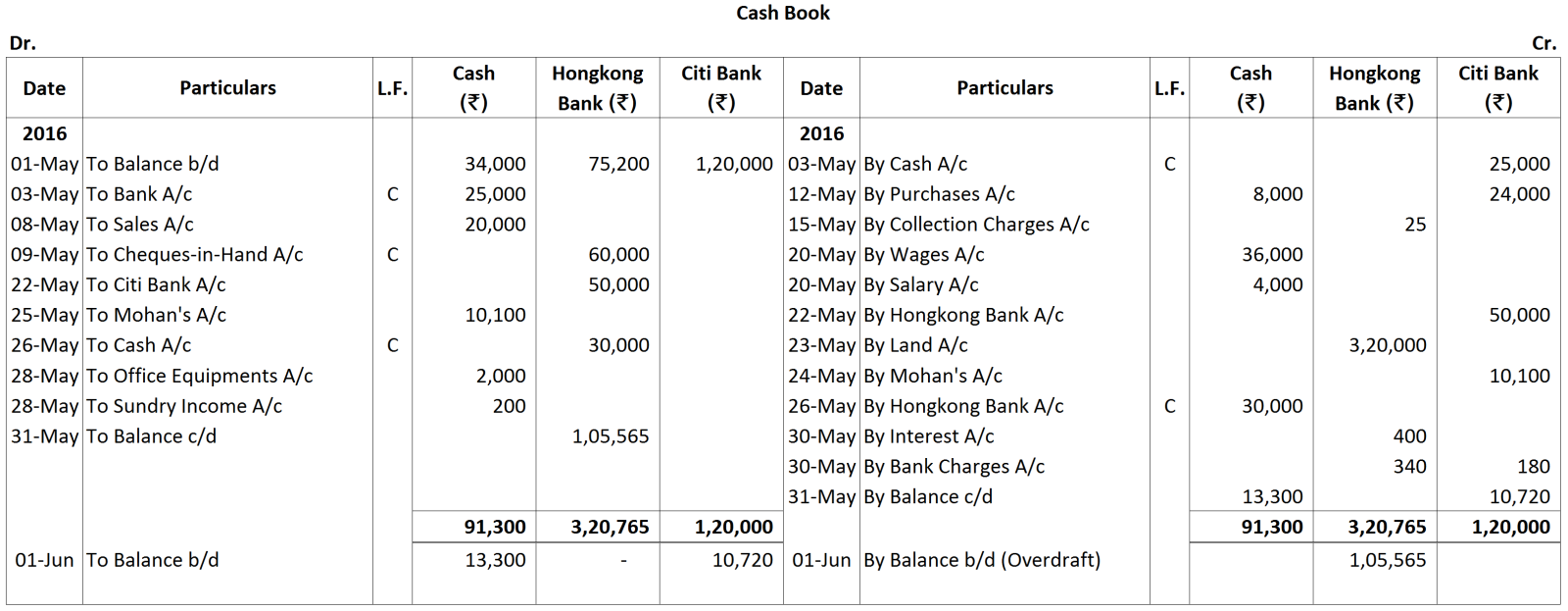
Mr. Chaturvedi maintains two bank accounts. Prepare his columnar cash book from the following particulars:
2016
 
(₹)
May 1
Cash in hand
34,000
Balance with Hongkong Bank
75,200
Balance with Citi Bank
1,20,000
May 3
Cash drawn from Citi Bank for office use
25,000
May 8
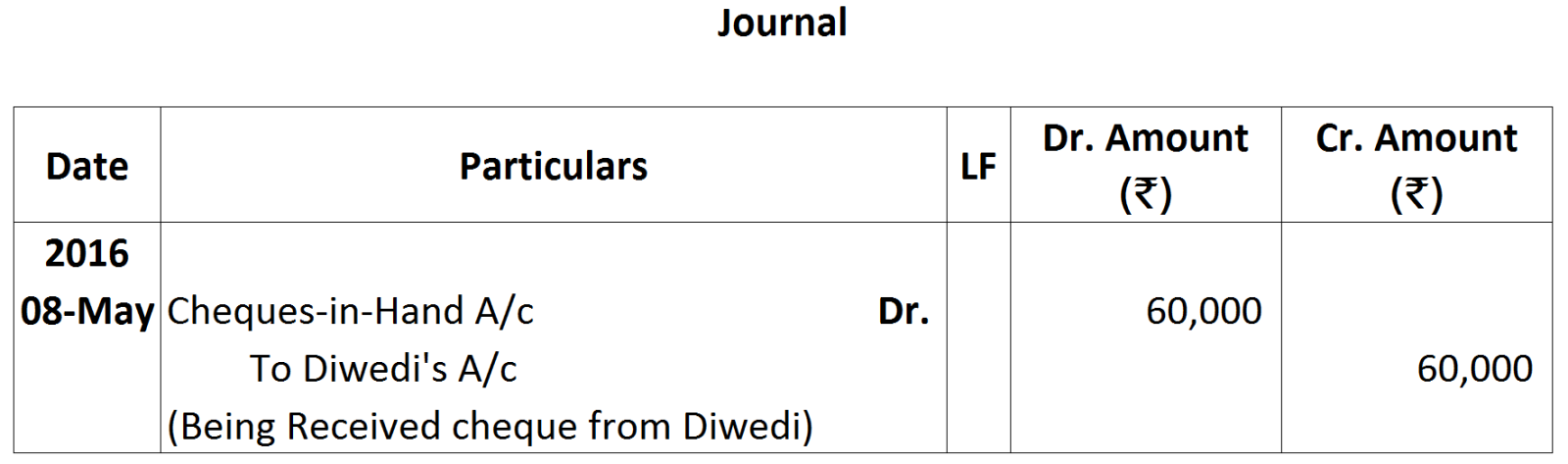
Sold goods to Diwedi for ₹ 80,000 and received from him ₹ 20,000 in cash and a cheque for the balance. The cheque is deposited in Hongkong Bank on 9th and the bank credited the amount on 15th and debited ₹ 25 as its collection charges.
 
May 12
Purchased goods for ₹ 40,000 at 20% trade discount. 25% of the amount is paid in cash and issued a cheque on Citi Bank for the balance amount.
 
May 20
Paid Wages ₹ 36,000 and Salary ₹ 4,000.
 
May 22
A cheque for ₹ 50,000 is drawn on Citi Bank and it is deposited in Hongkong Bank.
 
May 23
Purchased land for ₹ 3,20,000 and a cheque is issued on Hongkong Bank.
 
May 24
A cheque for ₹ 10,000 which was received from Mohan and was deposited in Citi Bank on 25th April is dishonoured and the bank debited ₹ 100 as bank charges on this cheque. The amount of dishonoured cheque and bank charges is received from Mohan in cash on 25th.
 
May 26
Deposited cash ₹ 30,000 in Hongkong Bank.
 
May 28
Sold old typewriter for ₹ 2,000 and old newspapers for ₹200 in cash.
 
May 30
Interest charged by Hongkong Bank ₹ 400.
 
May 31
Bank charges by Citi Bank ₹ 180 and Hongkong Bank ₹ 340.
 
Answer

Working Note:
View full question & answer
Question 456 Marks
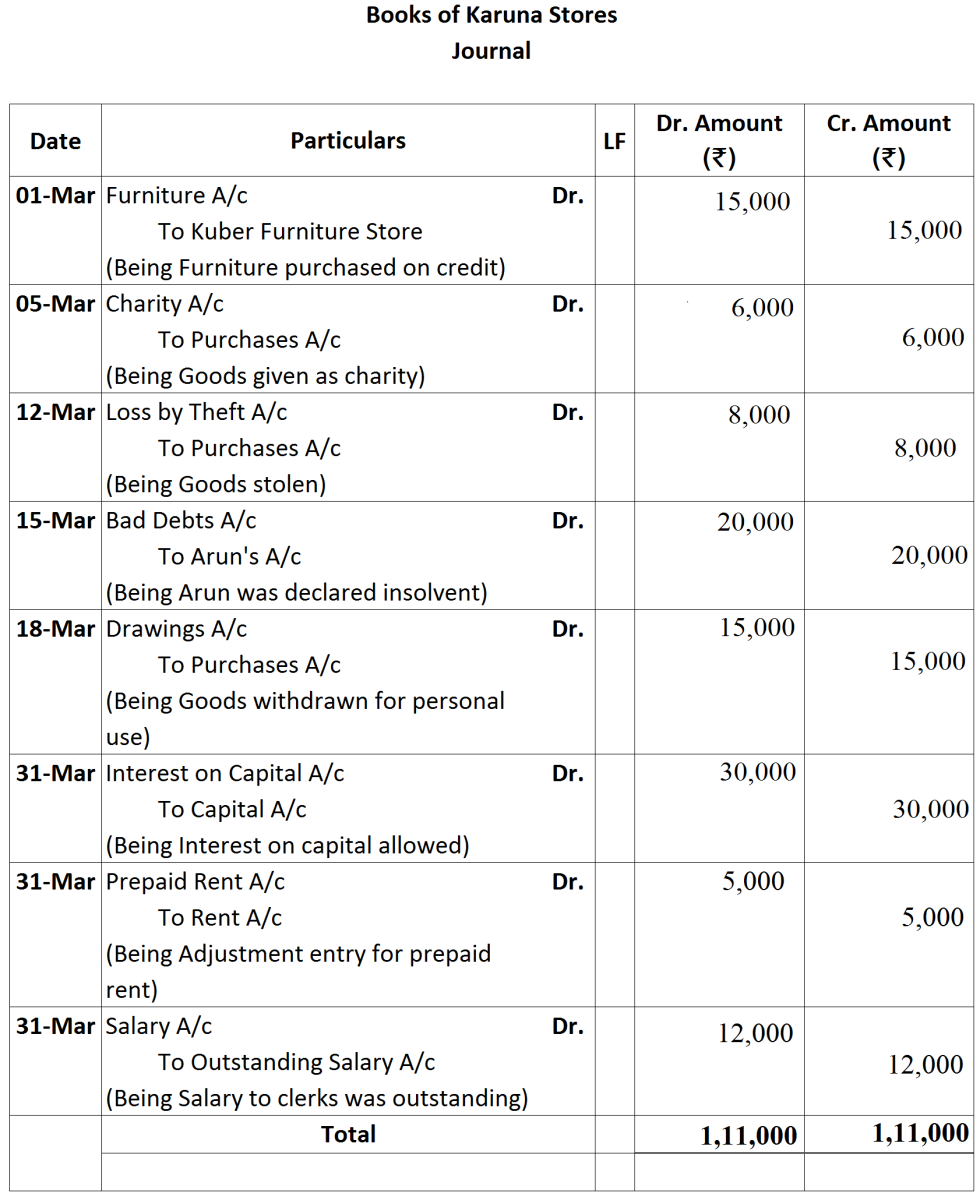
Enter the following transactions in the 'Journal Proper' of Karuna Stores:
March 1 Purchased furniture on credit from Kuber Furniture Store for ₹ 15,000.
March 5 Goods for ₹ 6,000 given away as charity.
March 12 Goods worth ₹ 8,000 and Cash ₹ 4,000 were stolen by an employee.
March 15 Arun who owed us ₹ 20,000 was declared insolvent and nothing was received from him.
March 18 Proprietor withdrew for his personal use cash ₹ 5,000 and goods worth ₹ 10,000.
March 31 Provide interest on capital of ₹ 5,00,000 at 6% p.a. for full year.
March 31 Out of the rent paid this year, ₹ 5,000 is related to the next year.
March 31 Salaries due to clerks ₹ 12,000.
Answer

Note: Cash transactions will not be recorded in Journal Proper.
View full question & answer
Question 466 Marks
What is contra entry? How can you deal this entry while preparing double column cash book?
Answer
The transaction that is entered in either sides of the double column or three column cash book, affecting both cash and the bank balances concomitantly is called contra entry. These entries result in increase in cash balances and decrease in bank balances or vice versa. In other words, a debit of bank account leads to a credit of cash account and a credit of bank account leads to a debit of cash account. For example, ₹ 200 cash deposited into bank. This transaction increases the bank amount on one hand; whereas, on the other hand reduces the cash balance. In this entry, in the debit side of the cash book, ‘Cash’ will be recorded with a balance of ₹ 200 in the bank column and in the credit side of the cash book, ‘Bank’ will be recorded with a balance of ₹ 200 in the cash column. This entry is a contra entry as it affects both cash and bank balance together. The contra entries are denoted by ‘C’.
Some transactions that lead to contra entry are given below.
  1. Opening a bank account.
  2. Depositing cash into bank.
  3. Withdrawal from bank.
These transactions are recorded in a double column Cash Book as done below.
View full question & answer
Question 476 Marks
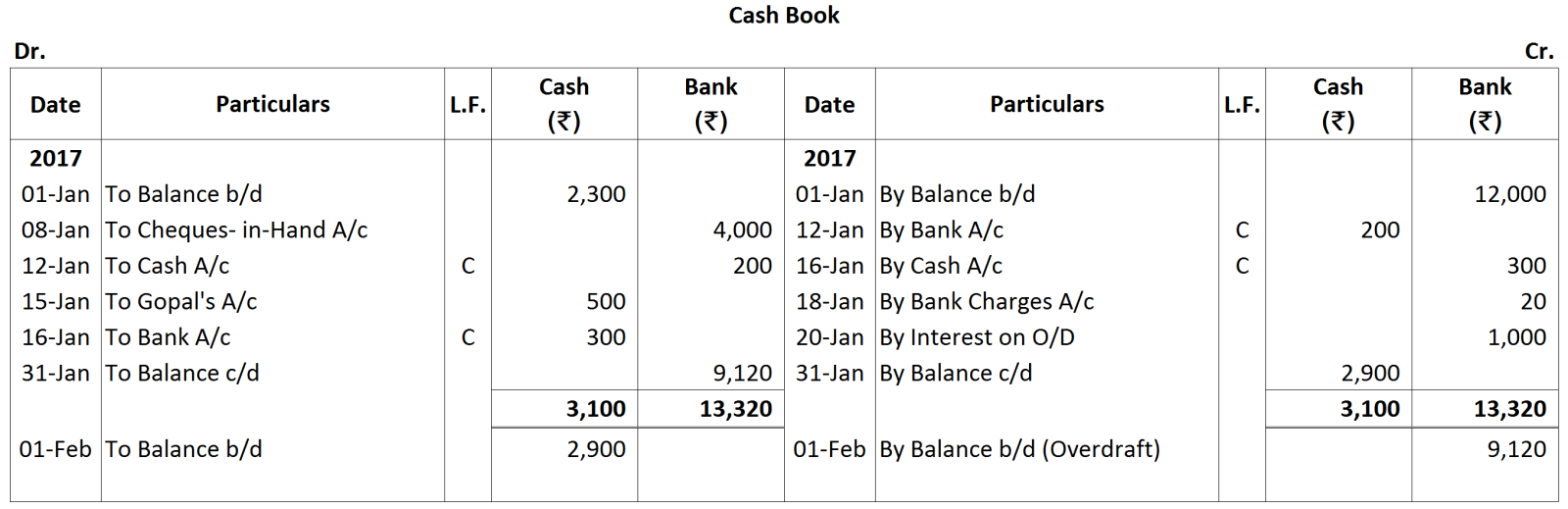
Record the following transactions in a cash book with cash and bank columns:
2017
 
(₹)
Jan. 1
Bank overdraft
12,000
Cash in hand
2,300
Jan. 7
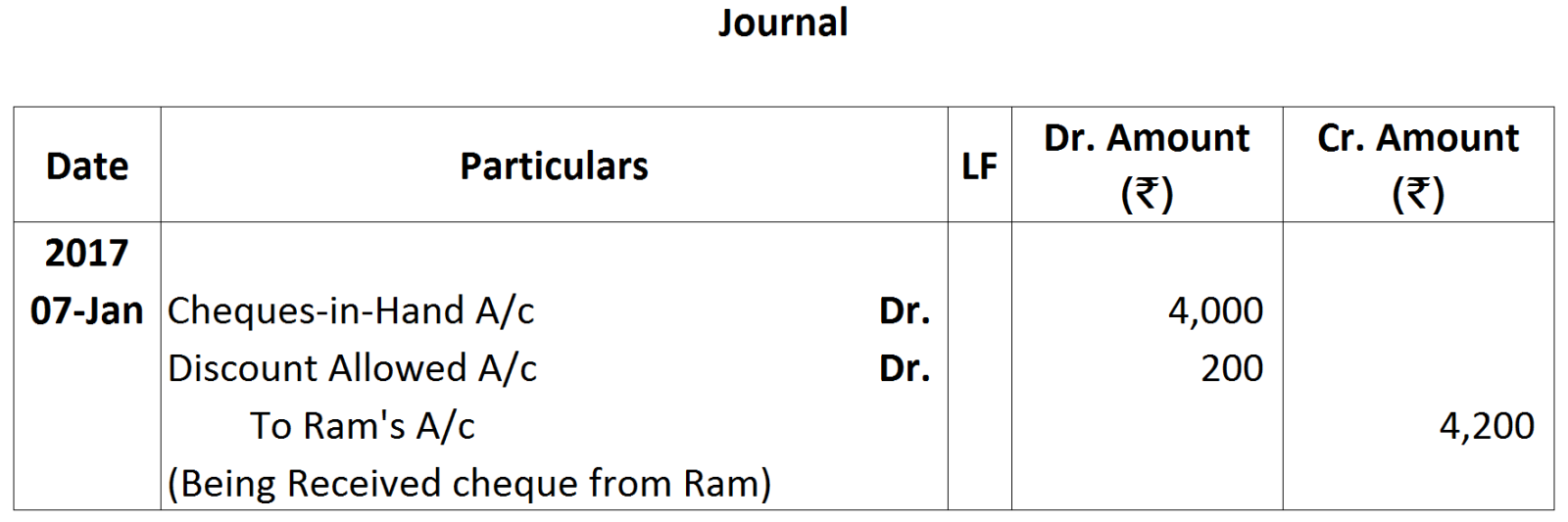
Cheque received from Ram ₹ 4,000 and discount allowed ₹ 200
 
Jan. 8
Deposited the above cheque into Bank
4,000
Jan. 12
Banked
200
Jan. 15
Received a money order from Gopal
500
Jan. 16
Money withdrawn from Bank for office use
300
Jan. 18
Bank Charges
20
Jan. 20
Interest on bank overdraft
1,000
Answer

Working Note:
View full question & answer
Question 486 Marks
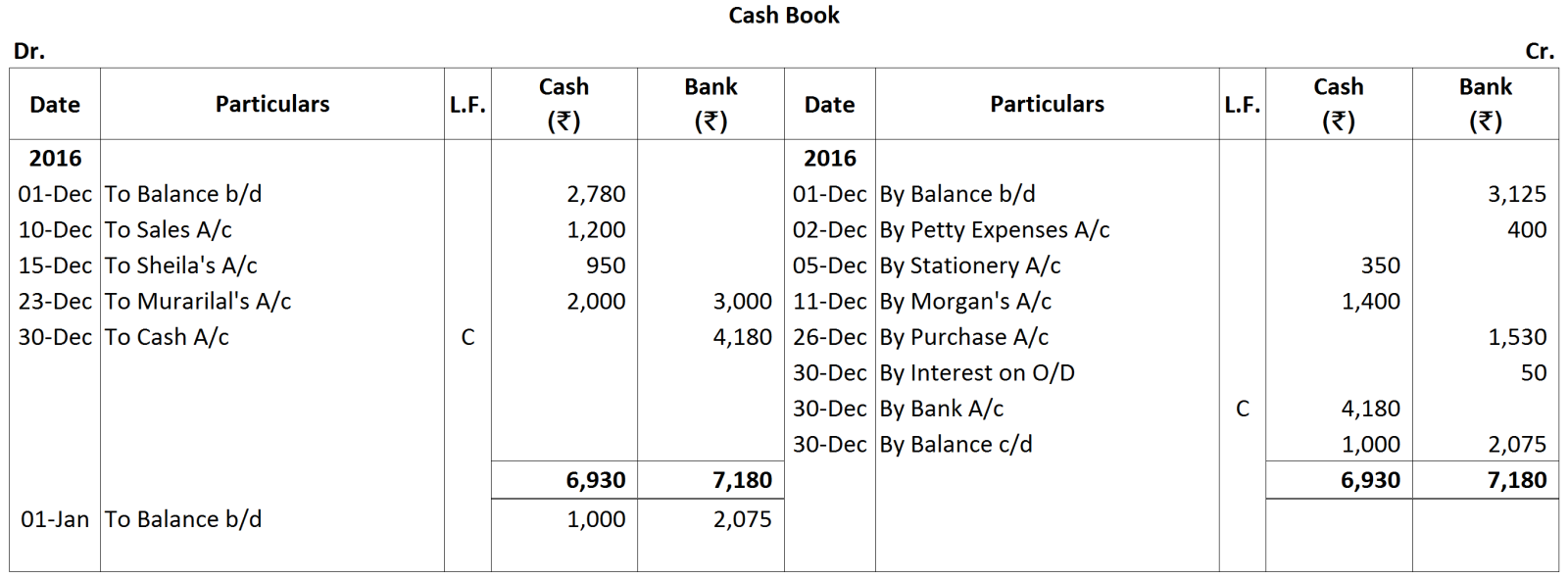
Prepare a Cash Book with Cash and Bank columns from the following information for the month of December 2011 in the Books of O'Neil:
2016  
Dec. 1 Cash in Hand ₹ 2,780; Bank Overdraft ₹ 3,125
Dec. 2 Cheque worth ₹ 400 issued to the petty cashier
Dec. 5 ₹ 350 was paid to Hari & Sons for the supply of stationery on this day
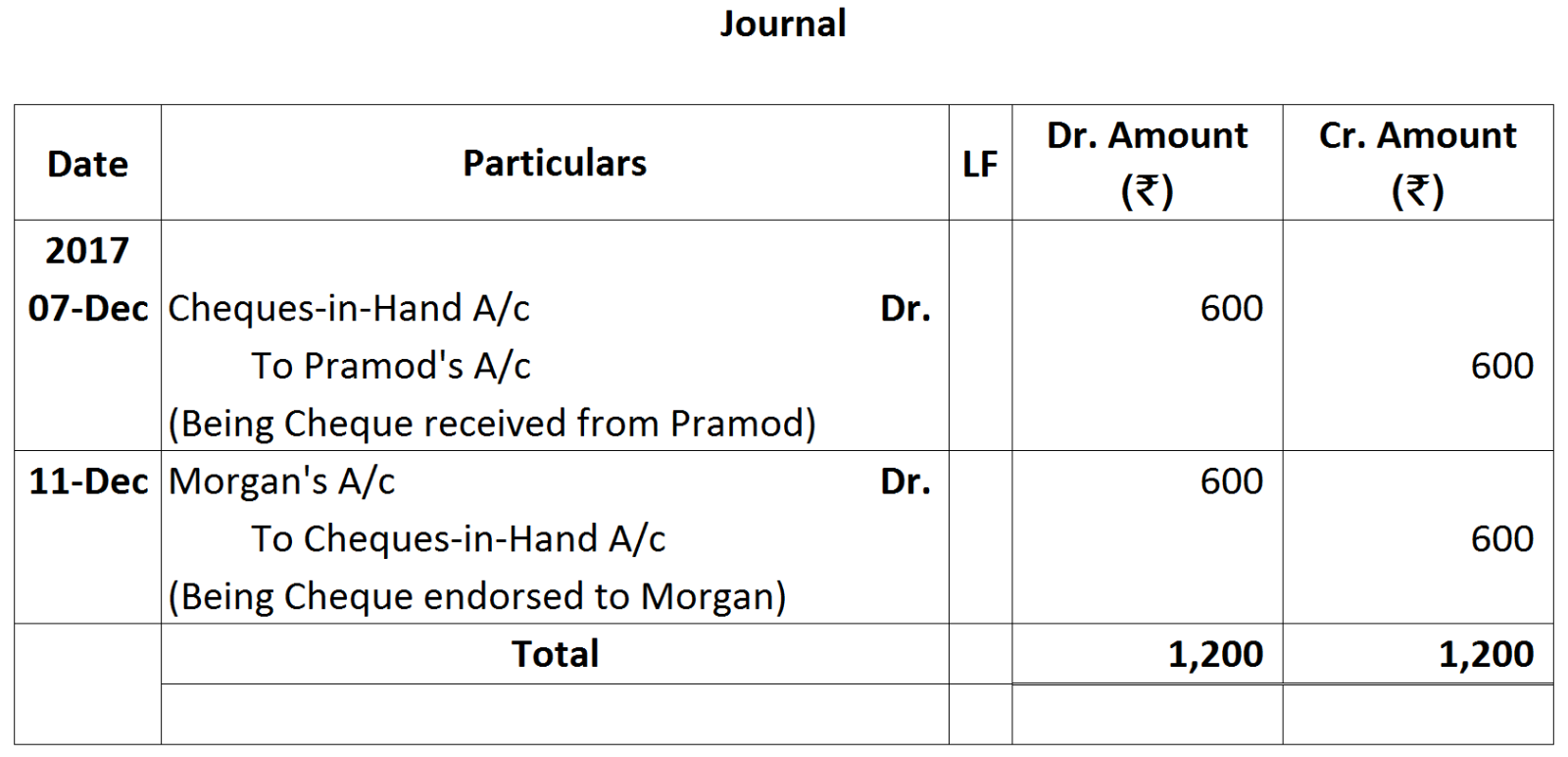
Dec. 7 Received a cheque worth ₹ 600 from Pramod against sale of goods
Dec. 10 Received ₹ 1,200 for sale of goods
Dec. 11 The cheque which was received from Pramod on 7th December was endorsed as favour of Morgan together with ₹ 1,400 in cash
Dec. 15 Received ₹ 950 from Sheila
Dec. 23 Murarilal paid ₹ 2,000 in cash and ₹ 3,000 in cheque after receiving a discount of ₹ 200 for goods sold to him in November. The cheque was immediately deposited into the Bank
Dec. 26 Bought goods worth ₹ 1,700 from Rustom and paid by cheque after receiving a discount of ₹ 170
Dec. 30 Interest on overdraft ₹ 50 was charged by the Bank
Dec. 30 Cash in excess of ₹ 1,000 was deposited into the Bank
Answer

Working Notes:
WN 1:

WN 2: Cash Deposited into the Bank,
Cash Deposited into the Bank = Total of Cash Column (Dr. side) - (Total of Cash Column (Cr. side) + Cash balance maintained)
Cash Deposited into the Bank = 6,930 - (1,750 + 1,000) = ₹ 4,180
View full question & answer
Question 506 Marks
Enter the following transactions in a Single Column Cash Book:
2016
 
(₹)
Dec. 1
Cash-in-hand
25,000
Dec. 2
Cash Sales (CGST 6%, SGST 6%)
40,000
Dec. 4
Received from X on behalf of Y
4,000
Dec. 9
Paid to Som Pal
4,900
Discount Received
100
Dec. 12
Received from Vijay Kumar
7,800
discount allowed
200
Dec. 20
Bought goods for Cash (CGST 6%, SGST 6%)
20,000
Dec. 21
Paid Cartage (CGST 6%, SGST 6%)
1,000
Dec. 23
Remitted to Dharamvir
1,880
discount allowed by him
120
Dec. 25
Received M.O. from Mohan
500
Dec. 27
Borrowed from Mahabir
7,500
Dec. 29
Received from Bhushan
3,900
discount allowed
100
Dec. 31
Paid to Lalit ₹ 2,700 in full settlement of his account of ₹ 3,000
 
View full question & answer
6 Marks Question - Account STD 11 Commerce Questions - Vidyadip