Question
What is the difference between a reflex action and walking?

Answer

A reflex action is a rapid, automatic response to a stimulus. It does not involve any thinking. For example, we close our eyes immediately when the bright light is focused. Walking, on the other hand, is a voluntary action. It is under our conscious control.

Need a full question paper?

Generate a complete, print-ready paper with questions like this in minutes — across 16+ boards, with answer keys.
Start Generating Free

Similar questions

In which asexual reproduction two individuals are formed from a single parent and the parental identity is lost? Draw the initial and the final stages of this type of reproduction to justify your answer. Write the event with which this process starts.
Zebra, jackals, lions, goat, horse, wolves and sheep. Identify the first order consumers from those given above. Give a reason to support your answer.
What shape are your eye-lenses:
  1. When you look at your hand?
  2. When you look at a distant tree?
In an electrolytic tank, aluminium metal is being extracted by the electrolysis of molten aluminium oxide using carbon electrodes. It is observed that one of the carbon electrodes is gradually burnt away and has to be replaced.
  1. Which carbon electrode (cathode or anode) is burnt away?
  2. Why is this carbon electrode burnt away?
How is food transported in plants?
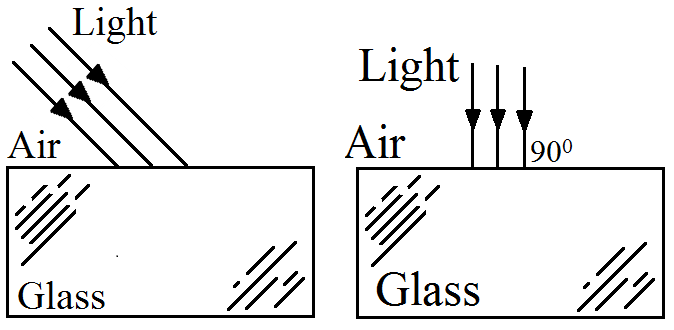
Draw and complete the following diagrams to show what happens to the beams of light as they enter the glass block and then leave it:
An element X combines with oxygen to form an oxide XO. This oxide is electrically conducting.
  1. How many electrons would be there in the outermost shell of the element X?
  2. To which group of the periodic table does the element X belong?
  3. Write the formula of the compound formed when X reacts with chlorine.
Name and state the law given by Lindeman which tells us how much energy entering a particular trophic level of organisms is available for trasnsfer to the next higher trophic level.
When hydrogen burns in oxygen, water is formed and when water is electrolysed, then hydrogen and oxygen are produced. What type of reaction takes place:
  1. In the first case?
  2. In the second case?
Given alongside is a part of the periodic table. As we move vertically downward from Li to Fr:
  1. What happens to the size of atoms?
  2. What happens to their metallic character?