Question

With the increase in principle quantum number, the energy difference between the two successive energy levels

(a) Increases

(b) Decreases

(c) Remains constant

(d) Sometimes increases and sometimes decreases

Answer

(b) Decreases

Need a full question paper?

Generate a complete, print-ready paper with questions like this in minutes — across 16+ boards, with answer keys.

Start Generating Free

Similar questions

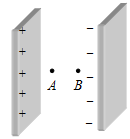
Two protons A and B are placed in space between plates of a parallel plate capacitor charged upto V volts (See fig.) Forces on protons are   and , then

(a)  

(b)  

(c)  

(d) Nothing can be said

When the number of nucleons in a nucleus increases, the binding energy per nucleon:
When a photon stimulates the emission of another photon, the two photons have:
Consider aiming a beam of free electrons towards free protons. When they scatter, an electron and a proton cannot combine to produce a H-atom:

To demonstrate the phenomenon of interference, we require two sources which emit radiation

(a) Of the same frequency and having a define phase relationship

(b) Of nearly the same frequency

(c) Of the same frequency

(d) Of different wavelengths

The resistance and inductance of series circuit are 5 and 20H respectively. At the instant of closing the switch, the current is increasing at the rate 4A - s. The supply voltage is

(a) 20 V

(b) 80 V

(c) 120 V 

(d) 100 V 

If a magnet is plugged into a coil, then the magnitude of induced emf does not depend upon:

The magnetic flux linked with coil, in weber is given by the equation,  The induced emf in the coil in the fourth second is

(a) 10 V

(b) 30 V

(c)  45 V

(d) 90 V

Assertion  :  Two P-N junction diodes placed back to back, will work as a NPN transistor.

Reason     : The P-region of two PN junction diodes back to back will form the base of NPN transistor.

(a) If both assertion and reason are true and the reason is the correct explanation of the assertion.

(b) If both assertion and reason are true but reason is not the correct explanation of the assertion.

(c) If assertion is true but reason is false.

(d) If the assertion and reason both are false.

Two particles X and Y having equal charges, after being accelerated through the same potential difference, enter a region of uniform magnetic field and describes circular path of radius   and  respectively. The ratio of mass of X to that of Y is

(a)

(b)  

(c)

(d)