Question
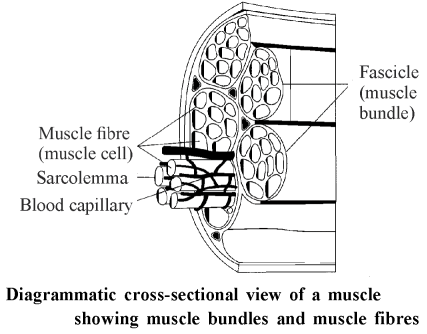
Write four differences between A-band and I-band and draw a labelled diagram illustrating a transverse section of muscle showing muscle bundle and muscle fibres.

Need a full question paper?

Generate a complete, print-ready paper with questions like this in minutes — across 16+ boards, with answer keys.
Start Generating Free

Similar questions

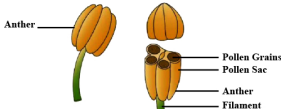
The androecium is composed of stamens. Each stamen that represents the male reproductive organ consists of a stalk or a filament and an anther. Each anther is usually bilobed and each lobe has two chambers, the pollen-sacs. Stamens of flowers may be united with other members such as petals or among themselves. The stamens may be epipetalous or epiphyllous. A flower is a modified shoot wherein the shoot apical meristem changes to floral meristem. Internodes do not elongate and the axis gets condensed. The apex produces different kinds of floral appendages laterally at successive nodes instead of leaves. The arrangement of flowers on the floral axis is termed an inflorescence.
Image

i. Observe the figure and mention what is androecium composed of. (1)
ii. The pollen grains are produced in pollen-sacs. What is a sterile stamen is called? (1)
iii. Is salvia and mustard show variation in the length of filaments within a flower? (2)

OR

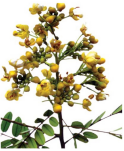
Mention statement justifies that the given figure is racemose inflorescence. (2)
Image
As what is Equisetum commonly known? Write any four differences between Bryophytes and Pteridophytes.
Illustrate the taxonomical hierarchy with suitable examples of a plant and an animal.
Describe briefly the four major groups of Protozoa.
The process to standardize the naming of living organisms is called nomenclature. Obviously, the nomenclature is only possible when the organism is described correctly and we know to what organism the name is attached to this is identification. The system of providing scientific name with two components is called Binomial Nomenclature. The scientific name ensures that each organism is identified by only one name all across the world. They also ensures that such a name has not been used for any other known organism. Scientific names for plants are provided in ICBN and for animals, in ICZN.

(1). Who proposed binomial nomenclature?
(A) Carolus Linnaeus  (B) Charles Darwin  (C) Francis crick  (D) Albert Einstein

(2)Which of the following is an example of binomial scientific name?
(A) Green algae  (B) Rana tigrina  (C) Snow leopard  (D) China rose

(3). In binomial nomenclature, the name of organism consists of
(A) kingdom   (B) genus   (C) species   (D) Both B and C

(4). ICBN stands for
(A) Internal botanical congress names
(B) International center of botanical names
(C) International code of botanical nomenclature
(D) Internal code of botanical nomenclature

(5). In binomial nomenclature,------- epithet starts with small letter
(A) Genus
(B) Species
(C) Both A and B
(D) None of the above
Explain the difference between ligament and tendon.
Write any four differences between bacteria and cyanobacteria?
Try to collect all the currently accepted meanings for the word ‘species’. Discuss with your teacher the meaning of species in case of higher plants and animals on one hand, and bacteria on the other hand.
Explain the differences between dorsiventral leaf and isobilateral leaf.
Difference between the cortex of mono- cotyledon and dicotyledon stem:
Write any four differences between sympathetic and parasympathetic nervous system. Make a labelled diagram showing the nerve endings and synapses.