Question
Write short note: Production of Yoghurt.

Answer

  • Yoghurt is one of the milk product produced from milk with the help of lactobacilli (inoculant).
  • In the industrial production of yoghurt, the milk is added with condensed milk powder. This increases the protein content of the milk. Then this milk is subjected to fermentation.
  • Milk is boiled and then it is cooled till it becomes lukewarm.
  • Then the bacterial strains of Streptococcus thermophiles and Lactobacillus delbrueckii are added to this lukewarm milk in 1:1 proportion.
  • The Streptococcus bacteria convert the milk into solution containing lactic acid. This makes the proteins to gel out. It makes the yoghurt dense.
  • The lactobacilli help in the formation of acetaldehyde like compounds giving a characteristic taste to the yoghurt.
  • For commercial reasons, various fruit juices are mixed with yoghurt to impart different flavours forming strawberry yoghurt, banana yoghurt, etc.
  • The pasteurization is carried out to increase the shelf life of yoghurt and improve its probiotic properties.

Need a full question paper?

Generate a complete, print-ready paper with questions like this in minutes — across 16+ boards, with answer keys.
Start Generating Free

Similar questions

An electric bulb of resistance $20 Ω$ and a resistance wire of $4 Ω $are connected in series with a 6V battery. Draw the circuit diagram and calculate:
  1. Total resistance of the circuit.
  2. Current through the circuit.
  3. Potential difference across the electric bulb.
  4. Potential difference across the resistance wire.
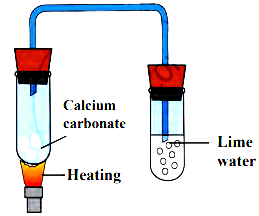
Explain the reaction given in the figure.
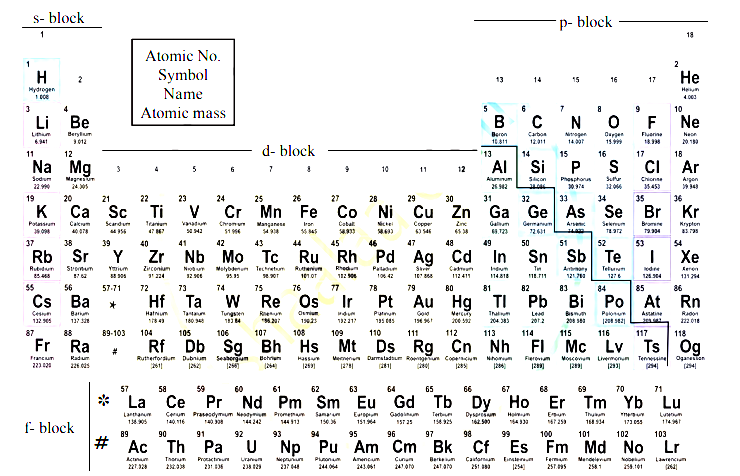
Observe the periodic table given below and write the answers of the questions.

  1. Write the name and valencies of the elements in 3rd row.
  2. Classify the elements in this row as metal, nonmetal and metalloids.
  3. Which block does nonmetals belong to?
  4. Write name of any two metalloid elements.
Give one example to show how the participation of local people can lead to the efficient management of forests.
 What is meant by latent heat? How will the state of matter transform if latent heat is given off?
The sea water contains water beetles, tadpole, fish and weeds.
  1. Write a food chain comprising all the given organisms?
  2. Which organisms in the food chain are (i) herbivore, and (ii) carnivores?
  3. Which organisms are (i) predators, and (ii) prey?
  4. Which organisms can trap solar energy to make food?
  5. Which organism is a secondary consumer?
Explain why, a salt which does not conduct electricity in the solid state becomes a good conductor in molten state.
 Explain the importance of good communication with others.
A scientist removed some cells from the growing point of a plant and placed it in a suitable medium leading to the formation of a shapeless lump of mass X. X is then transferred to another medium which stimulates it to develop roots. When X with developed roots is placed in a yet another medium, then it develops shoots to form tiny plantlets. These plantlets can then be transplanted in pots or soil where they can grow to form mature plants.
  1. What is the shapeless lump of mass X known as?
  2. What name is given to this method of producing new plants?
  3. The growth medium used in this method contains plant nutrients in the form of a 'jelly'. Name this jelly.
  4. What is the general name of chemicals used to stimulate the growth of plant cells and development of roots and shoots?
  5. Name any two plants which are produced by this method.
  6. State any two advantages of this method of producing plants.
  7. What is the other name of this method [other then that given in (b) above]?
Write short note: Pre-disaster management.