Question
Write the oxidation and reduction half reactions from the following redox reaction.
$2 \mathrm{Fe}+2 \mathrm{H}_2 \mathrm{O}+\mathrm{O}_2 \rightarrow 2 \mathrm{Fe}(\mathrm{OH})_2$
Answer

$\text{Fe}\xrightarrow{\ \ \ }\text{Fe}^{2+}+2\text{e}^-$ (Oxidation)
$\frac12\text{O}_2+\text{H}_2\text{O}+2\text{e}^-\xrightarrow{\ \ \ \ \ \ }\text{2OH}^-$ (Oxidation)

Need a full question paper?

Generate a complete, print-ready paper with questions like this in minutes — across 16+ boards, with answer keys.

Start Generating Free

Similar questions

For the solution of salt made from weak acid and strong base, give the relationship between $K_b, K_w$ and $K_a$, the amount of hydrolysis and the formula to determine the pH of solution.
What is significant figures? Explain.
The $\mathrm{Mn}^{3+}$ ion is unstable in solution and undergoes disproportionation to give $\mathrm{Mn}^{2+}, \mathrm{MnO}_2$ and $\mathrm{H}^{+}$ions. Write a balanced ionic equation for the reaction.
Does the number of moles of reaction products increase, decrease or remain same when each of the following equilibria is subjected to a decrease in pressure by increasing the volume?
$\text{PCl}_5\text{ (g)}\rightleftharpoons\text{PCl}_3\text{ (g) + }\text{Cl}_2\text{ (g)}$
Is boric acid a protic acid? Explain.
Arrange $C , N , O$ and F in increasing order of second ionization enthalpy, with reason.
Calculate $\Delta_\text{r}\text{H}^\circ$ for the reaction,
$\text{H}-\text{C}=\text{C}-\text{H}+30=0\overrightarrow{\ \ \ \ \ \ \ }\\ \ \ \ \ \ \ \ \ \ |\ \ \ \ \ \ \ |\\ \ \ \ \ \ \ \ \ \text{H} \ \ \ \ \ \text{H}\\20=\text{C}=0+2\text{H}-0-\text{H}$
The average bond enthalpies of various bonds are as follows.
Bond
Bond enthalpy ($\mathrm{kJ} \mathrm{~mol}^{-1}$)
C-H
414
O=O
499
C=O
724
O-H
460
C=C
619
How can you apply green chemistry for the following:To control photochemical smog.
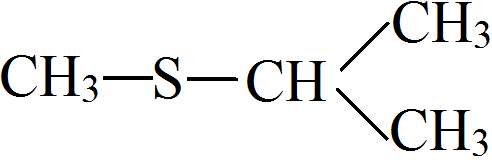
Compounds with same molecular formula but differing in their structures are said to be structural isomers. What type of structural isomerism is shown by $\mathrm{CH}_3-\mathrm{S}-\mathrm{CH}_2-\mathrm{CH}_2-\mathrm{CH}_3$ and
Arrange s, p and d sub-shells of a shell in the increasing order of effective nuclear charge ($Z_{\text {eff }}$) experienced by the electron present in them.