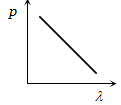
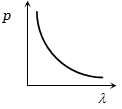
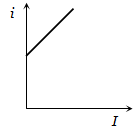
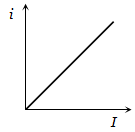
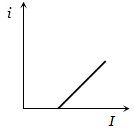
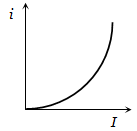
Which of the following figure represents the variation of particle momentum and the associated de-Broglie wavelength
|
(a)
|
(b)
|
(c)
|
(d)
|
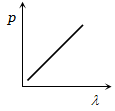
(d)

50 questions · timed · auto-graded
Which of the following figure represents the variation of particle momentum and the associated de-Broglie wavelength
|
(a)
|
(b)
|
(c)
|
(d)
|
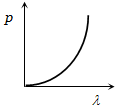
(d)
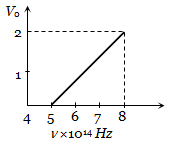
The stopping potential (
versus frequency (n) plot of a substance is shown in figure the threshold wave length is

|
(a) 5 |
(b) 6000Å |
|
(c) 5000 Å |
(d) Can not be estimated from given data |
(b) 6000Å
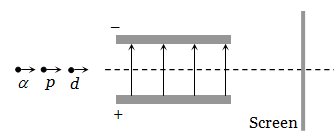
A proton, a deutron and an a-particle having the same momentum, enters a region of uniform electric field between the parallel plates of a capacitor. The electric field is perpendicular to the initial path of the particles. Then the ratio of deflections suffered by them is

|
(a) 1 : 2 : 8 |
(b) 1 : 2 : 4 |
(c) 1 : 1 : 2 |
(d) None of these |
(a) 1 : 2 : 8
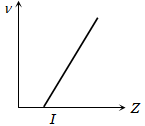
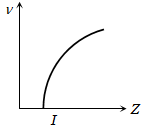
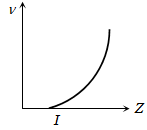
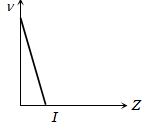
The graph that correctly represents the relation of frequency n of a particular characteristic X-ray with the atomic number Z of the material is
|
(a)
|
(b)
|
(c)
|
(d)
|
(c)

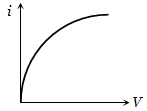
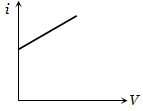
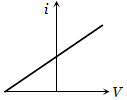
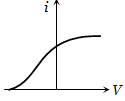
The curve between current (i) and potential difference (V) for a photo cell will be
|
(a)
|
(b)
|
(c)
|
(d)
|
(d)

Which of the following statements is correct
|
(a) The current in a photocell increases with increasing frequency of light |
|
(b) The photocurrent is proportional to applied voltage |
|
(c) The photocurrent increases with increasing intensity of light |
|
(d) The stopping potential increases with increasing intensity of incident light |
(c) The photocurrent increases with increasing intensity of light
A beam of light of wavelength λ and with illumination L falls on a clean surface of sodium. If N photoelectrons are emitted each with kinetic energy E, then
|
(a) N ∝ L and E ∝ L |
(b) N ∝ L and E ∝ |
|
(c) N ∝ |
(d) N ∝ |
(b) N ∝ L and E ∝
The graph between intensity of light falling on a metallic plate (I) with the current (i) generated is
|
(a)
|
(b)
|
(c)
|
(d)
|
(b)

By photoelectric effect, Einstein, proved
|
(a) E = hv |
(b) K.E. = |
(c) |
(d) |
(a) E = hv
A photon of wavelength 4400 Å is passing through vacuum. The effective mass and momentum of the photon are respectively
|
(a) 5 |
(b) 5 |
|
(c) Zero, 1.5 |
(d) 5 |
(a) 5 ![]()
Threshold frequency for a metal is
Hz. Light of
falls on its surface. Which of the following statements is correct
|
(a) No photoelectric emission takes place |
|
(b) Photo-electrons come out with zero speed |
|
(c) Photo-electrons come out with 103 m/sec speed |
|
(d) Photo-electrons come out with 105 m/sec speed |
(a) No photoelectric emission takes place
The radius of the orbital of electron in the hydrogen atom 0.5 Å. The speed of the electron is 2
. Then the current in the loop due to the motion of the electron is
|
(a) 1 mA |
(b) 1.5 mA |
(c) 2.5 mA |
(d) 1.5 |
(a) 1 mA
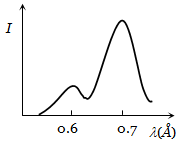
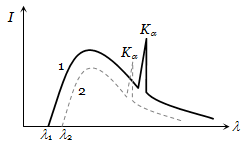
In the diagram a graph between the intensity of X-rays emitted by a molybdenum target and the wavelength is shown, when electrons of 30 keV are incident on the target. In the graph one peak is of
line and the other peak is of
line

|
(a) First peak is of |
|
(b) Highest peak is of Ka line at 0.7 Å |
|
(c) If the energy of incident particles is increased, then the peaks will shift towards left |
|
(d) If the energy of incident particles is increased, then the peaks will shift towards right |
(b) Highest peak is of Ka line at 0.7 Å
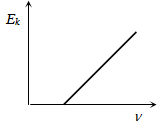
For the photoelectric effect, the maximum kinetic energy
of the emitted photoelectrons is plotted against the frequency n of the incident photons as shown in the figure. The slope of the curve gives

|
(a) Charge of the electron |
|
(b) Work function of the metal |
|
(c) Planck's constant |
|
(d) Ratio of the Planck’s constant to electronic charge |
(c) Planck's constant
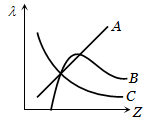
The variation of wavelength λ of the
line with atomic number Z of the target is shown by the following curve of

|
(a) A |
(b) B |
(c) C |
(d) None of these |
(c) C
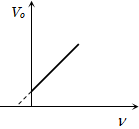
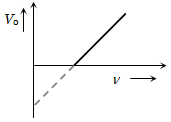
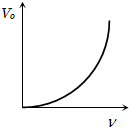
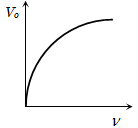
For a photoelectric cell the graph showing the variation of cut of voltage (Vo) with frequency (n) of incident light is best represented by
|
(a)
|
(b)
|
(c)
|
(d)
|
(d)

An X-ray tube is operating at 50 kV and 20 mA. The target material of the tube has a mass of 1.0 kg and specific heat 495 J kg-1
. One percent of the supplied electric power is converted into X-rays and the entire remaining energy goes into heating the target. Then
|
(a) A suitable target material must have a high melting temperature |
|
(b) The average rate of rise of temperature of target would be 2 °C/s |
|
(c) The minimum wavelength of the X-rays emitted is about 0.25 |
|
(d) a, b, c |
(d) a, b, c
In vacuum an electron of energy 10 keV hits tungsten target, then emitted radiation will be
|
(a) Cathode rays |
(b) X-rays |
(c) Infrared rays |
(d) Visible spectrum |
(b) X-rays
Consider the two following statements A and B and identify the correct choice given in the answers;
(A) In photovlotaic cells the photoelectric current produced is not proportional to the, intensity of incident light.
(B) In gas filled photoemissive cells, the velocity of photoelectrons depends on the wavelength of the incident radiation.
|
(a) Both A and B are true |
(b) Both A and B are false |
|
(c) A is true but B is false |
(d) A is false B is true |
(d) A is false B is true
Light of frequency 8
is incident on a substance of photoelectric work function 6.125eV. The maximum kinetic energy of the emitted photoelectrons is
|
(a) 17eV |
(b) 22eV |
(c) 27eV |
(d) 37eV |
(c) 27eV
The intensity distribution of X-rays from two coolidge tubes operated on different voltages V1 and V2 and using different target materials of atomic numbers Z1 and Z2 is shown in the figure. Which one of the following inequalities is true?

|
(a) V1 > V2, Z1 < Z2 |
(b) V1 > V2, Z1 > Z2 |
(c) V1 < V2, Z1 > Z2 |
(d) V1 = V2, Z1 < Z2 |
(a) V1 > V2, Z1 < Z2
In Bainbridge mass spectrograph a potential difference of 1000 V is applied between two plates distant 1 cm apart and magnetic field in B = 1T. The velocity of undeflected positive ions in m/s from the velocity selector is
|
(a) |
(b) |
(c) |
(d) |
(c)
X-rays of
have frequency
|
(a) 3 |
(b) 3 |
(c) |
(d) |
(b) 3
If the operating potential of an X-ray tube is 50 kV, the velocity of X-rays coming out of it is
|
(a) 4 |
(b) 3 |
(c) |
(d) 3 m/s |
(b) 3
When the accelerating voltage applied on the electrons increased beyond a critical value
|
(a) Only the intensity of the various wavelengths is increased |
| (b) Only the wavelength of characteristic relation is affected |
| (c) The spectrum of white radiation is unaffected |
|
(d) The intensities of characteristic lines relative to the white spectrum are increased but there is no change in their wavelength |
(d) The intensities of characteristic lines relative to the white spectrum are increased but there is no change in their wavelength
Assertion : X-rays are used for studying the structure of crystals.
Reason : The distance between the atoms of crystals is of the order of wavelength of X-rays.
|
(a) If both assertion and reason are true and the reason is the correct explanation of the assertion. |
|
(b) If both assertion and reason are true but reason is not the correct explanation of the assertion. |
|
(c) If assertion is true but reason is false. |
|
(d) If the assertion and reason both are false. |
(a) If both assertion and reason are true and the reason is the correct explanation of the assertion.
The wavelength of
line for an element of atomic number 43 is
. Then the wavelength of
line for an element of atomic number 29 is
|
(a) |
(b) |
(c) |
(d) |
(c)
Energy of photon whose frequency is
, will be
|
(a) 4.14 |
(b) 4.14 |
(c) 4.14 |
(d) 4.14 |
(d) 4.14
For harder X-rays
| (a) The wavelength is higher | (b) The intensity is higher |
| (c) The frequency is higher | (d) The photon energy is lower |
(c) The frequency is higher
As the intensity of incident light increases
|
(a) Photoelectric current increases |
|
(b) Photoelectric current decreases |
|
(c) Kinetic energy of emitted photoelectrons increases |
|
(d) Kinetic energy of emitted photoelectrons decreases |
(a) Photoelectric current increases
Assertion : Mass of moving photon varies inversely as the wavelength.
Reason : Energy of the particle = Mass × ![]()
|
(a) If both assertion and reason are true and the reason is the correct explanation of the assertion. |
|
(b) If both assertion and reason are true but reason is not the correct explanation of the assertion. |
|
(c) If assertion is true but reason is false. |
|
(d) If the assertion and reason both are false. |
(b) If both assertion and reason are true but reason is not the correct explanation of the assertion.
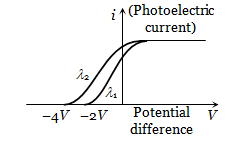
The maximum value of stopping potential in the following diagram is

|
(a) – 4V |
(b) – 1V |
(c) – 3V |
(d) – 2V |
(a) – 4V
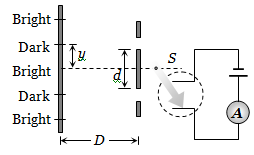
In the following arrangement y = 1.0 mm, d = 0.24 mm and D = 1.2 m. The work function of the material of the emitter is 2.2 eV. The stopping potential V needed to stop the photo current will be

|
(a) 0.9 V |
(b) 0.5 V |
(c) 0.4 V |
(d) 0.1 V |
(a) 0.9 V
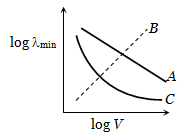
The dependence of the short wavelength limit
on the accelerating potential V is represented by the curve of figure

|
(a) A |
(b) B |
(c) C |
(d) None of these |
(a) A
If a photon has velocity c and frequency n, then which of following represents its wavelength
|
(a) |
(b) |
(c) |
(d) hv |
(a)
The kinetic energy of an electron which is accelerated through a potential of 100 volts is
|
(a) 1.602 |
(b) 418.6 calories |
(c) 1.16 |
(d) 6.626 |
(a) 1.602
A radio transmitter radiates 1 kW power at a wavelength 198.6 metres. How many photons does it emit per second
|
(a) |
(b) |
(c) |
(d) |
(c)
Energy required to remove an electron from aluminium surface is 4.2 eV. If light of wavelength 2000 Å falls on the surface, the velocity of the fastest electron ejected from the surface will be
|
(a) 8.4 |
(b) 7.4 |
(c) 6.4 |
(d) 8.4 |
(a) 8.4
The work function of metal is 1 eV. Light of wavelength 3000 Å is incident on this metal surface. The velocity of emitted photo-electrons will be
|
(a) 10 m/sec |
(b) 1 |
(c) |
(d) |
(d)
m/sec
Assuming photoemission to take place, the factor by which the maximum velocity of the emitted photoelectrons changes when the wavelength of the incident radiation is increased four times, is
|
(a) 4 |
(b) |
(c) 2 |
(d) |
(d) ![]()
Threshold wavelength for photoelectric effect on sodium is 5000 Å. Its work function is
|
(a) 15 J |
(b) 16 |
(c) 4 |
(d) 4 |
(c) 4
If the work function for a certain metal is 3.2
joule and it is illuminated with light of frequency 8
Hz. The maximum kinetic energy of the photo-electrons would be (h = 6.63 ![]()
|
(a) 3.2 |
(b) 8.5 |
(c) 5.3 |
(d) 3.2 |
(a) 3.2
A radio transmitter operates at a frequency of 880 kHz and a power of 10 kW. The number of photons emitted per second are
|
(a) 1.72 |
(b) 1327 |
(c) 13.27 |
(d) 0.075 |
(a) 1.72
If we express the energy of a photon in KeV and the wavelength in angstroms, then energy of a photon can be calculated from the relation
|
(a) E = 12.4 hv |
(b) E = 12.4 h/ |
(c) E = 12.4/ |
(d) E = hv |
(c) E = 12.4/![]()
The ratio of the energy of a photon with
to that with
is
|
(a) 2 |
(b) 1/4 |
(c) 4 |
(d) 1/2 |
(a) 2
The wavelength of most energetic X-rays emitted when a metal target is bombarded by 40KeV electrons, is approximately (h = 6.63
)
|
(a) 300 Å |
(b) 10 Å |
(c) 4 Å |
(d) 0.31 Å |
(d) 0.31 Å
Which of the following is incorrect statement regarding photon
|
(a) Photon exerts no pressure |
(b) Photon energy is hv |
|
(c) Photon rest mass is zero |
(d) None of these |
(a) Photon exerts no pressure
What is the de-Broglie wavelength of the α - particle accelerated through a potential difference V
|
(a) |
(b) |
(c) |
(d) |
(c)
Å
An electron of mass m when accelerated through a potential difference V has de-Broglie wavelength λ. The de-Broglie wavelength associated with a proton of mass M accelerated through the same potential difference will be
|
(a) λ |
(b) λ |
(c) λ |
(d) λ |
(b) λ
The wavelength of de-Broglie wave is 2mm, then its momentum is (h = 6.63 × 10⁻³⁴ J-s)
|
(a) 3.315 × 10⁻²⁸ kg-m/s |
(b) 1.66 × 10⁻²⁸ kg-m/s |
(c) 4.97 × 10⁻²⁸ kg-m/s |
(d) 9.9 × 10⁻²⁸ kg-m/s |
(a) 3.315 × 10⁻²⁸ kg-m/s