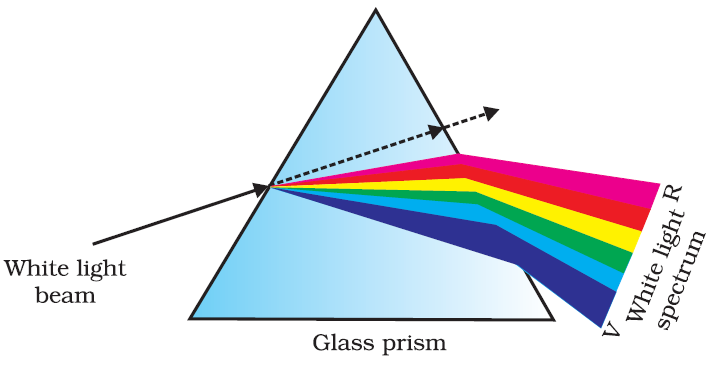
- ADispersion of light by water droplets.
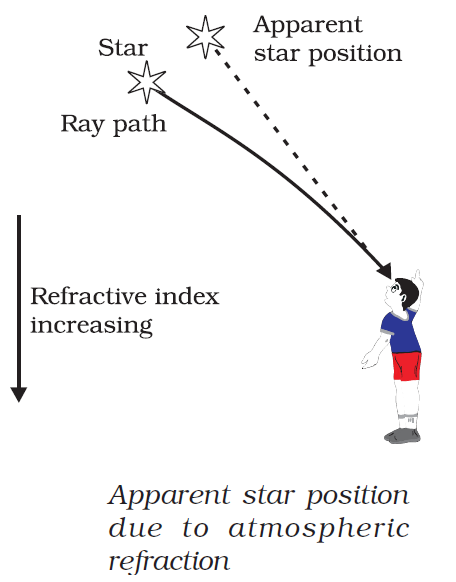
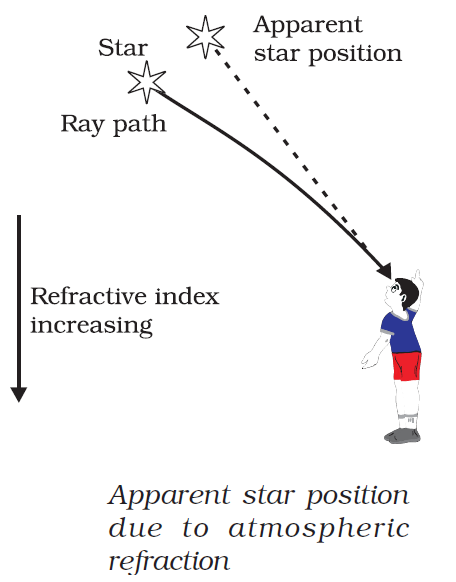
- ✓Refraction of light by different layers of varying refractive indices.
- CScattering of light by dust particles.
- DInternal reflection of light by clouds.
Answer: B.
View full solution →62 questions across 8 question groups — pick any mix to generate a Science paper with step-by-step answer keys.
M.C.Q
14 Q→02[2 Mark Questions]
3 Q→03[3 Mark Questions]
8 Q→04[5 marks Questions]
6 Q→05M.C.Q-[Phy-1M]
14 Q→06Answer the questions.[Phy-2M]
3 Q→07Answer the questions.[Phy-3M]
8 Q→08Answer the questions.[Phy-5M]
6 Q→One sample from each question group in this chapter. Select any group above to see the full set with answer keys.
Answer: B.
View full solution →Answer: B.
View full solution →Answer: C.
View full solution →Answer: A.
View full solution →
Answer: A.
View full solution →
Answer: A.
View full solution →
Answer: A.
View full solution →Answer: A.
View full solution →Hypermetropic eye.
Answer: A.
View full solution →
Answer: A.
View full solution →
Answer: A.
View full solution →Answer: A.
View full solution →
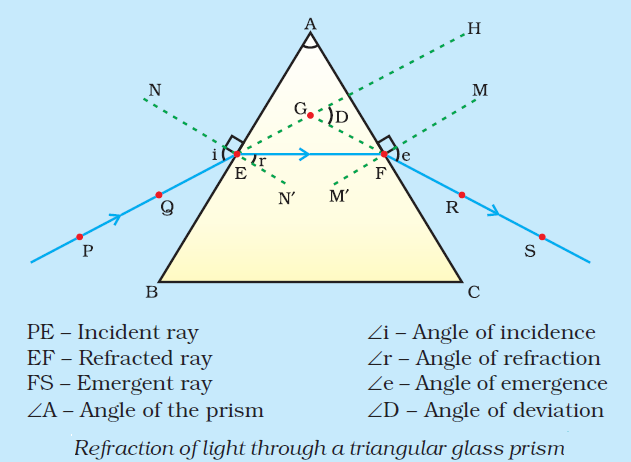
The light ray PE enters from air to glass (rarer to denser medium) at surface AB and therefore, bends towards the normal. The refracted ray EF now exits from glass and enters air (from denser to rarer medium) and therefore, bends away from the normal. Extrapolation of incident and emergent ray gives the angle of deviation.
Answer: A.
View full solution →Pick question groups from the list above, set marks and difficulty, and export a branded PDF with step-by-step answer keys. First 3 chapters free — no signup.