Question types

Exponents and Powers question types

230 questions across 5 question groups — pick any mix to generate a Maths paper with step-by-step answer keys.

230
Questions
5
Question groups
5
Question types
Sample Questions

Exponents and Powers questions

One sample from each question group in this chapter. Select any group above to see the full set with answer keys.

For a fixed base, if the exponent decreases by $1,$ the number becomes:
  • One-tenth of the previous number.
  • B
    Ten times of the previous number.
  • C
    Hundredth of the previous number.
  • D
    Hundred times of the previous number.

Answer: A.

View full solution
A particular star is at a distance of about $8.1 × 10^{13}$ km from the Earth. Assuring that light travels at $3 × 10^8$m per second, find how long does light takes from that star to reach the Earth.
View full solution
Q 113 Marks Question3 Marks
In a repeater machine with $0$ as an exponent, the base machine is applied $0$ times.
$a.$ What do these machines do to a piece of chalk?

$b.$ What do you think the value of $60$ is? You have seen that a hookup of repeater machines with the same base can be replaced by a single repeater machine. Similarly, when you multiply exponential expressions with the same base, you can replace them with a single expression.
View full solution
Astronomy The table shows the mass of the planets, the sun and the moon in our solar system.
Celestial Body
Mass $(kg)$
Mass $(kg)$ Standard Notation
Sun
$1,990,000,000,000,000,000,000,000,000,000$
$1.99 \times 10^{30}$
Mercury
$330,000,000,000,000,000,000,000$
 
Venus
$4,870,000,000,000,000,000,000,000$
 
Earth
$5,970,000,000,000,000,000,000,000$
 
Mars
$642,000,000,000,000,000,000,000,000,000$
 
Jupiter
$1,900,000,000,000,000,000,000,000,000$
 
Saturn
$568,000,000,000,000,000,000,000,000$
 
Uranus
$86,800,000,000,000,000,000,000,000$
 
Neptune
$102,000,000,000,000,000,000,000,000$
 
Pluto
$12,700,000,000,000,000,000,000$
 
Moon
$73,500,000,000,000,000,000,000$
 
$a.$ Write the mass of each planet and the Moon in scientific notation.
$b.$ Order the planets and the moon by mass, from least to greatest.
$c.$ Which planet has about the same mass as earth?
View full solution
Investigating Solar System: The table shows the average distance from each planet in our solar system to the sun.
Planet
Distance from sun $(km)$
Distance from sun $(km)$ Standard Notation
Earth
$149,600,000$
$1.496 \times 10^8$
Jupiter
$778,300,000$
 
Mars
$227,900,000$
 
Mercury
$57,900,000$
 
Neptune
$4,497,000,000$
 
Pluto
$5,900,000,000$
 
Saturn
$1,427,000,000$
 
Uranus
$2,870,000,000$
 
Venus
$108,200,000$
 
$a.$ Complete the table by expressing the distance from each planet to the Sun in scientific notation.
$b.$ Order the planets from closest to the sun to farthest from the sun.
View full solution
Predicting the ones digit, copy and complete this table and answer the questions that follow.
$x$
$1^x$
$2^x$
$3^x$
$4^x$
$5^x$
$6^x$
$7^x$
$8^x$
$9^x$
$10^x$
$1$
$1$
$2$


$2$
$1$
$4$


$3$
$1$
$8$


$4$
$1$
$16$


$5$
$1$
$32$


$6$
$1$
$64$


$7$
$1$
$128$


$8$
$1$
$256$


Ones Digit of the Powers
$1$
$2, 4, 8, 6$


$a.$ Describe patterns you see in the ones digits of the powers.
$b.$ Predict the ones digit in the following:
$i. 4^{12}$
$ii. 9^{20}$
$iii. 3^{17}$
$iv. 5^{100}$
$v. 10^{500}$
$c.$ Predict the ones digit in the following:
$i. 31^{10}$
$ii. 12^{10}$
$iii.17^{21}$
$iv. 29^{10}$
View full solution
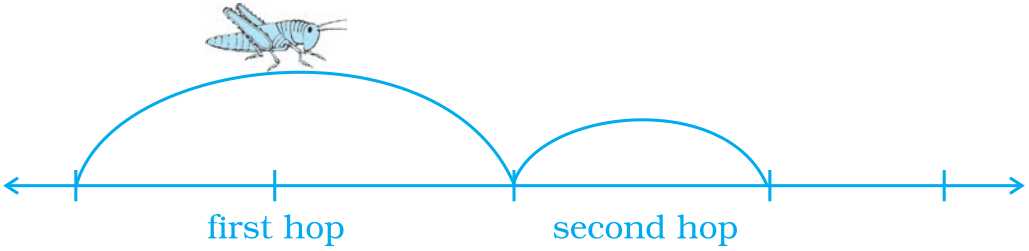
An insect is on the $0$ point of a number line, hopping towards $1$. She covers half the distance from her current location to $1$ with each hop. So, she will be at $\frac{1}{2}$ after one hop, $\frac{3}{4}$ after two hops, and so on.
$a.$ Make a table showing the insect’s location for the first $10$ hops.
$b.$ Where will the insect be after $n$ hops?
$c.$ Will the insect ever get to $1$? Explain.
View full solution
This table shows the mass of one atom for five chemical elements. Use it to answer the question given.
Elements
Mass of atom $(kg)$
Titanium
$7.95 \times 10^{-26}$
Lead
$3.44 \times 10^{-25}$
Silver
$1.79 \times 10^{-25}$
Lithium
$1.15 \times 10^{-26}$
Hydrogen
$1.674 \times 10^{-27}$
$a.$ Which is the heaviest element?
$b.$ Which element is lighter, Silver or Titanium?
$c.$ List all five elements in order from lightest to heaviest.
View full solution

Generate a Exponents and Powers paper free

Pick question groups from the list above, set marks and difficulty, and export a branded PDF with step-by-step answer keys. First 3 chapters free — no signup.

Download App