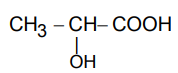
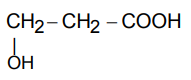
MCQ 14 Marks
In which of the following molecule/ion all the bonds are not equal?
- A
$XeF _4$
- B
$BF _4^{-}$
- ✓
$BrCl _3$
- D
$SF _6$
AnswerCorrect option: C. $BrCl _3$
(C) $BrCl _3$
View full question & answer→MCQ 24 Marks
Which of the following has a shape different from the other three species ?
- A
$BF _4^{-}$
- B
$SO _4{ }^{2-}$
- ✓
$I _3^{-}$
- D
$PH _4^{+}$
AnswerCorrect option: C. $I _3^{-}$
(C) $I _3^{-}$
$I _3{ }^{-}$is linear, where as rest molecules are tetrahedral.
View full question & answer→MCQ 34 Marks
Among $NaCl , BeCl _2, BCI _3$ and $CCl _4$, the covalent bond character follows the order
- ✓
$NaCl < BeCl _2< BCl _3< CCl _4$
- B
$NaCl < BeCl _2> BCl _3> CCl _4$
- C
$NaCl > BeCl _2< BCl _3< CCl _4$
- D
$NaCl > BeCl _2> BCl _3> CCl _4$
AnswerCorrect option: A. $NaCl < BeCl _2< BCl _3< CCl _4$
(A) $NaCl < BeCl _2< BCl _3< CCl _4$
Among $NaCl , BeCl _2, BCl _3$ and $CCl _4$, the covalent bond character follows the order $NaCl < BeCl _2<$ $BCl _3< CCl _4$
View full question & answer→MCQ 44 Marks
$CH_3 CH_2 COOH \xrightarrow[\text { Red } P]{Cl_2}(A) \xrightarrow{\text { Alc. } KOH}(B)$ Compound $(B)$ is :
- A
- B
- ✓
$CH _2= CH - COOH$
- D
$ClCH _2 CH _2 COOH$
AnswerCorrect option: C. $CH _2= CH - COOH$
(C) $ClCH _2 CH _2 COOH$
View full question & answer→MCQ 54 Marks
Choose the correct statements :
i. Dipole moment of phenol is less than cyclo hexanol.
ii. Phenol is acidic in nature due to resonance.
iii. Boiling point of isobutyl alcohol is less than terteary butyl alcohol.
iv. Isobutyl alcohol is primary alcohol.
Answer(C) i, ii, iv
In phenol negative charge of oxygen atom is destributed in resonance.
Phenol is acidic due to resonance
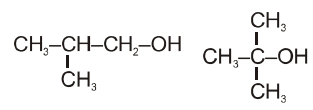
B.P. > B.P.
View full question & answer→MCQ 64 Marks
Correct order of given alkyl halide for $S _{ N } 1$ reaction :
(a) $\left( CH _3\right)_3 C - Cl$
(b) $\left( CH _3\right)_3 C - Br$
(c) $\left( CH _3\right)_3 C - I$
Answer(A) c > b > a
$S _{ N } 1$ reaction order :
$R-I>R-Br>R-Cl$
View full question & answer→MCQ 74 Marks
Correct order of second ionization enthalpy are :
- A
$Sc < V < Cr < Ti$
- B
$V < Sc < Cr < Ti$
- C
$Sc < Cr < V < Ti$
- ✓
$Sc < Ti < V < Cr$
AnswerCorrect option: D. $Sc < Ti < V < Cr$
(D) $Sc < Ti < V < Cr$
View full question & answer→MCQ 84 Marks
Identify the reaction order from the following rate constants.
$k=3 \times 10^{-4} s^{-1}$
Answer(B) First order reaction
The unit of a first order rate constant is $s ^{-1}$ therefore $k =3 \times 10^{-4} s^{-1}$ represents a first order reaction
View full question & answer→MCQ 94 Marks
For the reaction $R \rightarrow P$, the concentration of a reactant changes from 0.03 M to 0.02 M in 25 minutes. Calculate the average rate of reaction using units of time in seconds:
- A
$1.67 \times 10^{-6}$
- B
$3.67 \times 10^{-3}$
- C
$5.67 \times 10^{-3}$
- ✓
$6.67 \times 10^{-6}$
AnswerCorrect option: D. $6.67 \times 10^{-6}$
(D) $6.67 \times 10^{-6}$
Average rate of reaction $=-\frac{\Delta[ R ]}{\Delta t}$
$\Rightarrow-\frac{[R]_2-[R]_1}{t_2-t_1}$
$\Rightarrow-\frac{0.02-0.03}{25}=4 \times 10^{-4} \text{ M min} ^{-1}$
Also, it can be expressed in seconds as:
$\begin{aligned} \text { Average rate of reaction } & =\frac{4 \times 10^{-4}}{60} \\ = & 6.67 \times 10^{-6}\end{aligned}$
View full question & answer→MCQ 104 Marks
Faraday’s law of electrolysis is related to the
- A
atomic number of the anion
- ✓
equivalent weight of the electrolyte
- C
atomic number of reactants.
- D
AnswerCorrect option: B. equivalent weight of the electrolyte
(B) Equivalent weight of the electrolyte
View full question & answer→MCQ 114 Marks
Why does the conductivity of a solution decreases with dilution because :
- A
the number of ions per unit volume decreases
- ✓
the number of ions per unit volume decreases
- C
the number of ions per unit volume decreases
- D
AnswerCorrect option: B. the number of ions per unit volume decreases
(B) the number of ions per unit volume decreases
Conductivity of a solution is the conductance of ions present in a unit volume of the solution. On dilution, the number of ions per unit volume decreases. Hence the conductivity decreases.
View full question & answer→MCQ 124 Marks
A molal solution is one that contain 0.5 mole of a solute in :
Answer(A) 500 g of solvent
Molality $=\frac{\text { mole }}{\text { wt. of solvent in } Kg }$
View full question & answer→MCQ 134 Marks
At equilibrium which does not be zero
i. $E_{\text {cell }}$
ii. $\Delta G_{\text {cell }}$
iii. $\Delta G ^{\circ}{ }_{\text {cell }}$
Answer(C) Only iii
$\Delta G^o$ cell
View full question & answer→MCQ 144 Marks
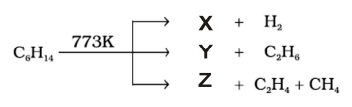
In the given reaction, Find out X, Y and Z respectively :
- A
$X=C_3 H_6, Y=C_4 H_8, Z=C_6 H_{12}$
- B
$X = C _4 H _8, Y= C _6 H _{12}, Z= C _3 H _6$
- C
$X=C_6 H_{12}, Y=C_3 H_6, Z=C_4 H_8$
- ✓
$X=C_6 H_{12}, Y=C_4 H_8, Z=C_3 H_6$
AnswerCorrect option: D. $X=C_6 H_{12}, Y=C_4 H_8, Z=C_3 H_6$
(D) $X=C_6 H_{12}, Y=C_4 H_8, Z=C_3 H_6$
View full question & answer→MCQ 154 Marks
The general combustion equation for any alkane is :
$C_n H_{2 n+2}+(x) O_2 \rightarrow nCO_2+(n+1) H_2 O$
Select the correct option for x :
- A
$\left(\frac{2 n+1}{2}\right)$
- B
$\left(\frac{2 n+1}{4}\right)$
- ✓
$\left(\frac{3 n+1}{2}\right)$
- D
$\left(\frac{4 n+1}{4}\right)$
AnswerCorrect option: C. $\left(\frac{3 n+1}{2}\right)$
View full question & answer→MCQ 164 Marks
Sodium salt of which acid will be needed for the preparation of propane by decarboxylation :
Answer(A) Butanoic acid
$CH _3 CH _2 CH _2 COO ^{-} Na ^{+}+ NaOH \xrightarrow{ CaO } CH _3 CH _2 CH _3+ Na _2 CO _3$
View full question & answer→MCQ 174 Marks
Answer (A) a-i, b-ii, c-iii, d-iv| Column-। | Column-।I |
| (a) o-Ethylanisole | i. 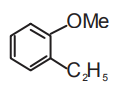 |
| (b) p-Nitroaniline | ii.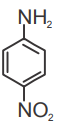 |
| (c) 2,3 - Dibromo-1- phenylpentane | iii. 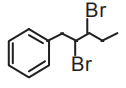 |
| (d) 4-Ethyl-1-fluoro-2- nitrobenzene | iv. 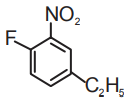 |
View full question & answer→MCQ 184 Marks
The class of compound “Arenes”, What is its example :
Answer(A) Benzene
The class of compound Arenes – Example : Benzene
View full question & answer→MCQ 194 Marks
What is the Common or Trivial Names of given Organic Compounds :
$\left(H_3 C\right)_2 CHCH_3$
Answer(C) Isobutane
- $H _3 CCH _2 CH _2 CH _3-$ n-Butane
- $\left( H _3 C \right)_4 C -$ Neopentane
- $\left( H _3 C _2 CHCH _3-\right.$ Isobutane
- $H _3 CCH _2 CH _2 OH -$ n-Propyl alcohol
View full question & answer→MCQ 204 Marks
Boiling point of water at 750 mm Hg is $99.63^{\circ} C$. How much sucrose is to be added to 500 g of water such that it boils at $100^{\circ} C$. [Given $K _{ b }=0.52$ and molecuar weight of sucrose $=342$]
View full question & answer→MCQ 214 Marks
Which statement is correct :
A. Oxidation : Loss of electron(s) by any species.
B. Reduction : Gain of electron(s) by any species.
C. Oxidising agent : Donor of electron(s).
D. Reducing agent : Acceptor of electron(s).
Answer(D) A and B
- Oxidation : Loss of electron(s) by any species.
- Reduction : Gain of electron(s) by any species.
- Oxidising agent : Acceptor of electron(s).
- Reducing agent : Donor of electron(s).
View full question & answer→MCQ 224 Marks
The boiling point of benzene is 353.23 K . When 1.80 g of a non-volatile solute was dissolved in 90 g of benzene, the boiling point is raised to 354.11 K. Calculate the molar mass of the solute. Kb for benzene is $2.53 \text{ K kg mol} ^{-1}$ :
- A
$18 \text{g mol} ^{-1}$
- B
$28 \text{g mol} ^{-1}$
- ✓
$58 \text{g mol} ^{-1}$
- D
$78 \text{g mol} ^{-1}$
AnswerCorrect option: C. $58 \text{g mol} ^{-1}$
(C) $58 \text{g mol} ^{-1}$
The elevation $\left(\Delta T_b\right)$ in the boiling point $=354.11 K-353.23 K=0.88 K$
Substituting these values in expression (2.33) we get
$\begin{array}{l} M _2=\frac{2.53 \text{ K kg mol} ^{-1} \times 1.8 \text{ g } \times 1000 \text{ g kg} ^{-1}}{0.88 \text{ K } \times 90 \text{ g }} \\ =58 \text{ g mol} ^{-1}\end{array}$
Therefore, molar mass of the solute,
$M_2=58 \text{ g mol}^{-1}$
View full question & answer→MCQ 234 Marks
The $NH _3- Co - NH _3$ bond angle values in a fac- $\left[ Co \left( NH _3\right)_3 Cl _3\right]$ complex is/are
AnswerCorrect option: B. $90^{\circ}$
(B) $90^{\circ}$
View full question & answer→MCQ 244 Marks
Match List - 1 with List - II:
| List-I (Complexes) | List-II (Types) |
| (a) $\left[ Co \left( NH _3\right)_5 CN \right] Cl _2$ | (i) ionisation isomerism |
| (b) $\left[ Cr \left( NH _3\right)_6\right]\left[ Co ( CN )_6\right]$ | (ii) coordination isomerism |
| (c) $\left[ Co \left( NH _3\right)_5\left( SO _4\right)\right] Br$ | (iii) linkage isomerism |
Choose the correct answer from the options given below: - A
(a)-(i), (b)-(iii), (c)-(ii)
- B
(a)-(iii), (b)- (i), (c)-(ii)
- C
(a)-(ii), (b)-(iii), (c)-(i)
- ✓
(a)-(iii), (b)-(ii), (c)-(i)
AnswerCorrect option: D. (a)-(iii), (b)-(ii), (c)-(i)
(D) (a)-(iii), (b)-(ii), (c)-(i)| List-I (Complexes) | List-II (Types) |
| (a) $\left[ Co \left( NH _3\right)_5 CN \right] Cl _2$ | (i) linkage isomerism |
| (b) $\left[ Cr \left( NH _3\right)_6\right]\left[ Co ( CN )_6\right]$ | (ii) coordination isomerism |
| (c) $\left[ Co \left( NH _3\right)_5\left( SO _4\right)\right] Br$ | (iii) linkage isomerism |
(a)-(iii), (b)-(ii), (c)-(i) View full question & answer→MCQ 254 Marks
Given below are two statements :
Statement I: $Ce ^{4+}$ Diamagnetic in nature
Statement II: $Ce ^{4+}$ act as oxidising agent.
In the light of the above statements, choose the most appropriate answer from the options given below :
- A
Both Statement I and Statement II are incorrect
- B
Statement I is correct but Statement II is incorrect
- C
Statement I is incorrect but Statement II is correct
- ✓
Both Statement I and Statement II are correct.
AnswerCorrect option: D. Both Statement I and Statement II are correct.
(D) Both Statement I and Statement II are correct.
- $Ce ^{4+}$ Diamagnetic in nature
- $Ce ^{4+}$ act as oxidising agent.
View full question & answer→MCQ 264 Marks
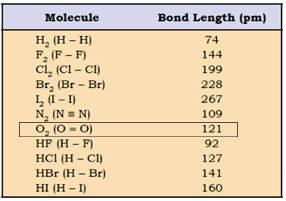
What is the bond lengths in common molecules O2 (O = O) :
Question 274 Marks
Name according to IUPAC nomenclature with IUPAC Official Name is incorrect :
| Name according to IUPAC nomenclature | IUPAC offficial Name |
| (A) Ununoctium | Oganesson |
| (B) Ununnillium | Darmstadtium |
| (C) Unniltrium | Lawrencium |
| (D) Unnilseptium | Dubnium |
Answer(D) Unnilseptium – Dubnium
- Unnilseptium - Bohrium
Atomic no. - 107
Symbol - Uns
- Unnilpentium - Dubnium
Atomic no. - 105
Symbol - Unp
View full question & answer→MCQ 284 Marks
Calculate the frequency of yellow radiation having wavelength 5800 Å.
- A
$1.172 \times 10^{14} s^{-1}$
- B
$2.172 \times 10^{10} s^{-1}$
- C
$3.172 \times 10^{10} s^{-1}$
- ✓
$5.172 \times 10^{14} s^{-1}$
AnswerCorrect option: D. $5.172 \times 10^{14} s^{-1}$
(D) $5.172 \times 10^{14} s^{-1}$
Calculation of the frequency (v)
$\bar{v}=\frac{c}{\lambda}=\frac{3 \times 10^8 m s ^{-1}}{5800 \times 10^{-10} m}$
$=5.172 \times 10^{14} s^{-1}$
View full question & answer→MCQ 294 Marks
Which of the following amines does not react with Hinsberg’s reagent :
AnswerCorrect option: C. $\left( CH _3 CH _2\right)_3 N$
(C) $\left( CH _3 CH _2\right)_3 N$
View full question & answer→MCQ 304 Marks
In the reactions given below, identify the element undergoing oxidation and reduction:
$3 Fe_3 O_4(s)+8 Al(s) \rightarrow 9 Fe(s)+4 Al_2 O_3(s)$
Answer(C) AI, Fe
Aluminium is oxidised because oxygen is added to it. Ferrous ferric oxide redox reactions $\left( Fe _3 O _4\right)$ is reduced because oxygen has been removed from it.
View full question & answer→MCQ 314 Marks
The oxidation of toluene to benzaldehyde by chromyl chloride is called :
MCQ 324 Marks
Which one is the commercial method for the prepration of benzaldehyde.
(a) Rosenmund reduction
(b) Etard reaction
(c) Stephen reaction
(d) Side chain chlorination, followed by hydrolysis.
Answer(D) only d
Side chain chlorination, followed by hydrolysis.
View full question & answer→MCQ 334 Marks
Oil of Eranda and seeds of Mahua plant and calcium carbonate were used for .
Answer(D) making soap
Oil of Eranda and seeds of Mahua plant and calcium carbonate were used for making soap.
View full question & answer→MCQ 344 Marks
____________ discovered mercury sulphide :
Answer(A) Chakrapani
Chakrapani discovered mercury sulphide.
View full question & answer→MCQ 354 Marks
At equilibrium, the concentrations of $N _2=3.0 \times 10^{-3}$ $M , O _2=4.2 \times 10^{-3} M$ and $NO =2.8 \times 10^{-3} M$ in a sealed vessel at 800 K . What will be $K _{ c }$ for the reaction
$N_2(g)+O_2(g) \rightleftharpoons 2 NO(g)$
Answer(C) 0.622
For the reaction equilibrium constant, $K _{ c }$ can be written as
$K _{ C }=\frac{[ NO ]^2}{\left[N_2\right]\left[ O _2\right]}$
$K _{ C }=\frac{\left(2.8 \times 10^{-3} M \right)^2}{\left(3.0 \times 10^{-3} M \right)\left(4.2 \times 10^{-3} M \right)}$
$=0.622$
View full question & answer→MCQ 364 Marks
Choose the correct answer. A thermodynamic state function is a quantity
- A
used to determine heat changes
- ✓
whose value is independent of path
- C
used to determine pressure volume work
- D
whose value depends on temperature only
AnswerCorrect option: B. whose value is independent of path
(B) whose value is independent of path
In thermodynamics, state function is a property whose value depends only on the current state of the system rather than on the path taken to reach that specific value.
View full question & answer→MCQ 374 Marks
Identify the correct statements :
A. $F _2$ and $O _2{ }^{2-}$ have bond order 2.
B. $N _2, CO$ and $NO ^{+}$have bond order 3 .
Answer(B) Only B
A. Isoelectronic molecules and ions have identical bond orders; for example, $F _2$ and $O _2{ }^{2-}$ have bond order 1.
B. $N _2, CO$ and $NO ^{+}$have bond order 3 .
View full question & answer→MCQ 384 Marks
The oxidation state and coordination number of Al in $\left[ AlCl \left( H _2 O \right)_5\right]^{2+}$ are :
Answer(B) +3, 6
The oxidation state of Al is +3 and The covalency is 6 .
View full question & answer→MCQ 394 Marks
The correct order of electron affinity of B, C, Ne, O is :
- A
$O > C > Ne > B$
- B
$B > Ne > C > O$
- ✓
$O > C > B > Ne$
- D
$O > B > C > Ne$
AnswerCorrect option: C. $O > C > B > Ne$
(C) $O > C > B > Ne$
Order of electron affinity
$O > C > B > Ne$
View full question & answer→MCQ 404 Marks
If pH of 0.1M acetic acid is 3.0, then dissociation constant of this acid will be
- A
$10^{-4}$
- ✓
$10^{-5}$
- C
$10^{-3}$
- D
$10^{-8}$
AnswerCorrect option: B. $10^{-5}$
(B) $10^{-5}$
${\left[ H ^{+}\right] 10^{-3}, pH =3 \quad C =10^{-1}}$
${\left[ H ^{+}\right]= C \cdot x }$
$10^{-3}=10^{-1} \cdot x$
$x =\frac{10^{-3}}{10^{-1}}=10^{-2}, K_{ a }= Cx { }^2$
$K_{ a }=C x^2=10^{-1} \times 10^{-2} \times 10^{-2}=10^{-5}$
View full question & answer→MCQ 414 Marks
A reaction $X+Y \rightarrow Z+A+q$ is found to have a positive entropy change, the reaction will be :
- A
Possible at high temperature
- B
Possible only at low temperature
- C
Not possible at any temperature
- ✓
Possible at any temperature
AnswerCorrect option: D. Possible at any temperature
(D) Possible at any temperature
$ \begin{array}{l} \Delta H=-v e \\ \Delta S=+v e \\ \Delta G=\Delta H-T \Delta S \end{array} $
$\Delta G$ is -ve at all temperaters.
View full question & answer→MCQ 424 Marks
For which of these reactions will there be $\Delta$S negative :
- ✓
$NH _3(g) \rightarrow NH _3( l )$
- B
$H _2(g)+ I _2(g) \rightarrow 2 HI ( g )$
- C
$CaCO _3$ (s) $\rightarrow CaO$ (s) $+ CO _2$ (g)
- D
AnswerCorrect option: A. $NH _3(g) \rightarrow NH _3( l )$
(A) $NH _3(g) \rightarrow NH _3( l )$
Gas changes to liquid so entropy decreases.
View full question & answer→MCQ 434 Marks
$O - O$ bond length order in $O _2^{-2}, O _2^{-}, O _3$ and $O _2$ :
- A
$O _2^{-2}< O _2^{-}< O _3< O _2$
- B
$O _2^{-2}> O _2^{-}> O _3> O _2$
- ✓
$O _2^{-2}> O _2^{-}= O _3> O _2$
- D
$O _2^{-2}< O _2^{-}= O _3< O _2$
AnswerCorrect option: C. $O _2^{-2}> O _2^{-}= O _3> O _2$
(C) $O _2^{-2}> O _2^{-}= O _3> O _2$
Bond order $\propto\frac{1}{\text{ Bond lenght}} $
$\begin{array}{l} B . O = O _2^{-2}> O _2^{-}= O _3> O _2 \\ ( O - O )\end{array}$
View full question & answer→MCQ 444 Marks
In which conversion, bond length decreases :
- A
$N _2 \rightarrow N_2{ }^{+}$
- B
$N _2 \rightarrow N_2^{-}$
- ✓
$O _2 \rightarrow O _2^{+}$
- D
$O _2 \rightarrow O _2^{-}$
AnswerCorrect option: C. $O _2 \rightarrow O _2^{+}$
(C) $O _2 \rightarrow O _2^{+}$
Bond length $\propto 1 /$ Bond order
View full question & answer→MCQ 454 Marks
Given below are two statements :
Statement I:
Both $H _3 O ^{+}$and $NH _3$ are pyramidal molecules.
Statement II:
Both $H _3 O ^{+}$and $NH _3$ have $sp ^3$ hybridisation of the central atom.
In the light of the above statements, choose the most appropriate answer from the options given below :
- A
Both Statement I and Statement II are incorrect
- B
Statement I is correct but Statement II is incorrect
- C
Statement I is incorrect but Statement II is correct
- ✓
Both Statement I and Statement II are correct.
AnswerCorrect option: D. Both Statement I and Statement II are correct.
(D) Both Statement I and Statement II are correct.
- Both $H _3 O ^{+}$and $NH _3$ are pyramidal molecules.
- Both $H _3 O ^{+}$and $NH _3$ have $sp ^3$ hybridisation of the central atom.
View full question & answer→