Question 15 Marks
Can you list 10 recombinant proteins which are used in medical practice? Find out where they are used as therapeutics (use the internet).
Answer
View full question & answer→| Recombinant Proteins | Therapeutic uses | |
| (a) | Insulin | Used for diabetes mellitus |
| (b) | OKT-3 | Therapeutic antibody, used for reversal of transplantation rejection |
| (c) | DNase | Treatment of cystic fibrosis |
| (d) | Reo Pro | Prevention of blood clots |
| (e) | Blood clotting factor VIII | Treatment of haemophilia A |
| (f) | Blood clotting factor IX | Treatment of haemophiiia B |
| (g) | Tissue plasminogen activator | For acute myocardial infarction |
| (h) | Interferon alpha (INF alpha) | Used for hepatitis C |
| (i) | Interferon beta (INF beta) | Used for multiple sclerosis |
| (j) | Interferon gamma (INF gamma) | Used for granulomatous disease |

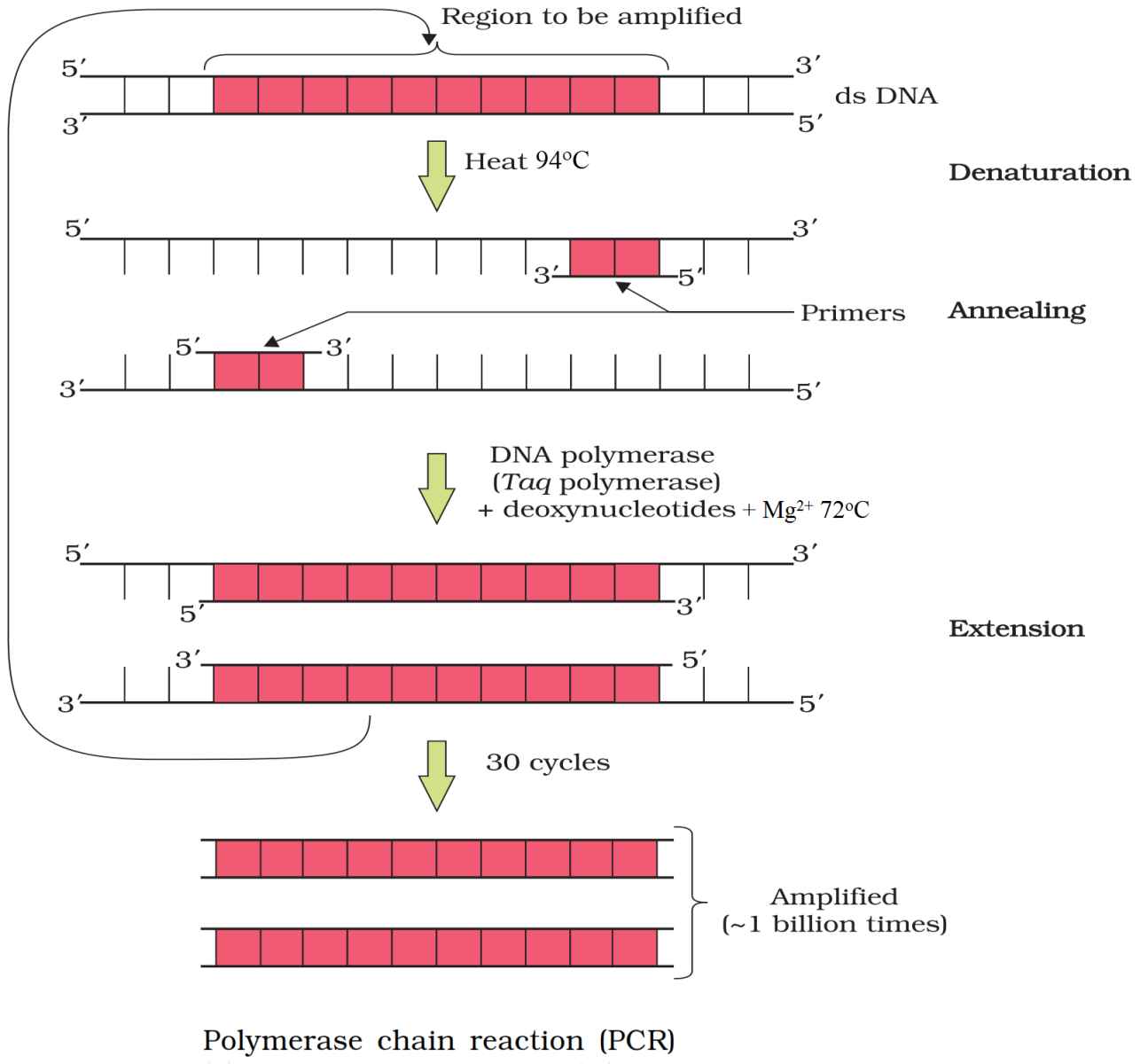
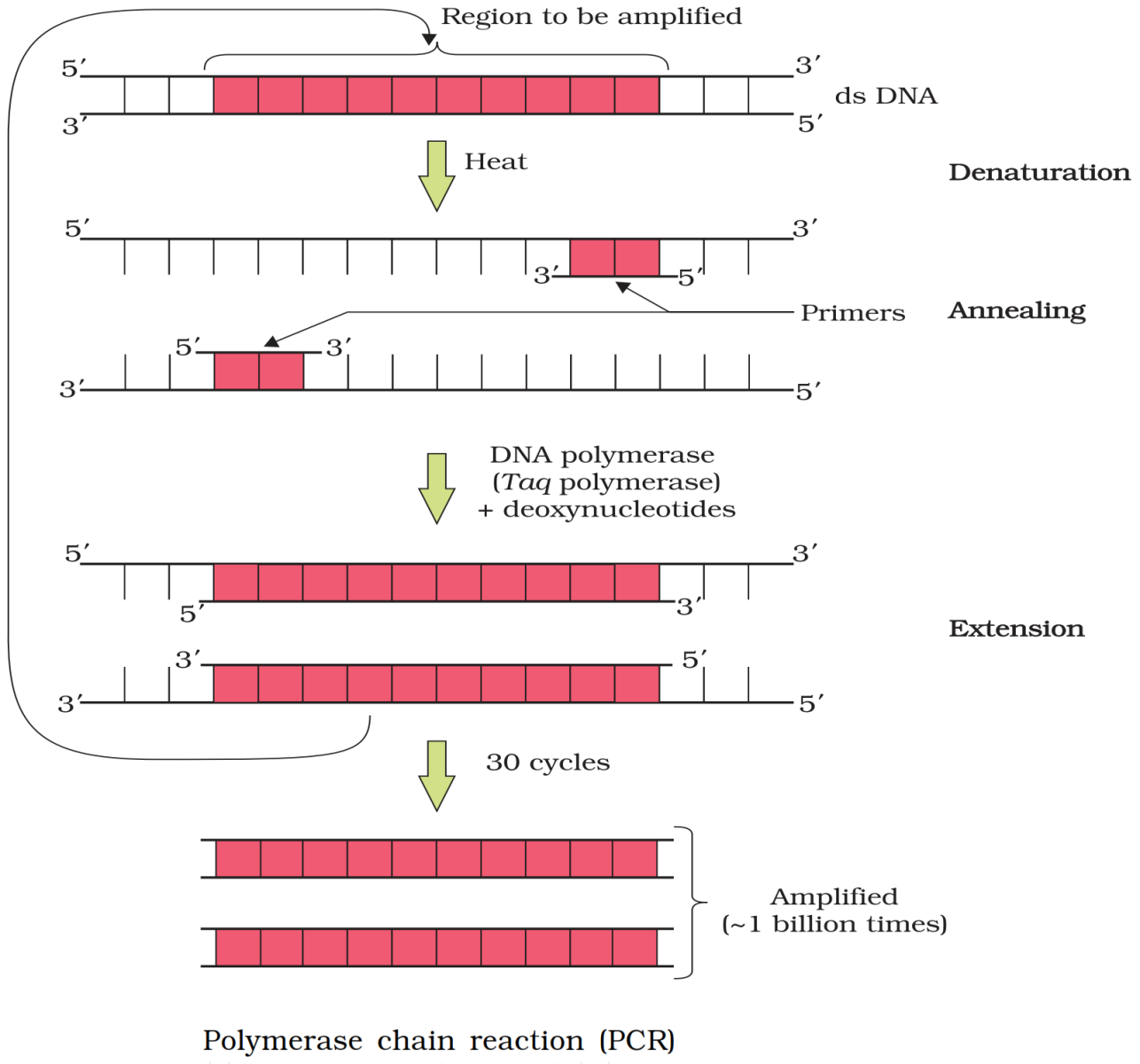 Application of PCR are in DNA technology, DNA sequencing, DNA fingerprinting, early diagnosis of infections, disease, etc.