Question 13 Marks
The diameter of the sun is 1.4 × 10⁹m and its distance from the earth is 1.5 × 10¹¹m. Find the radius of the image of the sun formed by a lens of focal length 20cm.
Answer
View full question & answer→u = -1.5 × 10¹¹ m; v = +20 × 10-2 m Since, f is very small compared to u, distance is taken as $\infty.$ So, image will be formed at focus. ⇒ v = +20 × 10-2m
$\therefore$ We know, $\text{m}=\frac{\text{v}}{\text{u}}=\frac{\text{h}_{\text{image}}}{\text{h}_{\text{object}}}$
$\Rightarrow\frac{20\times10^{-2}}{1.5\times10^{11}}=\frac{\text{D}_{\text{image}}}{1.4\times10^9}$
$\Rightarrow\text{D}_{\text{image}}=1.86\text{mm}$
So, radius $=\frac{\text{D}_{\text{image}}}{2}=0.93\text{mm}.$
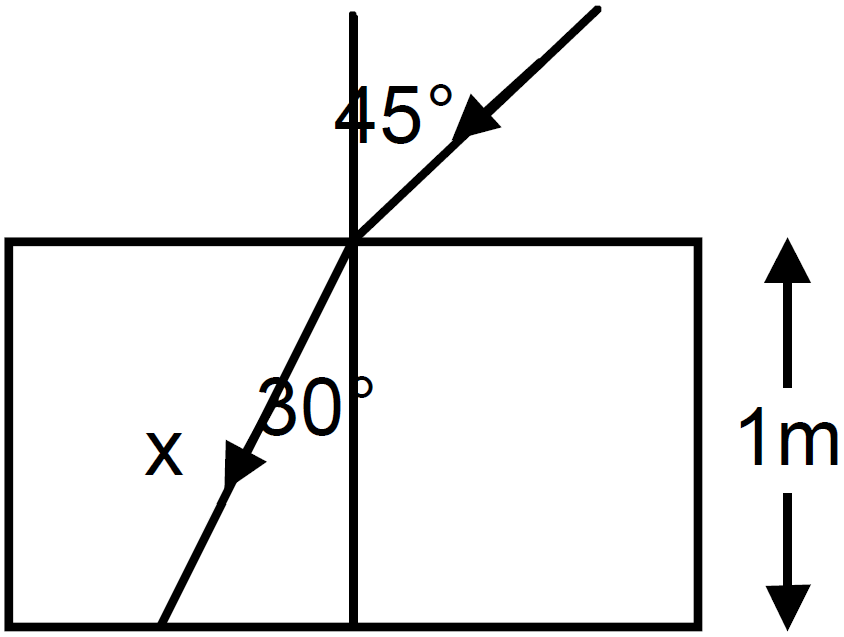
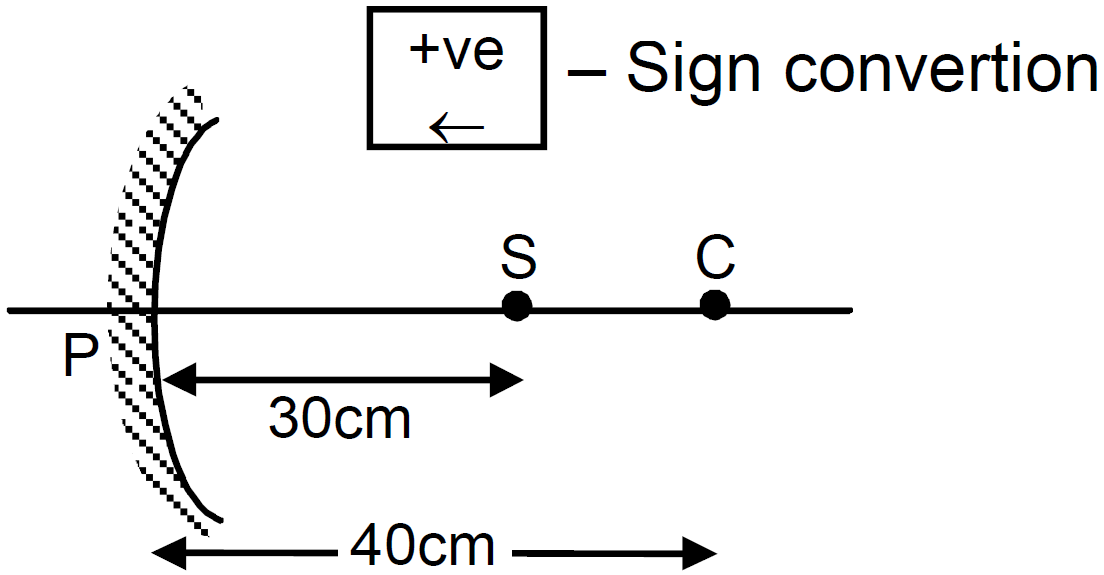
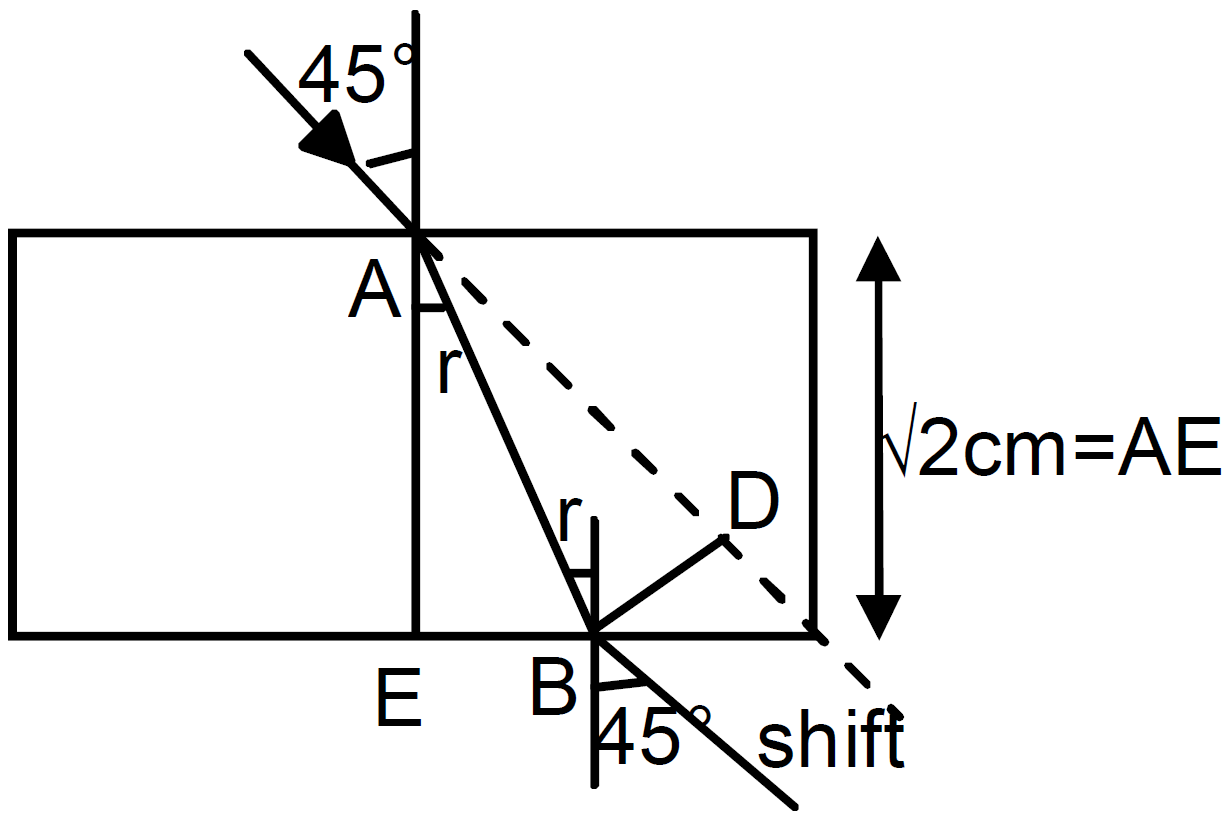
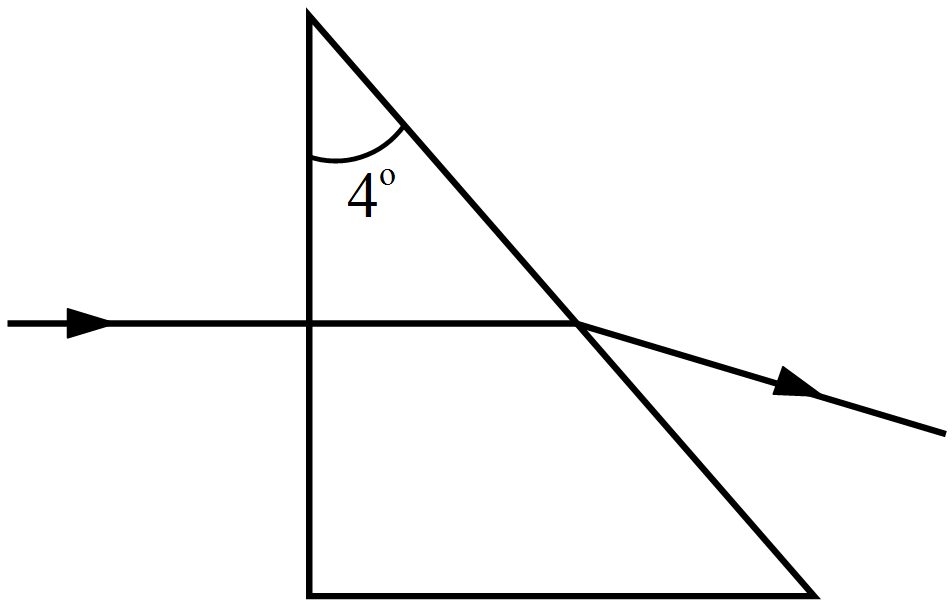
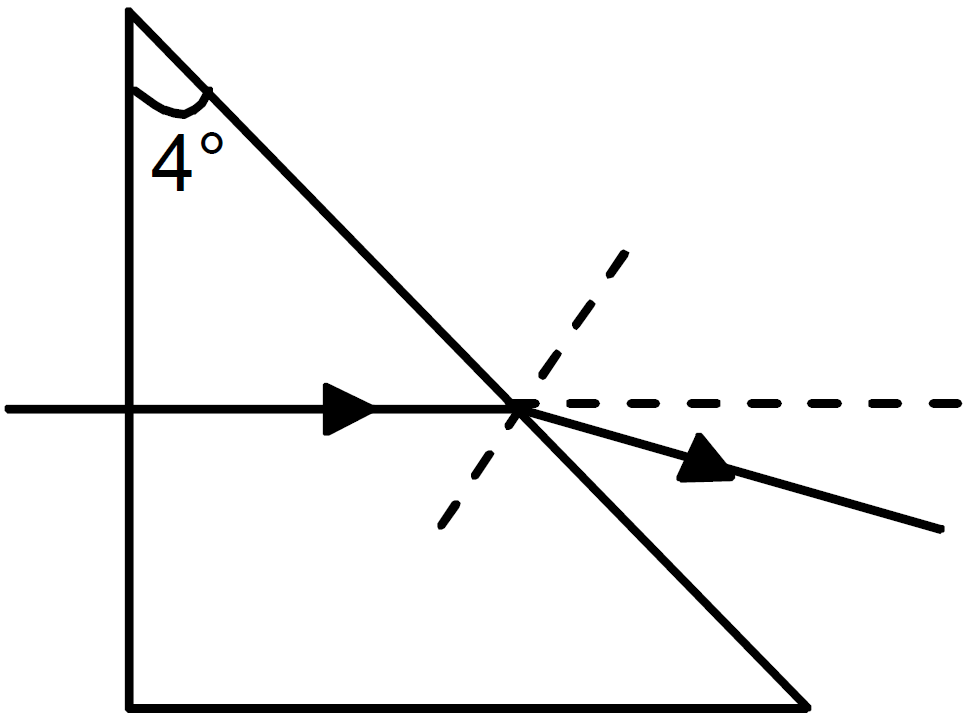 Given,
 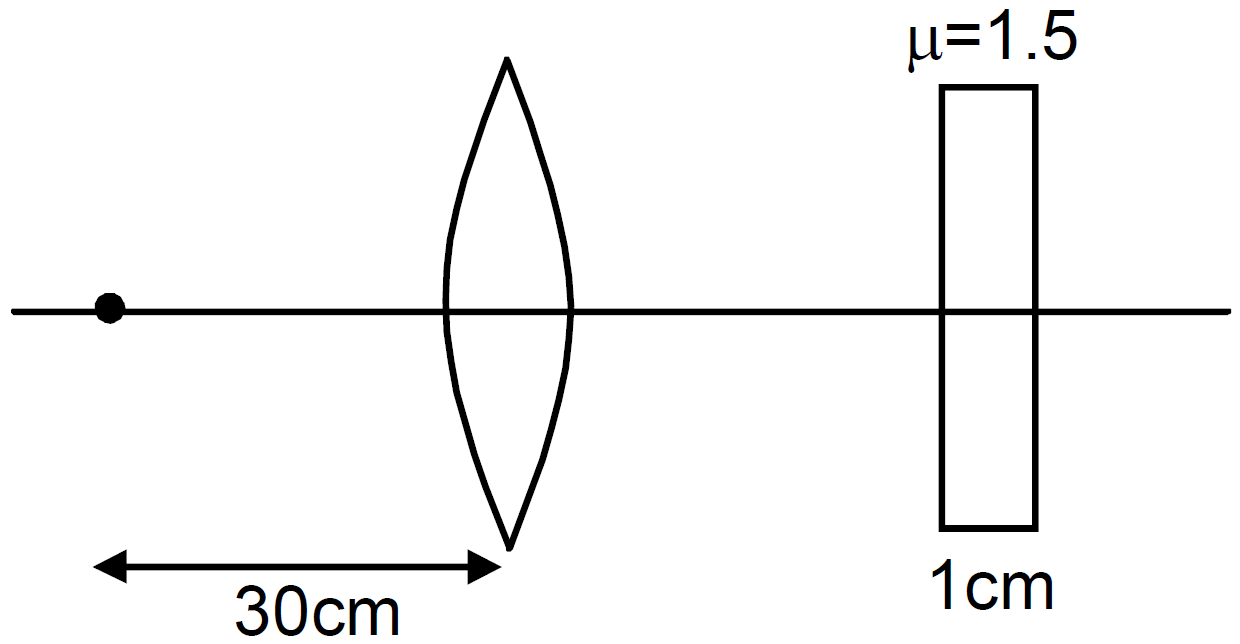 For the lens, f = 15cm, u = 30cm From lens formula
 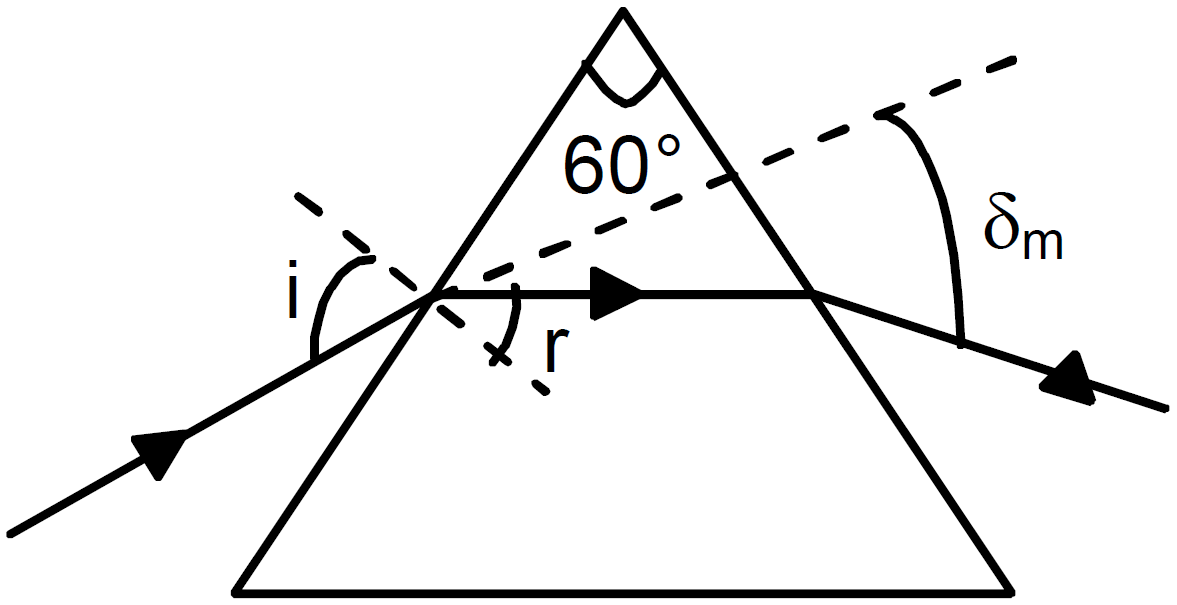 Where
Where 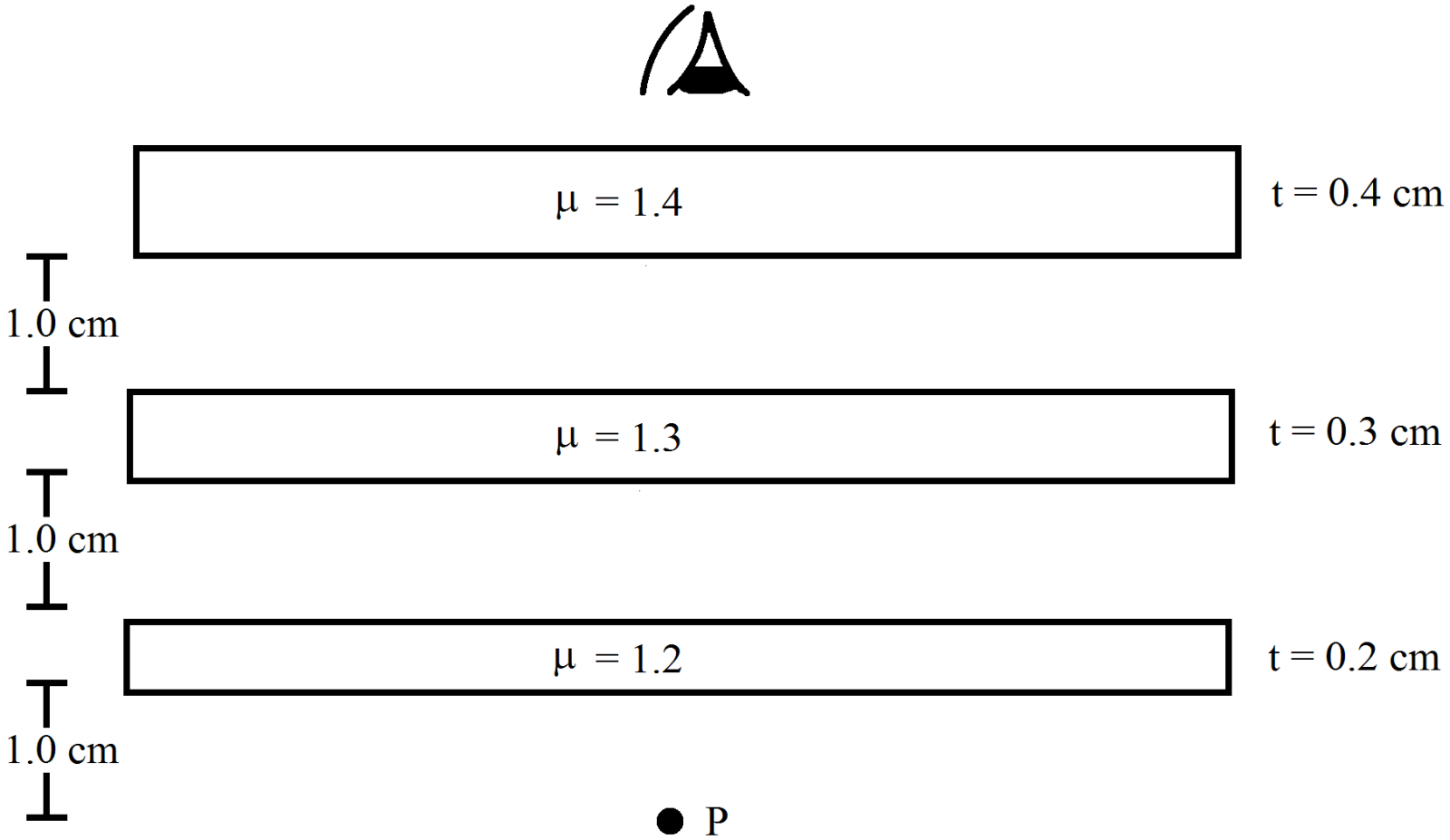
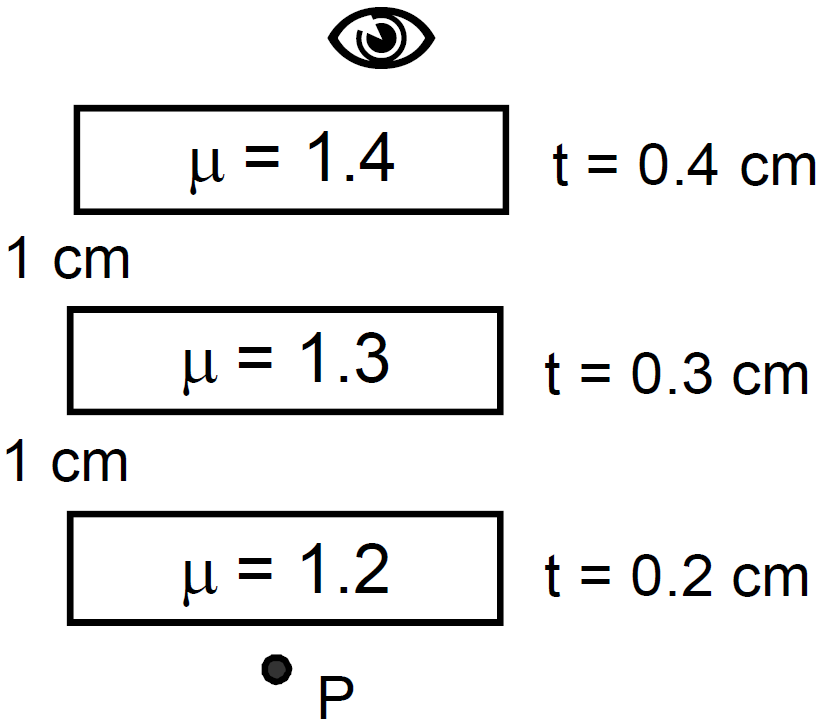 The presence of air medium in between the sheets does not affect the shift. The shift will be due to 3 sheets of different refractive index other than air.
 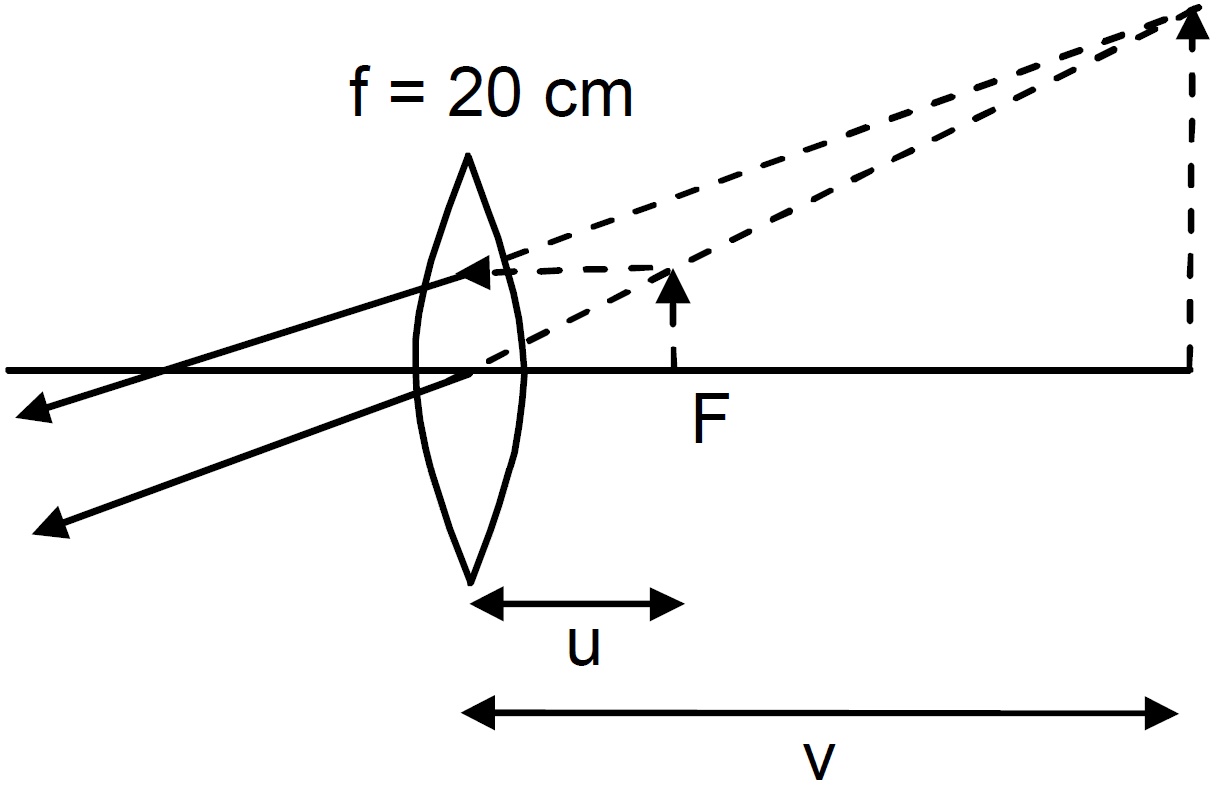 Given, P = 5 diopter (convex lens)
 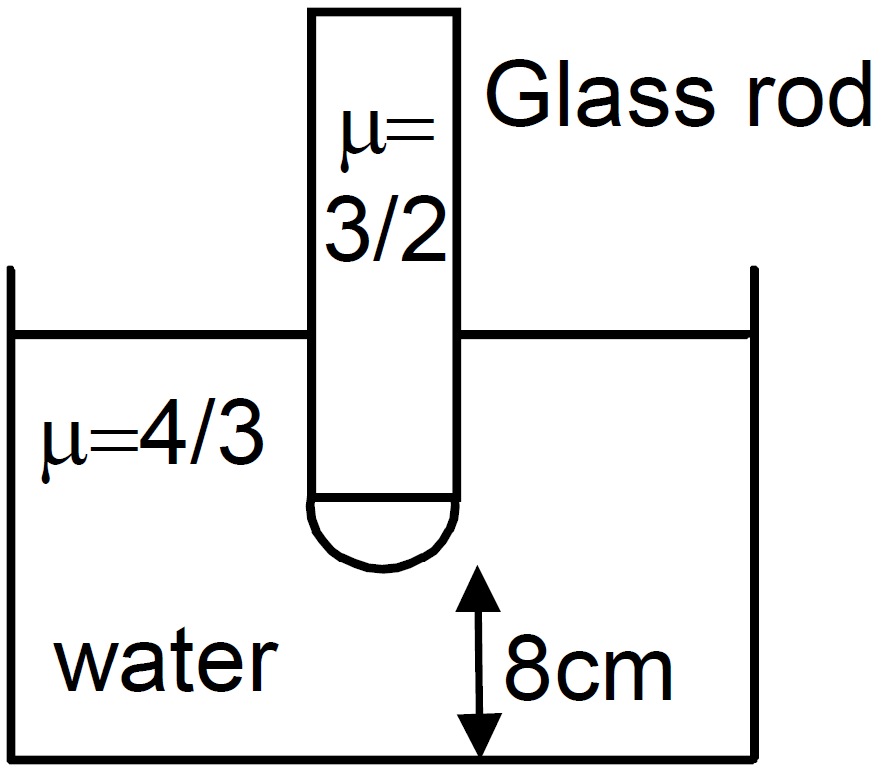 Radius of the cylindrical glass tube = 1cm We know,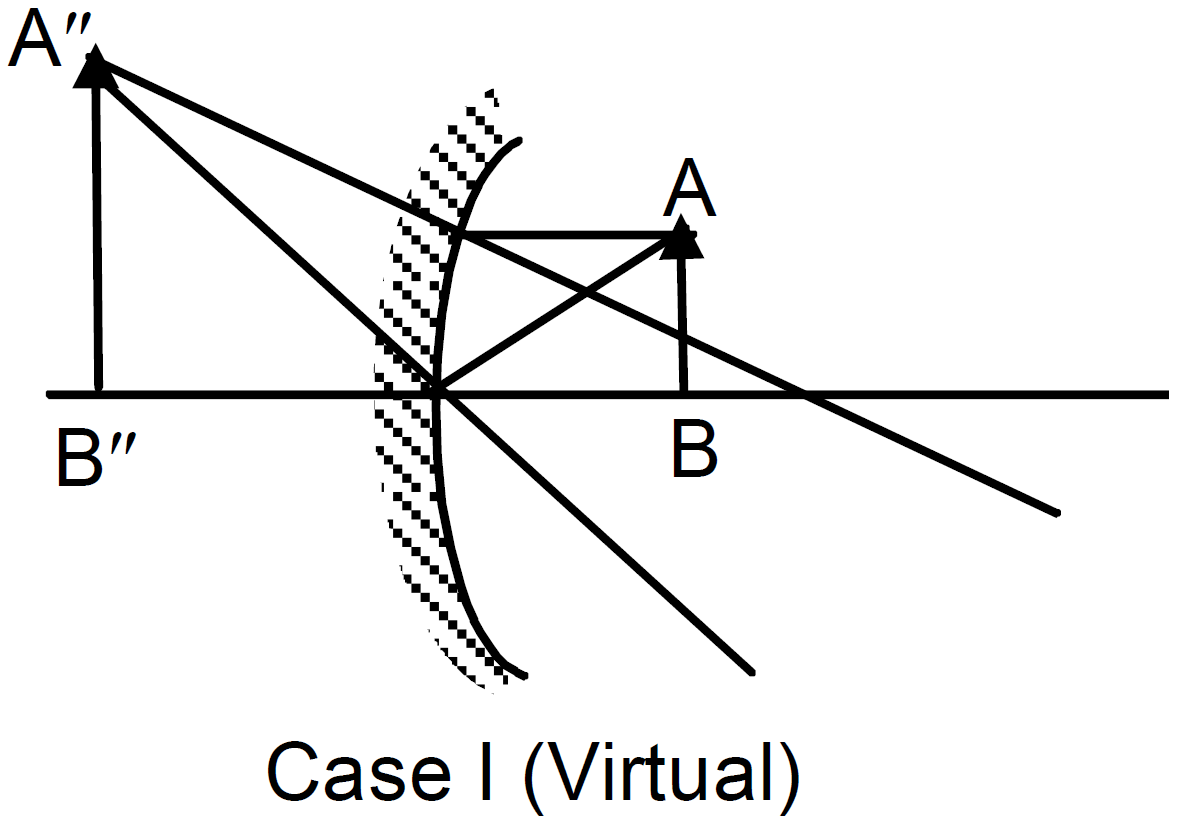
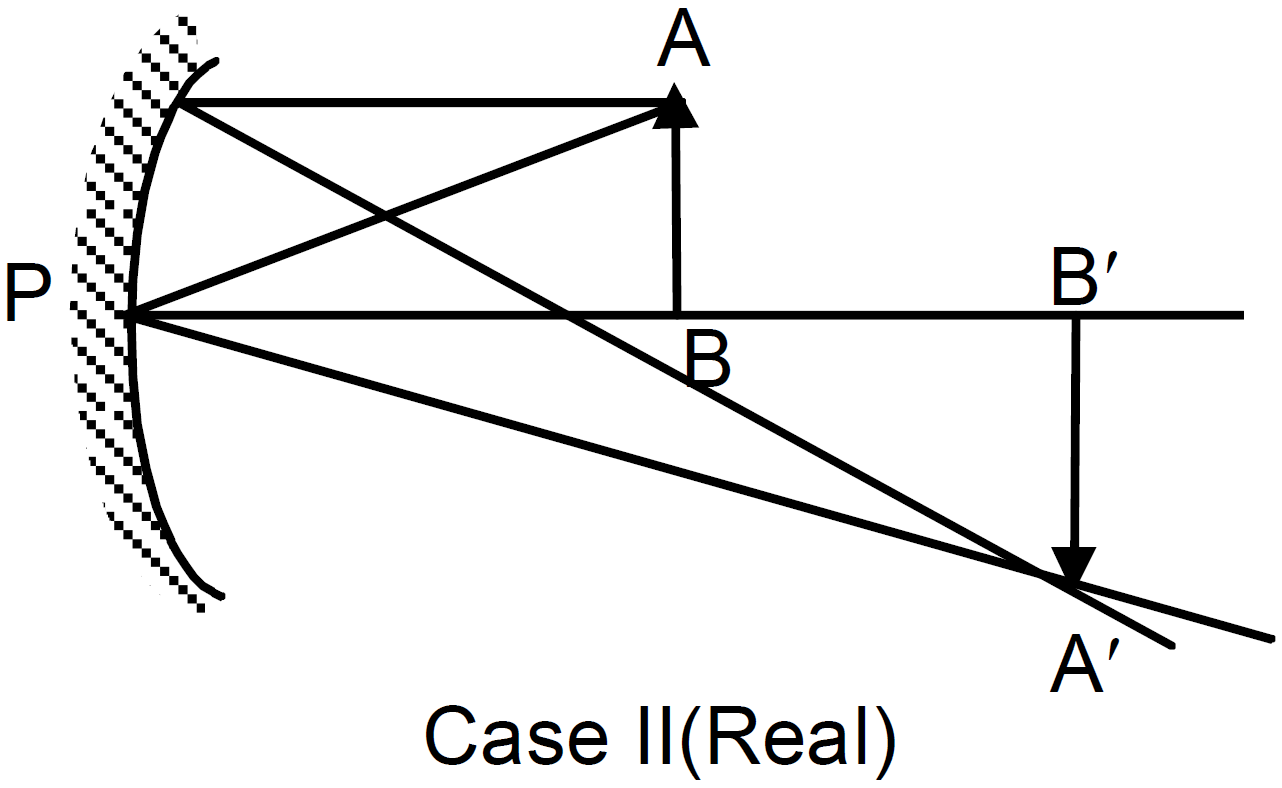 For the concave mirror,
 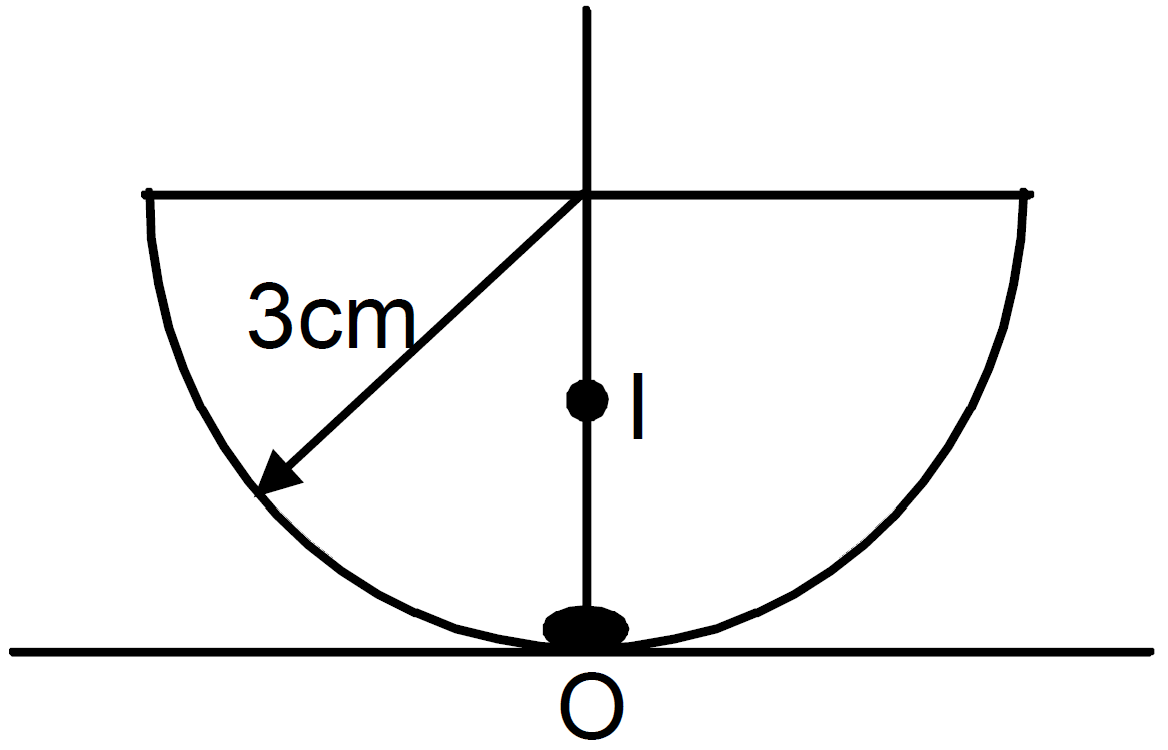 Thickness of glass
 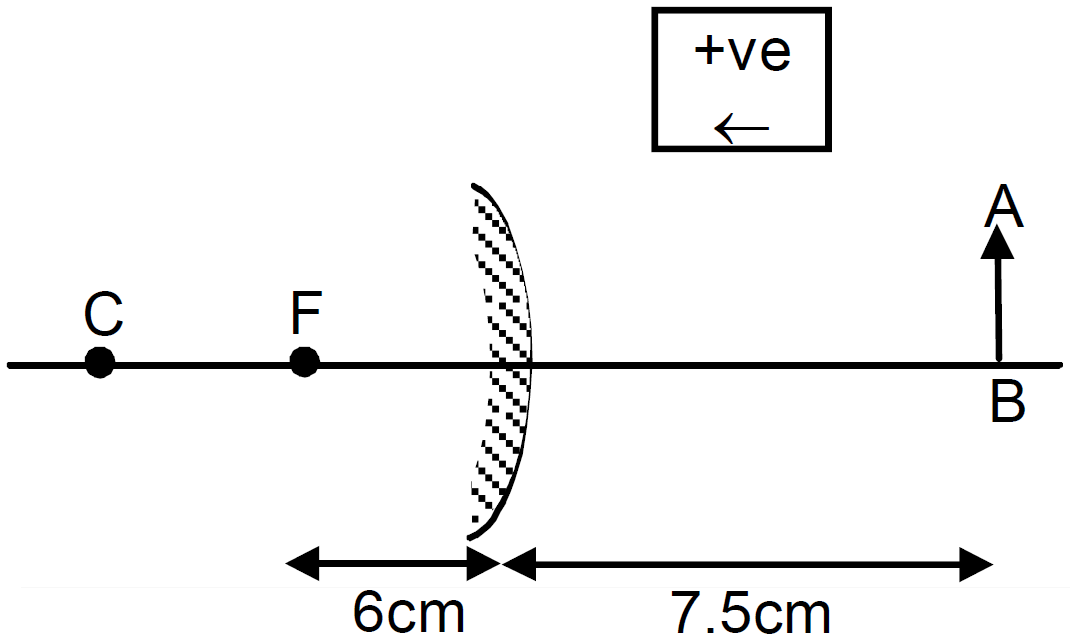 Given AB = 3cm, u = -7.5cm, f = 6cm. Using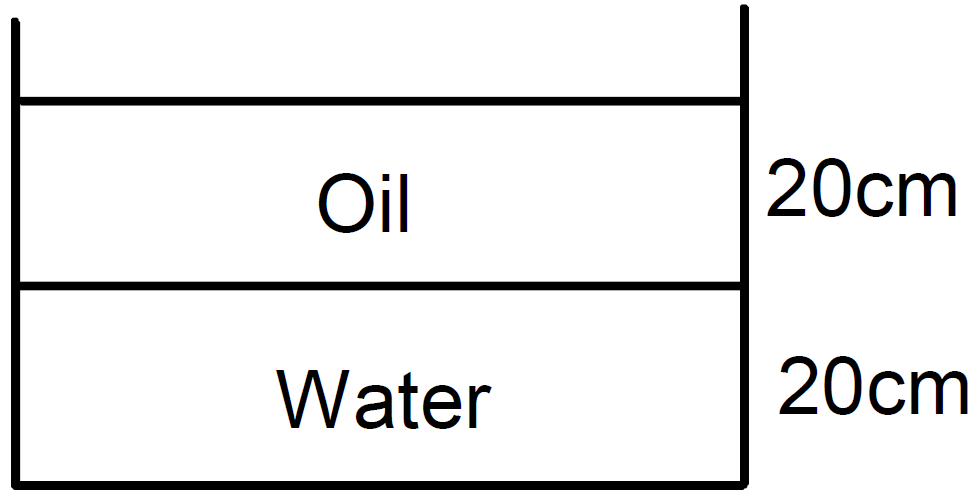
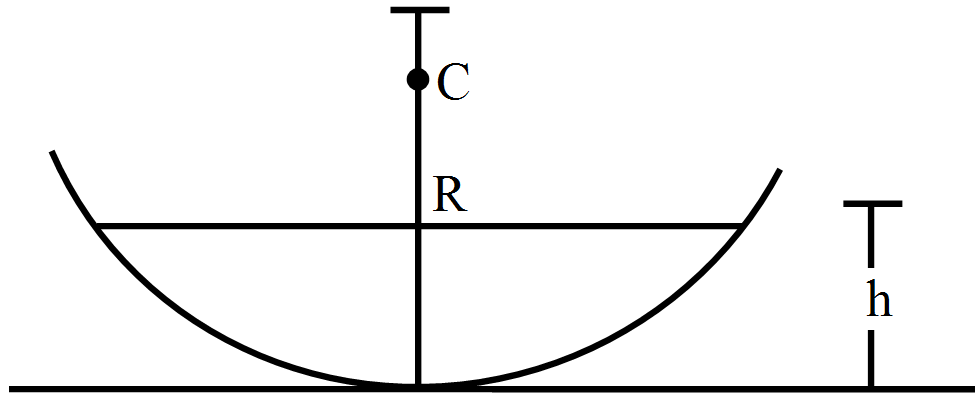
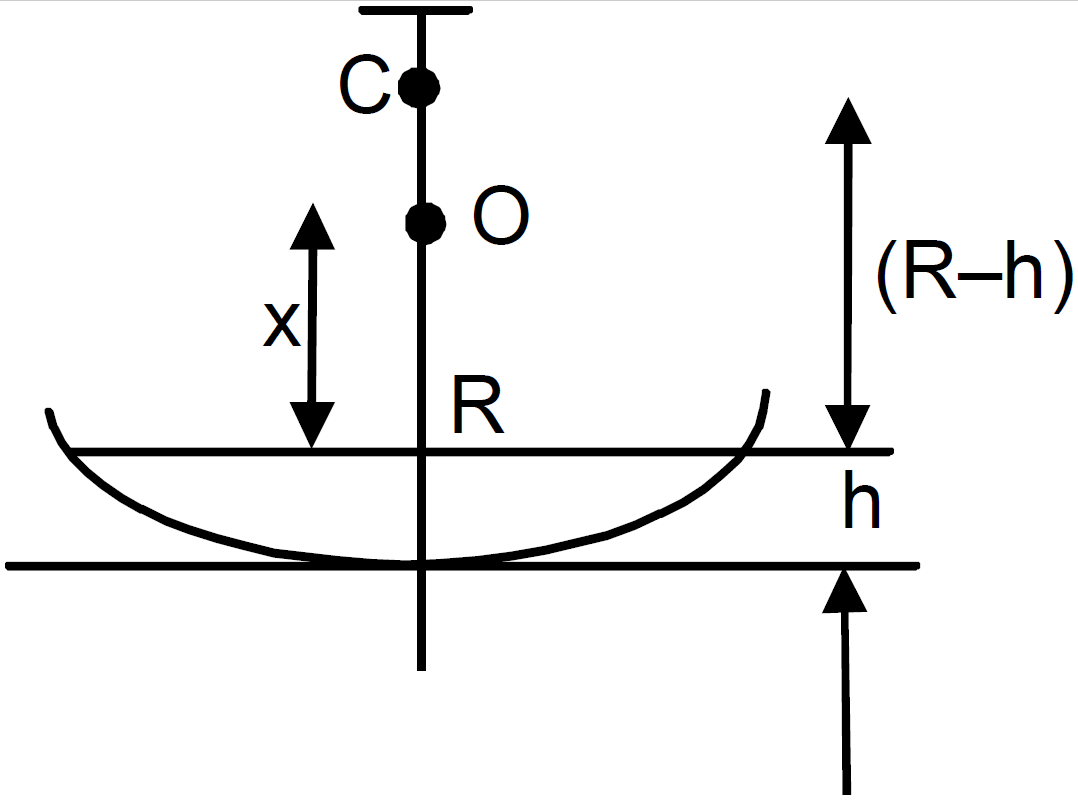 Let the object be placed at a height x above the surface of the water. The apparent position of the object with respect to mirror should be at the centre of curvature so that the image is formed at the same position. Since,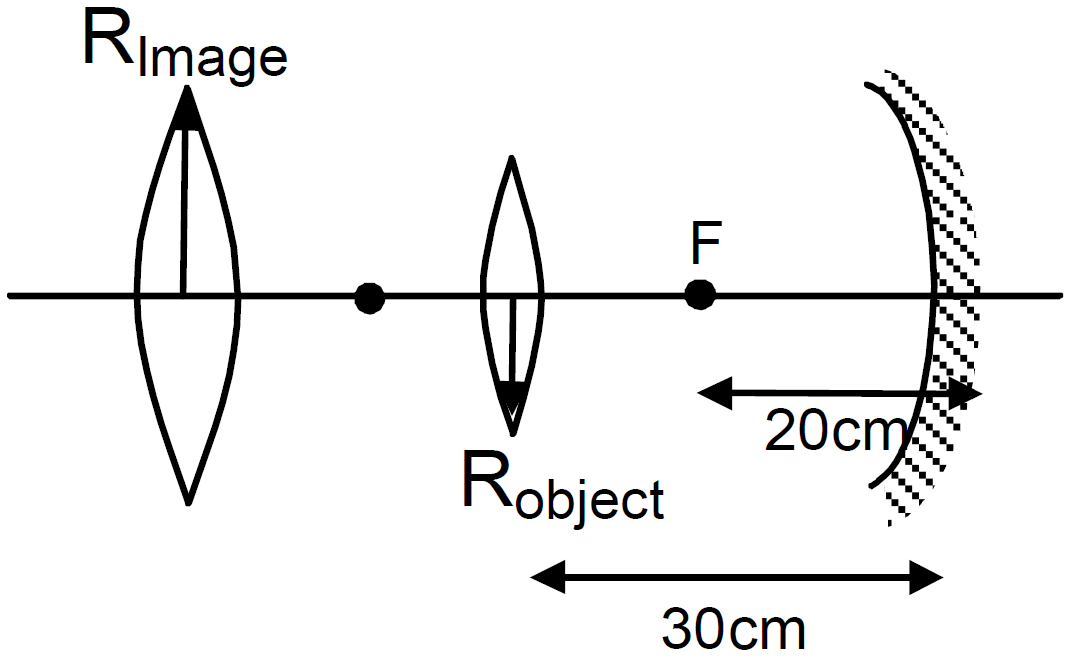
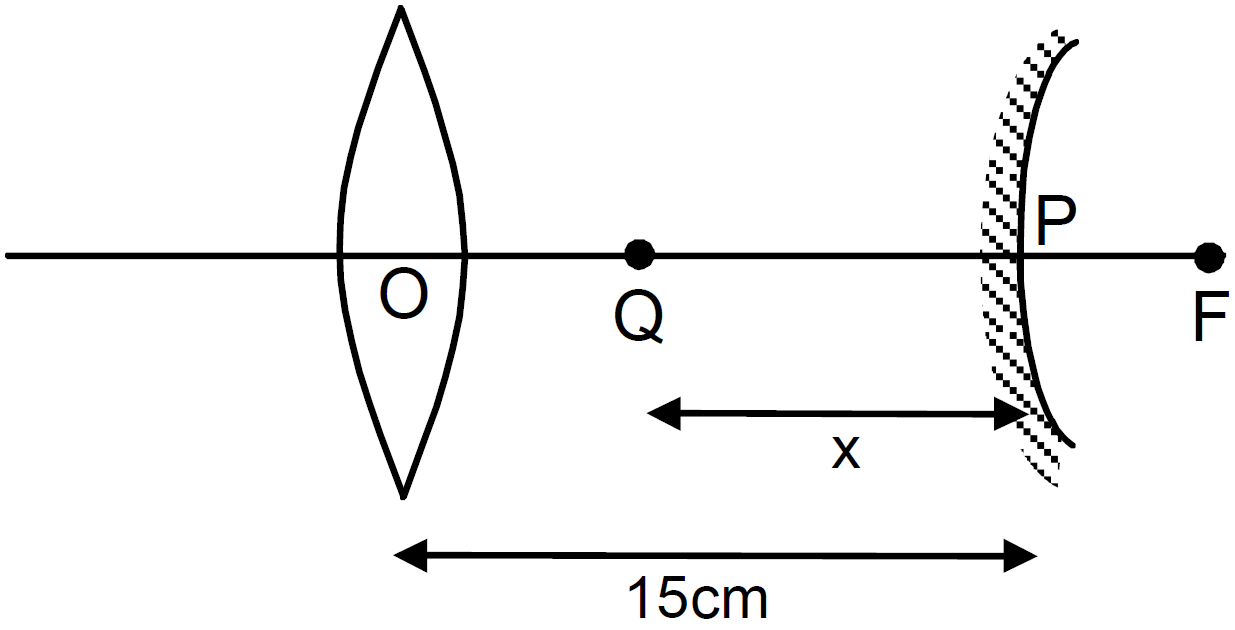 If the image in the mirror will form at the focus of the converging lens, then after transmission through the lens the rays of light will go parallel. Let the object is at a distance x cm from the mirror
 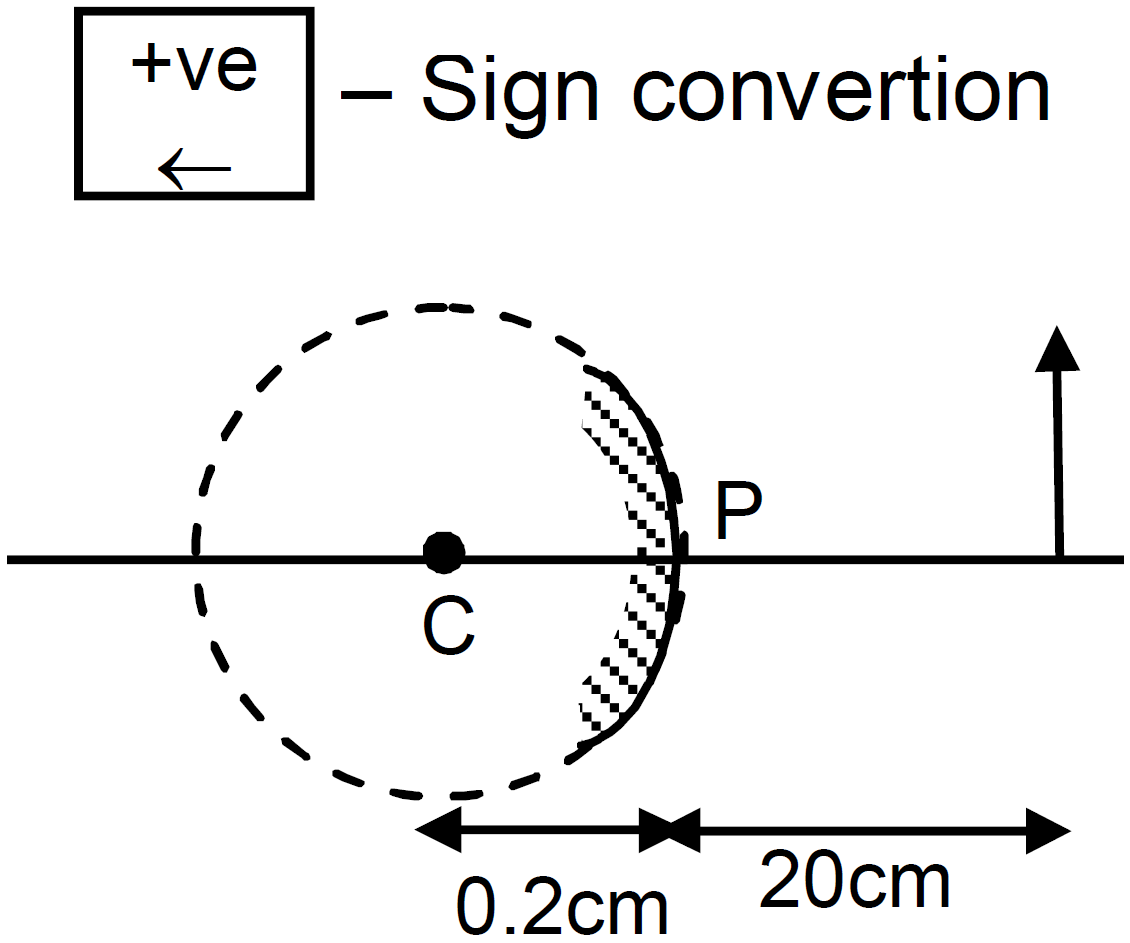 Height of the object AB = 1.6cm Diameter of the ball bearing = d = 0.4cm ⇒ R = 0.2cm Given, u = 20cm We know,