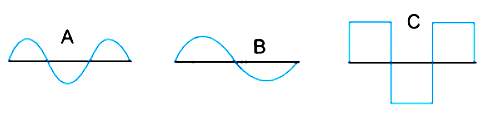
(i) Since both have same amplitude and waveform therefore loudness and quality is same.
(ii) Neither amplitude nor waveform is same. Hence no characteristic is same.
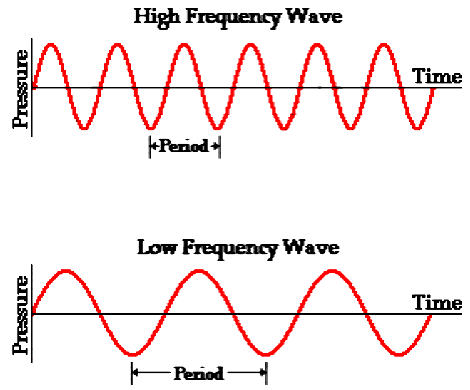
(iii) Frequency of both the sound is same in this case hence pitch is same.
15 questions · timed · auto-graded

(i) Since both have same amplitude and waveform therefore loudness and quality is same.
(ii) Neither amplitude nor waveform is same. Hence no characteristic is same.
(iii) Frequency of both the sound is same in this case hence pitch is same.

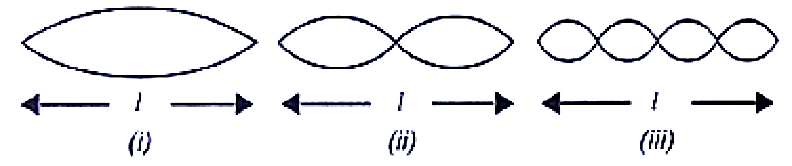
According to the study of bells (called campanology), larger bells provide less resonant frequency.
For a sound wave to travel long distances, it is essential that the frequency of the sound is less.
Also, it is observed that thicker the body of a bell, richer is the quality of sound.
This is the reason the bells of a temple are big in size.
natural vibrations
Damped vibrations
Forced vibration
Resonant vibrations
Hint: The vibrations of a body which take place under the influence of external periodic force acting on it are called the forced vibrations.
(b) How does the frequency depend on the factor stated in part (a).
| Forced Vibrations | Resonant vibrations |
| These are vibrations of a body under an external periodic force of frequency different than the natural frequency of the body. | These are vibrations of a body under an external periodic force of frequency exactly equal to the natural frequency of the body. |
| The amplitude of the vibration is usually small. | The amplitude of vibration is very large. |
A loud sound is heard only when a special case of forced vibration (resonance) has occurred.
When the frequency of the periodic force applied on a body is equal to the natural frequency of that body, we hear a loud soundcalled resonance.
It is due to resonance that a loud sound is heard on keeping the stem of a vibrating tuning fork on the surface of a table.