Sample QuestionsCarbon and its Compounds questions
One sample from each question group in this chapter. Select any group above to see the full set with answer keys.
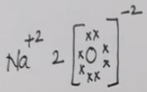
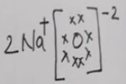
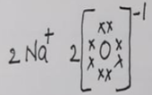
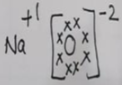
Which one of the following correctly represents Sodium oxide?
Answer: B.
View full solution →In the neighbourhood of your school, hard water required for an experiment is not available. Select from the following groups of salts available in your school, a group each member of which, if dissolved in distilled water, will make it hard :
- A
Sodium chloride, calcium chloride.
- B
Potassium chloride, sodium chloride.
- C
Sodium chloride, magnesium chloride.
- ✓
Calcium chloride, magnesium chloride.
Answer: D.
View full solution →In a locality, hard water, required for an experiment, is not available. However, the following salts are available in the school laboratory:
- Sodium sulphate.
- Calcium sulphate.
- Magnesium chloride.
- Sodium chlorid.
- Calcium chloride.
- Potassium sulphate.
Which of the above salts may be dissolved in water to obtain hard water for the experiment?
- ✓
$2, 3$ and $5$
- B
$1, 2$ and $5$
- C
$1, 2, 4$ and $6$
- D
$3$ and $5$ only
Answer: A.
View full solution →In an experiment to study the properties of ethanoic acid, a student takes about $3 mL$ of ethanoic acid in a dry test tube. He adds an equal amount of distilled water to it and shakes the test tube well. After some time he is likely to observe that.
- A
A colloid is formed in the test tube.
- ✓
The ethanoic acid dissolves readily in water.
- C
The solution becomes light orange.
- D
Water floats over the surface of ethanoic acid.
Answer: B.
View full solution →While studying the saponification reaction, what do you observe when you mix an equal amount of colourless vegetable oil and $20\%$ aqueous solution of $\ce{NaOH}$ in a beaker?
- A
The colour of the mixture has become dark brown.
- B
A brisk effervescence is taking place in the beaker.
- ✓
The outer surface of the beaker has become hot.
- D
The outer surface of the beaker has become cold.
Answer: C.
View full solution →Two statements are given $-$ one labelled Assertion $(A)$ and the other labelled Reason $(R)$. Select the correct answer to these questions from the codes $\ce{(a), (b), (c)}$ and $(d)$ as given below :
Assertion $(A)\ :$ Esterification is a process in which a sweet smelling substance is produced.
Reason $(R)\ :$ When esters react with sodium hydroxide an alcohol and sodium salt of carboxylic acid are obtained.
- A
Both $A$ and $R$ are true and $R$ is correct explanation of the Assertion.
- ✓
Both $A$ and $R$ are true but $R$ is not the correct explanation of the Assertion.
- C
$A$ is true but $R$ is false.
- D
$A$ is false but $R$ is true.
Answer: B.
View full solution →Two statements are given $-$ one labelled
Assertion $(A)$ and the other labelled
Reason $(R)$. Select the correct answer to these questions from the codes $(a), (b), (c)$ and $(d)$ as given below:
Assertion $(A):$ In a homologous series of alcohols, the formula for the second member is $C _2 H _5 OH$ and the third member is $C _3 H _7 OH$.
Reason$(R):$ The difference between the molecular masses of the two consecutive members of a homologous series is $144 .$
- A
Both $A$ and $R$ are true, and $R$ is correct explanation of the assertion.
- B
Both $A$ and $R$ are true, but $R$ is not the correct explanation of the assertion.
- ✓
$A$ is true, but $R$ is false.
- D
$A$ is false, but $R$ is true.
Answer: C.
View full solution →The following questions, a statement of Assertion is given by the corresponding statement of Reason. Of the statements, mark the correct answer as.
Assertion Alcohol cannot be used as an additive in petrol.
Reason Alcohol give rise to $CO$ and $H_2O$ when burnt in sufficient air.
- A
If both Assertion and Reason are true and Reason is the correct explanation of Assertion.
- B
If both Assertion and Reason are true, but Reason is not the correct explanation of Assertion.
- C
If Assertion is true, but Reason is false.
- ✓
If Assertion is false, but Reason is true.
Answer: D.
View full solution →For question two statements are given $-$ one labelled Assertion $(A)$ and the other labelled Reason $(R).$ Select the correct answer to these questions from the codes $\ce{(a), (b), (c)}$ and $(d)$ as given below :
Assertion : Carbon and its compounds can be used as fuels.
Reason : They are highly inflammable and have high calorific value.
- ✓
Both $A$ and $R$ are true, and $R$ is correct explanation of the assertion.
- B
Both $A$ and $R$ are true, but $R$ is not the correct explanation of the assertion.
- C
$A$ is true, but $R$ is false.
- D
$A$ is false, but $R$ is true.
Answer: A.
View full solution →For question two statements are given $-$ one labelled Assertion $(A)$ and the other labelled Reason $(R).$ Select the correct answer to these questions from the codes $\ce{(a), (b), (c)}$ and $(d)$ as given below : Assertion : Diamond is the hardest natural known substance.
Reason : Diamond is used for cutting marble, granite and glass.
- A
Both $A$ and $R$ are true, and $R$ is correct explanation of the assertion.
- ✓
Both $A$ and $R$ are true, but $R$ is not the correct explanation of the assertion.
- C
$A$ is true, but $R$ is false.
- D
$A$ is false, but $R$ is true.
Answer: B.
View full solution →The sodium salt of a long chain fatty acid is called ___________.
The IUPAC name of ethylene is _______.
Plant shoot grows upward in response to __________.
The main constituent of marsh gas is _____.
The property of carbon atoms to form long chains in compounds is called _______.
State whether the following statement is true or false:
The minimum number of carbon atoms in a ketone molecule is two.
Ethanol turns blue litmus red. [True/ False]
State whether the following statement is true or false:Diamond and graphite are the covalent compounds of carbon element (C).
The IUPAC name of $CH_3-CH_2-CH_2-CH_3$ is pentane. [True/ False]
View full solution →Carbon and its compounds are used as fuels because they burn in air releasing a lot of heat energy. [True/ False]
Write the molecular formula of the $2^{\text {nd }}$ and $3^{\text {rd }}$ member of the homologous series where the first member is ethyne.
View full solution →Write the name and structure of an aldehyde with four carbon atoms in its molecule.
Write the number of covalent bonds in the molecule of butane, $C _4 H _{10}$
View full solution → Write the molecular formula of the $2^{\text {nd }}$ and $3^{\text {rd }}$ member of the homologous series whose first member is ethene.
View full solution →Write the name and structure of an alcohol with four carbon atoms in its molecule.
Mention the essential material (chemicals) to prepare soap in the laboratory. Describe in brief the test of determining the nature (acidic/alkaline) of the reaction mixture of saponification reaction.
When you add sodium hydrogen carbonate to acetic acid in a test tube, a gas liberates immediately with a brisk effervescence. Name this gas. Describe the method of testing this gas.
A student adds a spoon full of powdered sodium hydrogen carbonate to a flask containing ethanol acid. List two main observations, he must note in his note book, about the reaction that takes place. Also write chemical equation for the reaction.
Write the name and molecular formula of an organic compound having its name suffixed with '- ol' and having two carbon atoms in the molecule. With the help of a balanced chemical equation indicate what happens when it is heated with excess of conc. $H _2 SO _4$.
View full solution →What happens when wood is burnt in a limited supply of oxygen? Name the residue left behind after the reaction and state two advantages of using this residue as a fuel over wood.
Write the structural formula of ethanol. What happens when it is heated with excess of conc. $H _2 SO _4$ at 443 K ? Write the chemical equation for the reaction stating the role of conc. $H _2 SO _4$ in this reaction.
View full solution →List two tests for experimentally distinguishing between an alcohol and a carboxylic acid and describe how these tests are performed.
Write the name and general formula of a chain of hydrocarbons in which an addition reaction with hydrogen is possible. State the essential condition for an addition reaction. Stating this condition, write a chemical equation giving the name of the reactant and the product of the reaction.
Define the term ‘structural isomerism’. Explain why propane cannot exhibit this property. Draw the structures of possible isomers of butane, $C _4 H _{10}$.
View full solution →A carboxylic acid (molecular formula $C _2 H _4 O _2$ ) reacts with an alcohol in the presence of an acid catalyst to form a compound ' X '. The alcohol on oxidation with alkaline $KMnO _4$ followed by acidification gives the same carboxylic acid $C _2 H _4 O _2$. Write the name and structure of,
i. Carboxylic acid.
ii. Alcohol.
iii. The compound ' $X$ '.
View full solution →Raina while doing certain reactions observed that heating of substance ' $X$ ' with vinegar like smell with a substance ' $Y$ ' (which is used as an industrial solvent) in presence of conc. Sulphuric acid on a water bath gives a sweet-smelling liquid ' $Z$ ' having molecular formula $C _4 H _8 O _2$. When heated with caustic soda $( NaOH )$, ' $Z$ ' gives back the sodium salt of and the compound ' $Y$ '
Identify ' $X$ ', ' $Y$ ', and ' $Z$ '. Illustrate the changes with the help of suitable chemical equations.
View full solution →a) Rehmat classified the reaction between Methane and Chlorine in presence of sunlight as a substitution reaction. Support Rehmat's view with suitable justification and illustrate the reaction with the help of a balanced chemical equation.
b) Chlorine gas was prepared using electrolysis of brine solution. Write the chemical equation to represent the change. Identify the other products formed in the process and give one application of each.
Why are certain compounds called hydrocarbons? Write the general formula for homologous series of alkanes, alkenes and alkynes and also draw the structure of the first member of each series. Write the name of the reaction that converts alkenes into alkanes and also write a chemical equation to show the necessary conditions for the reaction to occur.
Both soap and detergent are some type of salts. What is the difference between them? Describe in brief the cleansing action of soap. Why do soaps not form lather in hard water? List two problems that arise due to the use of detergents instead of soaps.
List two reasons for carbon forming a large number of compounds. Name the type of bonding found in most of its compounds. Why does carbon form compounds mainly by this kind of bonding?
Give reason why the carbon compounds:
- Generally have low melting and boiling points.
- Do not conduct electricity in molten state.
Read the following and answer any three questions from (i) to (iv). A series of organic compounds having same functional group, with similar or almost identical chemical characteristics in which all the members can be represented by the same general formula and the two consecutive members of the series differ by- $CH _2$ group or 14 mass unit in their molecular formulae is called a homologous series. For example, all the members of alcohol family can be represented by the general formula, $C _n H _{2 n+1} OH$ where, $n$ may have the values $1,2,3$, etc. The various members of a particular homologous series are called homologous. The physical properties such as density, melting point, boiling point, solubility, etc. of the members of a homologous series show almost regular variation in ascending or descending the series.
i. What are the characteristic of members of a homologous series?
ii. Write the general formula of all the members of homologous series of alkynes.
iii. What is a homologous series? Write example.
OR
iv. What are the 3 types of homologous series and define each.
View full solution →Read the following and answer any three questions from (i) to (iv).Two allotropic forms of carbon which are crystalline in nature, are diamond and graphite. They differ physically but chemically they are similar. Diamond is the hardest crystalline form of carbon. In diamond, each carbon atom is linked to four other carbon atoms by covalent bonds. In graphite, each carbon atom is linked to three other carbon atoms by covalent bond. Graphite is relatively soft and greasy. It is also a good conductor of electricity. The C-C bond length in graphite is 141.5 pm while in diamond it is 154 pm.
- Which are a good conductor of heat and electricity?
- Why Graphite is a good conductor of electricity?
- A) Which types of binding forces is present in the structure of diamond?
B) Why Diamond is not a good conductor of electricity?
OR
- Write two allotropic forms of carbon in brief.
Read the following and answer any three questions from (i) to (iv).As neutral atom carbon has electronic configuration $\text{K}\ \ \ \text{L}\\2\ \ \ \ 4$ To gain inert gas configuration carbon can either donate 4 valence electrons (helium gas configuration) or gain 4 electrons (neon gas configuration), but it cannot do so. To acquire inert gas configuration carbon can only share its 4 valence electrons with other atoms forming covalent bonds. A covalent bond can be defined as a chemical bond formed between two atoms by mutual sharing of valence electrons so that each atom acquires the stable electronic configuration of the nearest noble gas. The concept of covalent bonds was given by Langmuir and Lewis to explain bonding in non-ionic compounds. The covalent bonds are of three types. If each atom contributes one electron, the covalent bond formed is called a single covalent bond and is represented by a single line (-) and if each atom contributes two electrons, the covalent bond formed is called a double bond and is represented by a double line (=) and if each atom contributes three electrons, the covalent bond formed is called a triple bond and is represented by a triple line $(\equiv).$
- Which compounds do not contain a double bond?
- Write compounds which contains a triple bond?
- Which molecules has all its atoms joined together by double covalent bond? Give two example.
OR
- A) Langmuir and Lewis has given which concept?
B) Explain three types of covalent bonds?
View full solution →Read the following and answer any three questions from (i) to (iv).The compounds which have the same molecular formula but differ from each other in physical or chemical properties are called isomers and the phenomenon is called isomerism. When the isomerism is due to difference in the arrangement of atoms within the molecule, without any reference to space, the phenomenon is called structural isomerism. ln other words, structural isomers are compounds that have the same molecular formula but different structural formulas, i.e., they are different in the order in which different atoms are linked. In these compounds, carbon atoms can be linked together in the form of straight chains, branched chains or even rings.
i. Which sets of compounds have same molecular formula?
ii. How many an organic compound is their, In order to form branching?
iii. what is an isomers?
OR
A)Name three different types of chain?
B)The number of isomers of pentane are?
Read the following and answer any three questions from (i) to (iv).The table given below shows six organic compounds A, B, C, D, E and F having different molecular formula:
|
Organic compound
|
Molecular formula
|
|
A
|
$C _7 H _{16}$ |
|
B
|
$C _8 H _{16}$ |
|
C
|
$C _4 H _6$ |
|
D
|
$C _6 H _{10}$ |
|
E
|
$C _5 H _{10}$ |
|
F
|
$C _9 H _{20}$ |
- Write compounds belonging to the same homologous series?
- Write the member of the same homologous series as E with the help of the table?
- Identify Compound B from a given table.
OR
- A) Write the general formula of Compound (F).
B) Explain Different between organic and molecular compounds.
View full solution →