Questions

2 Marks Questions

Take a timed test

107 questions · self-marked practice — reveal the answer and mark yourself.

Question 12 Marks
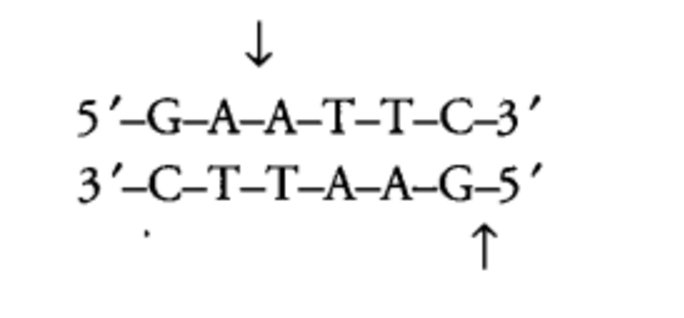
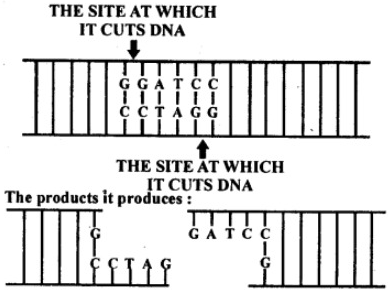
Make a chart (with diagrammatic representation) showing a restriction enzyme, the substrate DNA on which it acts, the site at which it cuts DNA and the product it produces.
Answer
Name of the Restriction enzyme-Bam HI.
The substrate DNA on which it acts-
View full question & answer
Question 22 Marks
Explain briefly:
PCR
Answer
PCR = Polymerase chain reaction (in vitro method) is a molecular biological technique for enzymatically replicating DNA without using a living organism, such as E. coli or yeast.
3 steps in PCR are-
  1. Denaturation of desired double strand DNA-to ssDNA
  2. Annealing of primer to ssDNA (single standard).
  3. Extension of primer by Taq DNA polymerase isolated form Thermits aquaticus.
Uses- Amplification of desired gene/ gene cloning.

Advantage- More output, greater efficiency, less error prone, less human interference and cyclic and automated.
View full question & answer
Question 32 Marks
Discuss with your teacher and find out how to distinguish between:
Plasmid DNA and Chromosomal DNA
Answer
Plasmid DNA and Chromosomal DNA
Plasmid DNA is an extra-chromosomal DNA molecule in bacteria that is capable of replicating, independent of chromosomal DNA.
Chromosomal DNA is the entire DNA of an organism present inside chromosomes.
View full question & answer
Question 42 Marks
Describe briefly the following:
Bioreactors
Answer
Bioreactors: Bioreactors are vessels in which raw materials are biologically converted into specific products, individual enzymes etc. using microbial plant, animal or human cells. A bioreactor provides the optimal conditions for achieving the desired product by providing optimum growth conditions (temperature, pH, substrate, salts, vitamins, oxygen). The most commonly used bioreactors are of stirring type. A biogas plant is a good example of a bioreactor.
View full question & answer
Question 52 Marks
Describe briefly the following:
Downstream processing
Answer
Downstream processing: After completion of the biosynthetic stage, the product is subjected through a series of processes before it is ready for marketing as a finished product. The processes include separation and purification, which are collectively referred to as downstream processing. The product has to be formulated with suitable preservatives. Such formulation has to undergo thorough clinical trials as in the case of drugs. Strict quality control testing for each product is also required. Downstream processing and quality control testing vary from product to product.
View full question & answer
Question 62 Marks
From what you have learnt, can you tell whether enzymes are bigger or DNA is bigger in molecular size? How did you know?
Answer
Enzymes are smaller in size than DNA molecules. This is because DNA contains genetic information for the development and functioning of all living organisms. It contains instructions for the synthesis of proteins and DNA molecules. while, enzymes are proteins which are synthesized from a small strend of DNA known as 'genes', which are involved in the formatoin of the polypeptide chain.
View full question & answer
Question 72 Marks
Describe briefly the following:
Origin of replication
Answer
Origin of replication (ori): This is a sequence from where replication starts and any piece of DNA when linked to this sequence can be made to replicate within the host cells. This sequence is also responsible for controlling the copy number of the linked DNA. So, if one wants to recover many copies of the target DNA it should be cloned in a vector whose origin supports a high copy number.
View full question & answer
Question 82 Marks
Collect 5 examples of palindromic DNA sequences by consulting your teacher. Better try to create a palindromic sequence by following base-pair rules.
Answer
Some palindromic DNA sequences and the restriction enzymes which act on them are:
  1. 5'- AGCT-3' Alul (Arthrobacter luteus) 3'-TCGA-5'
  2. 5'-GAATTC-3' EcoRI (Escherichia colt) 3'-CTTAAG-5'
  3. 5'-AAGCTT-3' Hindlll (Haemophilus influenzae) 3'-TTCGAA-5'
  4. 5'-GTCGAC-3' Sall (Streptomyces albus) 3'-CAGCTG-5'
  5. 5'-CTGCAG-3' Pstl (Providencia stuartif] 3'-GACGTC-5'
View full question & answer
Question 92 Marks
What would be the molar concentration of human DNA in a human cell? Consult your teacher.
Answer
The average molecular weight of a nucleotide in human DNA is 130.86. The molecular weight of human DNA will therefore be $6 × 10^9$ nucleotides (based on the human genome project)$ × 130.86 = 784.56 × 10⁹$ gm/mol. The molar concentration of DNA can be calculated accordingly.
View full question & answer
Question 102 Marks
Explain briefly:
Chitinase
Answer
Chitinase- Chitinase is a enzyme to digest or breakdown glycosidic bonds in chitin cell wall of fungal cell to facilitate its transformation.
View full question & answer
Question 112 Marks
Do eukaryotic cells have restriction endonucleases? Justify your answer.
Answer
No, eukaryotic cells do not have restriction endonuclease because DNA molecules of eukaryotes are heavily methylated. All the restriction endonucleases have been isolated from various strain of bacteria.
View full question & answer
Question 122 Marks
Discuss with your teacher and find out how to distinguish between:
RNA and DNA
Answer
RNA and DNA
RNA is a single stranded molecule.
DNA is a double stranded molecule.
It contains ribose sugar.
It contains deoxyribose sugar.
The pyrimidines in RNA are adenine and uracil.
The pyrimidines in DNA are adenine and thymine.
RNA cannot replicate itself.
DNA molecules have the ability to replicate.
It is a component of the ribosomes.
It is a component of the chromosomes.
View full question & answer
Question 132 Marks
Discuss with your teacher and find out how to distinguish between:
Exonuclease and Endonuclease
Answer
Exonuclease and Endonuclease
It is a type of restriction enzyme that removes the nucleotide from 5' or 3' ends of the DNA molecule.
It is a type of restriction enzyme that makes a cut within the DNA at a specific site to generate sticky ends.
View full question & answer
Question 142 Marks
Explain briefly:
Restriction enzymes and DNA
Answer
Restriction enzymes and DNA- Restriction enzymes is a group of enzymes used to cleave or cut DNA strands each having a characteristics base sequence at which it cleaves.
  1. lt restricts foreign DNA from entering normal cell by digesting it at various recognition site. Recognition site is palindromic.
  2. They are endonuclease and exonuclease both types.
  3. They produces sticky ends. Cleavage site and recognition site are different from each other. Restriction enzymes therefore are believed to be a mechanism evolved by bacteria to resist viral attack and to help in the removal of viral sequences.
View full question & answer
Question 152 Marks
How does a restriction nuclease function? Explain.
Answer
Restriction nuclease cut DNA at specific sites exonuclease cuts DNA at the ends, endonuclease cuts at specific position within DNA./Restriction endonuclease cuts the DNA at specific pallindromic sequence.
View full question & answer
Question 162 Marks
Name the source of the DNA polymerase used in PCR technique. Mention why it is used.
Answer
The most commonly used matrix is agarose which is natural polymer extracted from sea weeds. The DNA fragments separate according to their size through sieving effect provided by the agarose gel.
View full question & answer
Question 172 Marks
Write any four ways used to introduce a desired DNA segment into a bacterial cell in recombinant technology experiments.
Answer
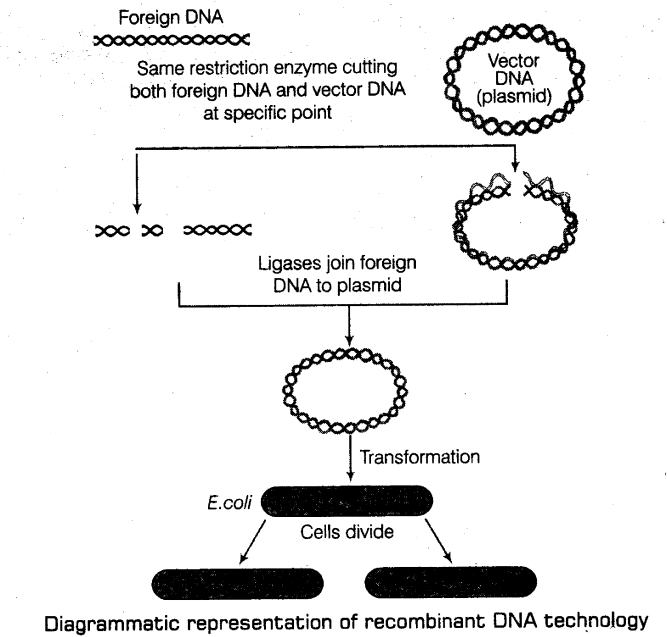
Recombinant DNA technology involves the steps are:
Restriction enzymes, polymerare enzymes, ligases, vectors, and the host organisms.
  1. Isolation of DNA.
  2. Fragmentation of DNA by restriction endonucleases.
  3. Isolation of the desired DNA fragment.
  4. Amplification of the gene of interest.
  5. Ligation of the DNA fragment into a vector using DNA ligase.
  6. Transfer of becombinant DNA into the host.
  7. Culturing the host cells on a suitable medium on a large scale.
  8. Extraction of the desired product.
  9. Downstream processing of the product as a finished product ready for marketing.
View full question & answer
Question 182 Marks
  1. A recombinant vector with a gene of interest inserted within the gene of $\alpha$ -galactosidase enzyme is introduced into a bacterium. Explain the method that would help in selection of recombinant colonies from non-recombinant ones.
  2. Why is this method of selection referred to as “insertional inactivation”?
Answer
  1. Bacteria is grown in a medium with chromogenic substrate, colonies formed show blue colour no recombinants, no blue colour-presence of recombinants.
  2. Gene for the enzyme is inactivated by insertion.
View full question & answer
Question 192 Marks
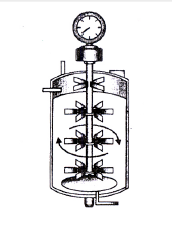
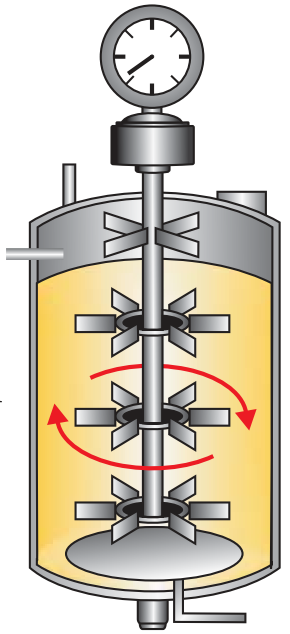
Name the type of bioreactor shown.Write the purpose for which it is used.
Answer
Simple stirred tank bioreactor,
Large scale production of recombinant protein/Raw materials are biologically converted into specific products or enzymes, using microbial plants/animals/human cells.
View full question & answer
Question 202 Marks
  1. Mention the number of primers required in each cycle of polymerase chain reaction (PCR). Write the role of primers and DNA polymerase in PCR.
  2. Give the characteristic feature and source organism of the DNA polymerase used in PCR.
Answer
  1. 2 sets of primers, DNA polymerisation/extends the primers using the nucleotides.
  2. Thermostable/remain active during high temperature induced denaturation of DNA, Thermus aquaticus.
View full question & answer
Question 212 Marks
How is DNA isolated in purified form from a bacterial cell?
Answer
Lysozyme added to remove the cell wall; Ribonuclease added to remove RNAs; Proteases added to remove proteins, chilled ethanol added to precipitate DNA.
View full question & answer
Question 222 Marks
What are recombinant proteins? How do bioreactors help in their production?
Answer
Any protein produced by genetically altered gene in a host.Bioreactors can be thought of as vessels in which raw materials are biologically converted into specific products// A bioreactor provides the optimal conditions for achieving the desired product by providing optimum growth conditions (temperature, pH, substrate, salts, vitamins, oxygen).
View full question & answer
Question 232 Marks
How can DNA segments, separated by gel electrophoresis, be visualised and isolated?
Answer
Visualised by staining the DNA fragments with ethidium bromide, exposing them to UV radiation (Appear as bright orange bands).Bands are cut out from agarose gel, extracted from gel piece.
View full question & answer
Question 242 Marks
  1. Name the nematode that infests and damages tobacco roots.
  2. How are transgenic tobacco plants produce to solve this problem?
Answer
  1. Meloidegyne incognita.
  2. Nematode specific genes isolated cloned and introduced into tobacco plants, ds RNA are produced and RNAi interference initiated, mRNA translation silenced, survival of the nematode not possible in the host plant.
View full question & answer
Question 252 Marks
Explain with the help of a suitable example the naming of a restriction endonuclease.
Answer
EcoRI.
Eco stands for the genus and species of the prokaryotic cell from which the enzyme was isolated, i.e. E.coli.
R stands for strain.
‘I’ follows order in which enzyme was isolated.
View full question & answer
Question 262 Marks
How are ‘sticky ends’ formed on a DNA strand? Why are they so called?
Answer
Restriction enzymes cut the strands of the DNA, a little away from the centre of the palindromic sites, but between the same two bases on opposite strands.
They form hydrogen bonds with their complementary cut counterparts.
View full question & answer
Question 272 Marks
Write the role of 'Ori' and 'restriction’ site in a cloning vector pBR322.
Answer
Ori- Site where replication starts, responsible for controlling copy number.
Restriction site- Site of ligation of alien/foreign DNA, in one of the two antibiotic resistance site/coding sequence of galactosidase.
View full question & answer
Question 282 Marks
Expand the following and mention one application of each:
  1. PCR.
  2. ELISA.
Answer
  1. PCR: Polymerase chain reaction
  1. PCR is used to alter a particular template sequence for production of newer and desired "DNA by getting sample number of DNA copies.
  2. PCR is also used for DNA sequencing. It can be used to detect naturally occurring mutations.
  3. It is used in DNA finger printing technique.
  1. ELISA {Enzyme-Linked Immuno-sorbant Assay) is an immune chemical test.
  1. It is useful in the early diagnosis of diseases using antigen–antibody interactions
  2. Used in food industry when detecting potential food allergens.
View full question & answer
Question 292 Marks
Name two commonly used bioreactors. State the importance of using a bioreactor.
Answer
The two most commonly used bioreactors are simple stirred-tank bioreactor. The importance of using bioreactors is as follows:
  1. It provides large volume for cultures. Thus, products are obtained in high quantity.
  2. It provides optimal like temperatures and pH for growth of desired product.
View full question & answer
Question 302 Marks
  1. Mention the difference in the mode of action of exonuclease and endonuclease.
  2. How does restriction endonuclease function?
Answer
  1. Exonucleases remove nucleotides from the ends of the DNA, whereas Endonucleases make cuts at specific positions within the DNA.
  2. Each restriction endonuclease inspects the DNA molecule in search of a specific recognition sequence. When it gets its specific recognition sequence, it binds to the site and cuts each of the two strands of the double helix at specific points by hydrolysing the phosphodiester backbones.
View full question & answer
Question 312 Marks
  1. State the role of DNA ligase in biotechnology.
Answer
Linking of DNA fragment is done by DNA ligase/linking of Okazaki fragments or discontinuous synthesis fragments/linking of desired genewith plasmid to form recombinant DNA.
View full question & answer
Question 322 Marks
Explain the work carried out by Cohen and Boyer that contributed immensely in biotechnology.
Answer
Cohen and Boyer isolated the antibiotic resistant gene, from the plasmid of a bacterium that was resistant to the antibiotic drug, and then linked this gene with the plasmid of Salmonella typhimurium, construction of artificial recombinant DNA molecule.
View full question & answer
Question 332 Marks
List the key tools used in recombinant DNA technology.
Answer
Restriction enzymes/Polymerase enzymes/Ligase enzymes/Vectors/Host organizms/E.coli/Agrobacterium.
View full question & answer
Question 342 Marks
Why is the introduction of genetically engineered lymphocytes into an ADA deficiency patient not a permanent cure? Suggest a possible permanent cure.
Answer
Lymphocytes not immortal/short lived, hence patient requires periodic infusion of such genetically engineered lymphocytes, however if a gene producing ADA is isolated from marrow cells, and introduced into the cells at early embryonic stages it could be a permanent cure.
View full question & answer
Question 352 Marks
Explain the contribution of Thermus aquaticus in the amplification of a gene of interest.
Answer
Thermus aquaticus produces a thermostable, DNA polymerase, when DNA is denatured at high temperature, this enzyme remains active.
View full question & answer
Question 362 Marks
Describe the responsibility of GEAC, set up by the Indian Government.
Answer
(Genetic Engineering Approval Committee) GEAC checks the validity of genetic engineering research and checks the safety of introducing any GMO (genetically modified organisms) because sometimes the GMO results could be unpredictable.
View full question & answer
Question 372 Marks

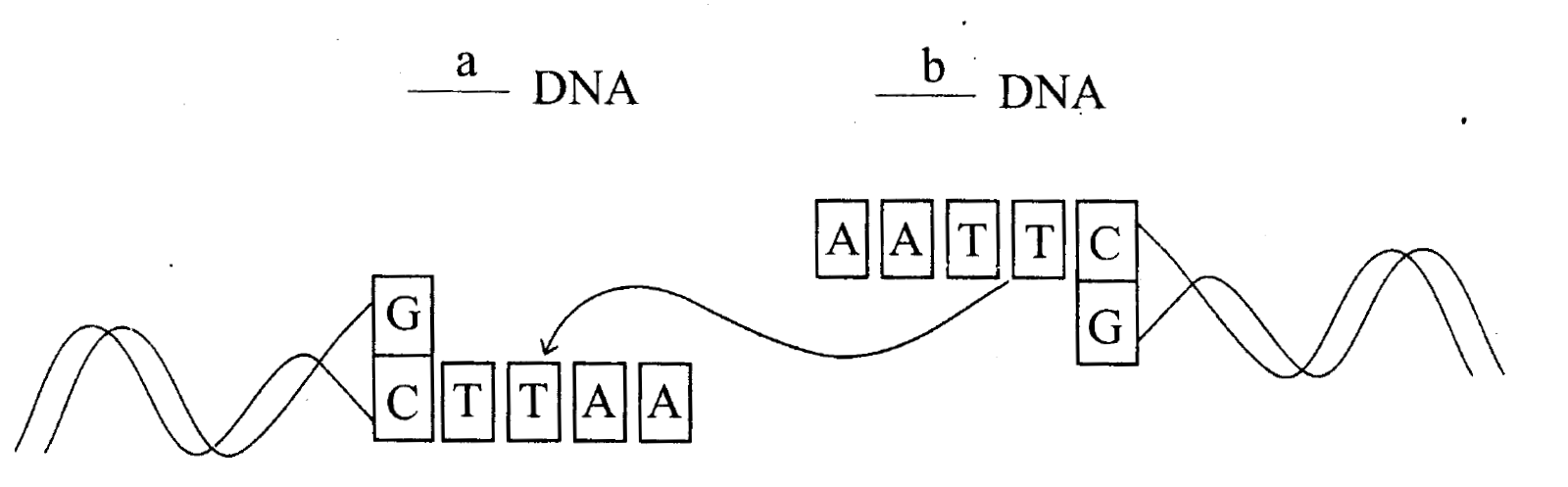
Study the linking of DNA fragments shown above.
  1. Name ‘a’ DNA ‘b’ DNA.
  2. Name the restriction enzyme that recognises this palindrome.
  3. Name the enzyme that can link these two DNA fragments.
Answer
  1. ‘a’ - Vector DNA, ‘b’ - Foreign DNA.
  2. - EcoRI.
  3. - DNA ligase.
View full question & answer
Question 382 Marks
  1. What is a plasmid?
  2. What is meant by ADA deficiency? How is gene therapy a solution to this problem? Why is it not a permanent cure?
Answer
  1. Plasmid is an autonomously replicating circular extra chromosomal DNA of a bacterium.
  2. Adenosine deaminase deficiency, ADA cDNA IS Introduced into these lymphocytes, subsequently returned to the patient Cell could now produce ADA, deficiency overcome, Because these genetically engineered lymphocytes are not immortal.
View full question & answer
Question 392 Marks
  1. Mention the role of vectors in recombinant DNA technology. Give any two example.
  2. With the help of diagrammatic representation only, show the steps of recombinant DNA technology.
Answer
  1. To deliver alien/foreign/desired piece of DNA into the host organism,so that the foreign gene can be amplified,
Example - Plasmids, Viruses.

View full question & answer
Question 402 Marks
How is a continuous culture system maintained in bioreactors and why?
Answer
For maintaining continuous culture system in bioreactors, they are continuously and regularly fed with the growth culture medium steadily, maintaining the appropriate temperature, pressure, pH and other parameters within the bioreactors. From the other end of the bioreactor, finished product generated as a result of microbial action is continuously or periodically withdrawn in specified amounts.
Continuous culture system is maintained in bioreactors because the cells can be maintained in a constant physiological state which ensures continuous and regular outflow of desired products from the bioreactor.
View full question & answer
Question 412 Marks
How is DNA isolated in purified form from a bacterial cell?
OR
List the four steps to isolate DNA from a bacterium.
Answer
  • The bacterial cells are treated with lysozyme, to remove the cell wall.
  • The proteins associated with the DNA are removed by treatment with proteases and the associated RNAs are removed by treatment with RNases.
  • Similarly other molecules (if any) are removed by appropriate treatments.
  • The purified DNA is precipitated by the addition of chilled ethanol.
View full question & answer
Question 422 Marks

Study the linking of DNA fragments shown above.

  1. Name 'a' DNA and 'b' DNA.
  2. Name the restriction enzyme that recognizes this palindrome.
  3. Name the enzyme that can link these two DNA fragments.
Answer
  1. a- Vector/ plasmid DNA.
b- Foreign DNA.
  1. EcoRI.
  2. DNA ligase.
View full question & answer
Question 432 Marks
Explain gene cloning.
Answer
This ability to multiply and to produce multiple copies of antibiotic resistance gene E. coli was called cloning of antibiotic resistance gene.
View full question & answer
Question 442 Marks
How are the DNA fragments separated by gel electrophoresis visualised and separated for use in constructing recombinant DNA.
Answer
A compound called Ethidium Bromide (EtBr) stains DNA, which on exposure with ultraviolet radiations gives orange light. Hence, DNA fragments appear as orange bands.
View full question & answer
Question 452 Marks
How and why is the bacterium Thermus aquaticus employed in DNA technology? Explain.
Or
Name the source of the DNA polymerase used in PCR technique. Mention why it is used?

Or
Give the name of the organism from where the thermostable DNA polymerase is isolated. State its role in genetic engineering.
Answer
Bacterium Thermus aquaticus is a source of enzyme tag polymerase, As it is a thermostable enzyme and work at high temperature, it is used to amplify DNA in vitro by PCR. The amplified fragment of desired DNA can be used to ligate with the vector for further cloning
View full question & answer
Question 462 Marks
What modification is done in the Ti plasmid of Agrobacterium tumefaciens to convert it into a cloning vector?
Answer
T-DNA is the only essential part required to make Ti plasmid a cloning vector. The plasmid is disarmed by deleting the tumour inducing genes in the plasmid so that it becomes an effective cloning vector and remove it harmful effect.
View full question & answer
Question 472 Marks
Illustrate briefly downstream processing.
Answer
Downstream processing:
  • All the processes to which a product is subjected to before being marketed as a finished product are called downstream processing.
  • It includes:
  1. Separation of the product from the reactor.
  2. Purification of the product.
  3. Formulation of the product with suitable preservatives.
  4. Quality control testing and clinical trials in case of drugs.
View full question & answer
Question 482 Marks
While doing a PCR, ‘denaturation’ step is missed. What will be its effect on the process?
Answer
If denaturation of double-stranded DNA does not take place, then primers will not be able to anneal to the template, no extension will take place, hence no amplification will occur.
View full question & answer
Question 492 Marks
Do biomolecules (DNA, protein) exhibit biological activity in anhydrous conditions?
Answer
Biomolecules do not exhibit biological activity in anhydrous conditions. DNA may get damaged under anhydrous condition but has the ability to repair later on. Protein molecule may get denatured under anhydrous conditions.
View full question & answer
Question 502 Marks
Explain giving reasons why an alien piece of DNA needs to be integrated to a specific sequence of host DNA for its cloning.
Answer
  • The specific DNA sequence, where the replication of DNA is initiated, is called origin of replication (Ori).
  • For the multiplication of the alien DNA in the host, it has to be integrated to the origin of replication (Ori).
View full question & answer
Question 512 Marks
Restriction enzymes should not have more than one site of action in the cloning site of a vector. Comment.
Answer
If the restriction enzymes have more than one recognition site in a vector, than the vector itself will get fragmented on treatment with the restriction enzyme.
View full question & answer
Question 522 Marks
What is elution?
Answer
The separated band of DNA (after gel electrophoresis) are cut out from agarose gel and DNA is extracted from the gel piece. This step is called elution.
View full question & answer
Question 532 Marks
A plasmid without a selectable marker was chosen as vector for cloning a gene. How does this affect the experiment?
Answer
Selectable marker helps in identifying and eliminating non-transformant DNA and in selectively permitting the growth of transformants. In the absence of a selectable marker, it will not be possible to differentiate between transformants and non-transformants. Thus, carrying the experiment to its logical end would be impossible in the absence of selectable marker.
View full question & answer
Question 542 Marks
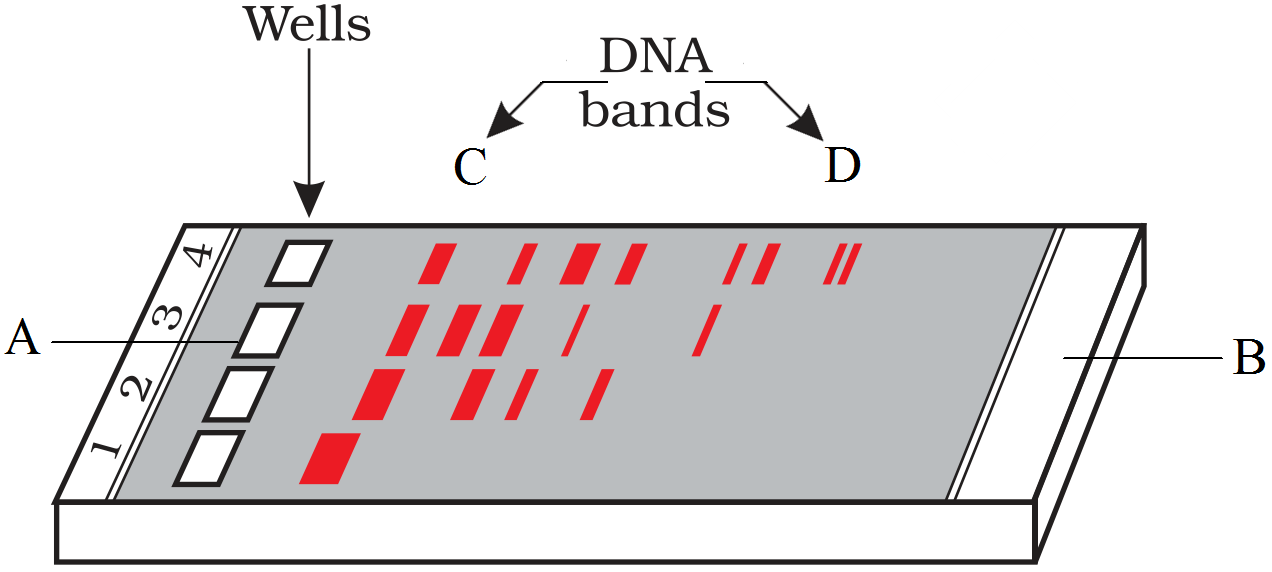
Study the diagram given below and answer the following questions:
  1. Why have DNA fragments in band 'D' moved farther away in comparison to those in band 'C'?
  2. Identify the anode end in the diagram.
  3. How are these DNA fragments visualised?
Answer
  1. DNA fragments in band D are smaller than those of band C.
  • The DNA fragments separate according to their size through the sieving effect provided by the gel; hence the smaller fragments move farther away than the larger ones.
  1. End towards B.
  2. The gel containing DNA fragments is stained with ethidium bromide and exposed to UV radiation; orange-coloured bands (of DNA) become visible.
View full question & answer
Question 552 Marks
Name the five key tools for accomplishing the tasks of recombinant DNA technology. Also mention the functions of each tool.
Answer
  1. Restriction endonucleases: for cutting the desired DNA at desired places.
  2. Gel electrophoresis: for separating the desired DNA fragments.
  3. Ligase enzyme: for creating recombinant DNA molecule.
  4. DNA delivery system: like electroporation, microinjection, gene gun method.
  5. Competent host (usually bacteria/ yeast): to take up recombinant DNA.
View full question & answer
Question 562 Marks
A and B are the two different cloning vectors in two different bacterial colonies cultured in chromogenic substrate, Bacterial colonies with cloning vector A were colourless, whereas those with B were bluecoloured. Explain giving reasons the cause of the difference in colour that appeared.
Answer
  • Bacterial colonies with cloning vector A are colourless, as they are recombinants with the insert.
  • Presence of the insert has resulted in insertional inactivation of the enzyme and hence, do not produce any colour.
  • Bacterial colonies with cloning vector B are non recombinants, i.e. have no insert and produce colour as the enzyme is produced.
View full question & answer
Question 572 Marks
Restriction enzymes that are used in the construction of recombinant DNA are endonucleases which cut the DNA at ‘specific-recognition sequence’. What would be the disadvantage if they do not cut the DNA at specific-recognition sequence?
Answer
If the restriction enzymes would cut DNA at random sites instead of at specific sites, then the DNA fragments obtained will not have ‘sticky ends’. In the absence of sticky ends, construction of recombinant DNA molecule would not be possible.
View full question & answer
Question 582 Marks
You have chosen a plasmid as vector for cloning your gene. However this vector plasmid lacks a selectable marker. How would it affect your experiment?
Answer
In a gene cloning experiment, first a recombinant DNA molecule is constructed, where the gene of interest is ligated to the vector and introduced inside the host cell (transformation).
Since, not all the cells get transformed with the recombinant/plasmid DNA, in the absence of selectable marker, it will be difficult to distinguish between transformants and non-transformants, because role of selectable marker is in the selection of transformants.
View full question & answer
Question 592 Marks
Describe the role of $CaCl_2$ in preparation of competent cells.
Answer
$CaCl_2$ is known to increase the efficiency of DNA uptake to produce transformed bacterial cells. The divalent $Ca^{2+}$ ions supposedly create transient pores in the bacterial cell wall, by which the entry of foreign DNA is facilitated into the bacterial cells.
View full question & answer
Question 602 Marks
What does ‘competent’ refer to in competent cells used in transformation?
Answer
Competent means bacterial cells which by various methods like treatment with $CaCl_2$ are made capable of taking up foreign DNA.
View full question & answer
Question 612 Marks
What does H in’ ‘d’ and ‘III’ refer to in the enzyme Hind III?
Answer
In the enzyme Hind III; ‘H in’ refers to Haemophilus influenza, D refers to the strain of H. influenza and III refers to the sequence in which this enzyme was discovered.
View full question & answer
Question 622 Marks
Explain any two methods of vector less gene transfer.
Answer
The two methods of vectorless gene transfer are:
  1. Micro-injection: The technique of introducing foreign gene in a target cell by injecting the DNA, directly into the nucleus, by micro-needle is called micro-injection.
  2. Electroporation: It is the process in which transient holes are produced in the plasma membrane of the target cell, to incorporate foreign DNA.
View full question & answer
Question 632 Marks
What is the role of lysing enzyme in biotechnology?
Answer
Lysing enzymes are used to open up the cell to obtain DNA along with other macromolecules for genetic experiments. Bacterial cells are treated with lysozyme, plant cells are treated with cellulase, and fungal cells are treated with chitinase for lysing.
View full question & answer
Question 642 Marks
  1. Mention the number of primers required in each cycle of polymerase chain reaction (PCR). Write the role of primers and DNA polymerase in PCR.
  2. Give the characteristic feature and the source organism of the DNA polymerase used in PCR.
Answer
  1. Two primers are required:
  • The primers become annealed at the complementary regions of the DNA strands, that have been separated by denaturation; it makes the extension (synthesis of new DNA strands easy).
  • DNA polymerase extends the primers using the nucleotides is the medium on the genomic template.
  1. The source is Thermus aquaticus: The Taq polymerase is thermostable and withstands the high temperature used in denaturation.
View full question & answer
Question 652 Marks
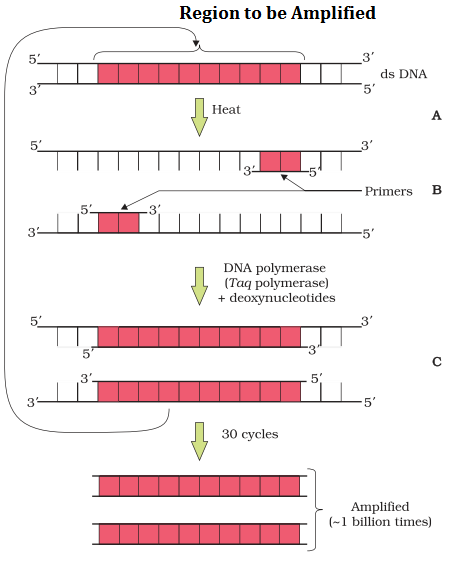
Identify and explain steps ‘A’, ‘B’ and ‘C’ in the PCR diagram given below.
Answer
  1. Denaturation.
  2. Annealing.
  3. Extension.
View full question & answer
Question 662 Marks
Where and why do we use Taq polymerase enzyme when it works exactly as DNA polymerase?
Answer
In PCR, because it is a thermostable DNA polymerase enzyme, gets isolated from bacteria Thermus aquaticus from hot water springs, and it does not get denatured at high temperature which is required during PCR and works as normal DNA polymerase enzyme (whereas the normal DNA polymerase gets denatured at high temperature).
View full question & answer
Question 672 Marks
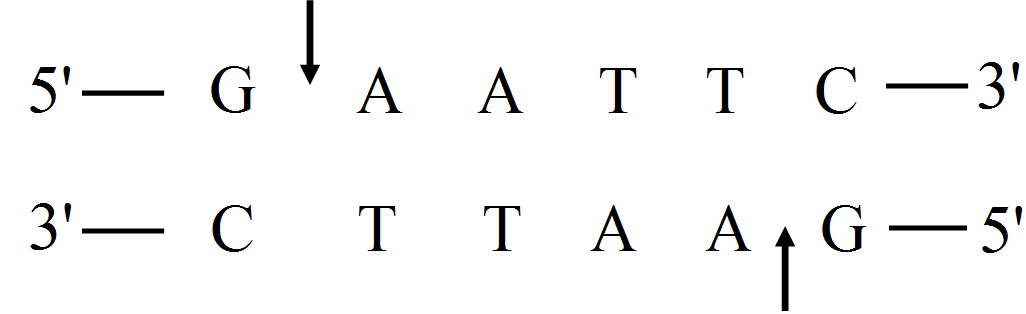
  1. Illustrate the recognition sequence of EcoRI and mention what such sequences are called.
  2. How does restriction endonuclease act on a DNA molecule?
Answer
  1.  


Such sequences are called palendromes in DNA.
  1. Each restriction endonuclease recognises a specific palindromic nucleotide sequence in the DNA and cuts the DNA strands a little away from the centre of the palindromic sequence, but between the same two bases on the two strands.
  • This leaves single-stranded portions, called sticky ends, overhanging at the end of each strand.
  • Since, the stickiness facilitates the action of DNA ligase, they easily form hydrogen bonds with their complementary counterparts.
View full question & answer
Question 682 Marks
What is the significance of adding proteases at the time of isolation of genetic material (DNA).
Answer
Role of proteases is to degrade the proteins present inside a cell (from which DNA is being isolated). If the proteins are not removed from DNA preparation then they could interfere with any downstream treatment of DNA (such action of restriction endonuclease, DNA ligase etc).
View full question & answer
Question 692 Marks
  1. What is the advantage of bubbling air into the sparged stirred-tank bioreactors?
  2. Name the two main processes involed in down stream processing.
Answer
  1. The air bubbles dramatically increase the surface area for oxygen transfer.
  2. Separation and purification.
View full question & answer
Question 702 Marks
PCR is a useful tool for early diagnosis of an infectious disease. Comment.
Answer
PCR is a very sensitive technique which enables the specific amplification of desired DNA from a limited amount of DNA template.
Hence, it can detect the presence of an infectious organism in the infected patient at an early stage of infection (even before the infectious organism has multiplied to large number).
View full question & answer
Question 712 Marks
Write the use of the following in biotechnology.
Chilled ethanol.
Answer
It is added to precipitate the purified DNA to isolate it.
View full question & answer
Question 722 Marks
A wine maker and a molecular biologist who has developed a recombinant vaccine, both claim themselves to be biotechnologist. Who in your opinion is right?
Answer
Both are right because biotechnology is a very wide area which deals with techniques of using a ‘natural’ organism (or its parts) as well as genetically modified organism to produce products and processes useful for mankind. A wine maker employs a strain of yeast to produce wine by fermentation (a natural phenomenon), while the molecular biologist has cloned gene for the antigen (that is used as vaccine) in an organism which allows the production of the antigen in large amount.
View full question & answer
Question 732 Marks
Differentiate between rDNA and cDNA.
Answer
rDNA
cDNA
It is the DNA which is formed by joining together the DNA from two different organisms.
It is the DNA which is obtained from RNA template catalysed by reverse transcriptase enzyme.
 
View full question & answer
Question 742 Marks
What is meant by gene cloning?
Answer
Gene cloning refers to a process in which a gene of interest is ligated to a vector. The recombinant DNA thus produced is introduced in a host cell by transformation. Each cell gets one DNA molecule and when the transformed cell grows to a bacterial colony, each cell in the colony has a copy of the gene.
View full question & answer
Question 752 Marks
  1. Explain how to find whether an E.coli bacterium has transformed or not, when a recombinant DNA bearing ampicillin-resistant gene is transferred into it.
  2. What does the ampicillin-resistant gene act as, in the above case?
Answer
  1. The recombinant/ transformant can be selected out from the non-recombinants/ non-transformants by plating the transformants on ampicillin-containing medium. The transformants will grow in it, while the non-transformants will not grow.
  2. It acts as a selectable marker.
View full question & answer
Question 762 Marks
An alien piece of DNA needs to be integrated to a specific sequence of host DNA for its cloning. Is it true? if yes, explain. If this DNA is not picked up by host cells. Can you suggest a reason for it?
Answer
Yes, for the multiplication of the alien DNA in the host, it has to be integrated to the origin of replication. The host cell is not competent, hence it is not picking up the foreign DNA.
View full question & answer
Question 772 Marks
Is there any difference between recombinant DNA and recombinant protein? Support your answer.
Answer
rDNA is the plasmid vector containing the foreign DNA whereas recombinant protein is the product of transgenic gene in the host body or cell.
View full question & answer
Question 782 Marks
You have created a recombinant DNA molecule by ligating a gene to a plasmid vector. By mistake, your friend adds exonuclease enzyme to the tube containing the recombinant DNA. How will your experiment get affected as you plan to go for transformation now?
Answer
The experiment will not likely be affected as recombinant DNA molecule is circular and closed, with no free ends.
Hence, it will not be a substrate for exonuclease enzyme which removes nucleotides from the free ends of DNA.
View full question & answer
Question 792 Marks
What do you mean by a clone?
Answer
The cell or organism derived from the same parents by asexual mean which are genetically identical to each other and to the parent are called clones.
View full question & answer
Question 802 Marks
Why do prokaryotes (bacteria) have restriction enzymes but not eukaryotes?
Answer
  • The prokaryotes/ bacteria have restriction enzymes to restrict the growth of bacteriophages, which infect them; it is a defence mechanism of bacterial cells.
  • They do so by cutting the DNA of the phage with restriction enzyme.
  • Bacteriophages do not infect eukaryotes, eukaryotes have other defence mechanisms.
View full question & answer
Question 812 Marks
When a foreign DNA is introduced into an organism, how is it maintained in the host and how is it transferred to the progeny of the organism?
Answer
Foreign gene is usually ligated to a plasmid vector and introduced in the host. As plasmid replicates and makes multiple copies of itself, foreign gene also gets replicated and it's copies are also made. When the host organism divides, its progeny also receives the plasmid DNA containing the foreign gene.
View full question & answer
Question 822 Marks
Restriction enzymes present in the cloning site of a vector should not have more than one recognition site. Comment.
Answer
If the restriction enzymes have more than one recognition site in a vector, then the vector itself will get fragmented on treatment with the restriction enzyme.
View full question & answer
Question 832 Marks
Would you like to choose an exonuclease enzyme while producing a recombinant DNA molecule?
Answer
No, as exonuclease acts on the free ends of linear DNA molecule. Therefore, instead of producing DNA fragments with sticky ends, it will shorten or completely degrade the DNA fragment containing the gene of interest, and the circular plasmid (vector) will not get cut as it lacks free ends.
View full question & answer
Question 842 Marks
What does ‘competent’ refer to in competent cells used in transformation experiments?
Answer
The ability of the bacterial cell to take up DNA through pores in cell wall is called competent. DNA is a hydrophilic molecule and hence, it cannot pass through the cell membrane. So, cell is made ‘competent’ by treating with suitable divalent ion; like calcium.
View full question & answer
Question 852 Marks
  1. Using a single template molecule, how many DNA molecules are generated after 10 cycles of amplification in PCR?
  2. Name a cloning vector used to clone large DNA fragments (> 1MB).
Answer
  1. $2^{10}$ molecules = 1024 molecules.
  2. YAC vectors.
View full question & answer
Question 862 Marks
Define genetic engineering. Name one natural genetic engineer of plants.
Answer
Genetic engineering is the manipulation of genetic materials which can be introduced into host organisms and thus change the phenotype of the host organism. The natural genetic engineer of plant is Agrobacterium tumifaciens.
View full question & answer
Question 872 Marks
Write the use of the following in biotechnology.
Plasmid.
Answer
It is the vector to transform a foreign gene.
View full question & answer
Question 882 Marks
For producing a recombinant protein (for therapeutic purpose) in large scale, which vector would you choose—a low copy number or high-copy number?
Answer
High-copy number, because higher the copy number of vector plasmid, higher the copy number of gene and consequently, protein coded by the gene is produced in high amount.
View full question & answer
Question 892 Marks
Write the use of the following in biotechnology.
Bioreactor.
Answer
It is the set up to culture large volumes of transgenic bacteria to get large quantities of the product protein.
View full question & answer
Question 902 Marks
What is EcoRI? How does EcoRI differ from an exonuclease?
Answer
  • EcoRI is the restriction endonuclease obtained from Escherichia coli RY 13.
  • EcoRI is a restriction endonuclease which cuts the DNA strands at specific sites within the DNA.
  • Exonucleases remove the nucleotides or bases from the ends of the DNA strands.
View full question & answer
Question 912 Marks
DNA being hydrophilic cannot pass through the cell membrane of a host cell. Explain how does recombinant DNA get introduced into the host cell to transform the latter.
Answer
The cell is made competent by the following methods:
  1. Chemical method:
  • The cell is treated with specific concentration of a divalent cation such as calcium to increase pore size in cell wall.
  • The cells are incubated with recombinant DNA on ice, followed by placing them briefly at 42°C and then putting it back on ice. This is called heat shock treatment.
  • The bacteria now take up the recombinant DNA.
  1. Physical methods The physical methods include:
  • Micro-injection method: Recombinant DNA is directly injected into the nucleus of an animal cell.
  • Biolistics or gene gun method: Cells are bombarded with high velocity micro-particles of gold or tungsten coated with DNA in plants.
View full question & answer
Question 922 Marks
Why is Agrobacterium-mediated genetic transformation described as natural genetic engineering in plants?
Answer
Agrobacterium tumifaciens is a pathogen of several dicot plants which exhibit natural genetic engineering in plant.Reasons:
  1. It is able to deliver a piece of DNA called ‘T-DNA’ to transform normal plant cell into a tumour cell.
  2. The DNA transforms the normal cells into tumour cells which direct them to produce the chemical essential for the pathogen.
As this process occurs in nature it is called natural genetic engineering.
View full question & answer
Question 932 Marks
List five growth conditions that a bioreactor should provide for obtaining the desired product?
Answer
A bioreactor provides optimum growth conditions like temperature, pH, substrate, salts, vitamins and oxygen to get desired products.
View full question & answer
Question 942 Marks
Who was the first to construct rDNA? Name the bacterium whose plasmid was used. How was it possible to cut the specific genes/ DNA?
Answer
  • Stanley Cohen and Herbert Boyer.
  • Salmonella typhimurium.
  • It was possible with a restriction endonuclease.
View full question & answer
Question 952 Marks
Why is Agrobacterium tumifaciens a good cloning vector? Explain.
Answer
Agrobacterium tumifaciens is a soil bacterium which causes disease in many dicot plants. It is able to deliver a piece of DNA known as T-DNA, to transform the normal cells into tumour cells and direct these tumour cells to produce the chemicals required by the pathogen. The tumour inducing (Ti) plasmid of Agrobacterium tumifaciens has now been modified into a cloning vector which is no more pathogenic to the plants but still deliver genes of interest into a variety of plants.
View full question & answer
Question 962 Marks
  1. A recombinant vector with a gene of interest inserted within the gene of β-galactosidase enzyme is introduced into a bacterium. Explain the method that would help in selection of recombinant colonies from non-recombinant ones.
  2. Why is this method of selection referred to as 'insertional inactivation'?
Answer
  1.  
  • When an alien DNA is inserted within the coding sequence of the enzyme, it results in inactivation of the enzyme.
  • The recombinants can be differentiated from the non-recombinants by their inability to produce colour in the presence of a chromogenic substrate.
  • The recombinants do not produce any colour, while the non-recombinants produce a blue colour with the chromogenic substrate in the medium.
  1. Since, the insert inactivates the enzyme, β-galactosidase, this method is called insertional inactivation.
View full question & answer
Question 972 Marks
Why are cloning vectors necessary in cloning? Name any two such vectors that are used in experiment with E. coli.
Answer
DNA being hydrophilic in nature cannot pass through the cell membranes into the host. Therefore, cloning vectors are required to transfer the DNA into the host by attaching the desired DNA to it.
The two cloning vectors that are used are plasmids and bacteriophages.
View full question & answer
Question 982 Marks
What would happen when you grow a recombinant in a bioreactor but forget to add antibiotic to the medium in which the recombinant is growing?
Answer
In the absence of antibiotic, there will be no pressure on recombinants to retain the plasmid (containing the gene of your interest). Since, maintaining a high copy number of plasmids is a metabolic burden to the microbial cells, it will thus tend to lose the plasmid.
View full question & answer
Question 992 Marks
Give the name of the type of bioreactor shown. Write the purpose for which it is used.

Or
How can the desire products formed after genetic engineering be produced on a commercial scale?
Answer
The given bioreactor shown in the figure is the simple stirred-tank type bioreactor.
Its purpose is large scale Production of recombinant protein enzymes, using microbial plants, animals and human cells.
View full question & answer
Question 1002 Marks
Would you choose an exonuclease while producing a recombinant DNA molecule?
Answer
No, as exonuclease acts on the free ends of linear DNA molecule. Therefore, instead of producing DNA fragments with sticky ends, it will shorten or completely degrade the DNA fragment containing the gene of interest, and the circular plasmid (vector) will not get cut as it lacks free ends.
View full question & answer
Question 1012 Marks
What would happen when one grows a recombinant bacterium in a bioreactor but forget to add antibiotic to the medium in which the recombinant is growing?
Answer
In the absence of antibiotic, there will be no pressure on recombinants to retain the plasmid (containing the gene of your interest). Since, maintaining a high copy number of plasmids is a metabolic burden to the microbial cells, will thus tend to lose the plasmid.
View full question & answer
Question 1022 Marks
State the difference between simple stirred-tank bioreactor and sparged stirred-tank bioreactor. What are the advantages of these bioreactors?
Answer
S.No
Simple stirred-tank bioreactor
Sparged stirred-tank bioreactor
1.
A simple stirred-tank bioreactor is usually cylindrical or with a curved base to facilitate even mixing of reactor contents.
The sparged-stirred-tank bioreactor also facilitates the mixing of components and ensures oxygen availability throughout the bioreactor.
View full question & answer
Question 1032 Marks
A vector is engineered with three features which facilitate its cloning within the host cell. List the three features and explain each one of them.
Answer
  1. Origin of replication/ ori site: From here the replication starts (and any piece of DNA when linked, can be made to replicate within the host cell).
  2. At least two Selectable markers: Helpful in identifying and eliminating non-transformants.
  3. Unique Restriction sites for more than one restriction enzymes: The foreign DNA links to this region of the plasmid.
View full question & answer
Question 1042 Marks
How does one visualise DNA on an agarose gel?
Answer
A compound called Ethidium Bromide stains DNA, which on irradiating with Ultraviolet, fluoresce gives orange light. Hence, DNA fragments appear as orange band in the presence of Ethidium Bromide and UV.
View full question & answer
Question 1052 Marks
Write the use of the following in biotechnology.
Microinjection.
Answer
It is used to inject the foreign gene into a host cell, directly.
View full question & answer
Question 1062 Marks
A plasmid DNA and a linear DNA (both are of the same size) have one site for a restriction endonuclease. When cut and separated on agarose gel electrophoresis, plasmid shows one DNA band while linear DNA shows two fragments. Explain.
Answer
A circular DNA opens up to resemble a single linear DNA. A Linear DNA is divided into two fragments after cleavage. Hence, circular DNA shows one band, while linear DNA shows two bands.
View full question & answer
Question 1072 Marks
  1. If a desired gene is identified in an organism for some experiments explain the process of cutting this desired gene at specific location.
  2. Mention the function of stirrer in a bioreactor.
Answer
  1. The process of cutting the desired gene (also called restriction digestion) is carried out by incubating the purified DNA molecules with the specific restriction enzyme at optimal conditions of pH, temperature etc. of the enzyme.
  2. The stirrer facilitates the even mixing and oxygen availability throughout the contents in the reactor.
View full question & answer