Question types

Motion question types

834 questions across 9 question groups — pick any mix to generate a Science paper with step-by-step answer keys.

834
Questions
9
Question groups
5
Question types
Sample Questions

Motion questions

One sample from each question group in this chapter. Select any group above to see the full set with answer keys.

Q 1M.C.Q. [1 M]1 Mark
The velocity of a body can change:
  • A
    If its acceleration is zero.
  • If its acceleration is non-zero.
  • C
    Both $A \& B$
  • D
    None of the above.

Answer: B.

View full solution
Q 2M.C.Q. [1 M]1 Mark
The SI unit of retardation is $......$ ?
  • $\frac{\text{m}}{\text{s}}^{2}$
  • B
    $\frac{\text{m}}{\text{s}}$
  • C
    $\text{m}^2$
  • D
    $\text{s}^2$

Answer: A.

View full solution
Q 3M.C.Q. [1 M]1 Mark
Which of the following could not be a unit of acceleration?
  • A
    $\mathrm{km} / \mathrm{s}^2$
  • B
    $\mathrm{cms}^{-2}$
  • $\mathrm {km/s}$
  • D
    $\mathrm{m} / \mathrm{s}^2$

Answer: C.

View full solution
Q 4M.C.Q. [1 M]1 Mark
Which of the following statements is correct for a particle travelling with a constant speed:
  • A
    Its position remains constant as time passes.
  • B
    It covers equal distances in unequal time intervals.
  • Its acceleration is zero.
  • D
    It does not change its direction of motion.

Answer: C.

View full solution
Q 5M.C.Q. [1 M]1 Mark
When two bodies moves uniformly towards each her then they cross each other at the speed of $10\ m/s$. If both the bodies move in the same direction, then they cross each other at the speed of 6m/s. The speed of both bodies are:
  • $8\ m/s, 2\ m/s$
  • B
    $8\ m/s, 4\ m/s$
  • C
    $6\ m/s, 2\ m/s$
  • D
    $6\ m/s, 4\ m/s$

Answer: A.

View full solution
In the following Questions, the Assertion and Reason have been put forward. Read the statements carefully and choose the correct alternative from the following:
Assertion: Equations of motion can when the acceleration is $a = 2t$ where t seconds.
Reason: The slope of a $v-t$ graph with $60^o$ inclination is greater than $30^o$ inclination.
  • Both the Assertion and the Reason are correct and the Reason is the correct explanation of the Assertion.
  • B
    The Assertion and the Reason are correct but the Reason is not the correct explanation of the Assertion.
  • C
    Assertion is true but the Reason is false.
  • D
    The statement of the Assertion is false but the Reason is true.

Answer: A.

View full solution
In the following questions, a statement of Assertion is given by the corresponding statement of Reason. Of the statements, mark the correct answer as:
Assertion: A body performing uniform circular motion with constant speed may have acceleration.
Reason: When speed of a body remains constant, then its acceleration is always zero.
  • A
    If both Assertion and Reason are true and Reason is the correct explanation of Assertion.
  • B
    If both Assertion and Reason are true, but Reason is not the correct explanation of Assertion.
  • If Assertion is true, but Reason is false.
  • D
    If Assertion is false, but Reason is true.

Answer: C.

View full solution
In the following Questions, the Assertion and Reason have been put forward. Read the statements carefully and choose the correct alternative from the following:
Assertion: The slope of distance time graph gives acceleration of the body.
Reason: Greater the slope of distance time graph, more is the speed of the body.
  • Both the Assertion and the Reason are correct and the Reason is the correct explanation of the Assertion.
  • B
    The Assertion and the Reason are correct but the Reason is not the correct explanation of the Assertion.
  • C
    Assertion is true but the Reason is false.
  • D
    The statement of the Assertion is false but the Reason is true.

Answer: A.

View full solution
In the following questions, a statement of Assertion is given by the corresponding statement of Reason. Of the statements, mark the correct answer as:
Assertion: Acceleration of a body can be calculated from velocity-time graph.
Reason: Area of velocity-time graph gives distance travelled by the body.
  • A
    If both Assertion and Reason are true and Reason is the correct explanation of Assertion.
  • If both Assertion and Reason are true, but Reason is not the correct explanation of Assertion.
  • C
    If Assertion is true, but Reason is false.
  • D
    If Assertion is false, but Reason is true.

Answer: B.

View full solution
In the following questions, a statement of Assertion is given by the corresponding statement of Reason. Of the statements, mark the correct answer as:
Assertion: Distance travelled by a body may be positive, negative or zero.
Reason: Shortest distance travelled by the body between two points is called distance.
  • A
    If both Assertion and Reason are true and Reason is the correct explanation of Assertion.
  • B
    If both Assertion and Reason are true, but Reason is not the correct explanation of Assertion.
  • C
    If Assertion is true, but Reason is false.
  • If Assertion is false, but Reason is true.

Answer: D.

View full solution
Fill in the blanks with suitable words:
A motorcycle has a steady _________ of $3m/s^2$. This means that every __________ its _________ increases by __________.
View full solution
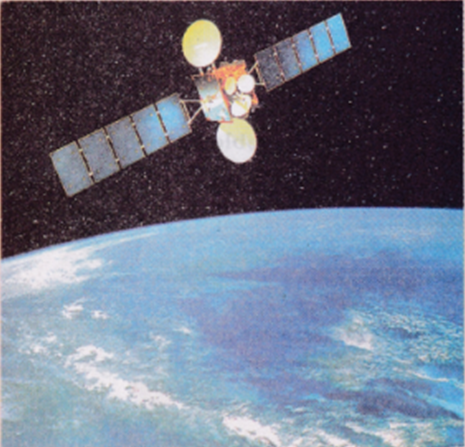
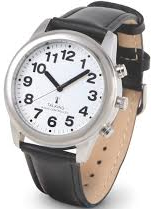
A satellite goes round the earth in a circular orbit with constant speed. Is the motion uniform or accelerated? This photograph shows a man-made 'communication satellite' going round the earth in a circular orbit (or circular path). We can see the dish antennae and solar panels (made of solar cells) clearly in this photograph. This photograph shows a watch. The tip of seconds 'hand of this watch moves rapidly on the dial of the watch. The tips of minutes' hand and hours' also move on the dial but they move slowly.
View full solution
An object is moving along a straight line with uniform acceleration. The following table gives the velocity of the object at various instants of time:
Time (in sec.):
$0$
$1$
$2$
$3$
$4$
$5$
$6$
Velocity (in m/s):
$2$
$4$
$6$
$8$
$10$
$12$
$14$
Plot the graph. From the graph,
  1. Find the velocity of the object at the end of $2.5$ seconds.
  2. Calculate the acceleration.
  3. Calculate the distance covered in the last $4$ seconds.
View full solution
Two stones are thrown vertically upwards simultaneously with their initial velocities $u_1$ and $u_2$ respectively. Prove that the heights reached by them would be in the ratio of $\text{u}_1^2:\text{u}_2^1$ (Assume upward acceleration is –g and downward acceleration to be +g).
View full solution
Abdul, while driving to school, computes the average speed for his trip to be $20km\ h^{−1}$. On his return trip along the same route, there is less traffic and the average speed is $30km\ h^{−1}$. What is the average speed for Abdul’s trip?
View full solution
A motorcyclist drives from place $A$ to $B$ with a uniform speed of $30km h^{-1}$ and returns from place $B$ to $A$ with a uniform speed of $20km h^{-1}$. Find his average speed.
View full solution
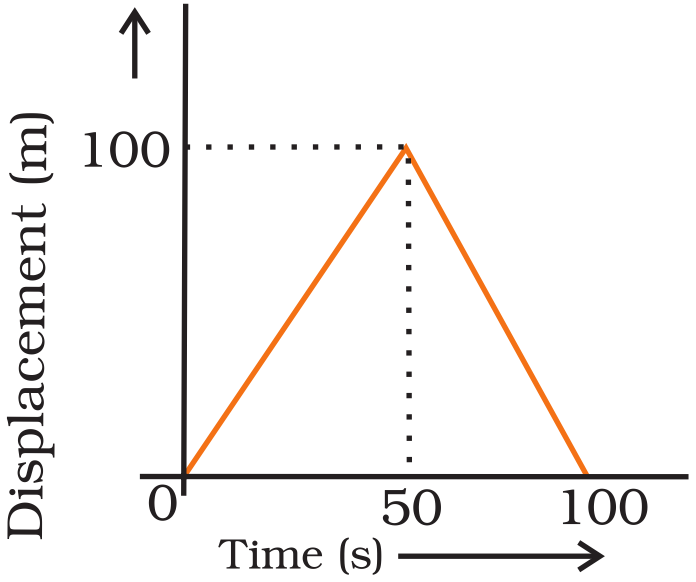
A girl walks along a straight path to drop a letter in the letterbox and comes back to her initial position. Her displacement–time graph is shown in Plot a velocity–time graph for the same.
View full solution
Using following data, draw time-displacement graph for a moving object:
Time $(s)$
$0$
$2$
$4$
$6$
$8$
$10$
$12$
$14$
$16$
Displacement $(m)$
$0$
$2$
$4$
$4$
$4$
$6$
$4$
$2$
$0$
Use this graph to find average velocity for first $4s,$ for next $4s$ and for last $6s.$
View full solution
Instruction: The table given below shows distance (in cm) travelled by the bodies $A, B$ and $C$. Read this data carefully and answer the questions which follow. Distance (in cm) covered by different bodies:
Time
Body A
Body B
Body C
$1$st second
$20$
$20$
$20$
$2$nd second
$20$
$36$
$60$
$3$rd second
$20$
$24$
$100$
$4$th second
$20$
$30$
$140$
$5$th second
$20$
$48$
$180$
  1. Which of the bodies is moving with:
  1. Constant speed?
  2. Constant acceleration?
  1. Which of the bodies covers:
  1. Maximum distance in $3$rd second?
  2. Minimum distance in $3$rd second?
  1. Which of the bodies is moving with non-uniform acceleration?
View full solution
View full solution

Generate a Motion paper free

Pick question groups from the list above, set marks and difficulty, and export a branded PDF with step-by-step answer keys. First 3 chapters free — no signup.

Download App