Questions · Page 2 of 7

M.C.Q (1 Marks)

MCQ 511 Mark
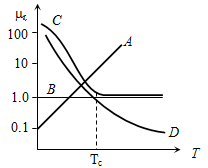
The relative permeability ($\mu_r$) of a ferromagnetic substance varies with temperature (T) according to the curve
  • A
    A
  • B
    B
  • C
  • D
    D
Answer
Correct option: C.
C
(c) C
View full question & answer
MCQ 521 Mark
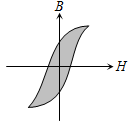
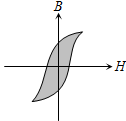
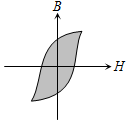
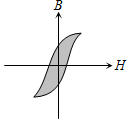
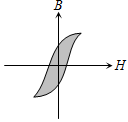
For substances hysteresis (B - H) curves are given as shown in figure. For making temporary magnet which of the following is best.
  • A
  • B
  • C
Answer
Correct option: D.
(d)
View full question & answer
MCQ 531 Mark
Two identical short bar magnets, each having magnetic moment M, are placed a distance of 2d apart with axes perpendicular to each other in a horizontal plane. The magnetic induction at a point midway between them is
  • A
    $\frac{\mu_0}{4 \pi}(\sqrt{2}) \frac{\mathrm{M}}{\mathrm{d}^3}$
  • B
    $\frac{\mu_0}{4 \pi}(\sqrt{3}) \frac{\mathrm{M}}{\mathrm{d}^3}$
  • C
    $\left(\frac{2 \mu_0}{\pi}\right) \frac{M}{d^3}$
  • $\frac{\mu_0}{4 \pi}(\sqrt{5}) \frac{M}{d^3}$
Answer
Correct option: D.
$\frac{\mu_0}{4 \pi}(\sqrt{5}) \frac{M}{d^3}$
(d) $\frac{\mu_0}{4 \pi}(\sqrt{5}) \frac{M}{d^3}$
View full question & answer
MCQ 541 Mark
If a magnet is suspended at an angle 30$^\circ$ to the magnetic meridian, it makes an angle of 45$^\circ$with the horizontal. The real dip is
  • $\tan ^{-1}(\sqrt{3} / 2)$
  • B
    $\tan ^{-1}(\sqrt{3})$
  • C
    $\tan ^{-1}(\sqrt{3 / 2})$
  • D
    $\tan ^{-1}(2 / \sqrt{3})$
Answer
Correct option: A.
$\tan ^{-1}(\sqrt{3} / 2)$
(a) $\tan ^{-1}(\sqrt{3} / 2)$
View full question & answer
MCQ 551 Mark
A short bar magnet with its north pole facing north forms a neutral point at P in the horizontal plane. If the magnet is rotated by 90$^\circ$ in the horizontal plane, the net magnetic induction at P is (Horizontal component of earth’s magnetic field = $B_H$)
  • A
    0
  • B
    $2B_H$
  • C
    $\frac{\sqrt{5}}{2} B_H$
  • $\sqrt{5} B_H$
Answer
Correct option: D.
$\sqrt{5} B_H$
(d) $\sqrt{5} B_H$
View full question & answer
MCQ 561 Mark
Among the following properties describing diamagnetism identify the property that is wrongly stated
  • A
    Diamagnetic material do not have permanent magnetic moment
  • B
    Diamagnetism is explained in terms of electromagnetic induction
  • Diamagnetic materials have a small positive susceptibility
  • D
    The magnetic moment of individual electrons neutralize each other
Answer
Correct option: C.
Diamagnetic materials have a small positive susceptibility
View full question & answer
MCQ 571 Mark
If the magnetic dipole moment of an atom of diamagnetic material, paramagnetic material and ferromagnetic material denoted by $\mu_d, \mu_p, \mu_f$ respectively then
  • A
    $\mu_d \neq 0$ and $\mu_{\mathrm{f}} \neq 0$
  • B
    $\mu_{\mathrm{p}}=0$ and $\mu_{\mathrm{f}} \neq 0$
  • $\mu_d=0$ and $\mu_p \neq 0$
  • D
    $\mu_d \neq 0$ and $\mu_p=0$
Answer
Correct option: C.
$\mu_d=0$ and $\mu_p \neq 0$
(c) $\mu_d=0$ and $\mu_p \neq 0$
View full question & answer
MCQ 581 Mark
In the hysteresis cycle, the value of H needed to make the intensity of magnetisation zero is called
  • A
    Retentivity
  • Coercive force
  • C
    Lorentz force
  • D
    None of the above
Answer
Correct option: B.
Coercive force
Coercive force
View full question & answer
MCQ 591 Mark
Which of the following is diamagnetism
  • A
    Aluminium
  • B
    Quartz
  • C
    Nickel
  • Bismuth
Answer
Correct option: D.
Bismuth
Bismuth
View full question & answer
MCQ 601 Mark
When a piece of a ferromagnetic substance is put in a uniform magnetic field, the flux density inside it is four times the flux density away from the piece. The magnetic permeability of the material is 
  • A
    1
  • B
    2
  • C
    3
  • 4
Answer
Correct option: D.
4
 4
View full question & answer
MCQ 611 Mark
The magnetic susceptibility of any paramagnetic material changes with absolute temperature T as
  • A
    Directly proportional to T
  • B
    Remains constant
  • Inversely proportional to T
  • D
    Exponentially decaying with T
Answer
Correct option: C.
Inversely proportional to T
 Inversely proportional to T
View full question & answer
MCQ 621 Mark
For an isotropic medium B, m, H and M are related as (where B, $\mu_0, H$ and M have their usual meaning in the context of magnetic material
  • A
    $(B-M)=\mu_0 H$
  • B
    $M=\mu_0(H+M)$
  • C
    $H=\mu_0(H+M)$
  • $B=\mu_0(H+M)$
Answer
Correct option: D.
$B=\mu_0(H+M)$
(d) $B=\mu_0(H+M)$
View full question & answer
MCQ 631 Mark
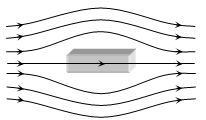
The given figure represents a material which is
  • A
    Paramagnetic
  • Diamagnetic
  • C
    Ferromagnetic
  • D
    None of these
Answer
Correct option: B.
Diamagnetic
(b) Diamagnetic
View full question & answer
MCQ 641 Mark
The materials suitable for making electromagnets should have
  • A
    High retentivity and high coercivity
  • B
    Low retentivity and low coercivity
  • High retentivity and low coercivity
  • D
    Low retentivity and high coercivity
Answer
Correct option: C.
High retentivity and low coercivity
 High retentivity and low coercivity
View full question & answer
MCQ 651 Mark
Curie-Weiss law is obeyed by iron at a temperature ......
  • A
    Below Curie temperature
  • Above Curie temperature
  • C
    At Curie temperature only
  • D
    At all temperatures
Answer
Correct option: B.
Above Curie temperature
View full question & answer
MCQ 661 Mark
Liquid oxygen remains suspended between two pole faces of a magnet because it is
  • A
    Diamagnetic
  • Paramagnetic
  • C
    Ferromagnetic
  • D
    Antiferromagnetic
Answer
Correct option: B.
Paramagnetic
 Paramagnetic
View full question & answer
MCQ 671 Mark
Which one of the following is a non-magnetic substance
  • A
    Iron
  • B
    Nickel
  • C
    Cobalt
  • Brass
Answer
Correct option: D.
Brass
 Brass
View full question & answer
MCQ 681 Mark
A frog can be deviated in a magnetic field produced by a current in a vertical solenoid placed below the frog. This is possible because the body of the frog behaves as
  • A
    Paramagnetic
  • Diamagnetic
  • C
    Ferromagnetic
  • D
    Antiferromagnetic
Answer
Correct option: B.
Diamagnetic
 Diamagnetic
View full question & answer
MCQ 701 Mark
A small rod of bismuth is suspended freely between the poles of a strong electromagnet. It is found to arrange itself at right angles to the magnetic field. This observation establishes that bismuth is
  • Diamagnetic
  • B
    Paramagnetic
  • C
    Ferri-magnetic
  • D
    Antiferro-magnetic
Answer
Correct option: A.
Diamagnetic
 Diamagnetic
View full question & answer
MCQ 711 Mark
Curies law can be written as
  • A
    $x \propto\left(T-T_c\right)$
  • B
    $X \propto \frac{1}{T-T_c}$
  • $x \propto \frac{1}{T}$
  • D
    $x \propto T$
Answer
Correct option: C.
$x \propto \frac{1}{T}$
(c) $x \propto \frac{1}{T}$
View full question & answer
MCQ 721 Mark
Which of the following statements is incorrect about hysteresis
  • A
    This effect is common to all ferromagnetic substances
  • B
    The hysteresis loop area is proportional to the thermal energy developed per unit volume of the material
  • The hysteresis loop area is independent of the thermal energy developed per unit volume of the material
  • D
    The shape of the hysteresis loop is characteristic of the material
Answer
Correct option: C.
The hysteresis loop area is independent of the thermal energy developed per unit volume of the material
 The hysteresis loop area is independent of the thermal energy developed per unit volume of the material
View full question & answer
MCQ 731 Mark
The universal property of all substances is
  • Diamagnetism
  • B
    Ferromagnetism
  • C
    Paramagnetism
  • D
    All of these
Answer
Correct option: A.
Diamagnetism
 Diamagnetism
View full question & answer
MCQ 741 Mark
Which of the following is most suitable for the core of electromagnets
  • Soft iron
  • B
    Steel
  • C
    Copper-nickel alloy
  • D
    Air
Answer
Correct option: A.
Soft iron
 Soft iron
View full question & answer
MCQ 751 Mark
Demagnetisation of magnets can be done by
  • A
    Rough handling
  • B
    Heating
  • C
    Magnetising in the opposite direction
  • All the above
Answer
Correct option: D.
All the above
 All the above
View full question & answer
MCQ 761 Mark
The magnetic susceptibility is negative for
  • A
    Paramagnetic materials
  • Diamagnetic materials
  • C
    Ferromagnetic materials
  • D
    Paramagnetic and ferromagnetic materials
Answer
Correct option: B.
Diamagnetic materials
 Diamagnetic materials
View full question & answer
MCQ 771 Mark
If a magnetic substance is kept in a magnetic field, then which of the following is thrown out
  • A
    Paramagnetic
  • B
    Ferromagnetic
  • Diamagnetic
  • D
    Antiferromagnetic
Answer
Correct option: C.
Diamagnetic
 Diamagnetic
View full question & answer
MCQ 791 Mark
Identify the paramagnetic substance
  • A
    Iron
  • Aluminium
  • C
    Nickel
  • D
    Hydrogen
Answer
Correct option: B.
Aluminium
 Aluminium
View full question & answer
MCQ 801 Mark
The magnetic susceptibility does not depend upon the temperature in
  • A
    Ferrite substances
  • B
    Ferromagnetic substances
  • Diamagnetic substances
  • D
    Paramagnetic substances
Answer
Correct option: C.
Diamagnetic substances
 Diamagnetic substances
View full question & answer
MCQ 811 Mark
Which of the following is true
  • A
    Diamagnetism is temperature dependent
  • Paramagnetism is temperature dependent
  • C
    Paramagnetism is temperature independent
  • D
    None of these
Answer
Correct option: B.
Paramagnetism is temperature dependent
 Paramagnetism is temperature dependent
View full question & answer
MCQ 821 Mark
The relative permeability is represented by $m_r$ and the susceptibility is denoted by $c$ for a magnetic substance. Then for a paramagnetic substance
  • A
    $m_r < 1, c < 0$
  • B
    $ m_r < 1, c > 0$
  • C
    $m_ r> 1, c < 0 $
  • $ m_r > 1, c > 0$
Answer
Correct option: D.
$ m_r > 1, c > 0$
$ m_r > 1, c > 0$
View full question & answer
MCQ 831 Mark
If a diamagnetic solution is poured into a U-tube and one arm of this U-tube placed between the poles of a strong magnet with the meniscus in a line with the field, then the level of the solution will
  • A
    Rise
  • Fall
  • C
    Oscillate slowly
  • D
    Remain as such
Answer
Correct option: B.
Fall
Fall
View full question & answer
MCQ 841 Mark
Magnetic permeability is maximum for
  • A
    Diamagnetic substance
  • B
    Paramagnetic substance
  • Ferromagnetic substance
  • D
    All of these
Answer
Correct option: C.
Ferromagnetic substance
View full question & answer
MCQ 851 Mark
The use of study of hysteresis curve for a given material is to estimate the
  • A
    Voltage loss
  • Hysteresis loss
  • C
    Current loss
  • D
    All of these
Answer
Correct option: B.
Hysteresis loss
 Hysteresis loss
View full question & answer
MCQ 861 Mark
An example of a diamagnetic substance is
  • A
    Aluminium
  • Copper
  • C
    Iron
  • D
     Nickel
Answer
Correct option: B.
Copper
Copper
View full question & answer
MCQ 871 Mark
Relative permeability of iron is $5500,$ then its magnetic susceptibility will be
  • A
    $5500 \times 10^{-7}$
  • B
    $5500 \times 10^{-7}$
  • C
    $5501$
  • $5499$
Answer
Correct option: D.
$5499$
$5499$
View full question & answer
MCQ 881 Mark
Which of the following statements are true about the magnetic susceptibility $\mathrm {x_m}$ of paramagnetic substance
  • A
    Value of $\mathrm {x_m}$ is inversely proportional to the absolute temperature of the sample
  • B
    $\mathrm {x_m}$ is positive at all temperature
  • C
    $\mathrm {x_m}$ is negative at all temperature
  • a,b
Answer
Correct option: D.
a,b
(d) a,b
View full question & answer
MCQ 891 Mark
The magnetic susceptibility is
  • $X=\frac{I}{H}$
  • B
    $X=\frac{B}{H}$
  • C
    $X=\frac{M}{V}$
  • D
    $X=\frac{M}{H}$
Answer
Correct option: A.
$X=\frac{I}{H}$
(a) $X=\frac{I}{H}$
View full question & answer
MCQ 901 Mark
Diamagnetic substances are
  • A
    Feebly attracted by magnets
  • B
    Strongly attracted by magnets
  • Feebly repelled by magnets
  • D
    Strongly repelled by magnets
Answer
Correct option: C.
Feebly repelled by magnets
View full question & answer
MCQ 911 Mark
Substances in which the magnetic moment of a single atom is not zero, is known as
  • A
    Diamagnetism
  • B
    Ferromagnetism
  • Paramagnetism
  • D
    Ferrimagnetism
Answer
Correct option: C.
Paramagnetism
 Paramagnetism
View full question & answer
MCQ 921 Mark
The only property possessed by ferromagnetic substance is
  • Hysteresis
  • B
    Susceptibility
  • C
    Directional property
  • D
    Attracting magnetic substances
Answer
Correct option: A.
Hysteresis
 Hysteresis
View full question & answer
MCQ 931 Mark
Which of the following statement is not the true
  • While taking reading of tangent galvanometer, the plane of the coil must be set at right angles to the earth’s magnetic meridian
  • B
    A short magnet is used in a tangent galvanometer since a long magnet would be heavy and may not easily move
  • C
    Measurements with the tangent galvanometer will be more accurate when the deflection is around $45^\circ$
  • D
    A tangent galvanometer can not be used in the polar region
Answer
Correct option: A.
While taking reading of tangent galvanometer, the plane of the coil must be set at right angles to the earth’s magnetic meridian
View full question & answer
MCQ 941 Mark
When 2 amperes current is passed through a tangent galvanometer, it gives a deflection of 30$^\circ$. For 60$^\circ$ deflection, the current must be
  • A
    1 amp
  • B
    $2\sqrt 3$ amp
  • C
    4 amp
  • 6 amp
Answer
Correct option: D.
6 amp
(d) 6 amp
View full question & answer
MCQ 951 Mark
A magnet freely suspended in a vibration magnetometer makes 10 oscillations per minute at a place A and 20 oscillations per minute at a place B. If the horizontal component of earth’s magnetic field at A is $36 \times 10^{-6} T$, then its value at B is
  • A
    $ 36 \times 10^{-6} \mathrm{~T} $
  • B
    $ 72 \times 10^{-6} \mathrm{~T} $
  • $ 144 \times 10^{-6} \mathrm{~T} $
  • D
    $ 288 \times 10^{-6} \mathrm{~T} $
Answer
Correct option: C.
$ 144 \times 10^{-6} \mathrm{~T} $
(c) $ 144 \times 10^{-6} \mathrm{~T} $
View full question & answer
MCQ 961 Mark
The time period of a thin bar magnet in earth’s magnetic field is T. If the magnet is cut into two equal parts perpendicular to its length, the time period of each part in the same field will be
  • $\frac{T}{2}$
  • B
    T
  • C
    $\sqrt 2$T
  • D
    2T
Answer
Correct option: A.
$\frac{T}{2}$
(a) $\frac{T}{2}$
View full question & answer
MCQ 971 Mark
Before using the tangent galvanometer, its coil is set in
  • Magnetic meridian $($or vertically north south$)$
  • B
    Perpendicular to magnetic meridian
  • C
    At angle of $45^\circ$ to magnetic meridian
  • D
    It does not require any setting
Answer
Correct option: A.
Magnetic meridian $($or vertically north south$)$
View full question & answer
MCQ 981 Mark
The error in measuring the current with a tangent galvanometer is minimum when the deflection is about
  • A
    $ 0^{\circ} $
  • B
    $ 30^{\circ} $
  • $ 45^{\circ} $
  • D
    $ 60^{\circ}$
Answer
Correct option: C.
$ 45^{\circ} $
$ 45^{\circ} $
View full question & answer
MCQ 991 Mark
A ferromagnetic material is heated above its curie temperature. Which one is a correct statement
  • A
    Ferromagnetic domains are perfectly arranged
  • Ferromagnetic domains becomes random
  • C
    Ferromagnetic domains are not influenced
  • D
    Ferromagnetic material changes itself into diamagnetic material
Answer
Correct option: B.
Ferromagnetic domains becomes random
 Ferromagnetic domains becomes random
View full question & answer
MCQ 1001 Mark
If a diamagnetic substance is brought near north or south pole of a bar magnet, it is
  • A
    Attracted by the poles
  • Repelled by the poles
  • C
    Repelled by the north pole and attracted by the south pole
  • D
    Attracted by the north pole and repelled by the south pole
Answer
Correct option: B.
Repelled by the poles
 Repelled by the poles
View full question & answer
M.C.Q (1 Marks) - Page 2 - Physics STD 12 Science Questions - Vidyadip