Question 13 Marks
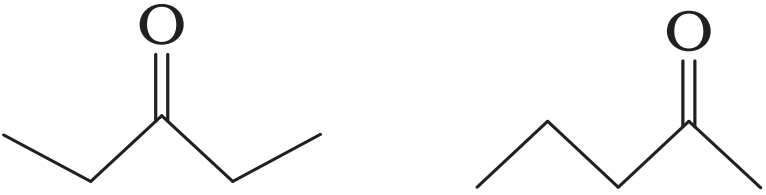
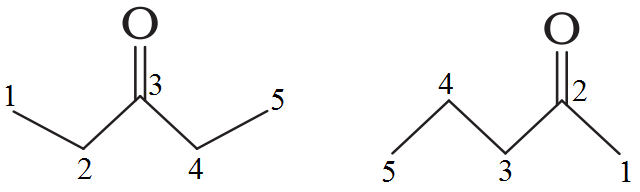
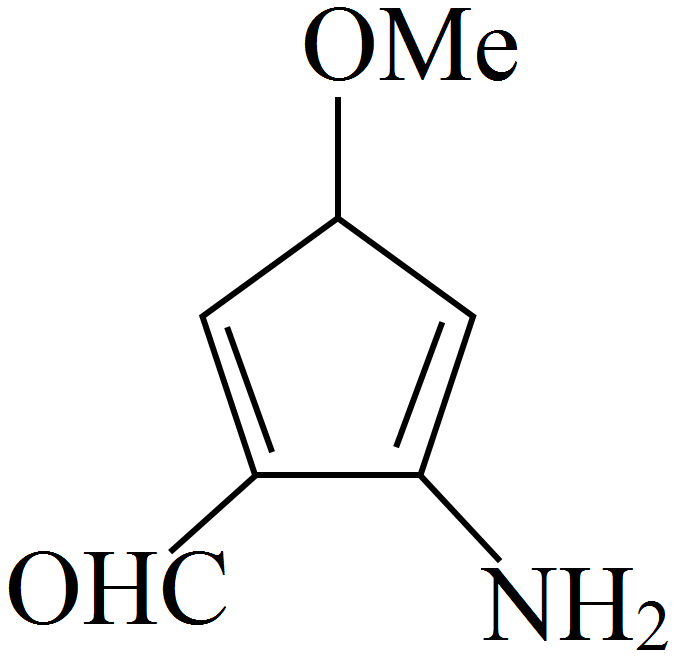
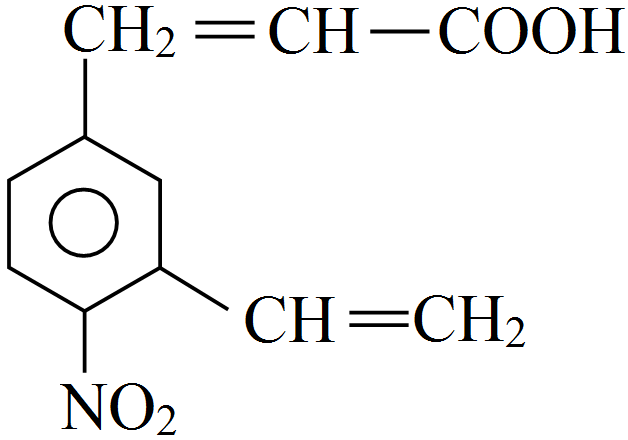
Write bond line formulas for: Isopropyl alcohol, 2,3-Dimethylbutanal, Heptan-4- one.
49 questions · timed · auto-graded
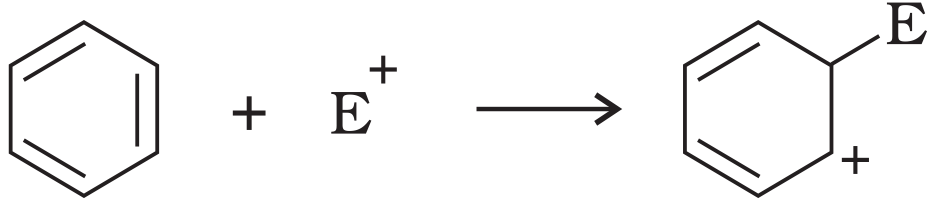
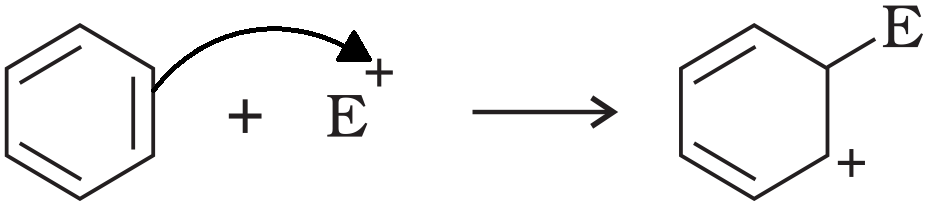
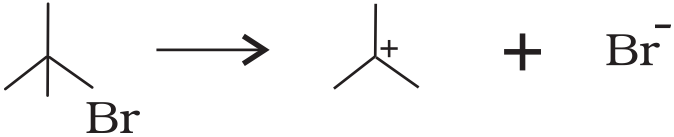
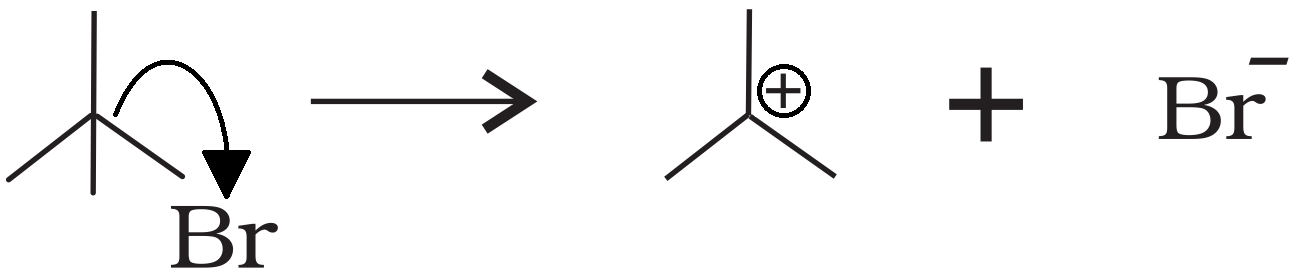
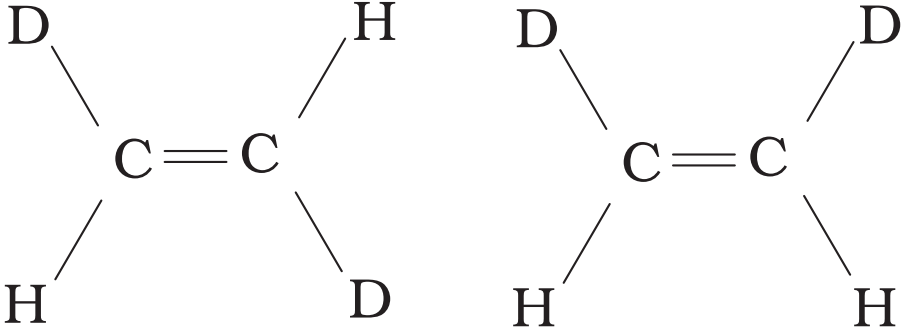
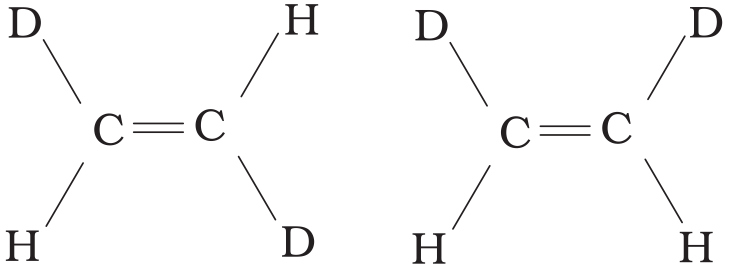
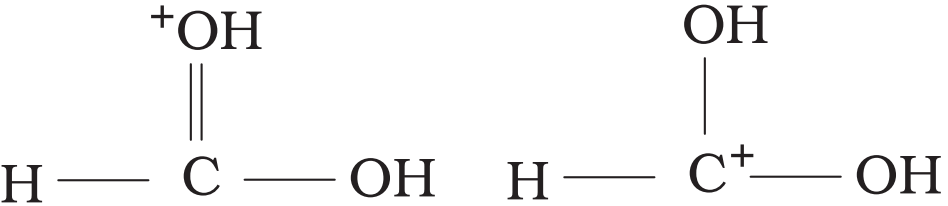
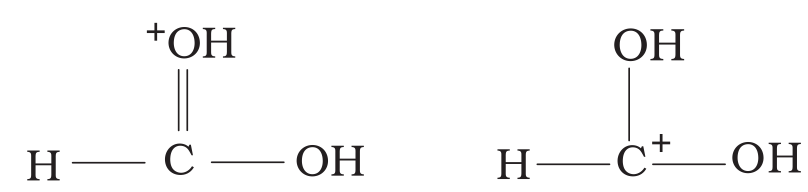


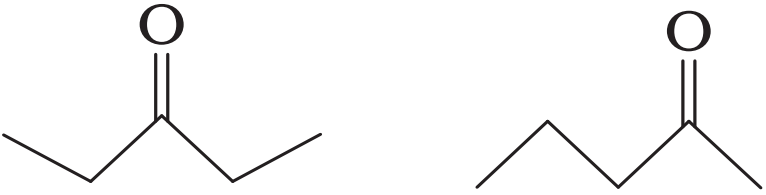
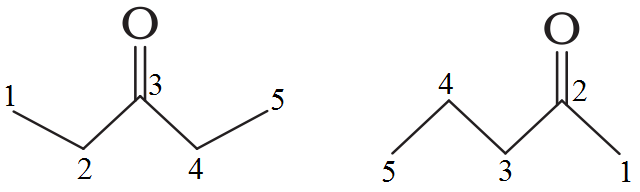


Ex: Cl- Br-, CN-, OH-, RCR2-, NH3, RNH2, H2O, ROH etc.
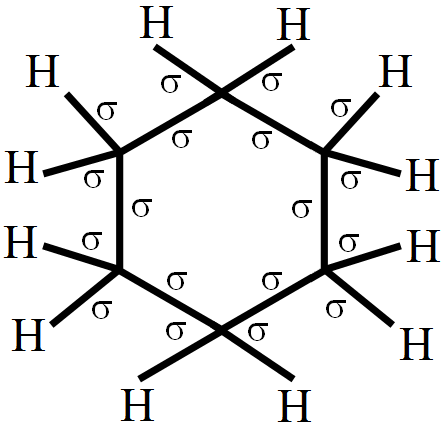
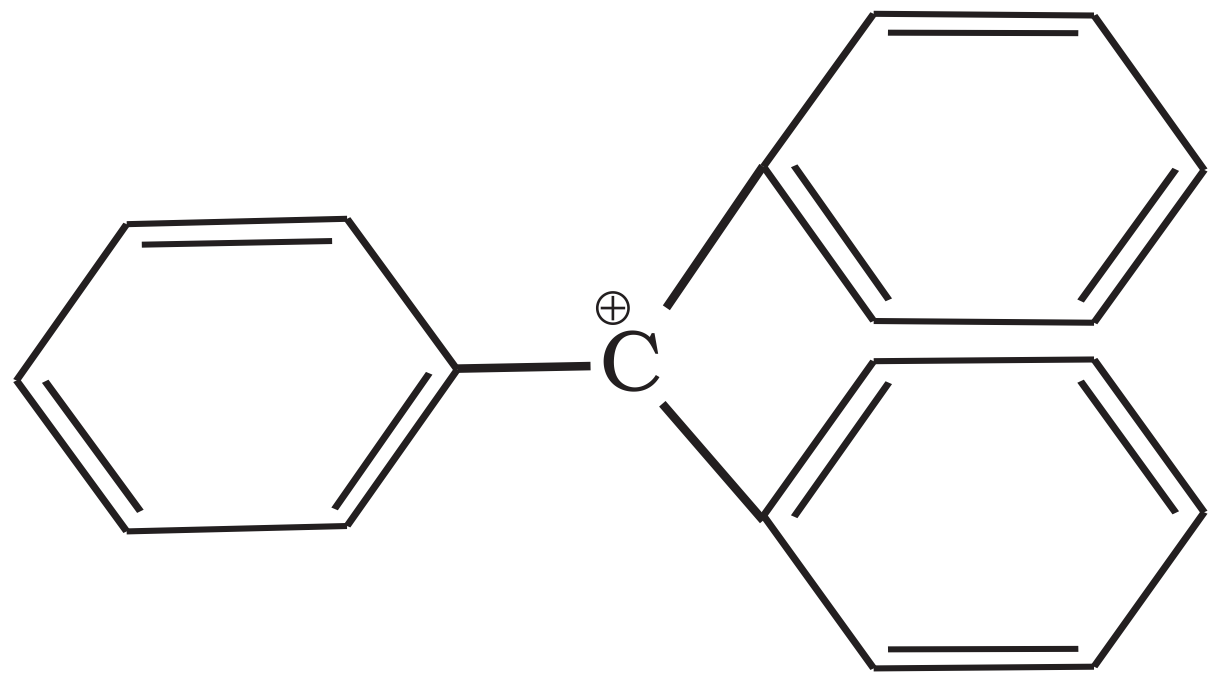
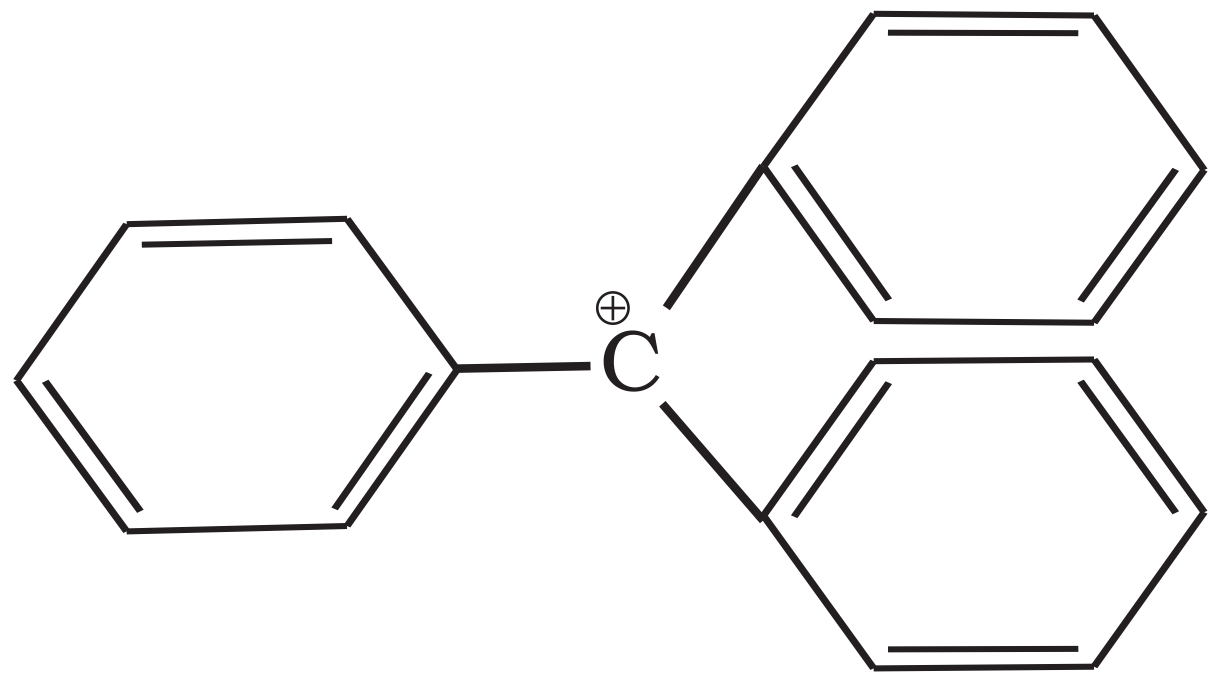
Triphenylmethyl cation is very stable because +ve charge of methyl carbon is delocalized in three phenyl rings. In each phenyl ring, +ve charge is developed on 2 ortho position and para position, i.e. three resonating structures. Total resonating structures given by triphenylmethyl cation are nine. Hence, it is very stable. These structures can be shown as.
$\text{CH}_3\text{CH}_2\text{CH}=\text{CH}_2,\ \text{CH}_3\text{CH}_2\text{CH}_2\text{CH}=\text{CH}_2$
$\text{CH}_3\text{CH}_2\text{CH}_2\text{COOH}$
$\text{CH}_3\text{CH}_2\text{CH}_2\text{CH}_2\text{COCH}_3$
$\text{CH}_3\text{OH},\text{CH}_3\text{CH}_2\text{OH},\text{CH}_3\text{CH}_2\text{CH}_2\text{OH},\\\text{CH}_3\text{CH}_2\text{CH}_2\text{CH}_2\text{OH}$
$\text{HC}\equiv\text{CH},\text{ CH}_3\text{C}\equiv\text{CH, CH}_3\text{CH}_2\text{C}\equiv\text{CH}\\\text{CH}_3\text{CH}_2\text{CH}_2\text{C}\equiv\text{CH}$
$(\text{C}_6\text{H}_5)\stackrel{\bf.\ \ \ }{\text{CH}}_2\text{ or }\text{CH}_2=\text{CH}-\stackrel{\bf.\ \ \ \ \ }{\text{CH}_2}$
$\text{C}_6\text{H}_5\stackrel{\oplus\ \ \ \ }{\text{CH}_2}$ is more stable due to resonance (5 resonating structures).
(C6H5)CH is more stable due to more resonating structures.
C6H5CH2 is more stable due to 5 resonating structures whereas CH2=CH-CH2 has two resonating structures.
$\text{CH}_3-\text{CH}_2-\text{CH}_2-\text{CH}_2-\text{NH}_2$
$\text{CH}_3-\text{CH}_2-\text{CH}-\text{CH}_3\\ \ \ \ \ \ \ \ \ \ \ \ \ \ \ \ \ \ \ \ \ \ \ \ \ \ \ |\\ \ \ \ \ \ \ \ \ \ \ \ \ \ \ \ \ \ \ \ \ \ \ \ \ \ \text{NH}_2$
$\text{CH}_3-\text{CH}-\text{CH}_2-\text{NH}_2\\ \ \ \ \ \ \ \ \ \ \ \ \ \ |\\ \ \ \ \ \ \ \ \ \ \ \ \ \text{CH}_3$
$ \ \ \ \ \ \ \ \ \ \ \ \ \text{CH}_3\\ \ \ \ \ \ \ \ \ \ \ \ \ \ |\\\text{CH}_3-\text{C}-\text{NH}_2\\ \ \ \ \ \ \ \ \ \ \ \ \ \ |\\ \ \ \ \ \ \ \ \ \ \ \ \ \text{CH}_3$
$\text{CH}_3-\text{CH}_2-\text{CH}_2-\text{NH}-\text{CH}_3$
$\text{CH}_3-\text{CH}-\text{NH}-\text{CH}_3\\ \ \ \ \ \ \ \ \ \ \ \ \ \ |\\\ \ \ \ \ \ \ \ \ \ \ \ \text{CH}_3$
$\text{CH}_3-\text{CH}_2-\text{NH}-\text{CH}_2-\text{CH}_3$
$\text{CH}_3-\text{CH}_2-\text{N}-\text{CH}_3\\ \ \ \ \ \ \ \ \ \ \ \ \ \ \ \ \ \ \ \ \ \ \ \ \ \ \ |\\ \ \ \ \ \ \ \ \ \ \ \ \ \ \ \ \ \ \ \ \ \ \ \ \ \ \text{CH}_3$
$\text{CH}_3-\text{CH}_2-\text{CH}-\text{CH}_3\\\ \ \ \ \ \ \ \ \ \ \ \ \ \ \ \ \ \ \ \ \ \ \ \ \ \ |\\\ \ \ \ \ \ \ \ \ \ \ \ \ \ \ \ \ \ \ \ \ \ \ \ \ \text{OH}$
$\ \ \ \ \ \ \ \ \ \ \ \ \text{CH}_3\\\ \ \ \ \ \ \ \ \ \ \ \ \ |\\\text{CH}_3-\text{C}-\text{CH}_3\\\ \ \ \ \ \ \ \ \ \ \ \ \ |\\\ \ \ \ \ \ \ \ \ \ \ \ \text{OH}$
$\text{CH}_3-\text{CH}-\text{CH}_2-\text{OH}\\\ \ \ \ \ \ \ \ \ \ \ \ \ \ \ \ \ \ \ \ \ \ \ \ |\\\ \ \ \ \ \ \ \ \ \ \ \ \ \ \ \ \ \ \ \ \ \ \ \text{CH}_3$
$\text{CH}_3-\text{CH}_2-\text{O}-\text{CH}_2-\text{CH}_3$
$\text{CH}_3-\text{O}-\text{CH}_2-\text{CH}_2-\text{CH}_3$
$\text{CH}_3-\text{O}-\text{CH}-\text{CH}_3\\\ \ \ \ \ \ \ \ \ \ \ \ \ \ \ \ \ \ \ \ \ \ |\\\ \ \ \ \ \ \ \ \ \ \ \ \ \ \ \ \ \ \ \ \ \text{CH}_3$
When two are more compounds have similar molecular formula but differnt carbon skeletone, these are referred to as chain as isomers and the phenomenon is termed as chain isomerism.
$\text{CH}_3-\text{CH}_2-\text{CH}_2-\text{CH}_2-\text{OH}$
$\text{CH}_3-\text{CH}_2-\text{CH}-\text{CH}_3\\\ \ \ \ \ \ \ \ \ \ \ \ \ \ \ \ \ \ \ \ \ \ \ \ \ \ |\\\ \ \ \ \ \ \ \ \ \ \ \ \ \ \ \ \ \ \ \ \ \ \ \ \ \text{OH}$ are position isomers.
$\ \ \ \ \ \ \ \ \ \ \ \ \text{CH}_3\\\ \ \ \ \ \ \ \ \ \ \ \ \ |\\\text{CH}_3-\text{C}-\text{CH}_3\\\ \ \ \ \ \ \ \ \ \ \ \ \ |\\\ \ \ \ \ \ \ \ \ \ \ \ \text{OH}$
$\text{CH}_3-\text{CH}-\text{CH}_2-\text{OH}\\\ \ \ \ \ \ \ \ \ \ \ \ \ \ \ \ \ \ \ \ \ \ \ \ |\\\ \ \ \ \ \ \ \ \ \ \ \ \ \ \ \ \ \ \ \ \ \ \ \text{CH}_3$ are position isomers.
| | Column I | | Column II |
| (i) | Free radical | (a) | Trigonal planar |
| (ii) | Carbocation | (b) | Pyramidal |
| (iii) | Carbanion | (c) | Linear |
| | Column I | | Column II |
| (i) | Free radical | (a) | Trigonal planar |
| (ii) | Carbocation | (a) | Trigonal planar |
| (iii) | Carbanion | (b) | Pyramidal |
$\text{C}_6\text{H}_5\text{CH}_2\stackrel{+ \ \ \ }{\text{CH}}_2<\text{C}_6\text{H}_5\stackrel{+\ \ \ \ \ \ \ \ \ \ \ \ }{\text{CHCH}}_3< \text{C}_6\text{H}_5\stackrel{+\ \ \ \ \ \ \ \ \ }{\text{C(CH}}_3)_2\\<\text{C}_6\text{H}_5\stackrel{+\ \ \ \ \ \ \ \ \ \ \ \ }{\text{CHCH}}=\text{CH}_2$
$(\text{CH}_3)_3\text{C}^+>\text{C}_6\text{H}_5\text{CH}_2^+>\text{CH}_2=\text{CHCH}_2^+>\text{CH}_3\text{CH}_2^+$
$(\text{CH}_3)_2\text{CH}^-<,\text{CH}_3\text{CH}_2^-<\text{CH}_3^-<\text{CH}_2=\text{CH}^-\\<\text{C}_6\text{H}_5\text{CH}^-_2<\text{HC}\equiv\text{C}^-$

$\ \ \ {\ \ \ \ \ \ \ \ \ \ \ {\text{O}}\\ \ \ \ \ \ \ \ \ \ \ \ \|\\\text{CH}-{\text{C}}\oplus\text{is electrophile}\\ \ \ \ \ \ \ \ \ \ \ {\text{O}}\ \ \ \ \ \ \ \ \ \ \ \ \ \ \ \ \ \ \ \ \ \ \ \ \ \ \ \ \ \ \ \ \text{O}\\\\ \ \ \ \ \ \ \ \ \ \ \|\ \ \ \ \ \ \ \ \ \ \ \ \ \ \ \ \ \ \ \ \ \ \ \ \ \ \ \ \ \ \ \ \ \ \|}\\ \text{CH}_3-\text{C}-\text{Cl}^-\xrightarrow{\ \ \ \ \ \ \ }\text{CH}_3-\text{C}\oplus+\text{Cl}^-$
$\text{CN}^-$ is nucleophile
$\text{KCN}\xrightarrow{\ \ \ \ \ \ \ \ \ \ }\text{K}^++\text{CN}^-$
The lower water layer is run off using the stop cock of the funnel and kerosene oil is obtained. It is dried over anhydrous CaCl2 or MgSO4 and then distilled to give pure kerosene oil.
$\text{CH}_3\text{CHCH}\equiv\text{CH}\\\ \ \ \ \ \ \ \ \ |\\ \ \ \ \ \ \ \ \ \text{CH}=\text{CH}_2$
$\text{CH},-\stackrel{3\ \ \ \ \ }{\text{CH}}-\stackrel{4\ \ \ \ \ }{\text{CH}}\equiv\stackrel{5 \ \ \ \ }{\text{CH}}\\\ \ \ \ \ \ \ \ \ \ \ \ |\\\ \ \ \ \ \ \ \ \ \ \ \text{CH}=\text{CH}_2\\\ \ \ \ \ \ \ \ \ \ ^{{\ \ 2\ \ \ \ \ \ \ \ \ \ \ \ \ \ 1}}\\ \ \ \ \ \ \ \ ^{\text{3-methyl pent-1-en-4yne}}$
$\stackrel{1\ \ \ \ \ }{\text{CH}_3}-\stackrel{2\ \ \ \ }{\text{CH}}-\stackrel{3\ \ \ \ \ }{\text{CH}}-\stackrel{4\ \ \ \ }{\text{CH}}=\stackrel{5 \ \ \ \ \ }{\text{CH}_2}\\\ \ \ \ \ \ \ \ \ \ \ \ \ \ |\\\ \ \ \ \ \ \ \ \ \ \ \ \ \text{OH}$
Nucleophile is a species which is either negatively charged or has lone pair of electron.

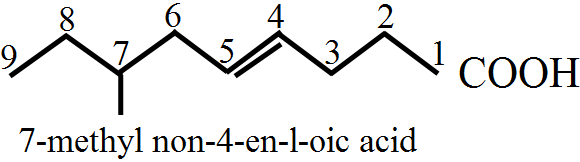
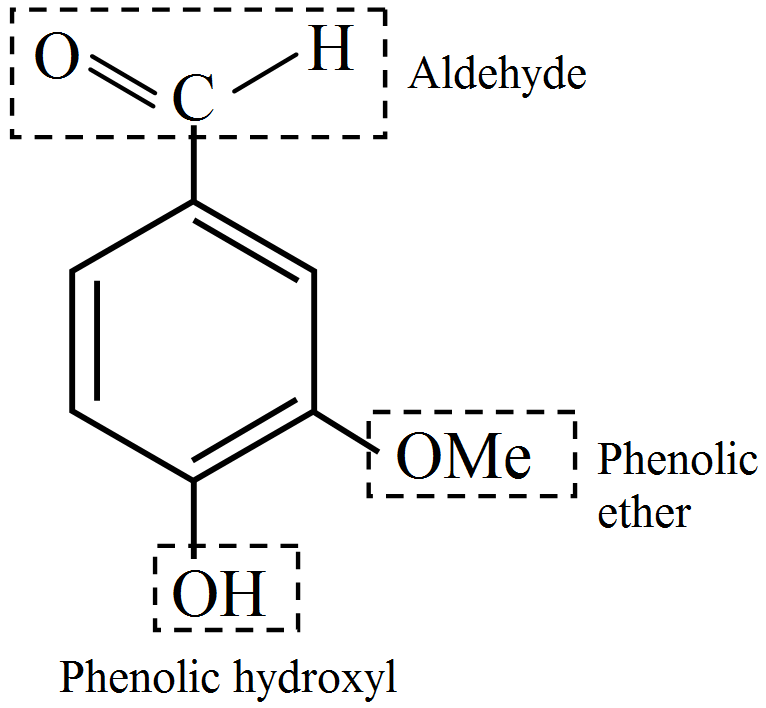
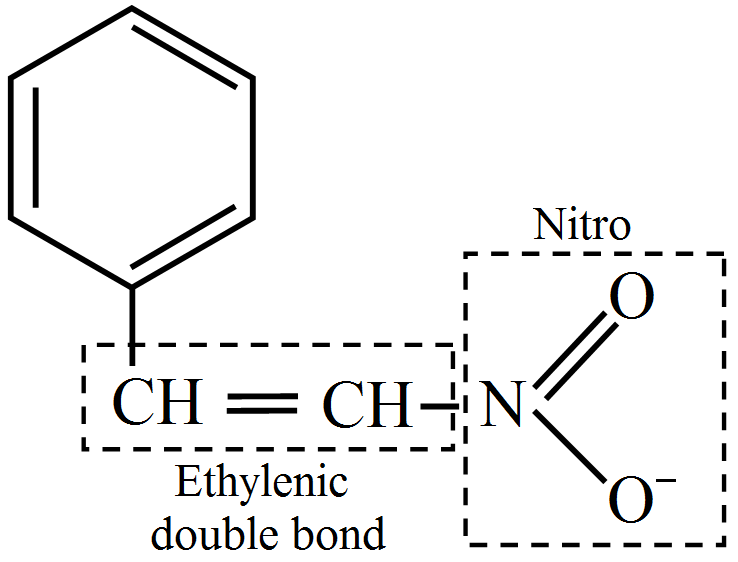
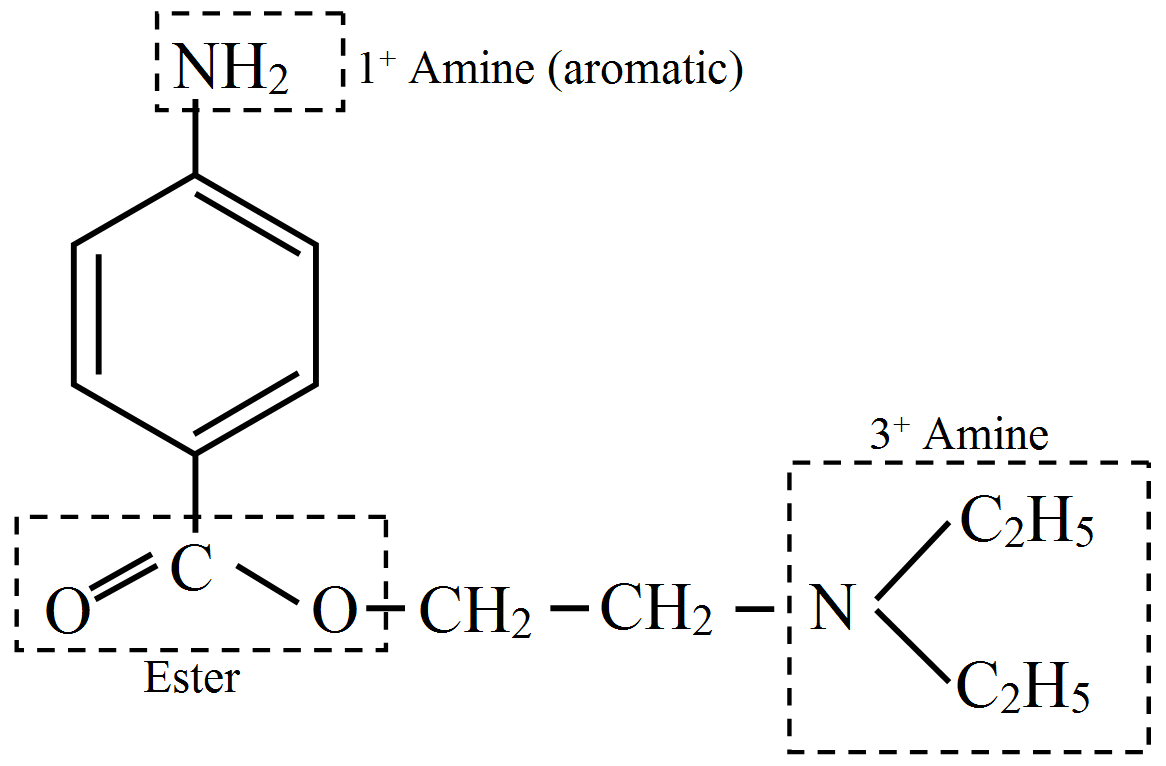
$\ \ \ \ \ \ \ \ \ \ \ \ \ \ \ \ \ \ \ \ \ \ \ \ \ \ \ \ \ \ \ \ \ \ \ \ \ \ \ \ \ \ \ \ \ \ \ \text{Cl}\\ \ \ \ \ \ \ \ \ \ \ \ \ \ \ \ \ \ \ \ \ \ \ \ \ \ \ \ \ \ \ \ \ \ \ \ \ \ \ \ \ \ \ \ \ \ \ \ \ |\\\text{CH}_3\text{CH}_2\text{CH}_2\text{Cl}\text{ and }\text{CH}_3-\text{CH}-\text{CH}_3\\1-\text{Cholropropane}\ \ \ \ \ \ \ \ \ \ \ \ \ \ \ 2-\text{Cholropropane}$
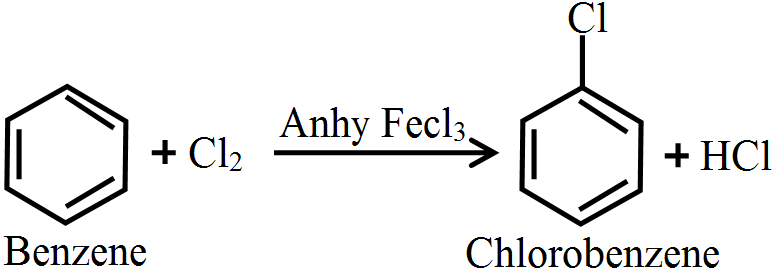
$\text{Na}+\text{C}+\text{N}\xrightarrow{\ \ \ \ \ \ \ \ \ \ \ \ }\text{NaCN}$
Add FeSO4 to L.E. (Lassaigne's extract)
$6\text{NaCl}+\text{FeSO}_4\xrightarrow{\ \ \ \ \ \ \ \ \ }\text{Na}_4[\text{Fe(CN)}_6]+\text{NaSO}_4$
Dilute H2SO4 is added to convert Fe2+ to Fe3+ and blue colour is formed due to formation of ferric ferrocyanide.
$4\text{Fe}^{3+}+\text{3Na}_4[\text{Fe(CN)}_6]\xrightarrow{\ \ \ \ \ \ \ \ \ }\text{Fe}_4[\text{Fe}(\text{CN})_6]_3+12\text{Na}^+\\ \ \ \ \ \ \ \ \ \ \ \ \ \ \ \ \ \ \ \ \ \ \ \ \ \ \ \ \ \ \ \ \ \ \ \ \ \ \ \ \ \ \ \ \ \ \ \ \ \ \ \ \text{Blue colouration}$
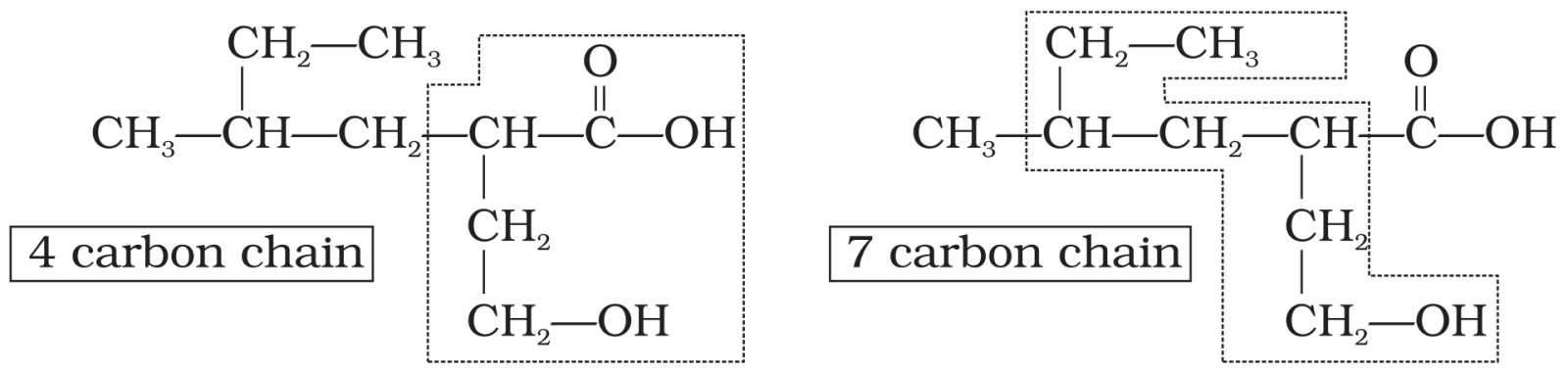
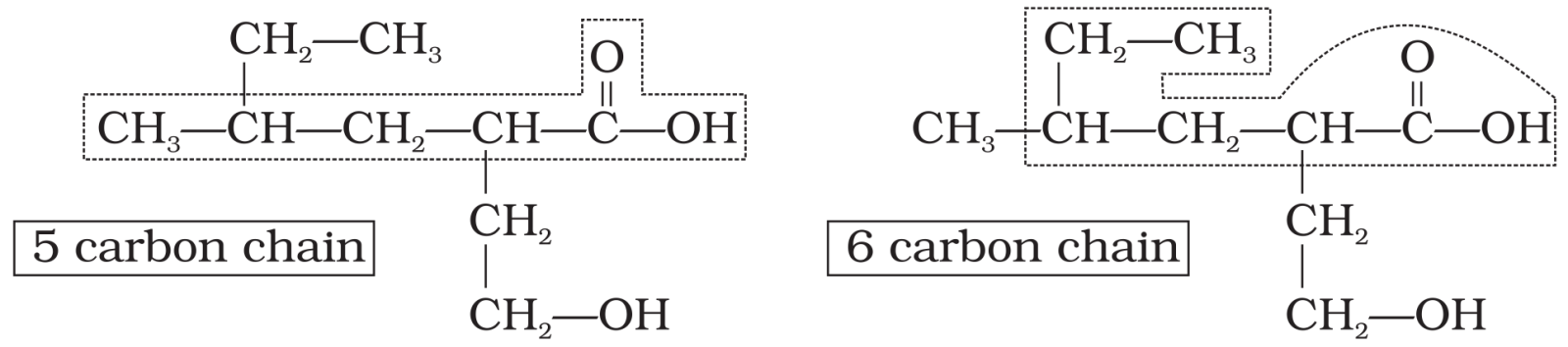
According to IUPAC nomenclature, the selected longest carbon chain must have maximum functional groups present in the compound. Therefore, only in one selected chain of 4 carbon atoms including both the functional group is corrected one.
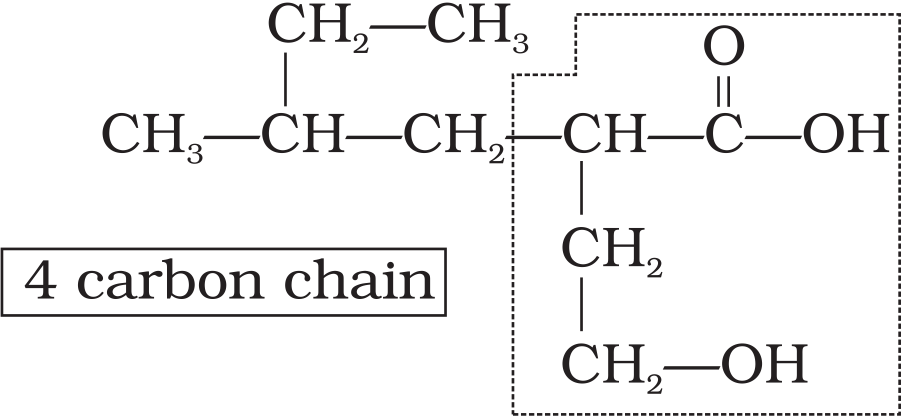
In other three, carbon atoms are in selected chain but both the functional groups are not included.
$\text{CH}_3-\text{CH}_2-\text{CH}-\text{CH}_3\\\ \ \ \ \ \ \ \ \ \ \ \ \ \ \ \ \ \ \ \ \ \ \ \ \ \ |\\\ \ \ \ \ \ \ \ \ \ \ \ \ \ \ \ \ \ \ \ \ \ \ \ \ \text{OH}$
$\ \ \ \ \ \ \ \ \ \ \ \ \text{CH}_3\\\ \ \ \ \ \ \ \ \ \ \ \ \ |\\\text{CH}_3-\text{C}-\text{CH}_3\\\ \ \ \ \ \ \ \ \ \ \ \ \ |\\\ \ \ \ \ \ \ \ \ \ \ \ \text{OH}$
$\text{CH}_3-\text{CH}-\text{CH}_2-\text{OH}\\\ \ \ \ \ \ \ \ \ \ \ \ \ \ \ \ \ \ \ \ \ \ \ \ |\\\ \ \ \ \ \ \ \ \ \ \ \ \ \ \ \ \ \ \ \ \ \ \ \text{CH}_3$
$\text{CH}_3-\text{CH}_2-\text{O}-\text{CH}_2-\text{CH}_3$
$\text{CH}_3-\text{O}-\text{CH}_2-\text{CH}_2-\text{CH}_3$
$\text{CH}_3-\text{O}-\text{CH}-\text{CH}_3\\\ \ \ \ \ \ \ \ \ \ \ \ \ \ \ \ \ \ \ \ \ \ |\\\ \ \ \ \ \ \ \ \ \ \ \ \ \ \ \ \ \ \ \ \ \text{CH}_3$
In position isomerism, two or more compounds differ in the position of substituent, functional group or multiple bonds but molecular formula is same. In the given structures, I and II, III and IV, and VI and VII are position isomers.
$\text{CH}_3-\text{CH}_2-\text{CH}_2-\text{CH}_2-\text{OH}$
$\text{CH}_3-\text{CH}_2-\text{CH}-\text{CH}_3\\\ \ \ \ \ \ \ \ \ \ \ \ \ \ \ \ \ \ \ \ \ \ \ \ \ \ |\\\ \ \ \ \ \ \ \ \ \ \ \ \ \ \ \ \ \ \ \ \ \ \ \ \ \text{OH}$ are position isomers.
$\ \ \ \ \ \ \ \ \ \ \ \ \text{CH}_3\\\ \ \ \ \ \ \ \ \ \ \ \ \ |\\\text{CH}_3-\text{C}-\text{CH}_3\\\ \ \ \ \ \ \ \ \ \ \ \ \ |\\\ \ \ \ \ \ \ \ \ \ \ \ \text{OH}$
$\text{CH}_3-\text{CH}-\text{CH}_2-\text{OH}\\\ \ \ \ \ \ \ \ \ \ \ \ \ \ \ \ \ \ \ \ \ \ \ \ |\\\ \ \ \ \ \ \ \ \ \ \ \ \ \ \ \ \ \ \ \ \ \ \ \text{CH}_3$ are position isomers.
$\text{CH}_3-\text{O}-\text{CH}_2-\text{CH}_2-\text{CH}_3$ and
$\text{CH}_3-\text{O}-\text{CH}-\text{CH}_3\\\ \ \ \ \ \ \ \ \ \ \ \ \ \ \ \ \ \ \ \ \ \ |\\\ \ \ \ \ \ \ \ \ \ \ \ \ \ \ \ \ \ \ \ \ \text{CH}_3$ are position isomers.
$\ \ \ \ \ \ \ \ \ \ \ \ \ \ \ \ \ \ \ \ \ \ \ \ \ \ \ \ \ \ \ \ \ \ \ +\ \ \ \ \ \ \ \ \ \ \ \ \ \ \ \ \ \ \ \ \ \ \ \ \ \ \ \ \ +\\\text{CH}_3-\text{CH}-\text{CH}_2-\text{CH}_2\ \ \ \ \text{CH}_3-\text{CH}-\text{CH}-\text{CH}_3\\\ \ \ \ \ \ \ \ \ \ \ \ \ | \ \ \ \ \ \ \ \ \ \ \ \ \ \ \ \ \ \ \ \ \ \ \ \ \ \ \ \ \ \ \ \ \ \ \ \ \ \ \ \ \ \ \ \ |\\\ \ \ \ \ \ \ \ \ \ \ \ \text{CH}_3\ \ \ \ \ \ \ \ \ \ \ \ \ \ \ \ \ \ \ \ \ \ \ \ \ \ \ \ \ \ \ \ \ \ \ \ \ \text{CH}_3\\\ \ \ \ \ \ \ \ \ \ \ \ \ \ \text{I}(1^\circ)\ \ \ \ \ \ \ \ \ \ \ \ \ \ \ \ \ \ \ \ \ \ \ \ \ \ \ \ \ \ \ \ \ \ \ \ \text{II}(2^\circ)$
$\ \ \ \ \ \ \ \ \ \ \ \ +\ \ \ \ \ \ \ \ \ \ \ \ \ \ \ \ \ \ \ \ \ \ \ \ \ \ +\\\text{CH}_3-\text{C}-\text{CH}_2-\text{CH}_3\ \ \ \ \text{CH}_2-\text{CH}_2\text{CH}-\text{CH}_2-\text{CH}_3\\\ \ \ \ \ \ \ \ \ \ \ \ \ |\ \ \ \ \ \ \ \ \ \ \ \ \ \ \ \ \ \ \ \ \ \ \ \ \ \ \ \ \ \ \ |\\\ \ \ \ \ \ \ \ \ \ \ \ \text{CH}_3\ \ \ \ \ \ \ \ \ \ \ \ \ \ \ \ \ \ \ \ \ \ \ \ \ \text{CH}_3\\\ \ \ \ \ \ \ \ \ \ \text{III}(3^\circ)\ \ \ \ \ \ \ \ \ \ \ \ \ \ \ \ \ \ \ \ \ \ \text{IV}(1^\circ)$ I < IV < II < III Stability of carbocation increases in the order 1° < 2° < 3°. Out of I and IV, IV is more stable than I because in IV, CH3 group is at a-carbon and in I, it is at β-carbon and +I-effect decreases with distance$\text{CH}_3-\text{CH}_2-\text{CH}-\text{CH}_3\\\ \ \ \ \ \ \ \ \ \ \ \ \ \ \ \ \ \ \ \ \ \ \ \ \ \ |\\\ \ \ \ \ \ \ \ \ \ \ \ \ \ \ \ \ \ \ \ \ \ \ \ \ \text{OH}$
$\ \ \ \ \ \ \ \ \ \ \ \ \text{CH}_3\\\ \ \ \ \ \ \ \ \ \ \ \ \ |\\\text{CH}_3-\text{C}-\text{CH}_3\\\ \ \ \ \ \ \ \ \ \ \ \ \ |\\\ \ \ \ \ \ \ \ \ \ \ \ \text{OH}$
$\text{CH}_3-\text{CH}-\text{CH}_2-\text{OH}\\\ \ \ \ \ \ \ \ \ \ \ \ \ \ \ \ \ \ \ \ \ \ \ \ |\\\ \ \ \ \ \ \ \ \ \ \ \ \ \ \ \ \ \ \ \ \ \ \ \text{CH}_3$
$\text{CH}_3-\text{CH}_2-\text{O}-\text{CH}_2-\text{CH}_3$
$\text{CH}_3-\text{O}-\text{CH}_2-\text{CH}_2-\text{CH}_3$
$\text{CH}_3-\text{O}-\text{CH}-\text{CH}_3\\\ \ \ \ \ \ \ \ \ \ \ \ \ \ \ \ \ \ \ \ \ \ |\\\ \ \ \ \ \ \ \ \ \ \ \ \ \ \ \ \ \ \ \ \ \text{CH}_3$
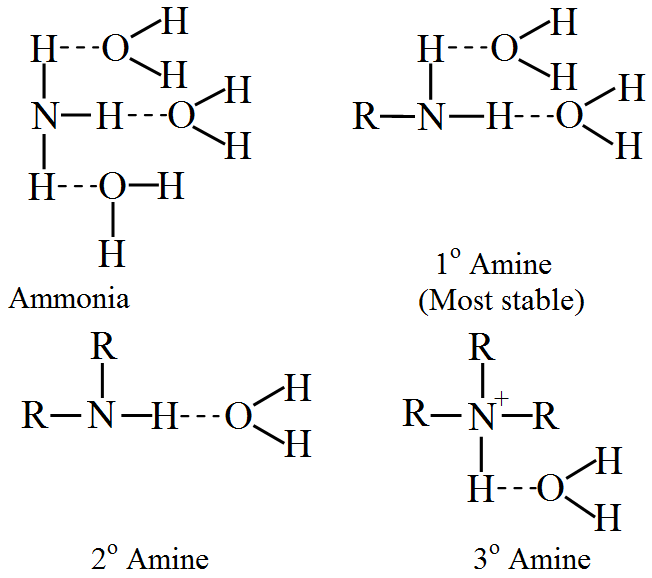
Combining all the factors, we get the order of basicity as NH3 > RNH2 > R2N.