The rate of reaction A + B → Products, is given by the equation r = k[A] [B]. If B is taken in large excess, the order of reaction would be:
Question types
MODEL PAPER 5 question types
37 questions across 6 question groups — pick any mix to generate a Chemistry paper with step-by-step answer keys.
37
Questions
6
Question groups
5
Question types
01
M.C.Q (1 Marks)
12 Q→02Assertion (A) & Reason (B) MCQ
4 Q→032 Marks Questions
6 Q→043 Marks Question
8 Q→055 Marks Questions
5 Q→064 Marks Questions
2 Q→Sample Questions
MODEL PAPER 5 questions
One sample from each question group in this chapter. Select any group above to see the full set with answer keys.
View full solution →
The unit of rate constant for a first order reaction is
Match the items of column I with appropriate entries of column II.
View full solution →| Column I | Column II |
| (a) Non ideal solution with positive deviation | (i) $H _2 O (57 \%)+ HI (43 \%)$ |
| (b) Maximum boiling azeotrope | (ii) $CHCl _3+\left( CH _3\right)_2 CO$ |
| (c) Non ideal solution with negative deviation | (iii) $C _2 H _5 OH (95.4 \%)+ H _2 O (4.6 \%)$ |
| (d) Minimum boiling azeotrope | (iv) $CCl _4+ C _6 H _5 CH _3$ |
An organic compound containing oxygen, upon oxidation forms a carboxylic acid as the only organic product with its molecular mass higher by $14$ units. The organic compound is $..........$
View full solution →Williamson synthesis is used to obtain:
Assertion (A): With excess of HI, glycerol ultimately gives isopropyl iodide.
Reason (R): The reaction occurs through intermediate formation of allyl iodide and propylene.
Reason (R): The reaction occurs through intermediate formation of allyl iodide and propylene.
Assertion (A): Vinyl halides do not give nucleophilic substitution reaction.
Reason (R): Vinyl group is electron donating in vinyl halides.
Reason (R): Vinyl group is electron donating in vinyl halides.
Assertion (A): Reactivity of ketones is more than aldehydes.
Reason (R): The carbonyl carbon of ketones is less electrophilic as compared to aldehydes.
Reason (R): The carbonyl carbon of ketones is less electrophilic as compared to aldehydes.
Assertion (A): D-glucose and D-mannose form same osazone with phenylhydrazine.
Reason (R): Osazone formation involves only the last four carbon atoms.
Reason (R): Osazone formation involves only the last four carbon atoms.
What is meant by the Ketal? Give an example.
Sodium chloride or calcium chloride is used to clear snow from the roads. Why?
Answer the following:
$(a)$ Define rate of reaction?
$(b)$ For a reaction the rate law expression is represented as follows:
Rate $=k[A][B]^{\frac{1}{2}}$
$i$. Interpret whether the reaction is elementary or complex. Give reason to support your answer.
$ii.$ Write the unit of rate constant for this reaction if concentration of $A$ and $B$ is expressed in moles/L
View full solution →$(a)$ Define rate of reaction?
$(b)$ For a reaction the rate law expression is represented as follows:
Rate $=k[A][B]^{\frac{1}{2}}$
$i$. Interpret whether the reaction is elementary or complex. Give reason to support your answer.
$ii.$ Write the unit of rate constant for this reaction if concentration of $A$ and $B$ is expressed in moles/L
Write the $IUPAC$ name and draw the structure of coordination entities of $[PtCl(NH_3)_5]Cl_3.$
View full solution →Give an explanation for the catalytic properties shown by transition metals.
$i.$ Determine the units of rate constant for first and zero order reaction.
$ii.$ Show that time required for the completion of $99\%$ of the first order reaction is twice the $90\%$ of completion of the reaction.
View full solution →$ii.$ Show that time required for the completion of $99\%$ of the first order reaction is twice the $90\%$ of completion of the reaction.
Tert-Butylbromide reacts with aq. $NaOH$ by $S_N1$ mechanism while n-butylbromide reacts by $SN_2$ mechanism. Why?
View full solution →Write the mechanism of acid dehydration of ethanol to yield ethane.
Calculate the emf of the cell
$Mg ( s )\left| Mg ^{+2}(0.1 M )\right| \mid Cu ^{+2}\left(1 \times 10^{-3} M \mid Cu ( s )\right)$
Given, $\left.E _{C u^{2+} / C u}^{\ominus}=+0.34 V, E _{M g^{+2} / M g}^{\ominus}=-2.37 V\right)$
View full solution →$Mg ( s )\left| Mg ^{+2}(0.1 M )\right| \mid Cu ^{+2}\left(1 \times 10^{-3} M \mid Cu ( s )\right)$
Given, $\left.E _{C u^{2+} / C u}^{\ominus}=+0.34 V, E _{M g^{+2} / M g}^{\ominus}=-2.37 V\right)$
Write the Nernst equation and calculate emf of the following cell at $298 K$ :
$ Cr \left| Cr ^{3+}(0 \cdot 1 M ) \| Fe ^{2+}(0 \cdot 01 M )\right| Fe$
Given : $E _{ Cr ^{3+} / Cr }^{\ominus}=-0 \cdot 75 V$
$E _{ Fe ^{2+} / Fe }^{\ominus}=-0 \cdot 45 V$
$(\log 10=1)$
View full solution →$ Cr \left| Cr ^{3+}(0 \cdot 1 M ) \| Fe ^{2+}(0 \cdot 01 M )\right| Fe$
Given : $E _{ Cr ^{3+} / Cr }^{\ominus}=-0 \cdot 75 V$
$E _{ Fe ^{2+} / Fe }^{\ominus}=-0 \cdot 45 V$
$(\log 10=1)$
Arrange the following compounds in a decreasing order of basic strength in their aqueous solutions.
$\ce{NH3, CH3NH2, (CH3)2NH, (CH3)3N}$
View full solution →$\ce{NH3, CH3NH2, (CH3)2NH, (CH3)3N}$
Write the formulas for the following coordination compounds:
a. Tetraammineaquachloridocobalt(III) chloride
b. Potassium tetrahydroxidozincate(II)
c. Potassium trioxalatoaluminate(III)
d. Dichloridobis(ethane-1, 2-diamine)cobalt(III)
e. Tetracarbonylnickel(0)
a. Tetraammineaquachloridocobalt(III) chloride
b. Potassium tetrahydroxidozincate(II)
c. Potassium trioxalatoaluminate(III)
d. Dichloridobis(ethane-1, 2-diamine)cobalt(III)
e. Tetracarbonylnickel(0)
Attempt any five of the following:
(a) Name the enzyme which convert surcrose into glucose and fructose.
(b) i. Name any two bases which are common to both DNA and RNA.
ii. Which vitamin deficiency causes:
1. Bone deformities in children?
2. Pernicious anaemia?
(c) What are heterocyclic bases?
(d) Write the name of linkage joining two monosaccharides.
(e) Name the purines present in DNA.
(f) Give an example of fibrous protein.
(g) Of the two bases named below, which one is present in RNA and which one is present in DNA?
i. Thymine
ii. Uracil
(a) Name the enzyme which convert surcrose into glucose and fructose.
(b) i. Name any two bases which are common to both DNA and RNA.
ii. Which vitamin deficiency causes:
1. Bone deformities in children?
2. Pernicious anaemia?
(c) What are heterocyclic bases?
(d) Write the name of linkage joining two monosaccharides.
(e) Name the purines present in DNA.
(f) Give an example of fibrous protein.
(g) Of the two bases named below, which one is present in RNA and which one is present in DNA?
i. Thymine
ii. Uracil
Give the oxidation state, $d-$ orbital occupation and coordination number of the central metal ion in the following complexes:
$\ce{K_3\left[ Co \left( C _2 O _4\right)_3\right]}$
cis $\ce{ - \left[ Cr (e n)_2 Cl _2\right] Cl}
$\ce{\left( NH _4\right)_2\left[ CoF _4\right]}
$\ce{\left[ Mn \left( H _2 O \right)_6\right] SO _4}$
View full solution →$\ce{K_3\left[ Co \left( C _2 O _4\right)_3\right]}$
cis $\ce{ - \left[ Cr (e n)_2 Cl _2\right] Cl}
$\ce{\left( NH _4\right)_2\left[ CoF _4\right]}
$\ce{\left[ Mn \left( H _2 O \right)_6\right] SO _4}$
i. Write structures of different isomeric amines corresponding to the molecular formula$, \ce{C4H11N}$.
ii. Write $\text{IUPAC}$ names of all the isomers.
iii. What type of isomerism is exhibited by different pairs of amines?
View full solution →ii. Write $\text{IUPAC}$ names of all the isomers.
iii. What type of isomerism is exhibited by different pairs of amines?
Read the following text carefully and answer the questions that follow:
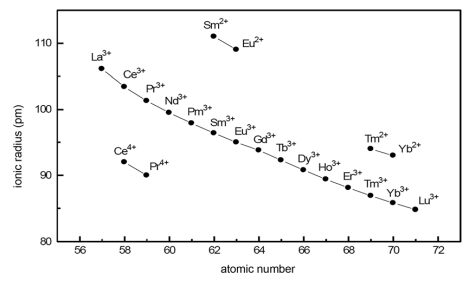
The $f-$ block consists of the two series, lanthanoids $($the fourteen elements following lanthanum$)$ and actinoids $($the fourteen elements following actinium$)$. Because lanthanum closely resembles the lanthanoids. The chemistry of the actinoids is much more complicated. The complication arises partly owing to the occurrence of a wide range of oxidation states in these elements and partly because their radioactivity creates special problems in their study. The overall decrease in atomic and ionic radii from lanthanum to lutetium $($the lanthanoid contraction$)$ is a unique feature in the chemistry of the lanthanoids. In the lanthanoids $,La (II)$ and $Ln (III)$ compounds are predominant species.
i. Which metal in the first transition series $(3d$ series$)$ exhibits $+1$ oxidation state most frequently and why?
ii. The transition metals $($with the exception of $\ce{Zn, Cd}$ and $\ce{Hg})$ are hard and have high melting and boiling points. Give reason.
iii. Both $O_2$ and $F_2$ stabilize high oxidation states of transition metals but the ability of oxygen to do so exceeds that of fluorine. Give reason.
$OR$
iii. The atomic radii of the metals of the third $(5d)$ series of transition elements are virtually the same as those of the corresponding members of the second $(4d)$ series. Give reason.
View full solution →The $f-$ block consists of the two series, lanthanoids $($the fourteen elements following lanthanum$)$ and actinoids $($the fourteen elements following actinium$)$. Because lanthanum closely resembles the lanthanoids. The chemistry of the actinoids is much more complicated. The complication arises partly owing to the occurrence of a wide range of oxidation states in these elements and partly because their radioactivity creates special problems in their study. The overall decrease in atomic and ionic radii from lanthanum to lutetium $($the lanthanoid contraction$)$ is a unique feature in the chemistry of the lanthanoids. In the lanthanoids $,La (II)$ and $Ln (III)$ compounds are predominant species.
i. Which metal in the first transition series $(3d$ series$)$ exhibits $+1$ oxidation state most frequently and why?
ii. The transition metals $($with the exception of $\ce{Zn, Cd}$ and $\ce{Hg})$ are hard and have high melting and boiling points. Give reason.
iii. Both $O_2$ and $F_2$ stabilize high oxidation states of transition metals but the ability of oxygen to do so exceeds that of fluorine. Give reason.
$OR$
iii. The atomic radii of the metals of the third $(5d)$ series of transition elements are virtually the same as those of the corresponding members of the second $(4d)$ series. Give reason.
The colligative properties of electrolytes require a slightly different approach than the one used for the colligative properties of non$-$electrolytes. The electrolytes dissociate into ions in solution. It is the number of solute particles that determines the colligative properties of a solution. The electron solutions, therefore, show abnormal colligative properties. To account for this effect we define a quantity called the van't Hoft factor, given
by
$i=\frac{\text { Actual number of particles in solution a fter dissociation }}{\text { Number of formula units initially dissolved in solution }}$
$i=1 ($for non$-$electrolytes$);$
$i>1 ($for electrolytes, undergoing dissociation$)$
$i<1 ($ for solutes, undergoing association$).$
$i. 0.1 M K _4\left[ Fe ( CN )_6\right]$ is $60 \%$ ionized. What will be its van't Hoff factor?
$ii.$ When a solution of benzoic acid dissolved in benzene such that it undergoes in molecular association and its molar mass approaches $244.$ In which form Benzoic molecules will exist?
$iii.$ How does van't Hoff factor $i$ and degree of association a are related if benzoic acid undergoes dimerisation in benzene solution? $\left( i =1 \frac{-\alpha}{2}\right.$ or $\left.i =1+\alpha\right)(2)$
OR
$iii.$ What do you mean by colligative properties of solutions?
View full solution →by
$i=\frac{\text { Actual number of particles in solution a fter dissociation }}{\text { Number of formula units initially dissolved in solution }}$
$i=1 ($for non$-$electrolytes$);$
$i>1 ($for electrolytes, undergoing dissociation$)$
$i<1 ($ for solutes, undergoing association$).$
$i. 0.1 M K _4\left[ Fe ( CN )_6\right]$ is $60 \%$ ionized. What will be its van't Hoff factor?
$ii.$ When a solution of benzoic acid dissolved in benzene such that it undergoes in molecular association and its molar mass approaches $244.$ In which form Benzoic molecules will exist?
$iii.$ How does van't Hoff factor $i$ and degree of association a are related if benzoic acid undergoes dimerisation in benzene solution? $\left( i =1 \frac{-\alpha}{2}\right.$ or $\left.i =1+\alpha\right)(2)$
OR
$iii.$ What do you mean by colligative properties of solutions?
Generate a MODEL PAPER 5 paper free
Pick question groups from the list above, set marks and difficulty, and export a branded PDF with step-by-step answer keys. First 3 chapters free — no signup.