Question
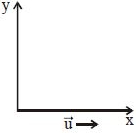
An electron is moving along $+x$ direction. To get it moving along an anticlockwise circular path in $x-y$ plane, magnetic field applied along

Answer

$\&$ force is in anticlockwise direction

According to right hand palon rule

$\mathrm{F}=\mathrm{q}(\vec {\mathrm{V}} \times \vec {\mathrm{B}})$ magnetic field is in $+\mathrm{z}-$ direction.
Need a full question paper?

Generate a complete, print-ready paper with questions like this in minutes — across 16+ boards, with answer keys.

Start Generating Free

Similar questions

If an electron oscillates at a frequency of $ 1 GHz$  it gives
If yellow light emitted by sodium lamp in Young's double slit experiment is replaced by monochromatic blue light of the same intensity
The number of molecules in a gas at pressure $1.64 \times {10^{ - 3}}$atmospheres and temperature $200\, K$ having the volume $1 \,cc$ are
An electron (charge = $1.6 \times {10^{ - 19}}$ $coulomb$) is accelerated through a potential of $1,00,000$ $volts$. The energy required by the electron is
Given below are two statements:

Statement $I:$ In a typical transistor, all three regions emitter, base and collector have same doping level.

Statement $II:$ In a transistor, collector is the thickest and base is the thinnest segment.

In the light of the above statements, choose the most appropriate answer from the options given below.

An electron moving with a velocity ${\vec V_1} = 2\,\hat i\,\, m/s$ at a point in a magnetic field experiences a force ${\vec F_1} =  - 2\hat j\,N$ .  If the electron is moving with a velocity ${\vec V_2} = 2\,\hat j \,\,m/s$ at the same point, it experiences a force ${\vec F_2} =  + 2\,\hat i\,N$ .  The force the electron would experience if it were moving with a velocity ${\vec V_3} = 2\hat k$  $m/s$ at the same point is
In intrinsic semiconductor at room temperature, number of electrons and holes are
Which of the following will fail to react with potassium dichromate and dilute sulphuric acid
Which of the following statements concerning the depletion zone of an unbiased $PN $ junction is (are) true
Stationary waves of frequency $300\, Hz$ are formed in a medium in which the velocity of sound is $1200$ metre/sec. The distance between a node and the neighbouring antinode is ... $m$