Question
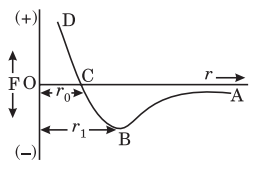
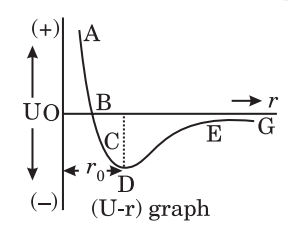
Draw the graphs for variation of potential energy and nuclear force between two nucleons as a function of distance between them.

Need a full question paper?

Generate a complete, print-ready paper with questions like this in minutes — across 16+ boards, with answer keys.
Start Generating Free

Similar questions

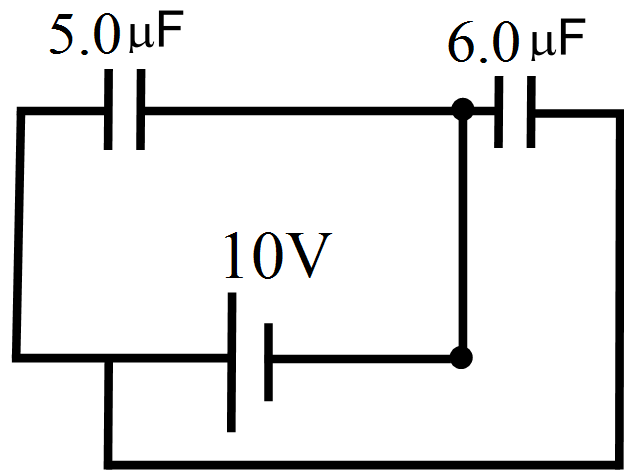
Find the charge supplied by the battery in the arrangement shown in figure.
A metallic rod of length l is rotated at a constant angular speed $\omega , $  normal to a uniform magnetic field B. Derive an expression for the current induced in the rod, if the resistance of the rod is R.
State two characteristic properties distinguishing the behaviour of paramagnetic and diamagnetic materials ?
The band gap between the valence and the conduction bands in zinc oxide (ZnO) is 3.2eV. Suppose an electron in the conduction band combines with a hole in the valence band and the excess energy is released in the form of electromagnetic radiation. Find the maximum wavelength that can be emitted in this process.
Explain the following:
(a) Ground Waves, (b) Sky Waves, (c) Space Waves.
An alpha particle enters a magnetic field of 0.2 weber $/ m ^2$ with a speed of $6.0 \times 10^5 m / s$ perpendicular to the field. Find out the acceleration of the particle and radius of the path.
Explain Yukawa's Principle for the origin of nuclear forces.
The potential difference between the terminals of a battery of emf 6.0V and internal resistance $1\Omega$ drops to 5.8V when connected across an external resistor. Find the resistance of the external resistor.
Radioactive isotopes are produced in a nuclear physics experiment at a constant rate $\frac{\text{dN}}{\text{dt}}=\text{R}.$ An inductor of inductance 100mH, a resistor of resistance $100\Omega$ and a battery are connected to form a series circuit. The circuit is switched on at the instant the production of radioactive isotope starts. It is found that $\frac{\text{i}}{\text{N}}$ remains constant in time where i is the current in the circuit at time t and N is the number of active nuclei at time t. Find the half-life of the isotope.
Is $\text{p}=\frac{\text{E}}{\text{c}}$ valid for electrons?