Question
How do we measure historical time?

Answer

(a) BC : The letters BC means Before Christ: Dates are generally counted (i.e., the day, the month and the years) or assigned to the birth of Jesus Christ, the founder of Christianity so 2000 BC means 2000 years before the birth of Jesus Christ. All dates before the birth of Jesus Christ are counted backwards and generally have the letter BC or BCE (Before Christ) added on.
(b) AD : We sometimes find AD before dates. This stands for two Latin words, “Anno Domini”, and mean in the year of the lord (i.e., Jestrs Christ). For example, 2008 can also be written as AD 2008 or 2008 AD or 2008 CE.
(c) CE : Sometimes, CE is used instead of AD. The letters CE stands for ‘Common Era’.
(d) BCE : Sometimes BCE is used instead of BC. The letters BCE stands for ‘Before Common Era’. We use these terms because the Christian Era is now used in the most countries of the world.
(e) Script : Way .or style of writing of a language is called a script. It consists of letters or signs. For example, ‘Devnagri’ is a script of Hindi.

Need a full question paper?

Generate a complete, print-ready paper with questions like this in minutes — across 16+ boards, with answer keys.

Start Generating Free

Similar questions

Question Box :
How does the Municipal Corporation get its money ?
What is the difference between evergreen forest and deciduous forest.
Read the source given below and answer the questions that follows.
But when do we come across a name for the entire Indian sub-continent? Because ancient Indian texts are difficult to date, this is not an easy question to answer. The Mahabharata uses the terms
‘Bharatavarsha’ and ‘Jambudvipa’, and scholars generally agree that this long poem was written from a few centuries BCE onward.
The first term, ‘Bharatavarsha’, clearly extends to the entire Subcontinent, and the text includes the names of numerous rivers and peoples. ‘Bharatavarsha’ means ‘the country of the Bharatas’. ‘Bharata’ is a name that first appears in the Rigveda, where it refers to one of the main Vedic groups of people. In later literature, several kings named ‘Bharata’ are mentioned.

(i) What are the challenges faced by the scholars in determining when the Indian sub-continent was first referred to by a single name ?
(ii) How does the term ‘Bharatavarsha’ contribute to our understanding of ancient Indian geography and identity ?
(iii) What significance does the name ‘Bharata’ hold in ancient Indian literature and how does its evolution reflect the development of Indian identity ?
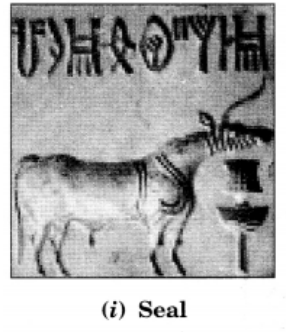
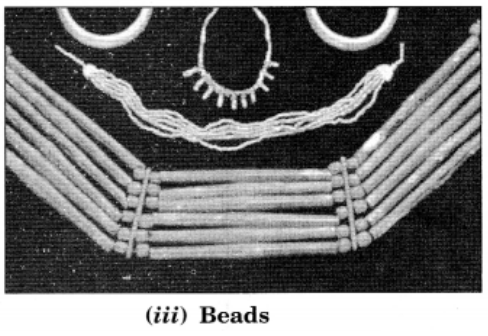
Look at the pictures given below and write about the picture.
Image
Image
Image
Image
An Event Box :
The city of Surat had a plague scare in 1994. Surat was one of the dirtiest cities in India. Houses, hotels and restaurants would dump their garbage into the nearest drain or street which made it very difficult for sweepers to collect and transfer the garbage into selected dumps. In addition to this, the Municipal Council did not collect the garbage as often as it should have and this led to the situation getting worse. The plague spreads through the air and people who have the disease have to he isolated. In Surat, several people lost their lives, and over 300,000 deserted the town. The scare of the plague ensured that the municipal council completely cleaned up the city. To this date, Surat continues to remain the second cleanest city in India after Chandigarh.
1. Do you know when and how often garbage gets collected in your neighbourhood ?
2. Do you think it is the same for all neighbourhoods in the city ? Why not ? Discuss.
Describe different type of vegetation found in India.
Sometimes people make prejudiced comments in our presence. We are often not in a position to do anything about this because it is difficult to say something right then and there. Divide the class into groups and each group discuss what they could do in one of the following situations :
1. A friend begins to tease a classmate because he is poor.
2. You are watching TV with your family and one of them makes a prejudicial comment about a particular religious community.
3. Children in your class refuse to share their food with a particular person because they think she is dirty.
4. Someone tells you a joke that makes fun of a community because of their accent.
5. Some boys make remarks about girls not being able to play games as well as them.

Discuss in class what the different groups have suggested for the above situations, and also talk about the problems that can come up when raising the issue.
Discuss the three main economic sectors and their roles in the economy. Provide examples of activities within each sector and explain how they contribute to the overall economic system.
Describe major landforms.
Read the following paragraph and answer the questions that follows.
Early humans faced many challenges from nature and lived in bands or groups to help each other. They were constantly seeking shelter and food, and were mainly hunters and gatherers; this means that they relied on hunting and collecting edible plants and fruits for their survival.

Our early ancestors also had certain beliefs about the natural elements and possibly also some notion of afterlife. These groups lived in temporary camps, rock shelters or caves, and communicated with each other using languages that are now lost. They used fire and started making objects that made their lives easier, like improved stone axes and blades, arrowheads and other tools.

Aspects of their life are visible in rock paintings found in hundreds of caves all over the world. Some of those paintings depict simple figures or a few symbols; others are more detailed and represent scenes with animals or humans. In time, these early humans learned to make simple ornaments such as stone or shell beads, pendants made of animal teeth, and sometimes exchanged them with other groups.

(i) What might be the reason early humans lived in groups or bands rather than alone ?
(a) To establish permanent settlements
(b) To ensure better protection and cooperation in finding food and shelter
(c) To develop complex languages
(d) To practice agriculture

(ii) What might have been the purpose of the rock paintings created by early humans ?
(a) To decorate their living spaces
(b) To record their daily activities, beliefs or significant events
(c) To serve as blueprints for construction
(d) To document agricultural techniques

(iii) Why is it likely that early humans began to improve tools such as stone axes and blades ?
(a) They had access to better materials over time
(b) Improved tools made hunting and gathering more efficient
(c) They were influenced by other cultures
(d) They needed to build permanent homes

(iv) The early humans used to do painting on their rock caves. What could be the possible reasons for this activity ?
(a) They wanted to beautify their walls
(b) They draw to mark the sign of authority
(c) They draw to make sure animals stay away from their shelters
(d) They used to draw to mark the ceremonies, gathering or their achievements