In a simple pendulum, the period of oscillation $T$ is related to length of the pendulum $l$ as
Easy


Download our appand get started for free
Experience the future of education. Simply download our apps or reach out to us for more information. Let's shape the future of learning together!No signup needed.*
Similar Questions
- 1A body of mass $5\, gm$ is executing $S.H.M.$ about a point with amplitude $10 \,cm$. Its maximum velocity is $100\, cm/sec$. Its velocity will be $50\, cm/sec$ at a distanceView Solution
- 2A loaded vertical spring executes $S.H.M.$ with a time period of $4\; sec$. The difference between the kinetic energy and potential energy of this system varies with a period of ........$sec$View Solution
- 3A simple harmonic motion is represented by $F(t) = 10\sin \,(20\,t + 0.5)$. The amplitude of the $S.H.M.$ is $a$ $=$ ....View Solution
- 4A $LCR$ circuit behaves like a damped harmonic oscillator. Comparing it with a physical springmass damped oscillator having damping constant $\mathrm{b}$, the correct equivalence would be:View Solution
- 5View SolutionIn case of a simple pendulum, time period versus length is depicted by
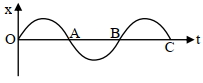
- 6The variation of displacement with time of a particle executing free simple harmonic motion is shown in the figure. The potential energy ${U}({x})$ versus time $({t})$ plot of the particle is correctly shown in figure:View Solution
- 7A particle is excuting a simple harmonic motion. Its maximum acceleration is $\alpha $ and maximum velocity is $\beta $. Then its frequency of vibration will beView Solution
- 8The amplitude of vibration of a particle is given by ${a_m} = ({a_0})/(a{\omega ^2} - b\omega + c);$ where ${a_0},a,b$ and $c$ are positive. The condition for a single resonant frequency isView Solution
- 9pendulum made of a uniform wire of cross sectional area $A$ has time period $T$. When an additional mass $M$ is added to its bob, the time period changes to $T_M$. If the Young's modulus of the material of the wire is $Y$ then $\frac{1}{Y}$ is equal to : ($g$ = gravitational acceleration)View Solution
- 10The time period of oscillations of a simple pendulum is $1$ minute. If its length is increased by $44 \%$. then its new time period of oscillation will be ......... $s$View Solution